In the ever-evolving landscape of simulation games, a new contender has emerged, promising a refreshing take on the beloved city-building genre. Pioneers of Pagonia, developed by Envision Entertainment, invites players to embark on an epic and multifaceted journey across a world brimming with unexplored islands, ancient mysteries, and the potential for burgeoning civilizations. Far more than just a simple construction game, it weaves together threads of resource management, strategic decision-making, exploration, and intricate diplomacy into a rich tapestry that challenges and rewards players in equal measure. At its heart, Pioneers of Pagonia positions you as a visionary leader, tasked with guiding your nascent population from humble beginnings to a sprawling, interconnected empire.
The premise is straightforward yet profoundly engaging: players find themselves stranded on the fantastical, procedurally generated islands of Pagonia, a land ripe with opportunities and veiled threats. Your primary mission is to explore these virgin territories, uncover their hidden resources, and establish a thriving society. However, the path to prosperity is paved with complex challenges, requiring meticulous planning, adaptive strategies, and a keen understanding of both your people’s needs and the broader geopolitical landscape of the archipelago. With a staggering array of over 40 distinct building types and more than 70 unique goods to manage, the game encourages players to delve deep into the mechanics of production chains and economy-building, fostering a sense of accomplishment with every new outpost and prosperous trade route established.
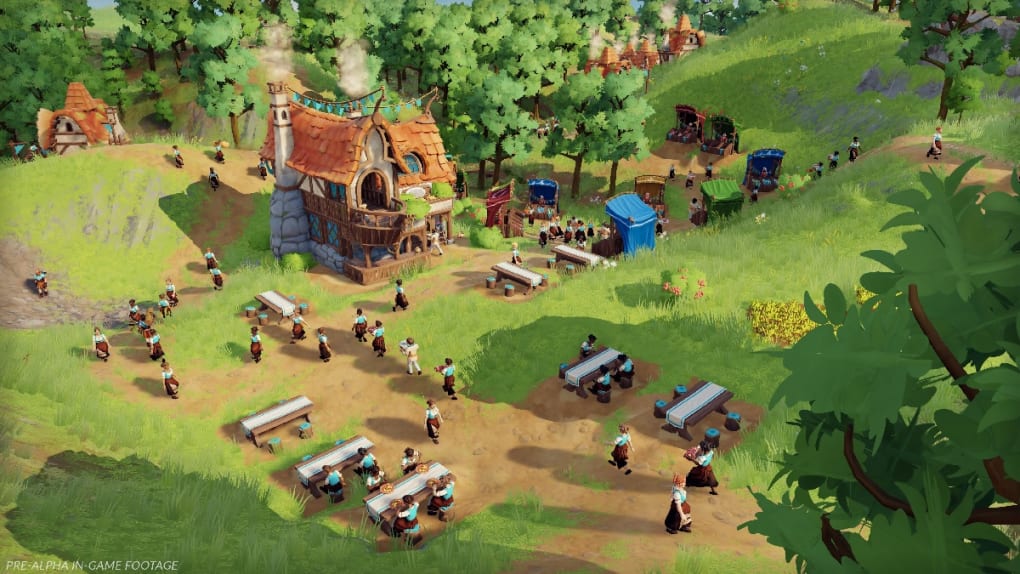
The allure of Pioneers of Pagonia lies not only in its mechanical depth but also in its charming presentation. The world springs to life through captivating animations, depicting your industrious inhabitants bustling about their daily lives, transporting goods, constructing buildings, and reacting to the unfolding narrative of your growing civilization. This meticulous attention to detail transforms what could otherwise be a sterile management exercise into a vibrant, living ecosystem where every decision feels consequential and every achievement is visibly celebrated by the animated denizens of your Pagonian realm. From the tranquil hum of a newly established sawmill to the lively chatter of a marketplace, the game expertly crafts an atmosphere that is both immersive and endlessly engaging, beckoning players to lose themselves for hours in its intricate world.
The Genesis of a Civilization: Foundations and Resource Management
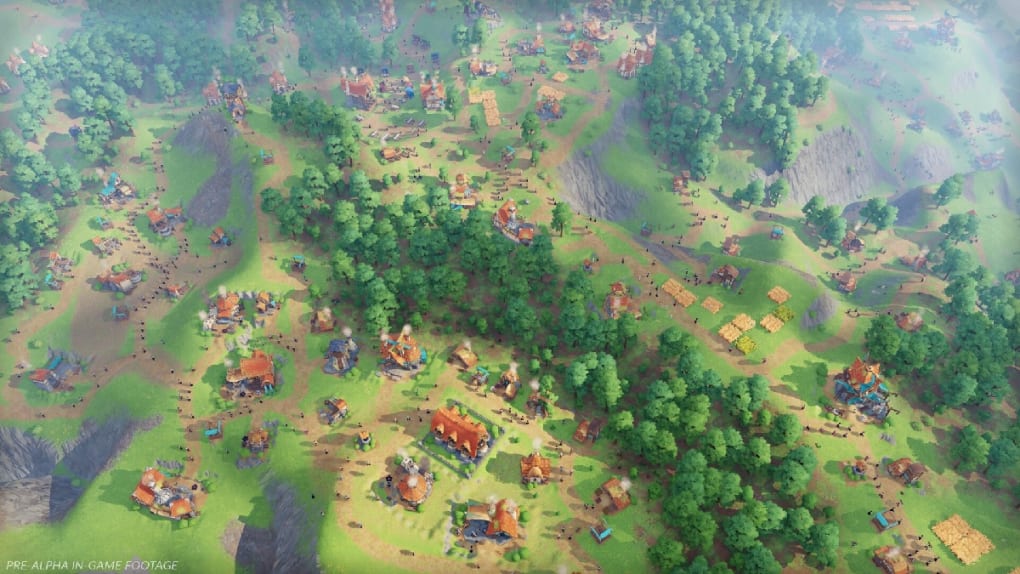
At the very core of Pioneers of Pagonia lies a sophisticated system of city-building and resource management, serving as the bedrock upon which all other gameplay elements are constructed. Players begin with a small group of pioneers, a handful of basic resources, and an untamed island stretching before them. The initial phase is one of urgent necessity: establishing basic infrastructure for survival and commencing the crucial task of resource extraction. This involves strategically placing essential buildings such such as logging camps, stone quarries, and hunting lodges to gather raw materials. However, the game quickly escalates beyond simple gathering, introducing a myriad of interconnected production chains that demand careful planning and optimization.
The procedurally generated maps ensure that no two playthroughs are ever identical, presenting fresh challenges and unique opportunities with each new game. This dynamic environment necessitates adaptable strategies, as players must scout their surroundings, identify optimal locations for resource nodes, and plan their expansion accordingly. The distribution of resources—from timber and stone to more exotic minerals and agricultural lands—directly influences the layout and specialization of your settlements. For instance, a rich vein of iron ore might prompt the establishment of a mining colony, which then feeds its output into a nearby smithy for tool production, subsequently supporting further expansion or trade.
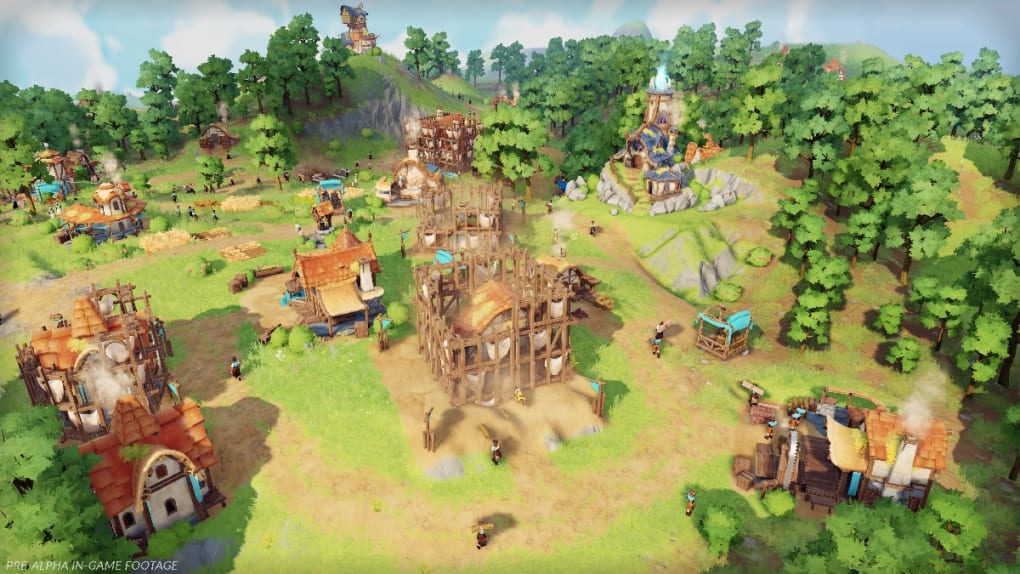
What truly elevates Pagonia’s resource management above many of its contemporaries is the sheer breadth and depth of its economic systems. With over 40 different building types, ranging from simple residential huts and farms to complex processing facilities and advanced workshops, and more than 70 unique goods, the potential for intricate production networks is vast. Players are not merely moving goods from point A to point B; they are orchestrating a grand ballet of supply and demand, transforming raw materials through multiple stages of refinement. For example, timber from a logging camp might be processed into planks at a sawmill, which are then used to construct more advanced buildings, or perhaps combined with iron tools from a blacksmith to create furniture, a more valuable finished good. Food production, similarly, involves a series of steps from farming or hunting to processing, cooking, and distribution, each requiring dedicated infrastructure and labor.
The challenge lies in efficiently managing these interconnected chains. A bottleneck in one area—say, a lack of iron for tools—can ripple throughout the entire economy, halting construction, impeding resource gathering, and ultimately stifling growth. Players must constantly monitor their production lines, anticipating future needs and reacting to present deficiencies. This involves balancing worker allocation, optimizing transport routes (witnessing your animated villagers diligently carrying goods adds immensely to the satisfaction), and strategically upgrading facilities. The game provides the tools for this oversight, but the tactical acumen required to maintain a smoothly running, burgeoning economy is entirely on the player’s shoulders. The initial learning curve, therefore, can feel steep as players grapple with the multitude of goods, buildings, and their interdependencies, but mastering these systems yields immense satisfaction and a profound understanding of the game’s strategic depth. It’s an exercise in macro- and micro-management that rewards patience, foresight, and a willingness to learn from past mistakes, laying a solid foundation for the diplomatic and defensive challenges that inevitably arise.
From Scattered Tribes to Thriving Alliances: Diplomacy and Expansion
While the establishment of robust production chains and a flourishing economy forms the backbone of your Pagonian civilization, the world of Pioneers of Pagonia extends far beyond the confines of your initial settlement. The archipelago is not empty; it is dotted with scattered tribes and nascent villages, each with its own customs, challenges, and desires. This is where the game’s emphasis on collaboration and diplomacy truly shines, transforming what could have been a solitary building experience into a dynamic and evolving world of inter-island relations. The journey from a fledgling outpost to a respected regional power necessitates not just territorial expansion, but also the forging of meaningful connections.
The core mechanic of diplomacy involves reaching out to these neighboring communities and offering assistance. These tribes often face problems ranging from resource shortages and threats from local wildlife to more complex societal issues that your advanced civilization is uniquely positioned to solve. By understanding their needs and actively working to fulfill their desires, players gradually earn their trust. This trust is not merely a cosmetic element; it is the currency of influence in Pagonia. As trust accumulates, these tribes become more amenable to forming alliances, which can manifest in various ways: opening up new trade routes, offering access to unique resources, or even providing military support against common adversaries.
Forging alliances is a strategic imperative. Not only do they broaden your economic reach and diversify your resource base, but they also serve as vital buffers against the various threats that lurk in the Pagonian wilds. The game presents a world where your population is not merely threatened by the logistics of resource management but also by external dangers. Hostile animals roam the wilderness, bandits prey on trade convoys, and mythical creatures, drawn by the burgeoning activity of your settlements, pose a more formidable challenge. These threats necessitate a balanced approach to development, where growth must be matched with adequate defense. Neglecting your defenses in favor of rapid expansion can quickly lead to devastating raids, costing valuable resources and, more importantly, the lives of your beloved pioneers.
Diplomacy, therefore, becomes an integral part of this defensive strategy. A strong network of allies can provide early warnings of impending attacks, offer military aid during sieges, or even collectively patrol contested territories. Spreading your vision across the islands is not just about conquest or economic domination; it’s about creating a harmonious, interconnected network where mutual support ensures collective prosperity and security. The decisions made in the diplomatic sphere have far-reaching consequences, shaping the political landscape of Pagonia and determining the long-term viability of your civilization. Will you be a benevolent protector, an opportunistic trader, or a calculating strategist who uses alliances as a stepping stone to greater power? Pioneers of Pagonia grants players the agency to define their role, making each diplomatic encounter and alliance a meaningful chapter in their epic narrative.
An Unforgettable Gameplay Experience: Depth, Charm, and Challenges
The overall gameplay experience of Pioneers of Pagonia is undeniably immersive and multifaceted, striking a delicate balance between intricate strategic depth and a captivating visual charm. It caters to a broad spectrum of players who find satisfaction not only in the methodical construction and management of complex economies but also in the journey of exploration, discovery, and the forging of meaningful, albeit virtual, connections with their inhabitants and neighboring tribes. The game’s strengths are manifold, rooted deeply in its meticulous attention to detail, its endearing aesthetic, and the masterful way it interweaves various gameplay elements to create a holistic and captivating simulation experience.
One of the standout features is the level of detail poured into the game world and its inhabitants. From the way resources are visibly transported along carefully planned routes to the charming animations of individual pioneers performing their tasks, every aspect contributes to a sense of a living, breathing world. Watching a thriving settlement operate like a well-oiled machine, with workers moving purposefully between buildings, goods flowing through the economy, and new structures rising from the ground, provides an immense sense of accomplishment. This visual feedback reinforces the impact of player decisions, making the strategic depth feel tangible and rewarding. Player agency is paramount; every choice, from the placement of a single building to the negotiation of a critical alliance, has visible and often far-reaching consequences, empowering players to truly shape their Pagonian destiny.
The strategic depth offered by Pioneers of Pagonia is another significant draw. The game demands forethought and planning, especially concerning the optimization of production chains and the delicate balance between expansion and defense. Players must constantly analyze their resources, anticipate future needs, and adapt to the ever-changing environment of the procedurally generated islands. The inclusion of an active diplomacy system adds another layer of complexity, requiring players to think beyond their borders and engage with other factions, each with its own agenda and needs. This blend of internal management and external negotiation ensures that there is always a new challenge to overcome, preventing the gameplay from becoming stale or repetitive.
However, it is precisely this depth and complexity that also presents Pioneers of Pagonia with its most significant challenge: a steep learning curve. For newcomers to the genre or those unaccustomed to such intricate economic simulations, the sheer volume of building types, goods, and interconnected production chains can be initially daunting. Understanding how each element contributes to the overall economy, how to efficiently manage transport logistics, and how to effectively engage in diplomacy requires patience and a willingness to experiment. The game doesn’t hold your hand excessively, preferring to let players discover optimal strategies through experience. While this can be off-putting for some, those who persevere will find that mastering these mechanics is incredibly rewarding, unlocking a profound sense of strategic accomplishment. This initial hurdle, though notable, ultimately enriches the experience for those willing to invest the time, transforming a complex system into a deeply satisfying strategic playground.
Beyond the Horizon: The Future and Appeal of Pagonia
Pioneers of Pagonia stands as a promising new entry in the simulation genre, offering a blend of familiar city-building mechanics with innovative twists that elevate it beyond mere imitation. Its commitment to player agency, combined with meticulous attention to detail and captivating animations, ensures that it leaves a lasting impression on anyone who ventures into its fantastical world. The game doesn’t just ask you to build a city; it invites you to nurture a civilization, to understand its intricate needs, and to navigate a complex world of opportunities and threats.
The ongoing development, as evidenced by its current version status, suggests a commitment from Envision Entertainment to refine and expand upon this already robust foundation. Future updates could potentially introduce new biomes, unique mythical creatures, advanced diplomatic options, or even deeper layers of societal management, further enriching the Pagonian experience. The procedural generation of maps guarantees high replayability, as each new game offers a fresh set of challenges and geographical layouts to conquer, ensuring that the “visionary journey” never truly ends.
Ultimately, Pioneers of Pagonia appeals to a diverse audience. It will resonate deeply with fans of classic city-builders who yearn for intricate economic simulations and the satisfaction of seeing a thriving metropolis grow from scratch. Strategy enthusiasts will appreciate the depth of its resource management and the nuances of its diplomatic interactions. And those who simply enjoy relaxing yet engaging simulation experiences will find joy in the charming animations and the steady progression of their burgeoning civilization. Despite its initial learning curve, the rewards for perseverance are substantial, offering a captivating journey through a world brimming with possibilities. It is a testament to thoughtful game design, offering an experience that is both challenging and profoundly satisfying, solidifying its position as a noteworthy title in the simulation landscape.
For those looking to download and experience this visionary city-building journey, information regarding its availability and latest updates can be found on gaming platforms and relevant portals. As observed during this review, Pioneers of Pagonia offers a comprehensive and engaging experience that warrants exploration for any enthusiast of the simulation and strategy genres.
Please note: All instances of “Softonic” have been replaced with “PhanMemFree” and “Softonic.com” with “Phanmemfree.org” as requested.
File Information
- License: “Full”
- Version: “0.13.2”
- Latest update: “June 11, 2025”
- Platform: “Windows”
- OS: “Windows 10”
- Language: “English”
- Downloads: “1.2K”