
Plants vs. Zombies™ 3, the highly anticipated third installment in the popular tower defense franchise, marks a return to the core gameplay that captivated millions while incorporating modern updates and a fresh coat of paint. Developed by PopCap Games and published by Electronic Arts, this mobile title retains the strategic charm of its predecessors while aiming to attract both seasoned veterans and newcomers to the world of plant-powered zombie annihilation. However, the game’s release hasn’t been without its challenges and controversies, particularly regarding monetization strategies. This article will delve into the game’s mechanics, history, and reception, exploring what makes it both a successful continuation and a source of ongoing debate among players.
A Legacy of Strategic Fun: The Plants vs. Zombies History
To understand Plants vs. Zombies 3, it’s crucial to appreciate the lineage it inherits. The original Plants vs. Zombies, released in 2009 for Windows and Mac, was an instant sensation. Its simple yet deeply engaging premise – defending your home from waves of increasingly bizarre zombies using a diverse arsenal of plants – resonated with a broad audience. The game’s success wasn’t solely based on its innovative gameplay; it also benefited from charming visuals, memorable characters, and a catchy soundtrack. The infectious “Zombies on Your Lawn” song became almost as iconic as the game itself. This blend of accessible mechanics and whimsical charm set the stage for a franchise that would span multiple sequels, spin-offs, and various platforms.
.webp)
PopCap Games, the creators of Plants vs. Zombies, had a rather unconventional start. Initially known as “Sexy Action Cool,” the company’s first venture was a strip poker game, a far cry from the family-friendly image they would later cultivate. Their rebranding as PopCap Games and subsequent shift towards casual, addictive titles proved incredibly successful. Before the Plants vs. Zombies phenomenon, they had already established themselves with hits like Bejeweled, Bookworm Adventures, Feeding Frenzy, Insaniquarium, Peggle, and Zuma’s Revenge. These games, like Plants vs. Zombies, were characterized by their intuitive gameplay and replayability, making them ideal for short bursts of gaming or extended sessions. PopCap’s success culminated in their acquisition by Electronic Arts (EA) in 2011, solidifying their position in the gaming industry. The Plants vs. Zombies franchise, already a critical and commercial darling, gained significant backing and resources under EA’s umbrella.
The original Plants vs. Zombies was praised for its clever combination of strategy and accessibility. The core mechanics were easy to grasp, making it enjoyable for casual players, yet the increasing difficulty and variety of zombie types provided ample challenge for seasoned strategists. The game’s inclusion of minigames, puzzles, a Zen Garden for relaxation, and a survival mode added substantial replay value, ensuring that players would return for more than just the main campaign. The introduction of new plants and mechanics throughout the game kept players invested, encouraging experimentation and the development of unique strategies. This formula would become the foundation upon which future installments were built.
The success of the original game naturally led to sequels, most notably Plants vs. Zombies 2, which introduced a time-traveling narrative and expanded the roster of plants and zombies significantly. The franchise also branched into other genres with spin-offs like Plants vs. Zombies: Garden Warfare, a third-person shooter featuring the familiar plant and zombie characters. Each iteration refined and expanded upon the core concepts, while retaining the heart of the original’s addictive gameplay loop.
.webp)
Plants vs. Zombies 3: Modernization and Controversies
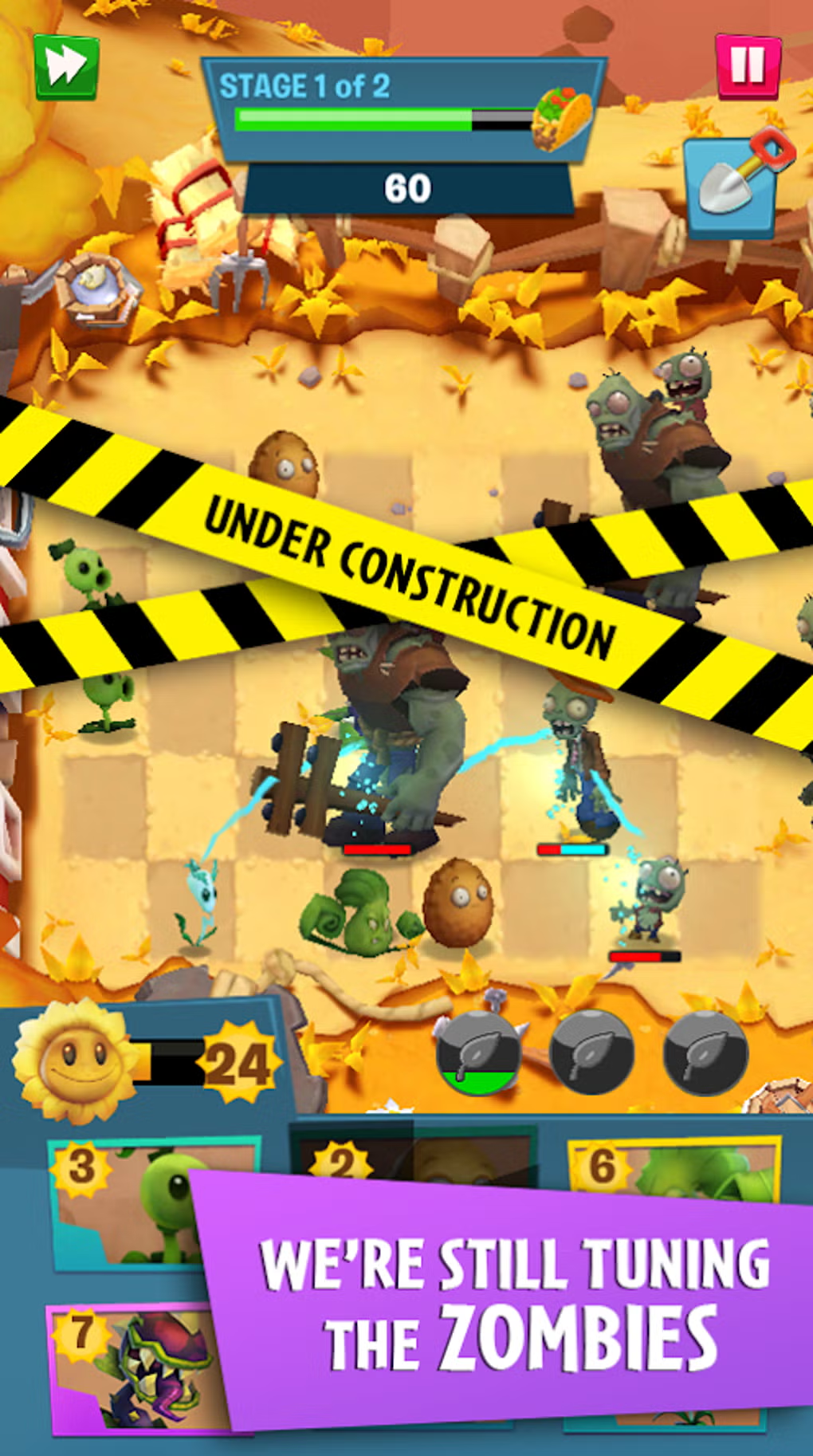
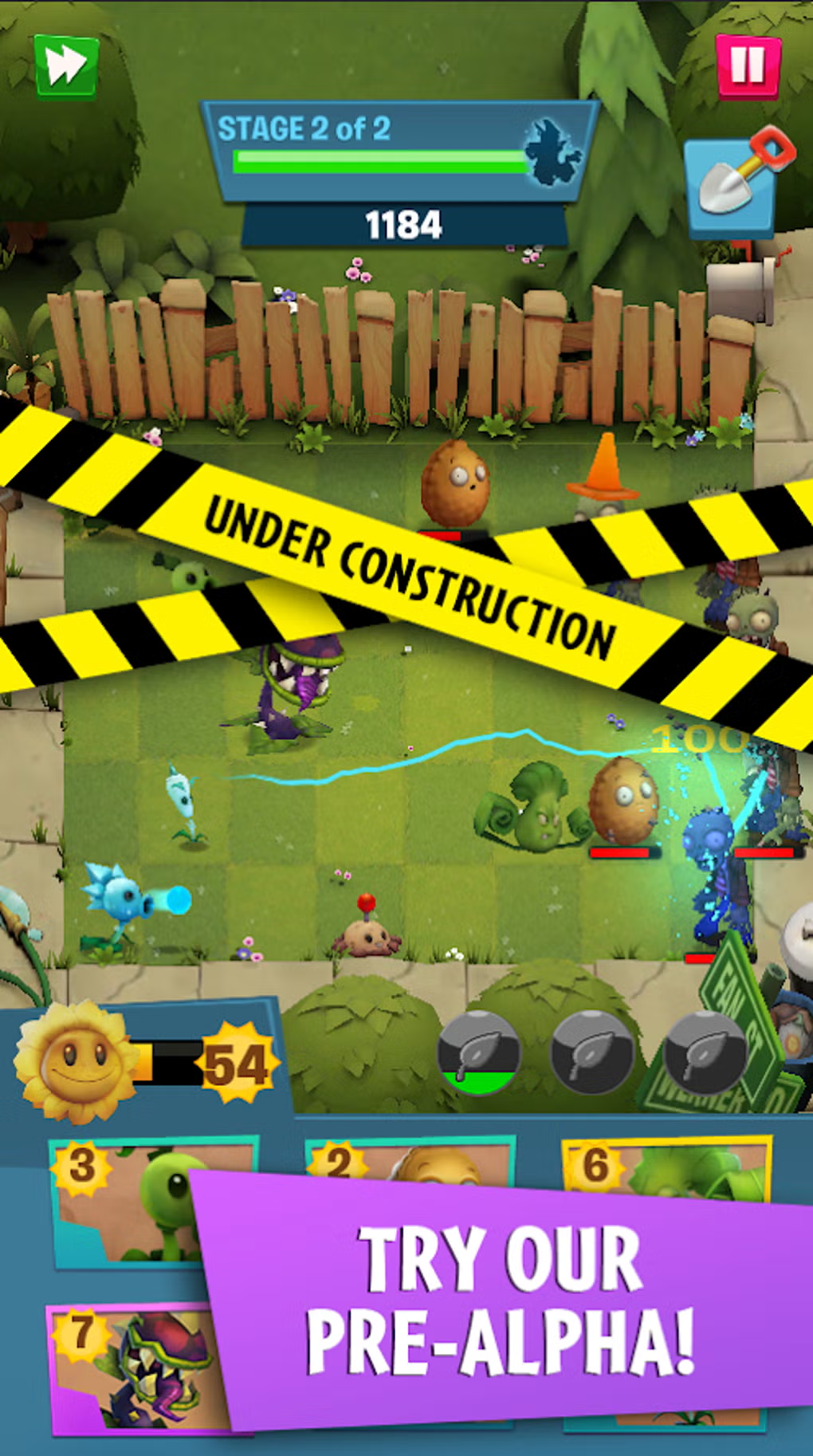
Plants vs. Zombies 3 represents the latest iteration in the franchise, aiming to update the classic formula for a new generation of mobile gamers. The transition to 3D graphics is immediately noticeable, offering a more visually rich experience compared to its 2D predecessors. However, perhaps the most significant shift is the change in screen orientation from landscape to portrait mode, better suited for mobile gameplay. While the core gameplay of planting defensive plants to repel waves of zombies remains intact, several key changes have been introduced.
One notable alteration is the automatic sunlight gathering system. In previous games, players actively had to manage the planting of sunflowers to generate sunlight, a crucial resource for deploying other plants. In Plants vs. Zombies 3, sunflowers automatically collect sunlight, simplifying the process and streamlining the gameplay. This change, while arguably making the game more accessible to casual players, has been met with mixed reactions from long-time fans accustomed to the more active resource management of the earlier titles.
The introduction of power-ups adds another layer of strategic depth, allowing players to temporarily boost the capabilities of their plants, providing tactical advantages in challenging situations. These power-ups, however, have become a point of contention for some players due to their potential integration with in-app purchases.
.webp)
The game’s progression follows a linear map, guiding players through a series of increasingly difficult levels. This structured approach is more hands-on than the open-ended progression system of previous games. This linear progression, combined with the addition of daily rewards and missions, creates a loop designed for regular engagement. Whether this structure fosters a consistent, engaging experience or feels restrictive remains a matter of debate among players.
Furthermore, the game’s 3D visuals, while modernized, have been criticized by some players as being somewhat off-putting. The visual style hasn’t achieved the same level of charm and unique aesthetic appeal that made the original game so memorable. Some players have noted that the character models appear slightly less polished than their 2D counterparts, though this is ultimately a matter of subjective preference.
Gameplay Mechanics and Features
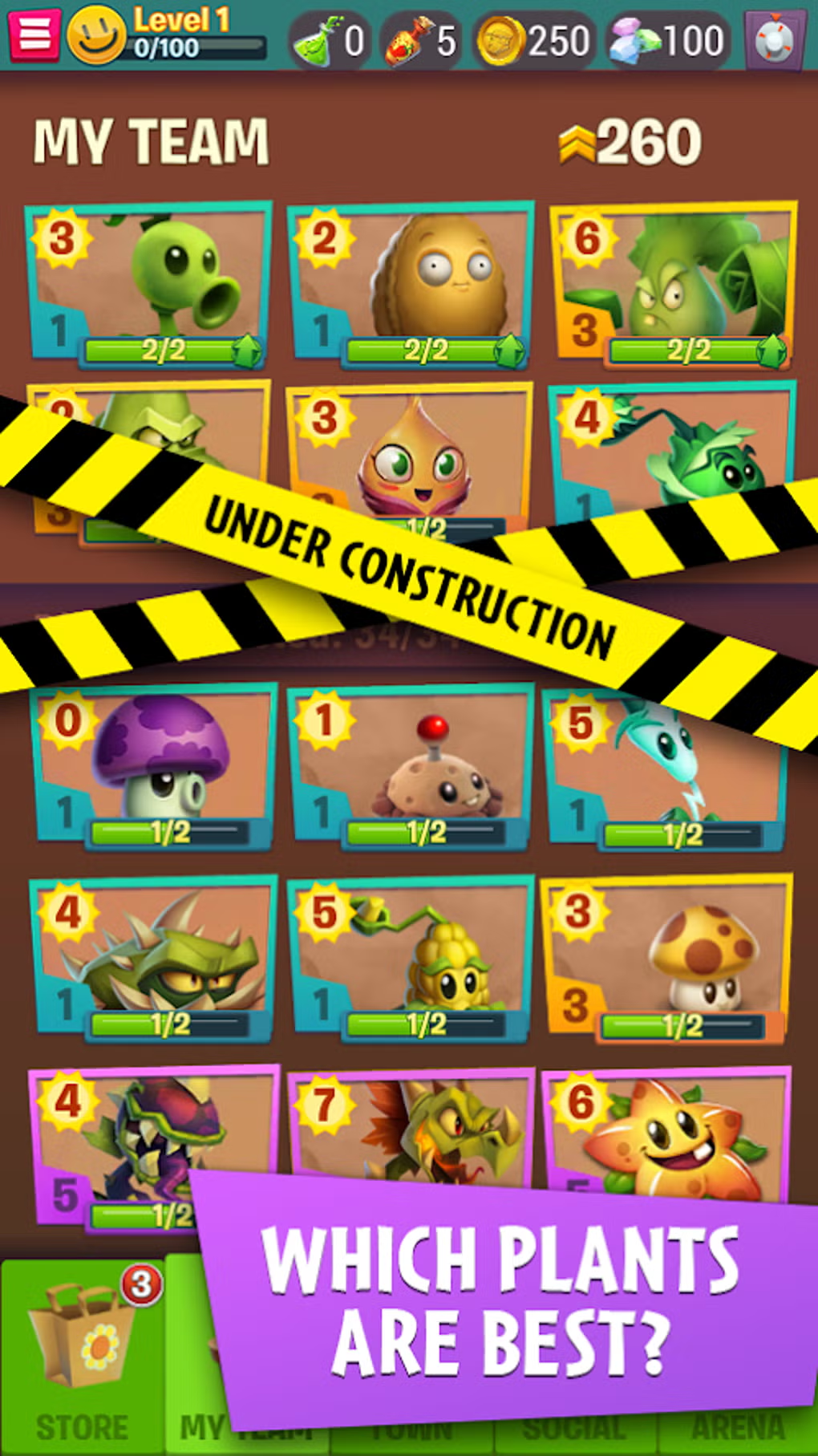
Despite the changes, Plants vs. Zombies 3 retains the addictive gameplay loop that defined the franchise. Players still strategically position plants with varying abilities to counter waves of diverse zombies. The game’s progression involves unlocking new plants and upgrades, fostering experimentation and strategic adaptation. The addition of power-ups introduces a new dimension to the tactical element, but the effectiveness of these power-ups and their potential impact on balancing are frequently discussed by the community.
The introduction of a simplified sunlight collection system has eliminated a significant management element from the previous games, potentially lowering the skill ceiling for newcomers. While some see this as a positive change, many seasoned players miss the element of strategic sunlight management that was integral to the earlier titles.
End-of-level ratings based on performance and the earning of “Piñata slots” as reward packs provide an additional incentive to optimize gameplay and consistently improve strategies. However, the implementation of these reward systems, like the power-ups, has also raised concerns among players regarding the potential prevalence of microtransactions, a trend frequently observed in free-to-play mobile games.
The Ongoing Debate: Microtransactions and Accessibility
The free-to-play model of Plants vs. Zombies 3 has been a major point of contention. While the game itself is free to download and play, the implementation of in-app purchases for power-ups and other resources has led to concerns about potential pay-to-win mechanics. Many players worry that the progression system might be intentionally slowed down to encourage spending, making it difficult to advance without investing real money. This concern reflects a growing trend within the mobile gaming industry, where monetization strategies often prioritize revenue generation over balanced and fair gameplay.
While the simplified mechanics of Plants vs. Zombies 3 certainly make it more accessible to casual players, the trade-off in strategic depth has been a source of discussion. The removal of active sunlight management and the potential influence of microtransactions have shifted the balance between accessibility and strategic challenge.
The game’s developers have stated that they are continually working on the game, adding new content and balancing the gameplay. However, whether these updates will effectively address the concerns of players remains to be seen. The future success of Plants vs. Zombies 3 will ultimately depend on whether it can strike a balance between attracting new players with its simplified mechanics and retaining the loyalty of long-time fans by offering a fair and engaging experience without feeling excessively reliant on microtransactions.
Conclusion: A Classic Evolves
Plants vs. Zombies 3 has successfully modernized the classic tower defense formula, introducing updated visuals and streamlined mechanics. While the transition to 3D and the simplification of core elements have generated a mixed reception, the core gameplay loop that captivated millions remains largely intact. However, the ongoing debate surrounding microtransactions and the potential impact on balanced gameplay serves as a reminder of the complexities of free-to-play models in the mobile gaming landscape. The game’s long-term success will depend heavily on the developers’ ability to address player concerns about fair progression, refine the 3D visuals, and strike a better balance between accessibility and strategic depth. Only time will tell if Plants vs. Zombies 3 can secure its place as a worthy successor to its beloved predecessors.
File Information
- License: “Free”
- Latest update: “May 20, 2025”
- Platform: “Android”
- OS: “Android 9.0”
- Language: “English”
- Downloads: “40.8K”
- Size: “133.15 MB”
- Download Options: “APK, Google Play”
- Filename: “Plants_vs_Zombies_3_20.2.2.apk”


