
Pokémon Simulator, a program released in 2007, offers a unique approach to the beloved Pokémon franchise. Unlike traditional Pokémon games that immerse players in expansive adventures, this simulator strips away the narrative elements, focusing solely on the core mechanics of Pokémon battles. This allows players to hone their strategic skills, experiment with different Pokémon and movesets, and gain a deeper understanding of the intricate combat system. Essentially, it serves as a digital training ground for Pokémon masters-in-training, allowing them to test their knowledge and strategies without the distractions of a storyline or exploration. This review will explore the features, strengths, and weaknesses of Pokémon Simulator, examining its role within the broader Pokémon ecosystem and its lasting impact on fans.
Gameplay Mechanics: A Pure Combat Focus
The core gameplay loop of Pokémon Simulator revolves around turn-based battles between Pokémon. Players select their team, choosing from a vast roster encompassing creatures from various Pokémon generations. Each Pokémon possesses a unique set of stats (HP, Attack, Defense, Special Attack, Special Defense, Speed) and a collection of moves, each with its own type, power, and additional effects. Battles unfold according to the established Pokémon rules: Pokémon attack one another in turns, with the order determined by speed, and type matchups dictate advantages and disadvantages. A well-thought-out strategy considers not only the raw power of a Pokémon’s moves but also the strategic implications of type matchups, elemental weaknesses, and status effects such as paralysis, burn, and poison.
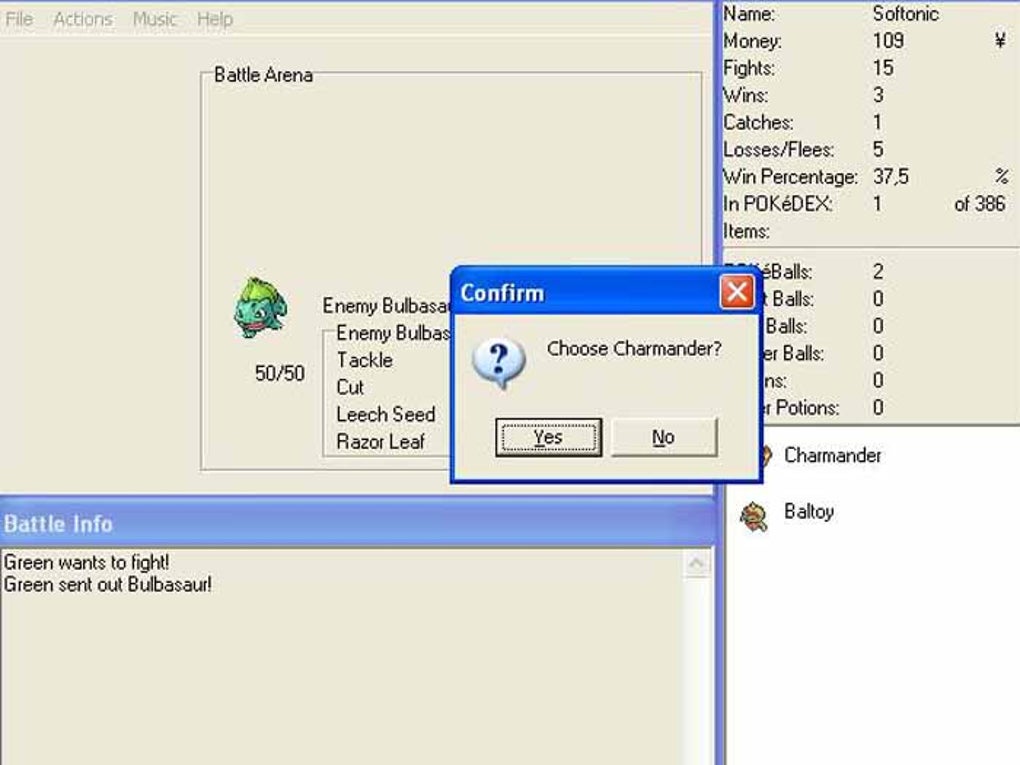
The simulator provides a comprehensive display of the battle statistics, showing not only the damage inflicted by each attack but also the changes in a Pokémon’s stats due to special moves or status effects. This detailed feedback is invaluable for strategic planning, allowing players to analyze their decisions and refine their approach. The absence of a leveling system, common in the main series games, means that battles are primarily a test of strategic acumen and team composition rather than a grind for experience points. This focus streamlines the experience, placing the emphasis squarely on the tactical nuances of Pokémon combat.
The game’s simplicity is both a strength and a weakness. Its lack of narrative can be frustrating for players accustomed to the rich storylines of the mainline Pokémon games. However, this absence allows for a more focused, strategic experience, making it ideal for players seeking to test their skills in a purely competitive setting.
Pokémon Roster and Data: Comprehensive Coverage
One of Pokémon Simulator’s most significant strengths lies in its expansive roster of Pokémon. The program includes a wide array of creatures from various generations, allowing players to experiment with a diverse range of strategies and team compositions. This extensive coverage makes it a powerful tool for those seeking to master the nuances of Pokémon battling, understanding type matchups, and exploiting various strategic combinations.
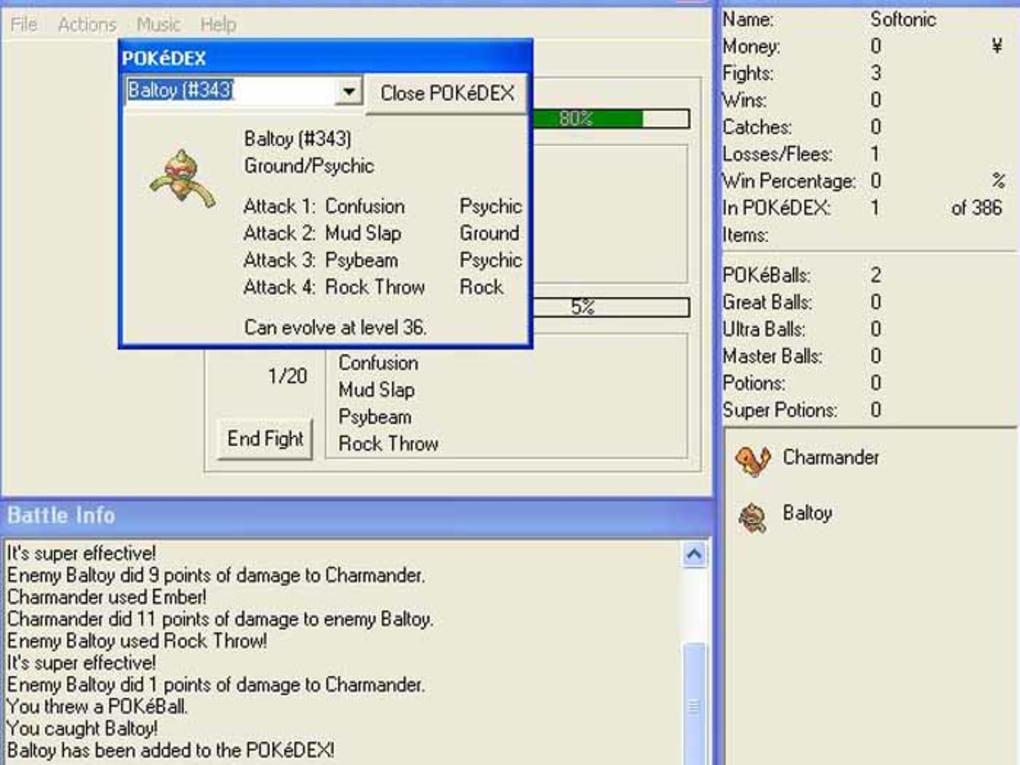
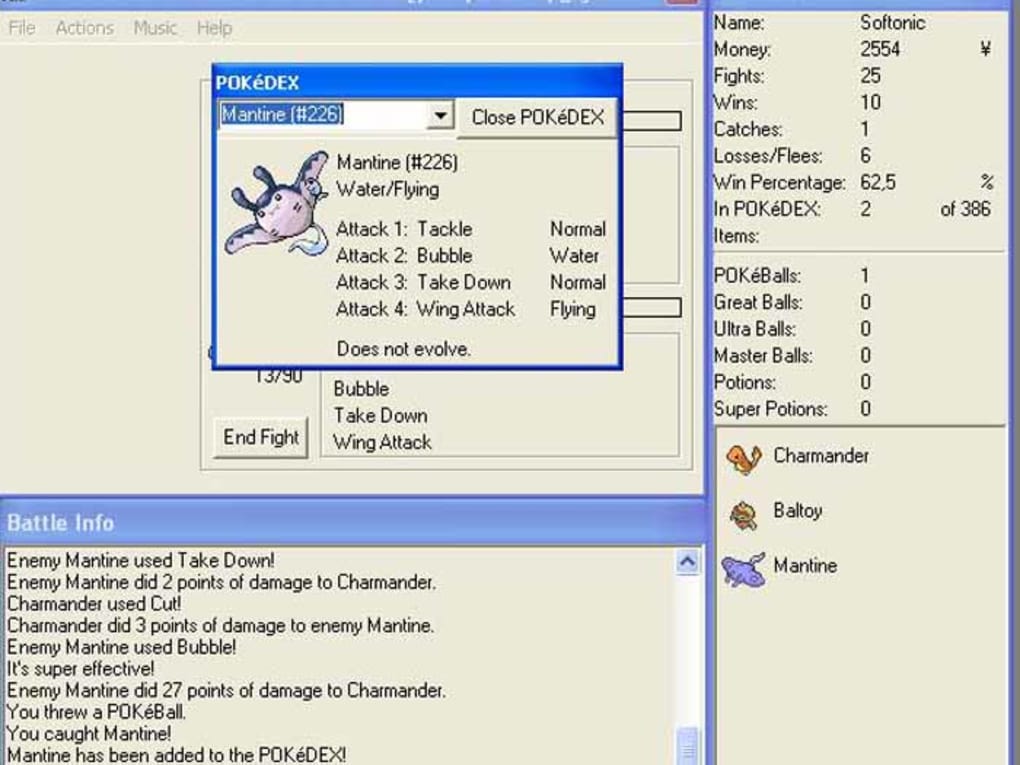
Furthermore, the simulator provides detailed statistics for each Pokémon and their moves. This information is crucial for strategic planning, allowing players to analyze the strengths and weaknesses of their opponents and make informed decisions during battles. The availability of this comprehensive data, easily accessible within the simulator’s interface, elevates it beyond a simple battle arena, transforming it into a valuable learning resource for Pokémon enthusiasts. The sheer depth of data makes it a useful tool for even seasoned players looking to refine their understanding of specific Pokémon or movesets.
Interface and User Experience: Simplicity and Accessibility
Pokémon Simulator boasts a simple, intuitive interface, making it readily accessible to players of all skill levels. While the lack of a tutorial or in-game help might present a minor hurdle for newcomers unfamiliar with the mechanics of Pokémon battles, the straightforward design minimizes any unnecessary complications. The interface is clear and uncluttered, presenting all the necessary information without overwhelming the player with complex menus or unnecessary visual elements. The focus on functionality over visual flair is a deliberate choice that enhances the user experience, particularly for players primarily interested in the core mechanics of Pokémon combat.
Limitations and Shortcomings: The Absence of Narrative and Context
While Pokémon Simulator excels as a purely strategic combat tool, its limitations become apparent when compared to the full-fledged Pokémon role-playing games. The absence of a narrative or story is a significant drawback for players who enjoy the immersive storylines and character development present in the main series games. This purely functional design, while efficient, might not appeal to players seeking a more engaging and emotionally resonant experience. The absence of a compelling context diminishes the overall impact of the simulation, making it feel like a disembodied collection of battles rather than a part of a larger Pokémon world.
Furthermore, the lack of a comprehensive tutorial can be a barrier to entry for players unfamiliar with the intricacies of Pokémon battles. While the interface is straightforward, players without prior experience with the franchise might struggle to grasp the nuances of type matchups, status effects, and strategic decision-making. This lack of guidance leaves newcomers feeling lost and could discourage them from engaging with the simulator.
Pokémon Simulator’s Place in the Pokémon Ecosystem: A Niche but Valuable Tool
Pokémon Simulator occupies a unique niche within the broader Pokémon ecosystem. It doesn’t aim to replicate the sprawling adventures and captivating storylines of the main series games. Instead, it carves a space for itself as a specialized tool for honing strategic skills and deepening one’s understanding of the Pokémon battle system. Its value lies in its ability to offer a highly focused, customizable environment for players to experiment with team compositions, test strategic approaches, and rigorously analyze the effectiveness of different Pokémon and movesets.
For veteran players, it offers a chance to refine their strategies without the constraints of a narrative or level progression. For newcomers, it can serve as a practical learning tool, allowing them to familiarize themselves with the core battle mechanics before embarking on the more complex adventures of the full-fledged Pokémon games. Its simplicity and accessibility make it a valuable resource for both casual and hardcore Pokémon fans seeking to improve their combat proficiency.
Conclusion: A Powerful Tool for Pokémon Strategists
Pokémon Simulator, despite its limitations, remains a compelling tool for Pokémon enthusiasts. Its pure focus on strategic combat, coupled with its comprehensive Pokémon roster and detailed statistics, provides a unique and valuable experience not found in the main series games. While the lack of narrative and in-game guidance may deter some players, its simplicity and accessibility make it a rewarding tool for those seeking to master the intricacies of Pokémon battles. Pokémon Simulator’s strength lies not in its attempt to replicate the full Pokémon experience, but rather in its ability to provide a dedicated, streamlined environment for tactical experimentation and refinement. It remains a testament to the enduring appeal of Pokémon’s battle system, offering a focused and insightful way to explore its depths.
File Information
- License: “Free”
- Version: “4.5”
- Latest update: “July 12, 2007”
- Platform: “Windows”
- OS: “Windows XP”
- Language: “English”
- Downloads: “147.9K”
- Size: “1.06 MB”


