
The popular survival horror game, Poppy Playtime, has made its way to mobile devices with the release of “Poppy Playtime game” by Lamba Studio Games. This free-to-play adventure game offers a mobile port of the critically acclaimed title from Mob Entertainment, aiming to recreate the terrifying experience within the confines of a smartphone or tablet. While not a perfect replica of the original, it provides a taste of the unsettling atmosphere and puzzle-solving gameplay that made the original game a success. This review delves into the strengths and shortcomings of this mobile adaptation, examining its faithfulness to the source material, its gameplay mechanics, and its overall user experience.
A Familiar Premise on a Smaller Screen
.webp)
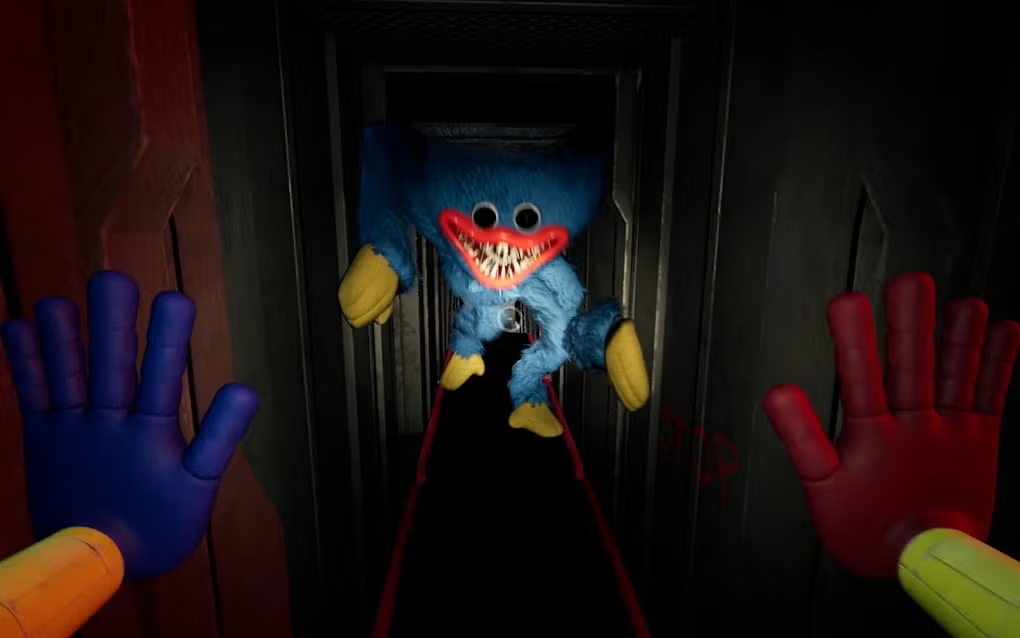
The mobile version of Poppy Playtime maintains the core narrative of its PC counterpart. Players assume the role of a former employee returning to the abandoned Playtime Co. toy factory after receiving a mysterious message from a missing colleague. The factory, however, is far from deserted; it’s teeming with terrifying, animatronic creatures, the most notable of which is the menacing Huggy Wuggy. The gameplay revolves around navigating the eerie factory environment, solving intricate puzzles, and, most importantly, evading the relentless pursuit of the game’s monstrous inhabitants. This familiar setup instantly connects players with the established lore and atmosphere of the Poppy Playtime universe, creating a sense of familiarity even within the new mobile context.
The game effectively incorporates the unique puzzle mechanics that define the Poppy Playtime experience. Players utilize the iconic GrabPack, a backpack equipped with two extendable robotic arms, to interact with the environment in innovative ways. This tool allows players to reach distant switches, manipulate objects, and solve power-related puzzles that require precise manipulation and timing. The adaptation successfully translates these puzzles to the touch screen interface, making them surprisingly intuitive to control despite the limitations of mobile input. This attention to detail in recreating the core puzzle-solving elements is a major strength of the mobile port, allowing players to experience the creative challenge without significant alterations.
Shortcomings of the Mobile Port
Despite successfully capturing the essence of the original game, the mobile adaptation falls short in several key aspects. The most significant issue is its incompleteness. This mobile version only represents a fraction of the original game’s content, offering a significantly abridged experience that omits a substantial portion of the narrative and gameplay. This leaves players with a frustrating sense of incompletion, as the mobile version ends abruptly, denying them the climactic conclusion and the overall narrative payoff of the original. This truncated nature makes it feel more like a demo or a prologue rather than a complete game.
Furthermore, the mobile adaptation suffers from technical issues that detract from the overall playing experience. Reports of numerous bugs and glitches plague the game, including collision problems where the player character can clip through walls or objects, and instances of asset loading failures that disrupt the visual consistency. These technical imperfections not only compromise the immersion but also, in some cases, impede progress through the game’s puzzles. The presence of these bugs highlights a lack of thorough testing and optimization before release, significantly hindering the potential enjoyment of the game.
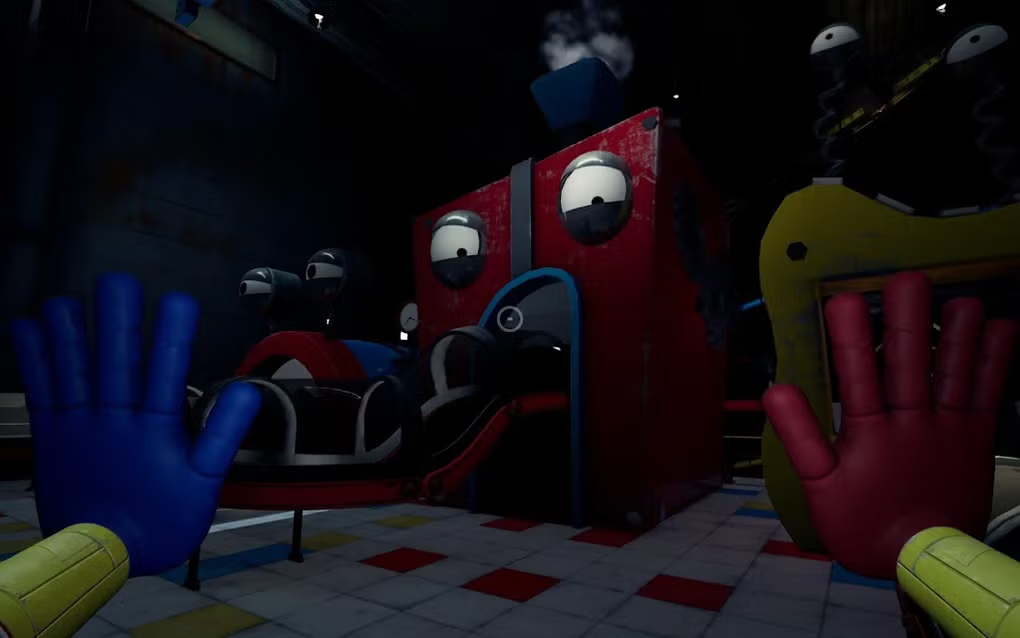
The monetization strategy employed by the developers is another notable drawback. While the game itself is free to play, it’s heavily reliant on in-game advertisements. These ads appear frequently, interrupting gameplay at various points, including after completing a level or even upon death. This constant barrage of advertisements significantly disrupts the flow and pacing of the game, often disrupting the tension and immersion carefully crafted by the developers. The intrusive nature of these ads detracts from the overall experience, making it less enjoyable for the player.
.webp)
Gameplay and Controls: A Mixed Bag
While the core gameplay mechanics are successfully adapted, the controls are a source of mixed reactions. The developers have opted for a standard touchscreen control scheme, which works reasonably well for the basic movement and puzzle interaction. However, the precision required for some puzzles, particularly those involving the GrabPack, can be challenging to execute perfectly on a touchscreen. This slight lack of precision can lead to frustration, especially in tense moments where precise movements are required to avoid being caught by Huggy Wuggy or to solve a particularly tricky puzzle.
The visual presentation of the game is another point of contention. While the graphics strive to emulate the style of the original game, the visual fidelity is significantly reduced to accommodate the lower processing power of mobile devices. This reduction in visual quality is noticeable and can be somewhat disappointing for those familiar with the higher-resolution visuals of the original game. However, the developers have managed to maintain a consistent visual style, retaining the eerie and atmospheric setting that defines the Poppy Playtime experience, making the visual downgrades somewhat less jarring.
Comparison with Similar Mobile Titles
Several other mobile games inspired by the Poppy Playtime franchise are available, including “Poppy Playtime Chapter 2 - Unofficial” and “Project Playtime.” These alternatives may offer more complete gameplay experiences or superior technical performance. While a direct comparison requires playing each title, it’s important for potential players to be aware of these alternatives and their potential advantages. A careful examination of player reviews and gameplay footage for these competing titles can help in making an informed decision on which game to play.
Ultimately, the choice between “Poppy Playtime game” and its competitors will depend on individual preferences and expectations. Players seeking a faithful, albeit incomplete, adaptation of the core Poppy Playtime experience with intuitive touchscreen controls might find this game acceptable despite its drawbacks. However, players prioritizing a complete and bug-free experience may want to explore the other mobile titles in the franchise before investing their time and potentially encountering significant frustrations.
Conclusion: A Flawed but Intriguing Attempt
“Poppy Playtime game” represents an ambitious attempt to bring the terrifying world of Poppy Playtime to mobile devices. While the game succeeds in capturing the core gameplay loop, including the atmosphere, puzzles, and iconic GrabPack mechanics, its significant shortcomings cannot be ignored. The incomplete nature of the game, the frequent technical issues, and the intrusive advertisements create a significantly less enjoyable experience compared to the original PC version. While it offers a glimpse into the unsettling world of Playtime Co., this mobile port ultimately feels more like a mobile demo than a fully realized game. Potential players should carefully consider its flaws before embarking on this potentially frustrating, yet intriguing, mobile horror adventure.
File Information
- License: “Free”
- Version: “1.0”
- Latest update: “February 22, 2023”
- Platform: “Android”
- OS: “Android 8.0”
- Language: “English”
- Downloads: “530.5K”
- Size: “86.13 MB”
- Download Options: “APK, Google Play”
- Filename: “poppy_playtime_game_1.0.apk”


