
Postal 2: Share the Pain, a first-person shooter released in 2003, is notorious for its over-the-top violence, darkly comedic storyline, and deeply offensive humor. While undeniably crude and often shocking, the game carved a niche for itself within the gaming world, attracting players drawn to its unique brand of chaotic gameplay and irreverent satire. This exploration delves into the game’s mechanics, its controversial legacy, and its enduring, if somewhat niche, appeal.
Gameplay: Sandbox Mayhem in Paradise
Postal 2 casts the player as an unnamed protagonist, a disgruntled everyman navigating the bizarre and often hostile town of Paradise. Unlike many shooters of its time, Postal 2 offers a considerable degree of freedom, operating within a sandbox environment where players are given a relatively wide berth to complete their missions. The primary objective is to complete various daily tasks, ranging from mundane errands to absurdly violent acts.
The game’s core gameplay loop revolves around these missions, which frequently involve interacting with the inhabitants of Paradise, ranging from everyday citizens to eccentric and aggressive characters. Players have the choice to complete these objectives non-violently, though the game heavily incentivizes – and arguably glorifies – violent interactions. The game’s open-world nature allows players to wander freely, exploring the town, interacting with its inhabitants (or violently dispatching them), and engaging in various activities outside the confines of the main missions.
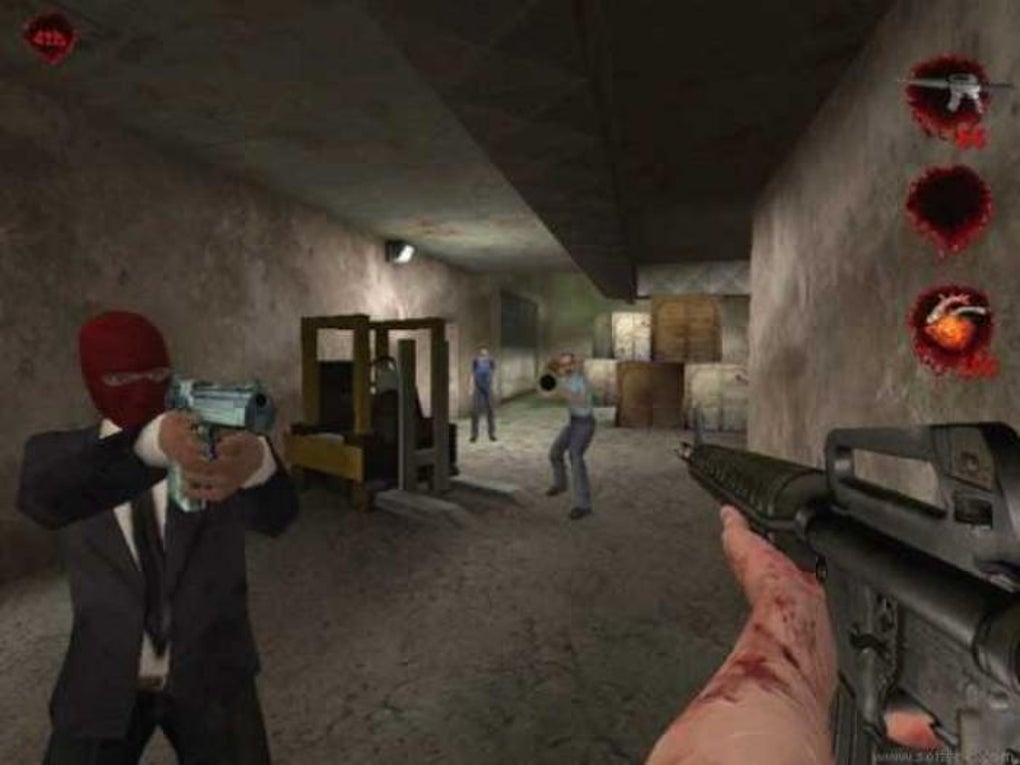
The weapon selection is as varied and bizarre as the game itself. Players have access to a wide arsenal, ranging from conventional firearms like pistols and shotguns to the more unusual, including a variety of explosive devices, melee weapons, and even the ability to use a cat as a makeshift silencer (a feature that highlights the game’s absurdist humor). The lack of realistic consequences for violence contributes to the anarchic gameplay experience. Unlike many games where aggressive actions have significant repercussions, in Postal 2, the consequences are largely minimal and often comedic.
The game’s graphics, by today’s standards, are dated. Even at the time of its release, the graphics were not cutting-edge, featuring low-resolution textures and somewhat clunky character models. However, this low-fidelity aesthetic contributes to the game’s overall unsettling atmosphere, accentuating the jarring contrast between the mundane setting and the hyper-violent actions within it. The game’s simplistic, yet oddly effective, visuals serve the purpose of delivering the intended tone effectively.
The core gameplay loop, while straightforward, is surprisingly engaging. The freedom to approach missions and interact with the world in violent or non-violent ways provides an element of replayability. Players can discover new ways to approach challenges and uncover hidden details in the game’s environment through repeated playthroughs. This encourages experimentation and fosters a sense of player agency rarely seen in games of its era, even if the overall execution often borders on gratuitous.
A Legacy of Controversy: Shock Value and Social Commentary
Postal 2’s release was met with a storm of controversy, fueled by its graphic violence, deeply offensive humor, and its provocative depiction of American culture. The game’s creators openly courted controversy, making it a focal point of the game’s marketing and appeal. The game’s subject matter, including its often gratuitous violence and insensitive satire, often pushes boundaries that even some hardened gamers may find uncomfortable. Some critics have suggested that the game revels in shock value, deliberately provoking outrage through its content. It is a game that does not shy away from taboo subjects.
However, others argue that the game’s controversial nature serves as social commentary, albeit a highly cynical and darkly comedic one. By pushing the boundaries of acceptable violence and offensive humor, the game aims to critique societal norms and values. The game’s setting, the dilapidated and ethically bankrupt town of Paradise, serves as a metaphor for various societal ills and the failings of modern civilization.
The game’s depiction of violence is not realistic or glamorous. It’s over-the-top and often absurd, designed to elicit disgust and uncomfortable laughter rather than excitement. The juxtaposition of mundane tasks with graphic violence is arguably a way to criticize the desensitization towards violence in modern society. While some may criticize this approach as crude and insensitive, it’s undeniable that it achieved its goal of sparking discussion and debate around the topics it addresses.
Humor and Satire: A Darkly Comedic Experience
Postal 2’s humor is undeniably dark, offensive, and often shocking. It relies heavily on taboo subjects, graphic violence, and politically incorrect stereotypes to elicit laughter. While this approach may alienate many players, it is a central element of the game’s identity. The game’s humor is not meant to be universally appealing, targeting a specific audience that appreciates its highly cynical and often disturbing brand of satire.
The game’s satire is multi-layered. It critiques various aspects of American culture, from consumerism and religious extremism to political correctness and social issues. The game uses excessive violence and offensive language as a means to satirize these elements, emphasizing the absurdity and hypocrisy of societal structures. The game often employs dark irony, juxtaposing graphic violence with everyday situations to create a surreal and darkly comedic effect. The humor is frequently reliant on shocking imagery and provocative themes to challenge the player’s comfort zone.
While the game’s humor is controversial, it’s undeniably effective in its own way. It fosters a unique, albeit unpleasant, gaming experience that remains engaging for those who appreciate its style. The game’s creators do not shy away from targeting sensitive issues and provoking emotional reactions, even if these reactions are frequently negative. The very nature of the humor is a form of social commentary, even if its effectiveness is subjective and debatable.
A Dated but Enduring Legacy
Postal 2, despite its age and outdated graphics, maintains a dedicated fanbase. Its unique blend of sandbox gameplay, over-the-top violence, and dark humor continues to resonate with certain players. The game’s longevity is partly due to its controversial nature, with its reputation often leading to renewed interest. Despite facing criticism for its graphics and questionable humor, the game’s open-world gameplay and freedom of action allow for numerous playthroughs and player experimentation.
The game’s enduring legacy stems from its ability to shock and provoke. In a gaming landscape often dominated by polished graphics and meticulously crafted narratives, Postal 2’s raw, unfiltered approach stands out. Its controversial nature has cemented its place in gaming history, even if it’s a place defined more by infamy than widespread critical acclaim. The game remains a testament to the power of controversial content in shaping gaming culture, even if it remains a game that will offend, shock, and ultimately, divide gamers. It is, ultimately, a game that gamers should approach with caution and a strong stomach.
File Information
- License: “Trial version”
- Version: “share-the-pain-demo”
- Latest update: “September 7, 2018”
- Platform: “Windows”
- OS: “Windows 98 SE”
- Language: “English”
- Downloads: “249.5K”
- Size: “163.40 MB”


