
Posteriza was a free Windows program that allowed users to create posters of virtually any size using their home printers. Released in 2007, it gained a considerable following, particularly in countries like Thailand, the United States, and Indonesia. While its functionality was basic compared to modern poster design software, its simplicity and lack of installation requirements made it an appealing option for casual users. This article explores Posteriza’s features, limitations, and its place in the history of readily accessible digital poster creation tools.
Posteriza’s Core Features: Simplicity and Accessibility
Posteriza’s main selling point was its ease of use. The software required no installation, eliminating the hassle of complex setup procedures and avoiding the creation of unnecessary files on the user’s system. This portability and ease of access made it readily available to users with less technical expertise. Users could simply run the executable file and immediately begin creating their posters.
Another key feature was its printer compatibility. Posteriza supported a wide range of Windows printers and could handle various paper sizes, including A4, A3, Folio, and Letter, as well as custom sizes. This flexibility allowed users to create posters of practically any dimension, even ones large enough to cover an entire wall, a significant advantage for those seeking large-format printing without specialized equipment.
The software provided a straightforward interface for incorporating various elements into the poster design. Users could easily incorporate text using any font installed on their system. Furthermore, they could use any image as a background, with support for BMP, JPEG, PNG, EMF, and GIF formats. The option to use only a portion of a photograph provided added design flexibility, allowing for creative cropping and composition. Predefined frame types and colors offered additional design options for those seeking a more structured layout.
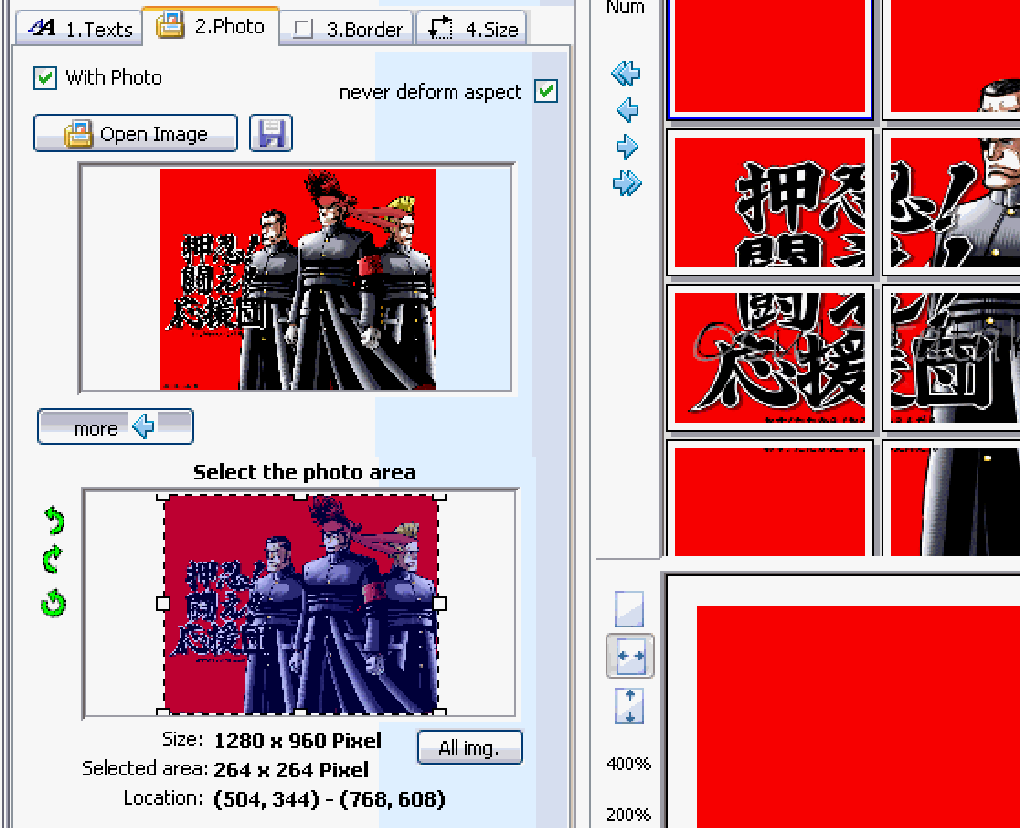
The absence of advanced features, such as sophisticated image editing tools, vector graphics capabilities, or layered design, was both a strength and a weakness. While this simplicity contributed to the program’s ease of use, it also limited its creative potential compared to more robust professional-grade software.
Limitations and Comparative Analysis
While Posteriza provided a convenient way to create simple posters, its limitations became apparent when compared to contemporary and subsequent poster-making software. The program lacked the advanced features found in professional design software, such as Adobe Photoshop or InDesign. These more advanced programs provided capabilities like precise control over image manipulation, vector graphics editing, text formatting options, and the ability to create multi-layered designs, resulting in far more sophisticated and visually appealing posters.
User reviews reflect the mixed feelings towards Posteriza. Many praised its simplicity and ease of use, highlighting its accessibility for non-technical users. However, several critics pointed to the software’s limited functionality and outdated interface as significant shortcomings. Some users specifically mentioned the lack of advanced features compared to alternatives such as RonyaSoft Poster Printer, which was cited as a superior option due to its updated features and improved functionality. This criticism points to Posteriza’s lack of development and updates after its release in 2007, leaving it behind the curve of evolving technology and design trends.
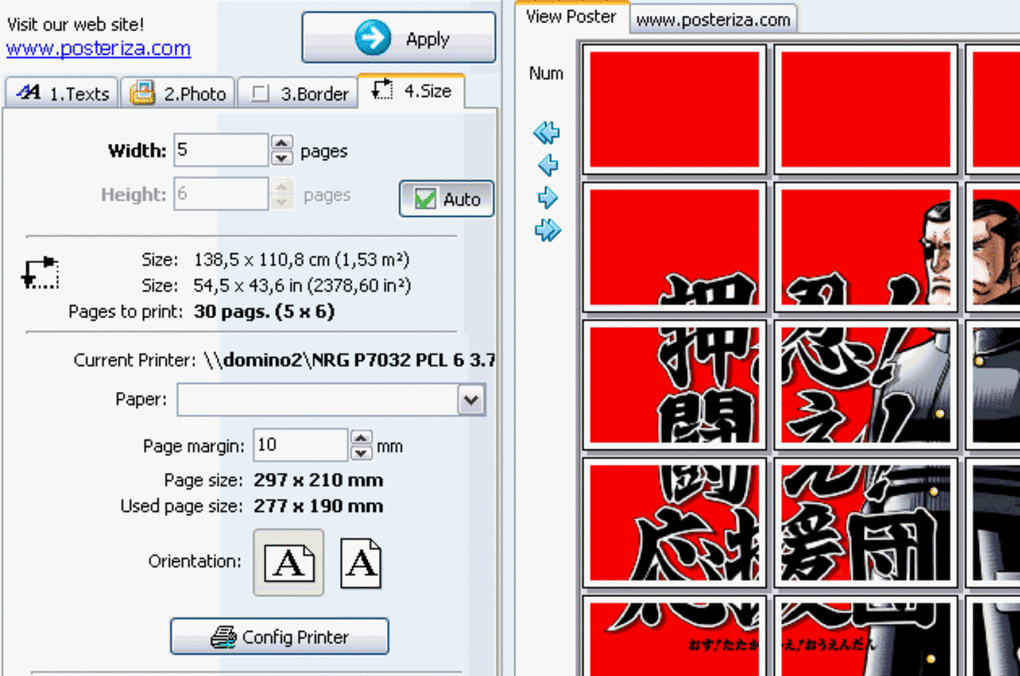
The lack of ongoing development severely hampered Posteriza’s long-term viability. As newer software with enhanced features and improved interfaces emerged, Posteriza’s limitations became increasingly pronounced, eventually rendering it less competitive in the market.
The Impact and Legacy of Posteriza
Despite its limitations, Posteriza played a role in democratizing poster creation. Its accessibility and ease of use made it possible for individuals without specialized design skills to create large-format prints using readily available home printers. The program filled a niche for users who needed a quick and simple way to create posters without the complexities and cost associated with professional software.
Posteriza’s legacy is primarily one of simplicity and accessibility in a time before the widespread availability of sophisticated and user-friendly online poster design tools. Its influence is less about revolutionary design features and more about providing a functional and easily accessible solution for a basic need. Its success, measured by its reported 500,991 downloads, points to a real demand for a user-friendly, no-frills poster creation tool during its active period.
The absence of updates and subsequent obsolescence underscores the rapid pace of technological advancement in software development. Software that once provided a viable solution may quickly become outdated and surpassed by more sophisticated alternatives, leaving a legacy more of a historical marker than a continuously relevant tool.
Posteriza in the Broader Context of Digital Poster Design
Posteriza’s existence highlights the evolving landscape of digital poster creation. Prior to the rise of widely accessible digital tools, creating posters often required specialized knowledge, access to professional printing services, or substantial investment in expensive software. Posteriza, in its simplicity, offered a way to bypass these barriers.
However, the evolution of digital design tools has since rendered Posteriza’s functionality somewhat obsolete. Today, numerous online platforms and software applications offer sophisticated poster design capabilities, often integrated with cloud-based printing services. These tools offer a far broader range of features, including collaborative design options, professional templates, and high-resolution image editing.
The proliferation of online tools has lowered the barrier to entry even further, making high-quality poster design more accessible to a wider audience. This readily available technology allows for more creative expression and professional-looking results without requiring specialized skills or expensive software investments.
In conclusion, Posteriza stands as a representative example of early digital poster creation tools. While its functionality was basic and its development ceased years ago, its simplicity and accessibility played a significant role in making poster creation more approachable for casual users during its active period. Its legacy lies not in technological innovation, but in its contribution to the democratization of digital poster creation in its time. Its eventual obsolescence highlights the rapid pace of technological change and the ongoing evolution of digital design tools.
File Information
- License: “Free”
- Version: “1.1.1”
- Latest update: “March 2, 2022”
- Platform: “Windows”
- OS: “Windows XP”
- Language: “English”
- Downloads: “40.5K”
- Size: “768.78 KB”


