In the vast and ever-evolving landscape of digital entertainment, where hyper-realistic graphics and sprawling open worlds often dominate headlines, there exists a unique charm in titles that dare to defy convention. “Press CRTL” is one such anomaly, an incremental strategy game that, at first glance, appears disarmingly simple, yet quickly reveals layers of intricate design and profound player engagement. Offered as a free download for Windows on platforms like PhanMemFree.org, this 8-bit gem, developed by Idan Rooze, invites players into a mesmerizing metagaming environment that challenges perceptions and rewards strategic thinking. It’s not merely a game to pass the time; it’s an exercise in focused concentration and an exploration of recursive control, all wrapped in a wonderfully minimalist package.
At its core, “Press CRTL” presents a refreshingly original premise: players control a character whose sole purpose is to control another character, with the ultimate objective of pressing an in-game “CTRL” button. This seemingly straightforward task quickly escalates into a multi-layered challenge, demanding constant participation and a keen understanding of cause-and-effect within its carefully constructed digital ecosystem. For those accustomed to the often-passive nature of traditional clicker or incremental games, “Press CRTL” offers a vibrant and active alternative, proving that compelling gameplay doesn’t always require a colossal budget or photorealistic textures.
Unraveling the Metagame: A Deep Dive into Press CRTL’s Mechanics
“Press CRTL” is more than just a game; it’s a metagame experience designed to challenge players’ understanding of control and consequence. The central conceit revolves around a recursive gameplay loop that is both the source of its addictive quality and its primary difficulty. Imagine a digital Russian doll, where each layer presents a smaller, mirrored version of the last, and your influence must ripple through them all to achieve a singular, seemingly simple goal.
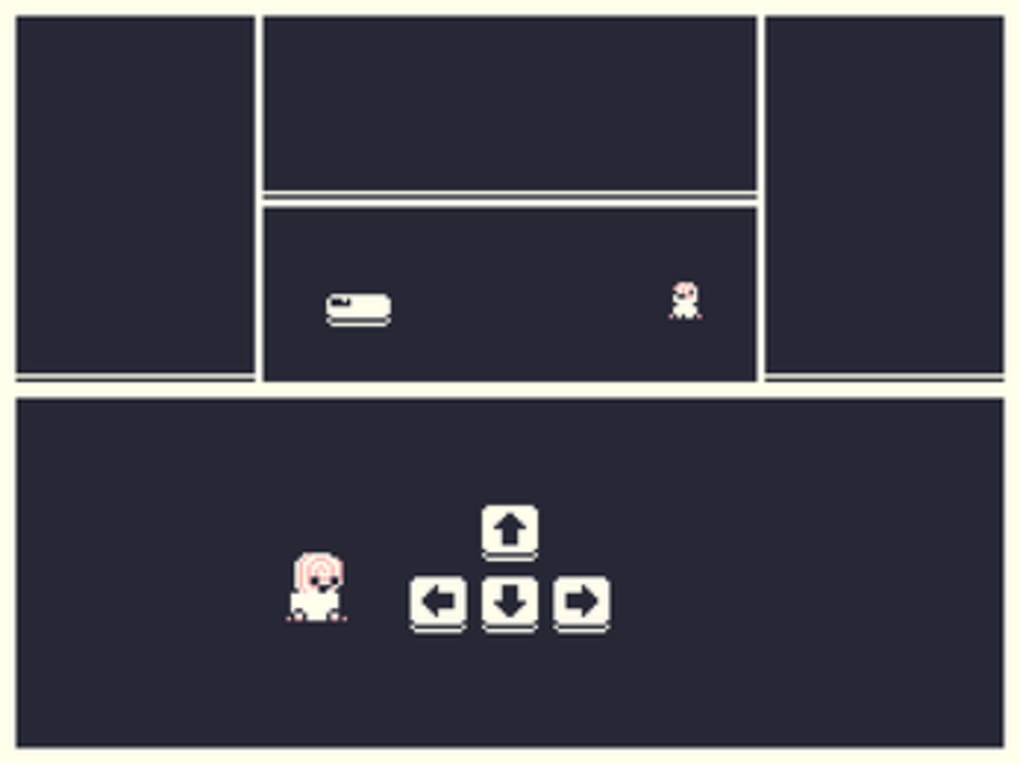
The game is structured across three distinct levels, each capable of spawning up to four successive layers. The journey begins with your avatar, positioned on the foremost layer. Your mission, should you choose to accept it, is to manipulate this initial character to interact with directional keys, which in turn guide a character on the next layer. This second character, in its own domain, must then perform actions that affect a character on the third layer, and so on, until the innermost character can finally reach and press the elusive “CTRL” button.
This escalating complexity is visually represented by a shrinking interface. As each new layer is introduced, it appears as a smaller iteration of the previous screen, creating a dizzying visual effect that mirrors the increasing cognitive load on the player. The directional keys, initially prominently displayed, are subsequently nested within these shrinking environments. This means that to control the character on the deepest layer, you must precisely guide the avatar on the outermost layer, which then translates your input through the intermediate avatars. The precision required for this cascade of controls is immense, transforming a simple button press into a multi-stage strategic endeavor.
The illusion of “infinite” layers, while constrained to a manageable maximum of four per round, is a powerful psychological tool. It instills a sense of deep progression and demands a strategy that anticipates multiple steps ahead. Players are forced to think in terms of a “domino effect,” where each input on the initial layer must be calibrated to trigger the correct sequence of movements across all subsequent layers. This intricate dance of indirect control distinguishes “Press CRTL” from the vast majority of incremental titles, which often rely on passive accumulation or repetitive clicking. Here, every click, every movement, is a deliberate strategic choice that contributes to a larger, complex chain reaction.
The Art of Incremental Strategy: Why Press CRTL Demands Your Attention
What elevates “Press CRTL” beyond a mere novelty is its unwavering demand for constant player participation and strategic foresight. Unlike many incremental games where progress is often achieved through passive accumulation of resources or automated clicks, “Press CRTL” insists on your active engagement at every single step. There’s no automation here, no idling to gain an advantage; only your direct, deliberate input can drive the game forward.
This makes “Press CRTL” inherently challenging, yet profoundly rewarding. The initial frustration of coordinating multiple indirect controls gives way to moments of pure satisfaction as a perfectly executed sequence sees the innermost character finally press “CTRL.” It’s a testament to the game’s intelligent design that despite its minimalist aesthetics and seemingly simple objective, it manages to cultivate such a deep sense of accomplishment. The learning curve is steep, but the internal logic of the game is impeccably consistent. For instance, the developer, Idan Rooze, has ensured that basic functionalities, like pressing the escape button to close the screen, work precisely as expected, removing any unnecessary friction from the player experience. This consistency allows players to focus solely on mastering the unique control scheme rather than wrestling with unintuitive interfaces.
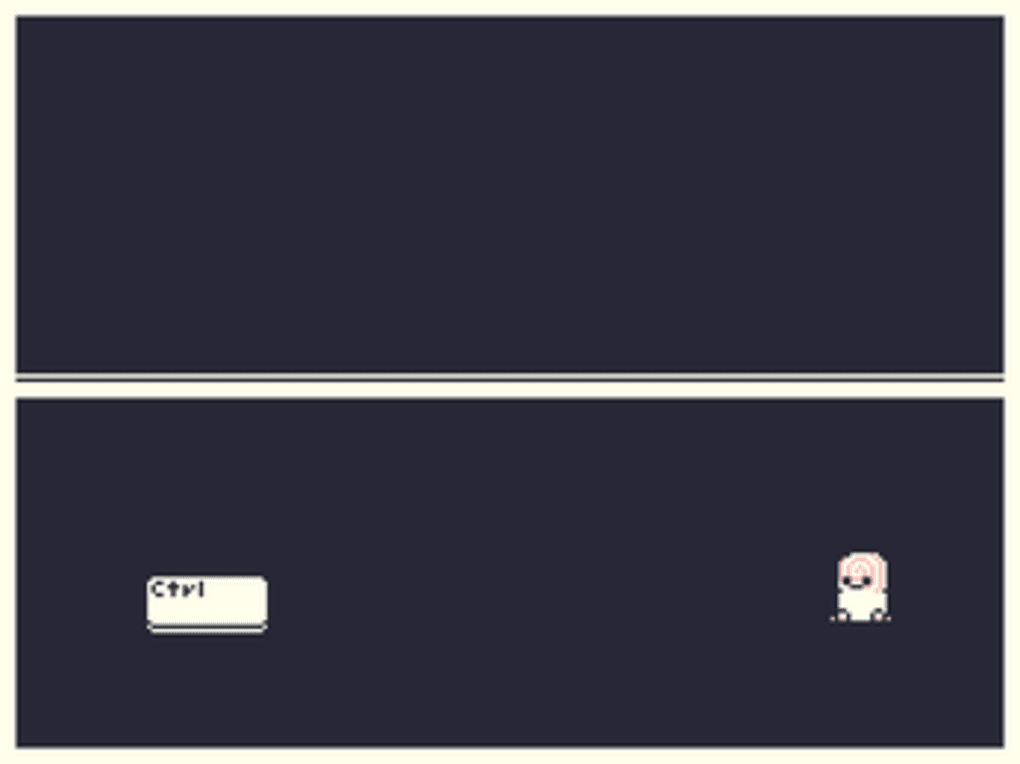
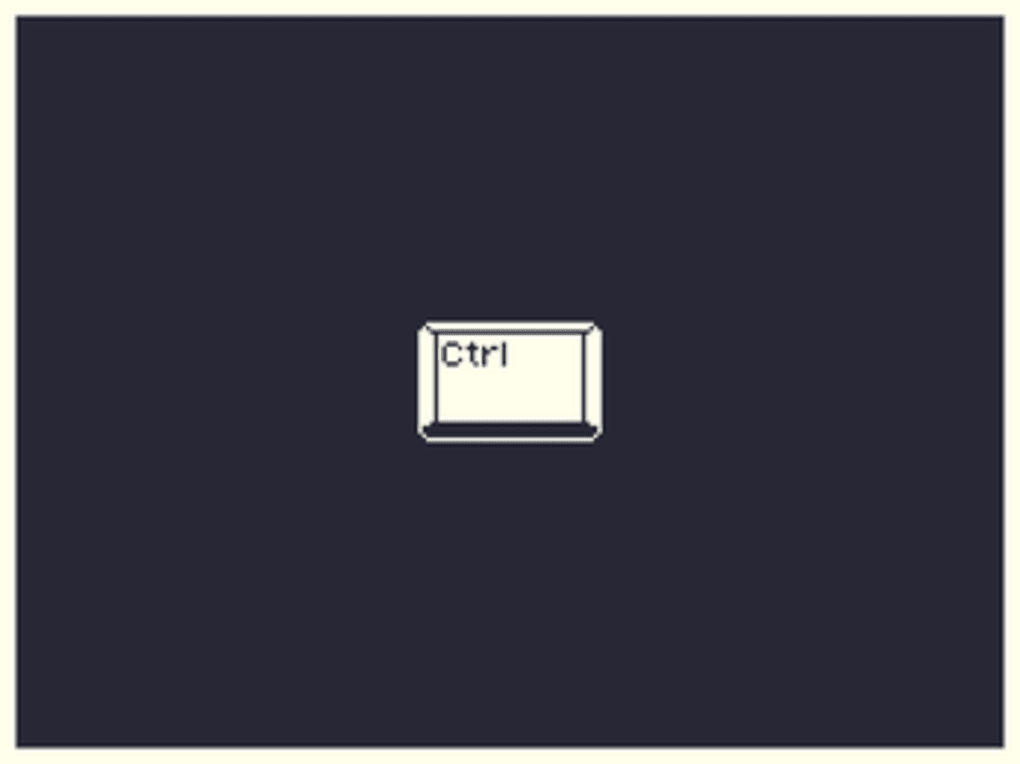
The strategy in “Press CRTL” isn’t about resource management or unit deployment; it’s about spatial reasoning, pattern recognition, and meticulous timing. Each level is a puzzle, and the solution lies in understanding how your actions on the outermost layer will propagate through the increasingly smaller iterations. The subtle animations, such as the initial “Ctrl” sequence at the beginning of each level and the clean title page, are prime examples of the developer’s philosophy of communicating ideas with minimum intervention. This deliberate scarcity of information forces players to observe, experiment, and ultimately deduce the mechanics for themselves, fostering a deeper connection with the gameplay.
The game’s inherent challenge, coupled with its consistent logic and direct feedback, creates a compelling loop. Players are continuously testing hypotheses about how their actions translate across layers, learning from each attempt, and refining their strategy. This active learning process, often absent in more conventional incremental titles, is what makes “Press CRTL” an engaging and truly unique entry in the strategy genre. It’s a game that respects the player’s intelligence, offering a complex problem within a simple framework, and trusting them to unravel its satisfying intricacies.
Behind the Pixels: The Vision of Idan Rooze and 8-Bit Design
The aesthetic choice of 8-bit graphics in “Press CRTL” is far from an arbitrary decision; it’s a fundamental aspect of its design philosophy, contributing significantly to its lightweight nature and broad accessibility. In an era where game development often chases photorealism and cutting-edge visual effects, Idan Rooze, the sole developer behind this intriguing title, opted for a simpler, more classic approach. This choice not only keeps the game file size remarkably small (a mere 22.24 MB), making it quick to download and easy on system resources, but also imbues it with a charming retro appeal that resonates with a wide audience.
The pixelated graphics serve a dual purpose: they evoke a sense of nostalgia for classic arcade and console games, and they ensure that the focus remains squarely on the innovative gameplay mechanics rather than visual spectacle. The simplicity of the visuals allows the intricate concept of recursive control and the shrinking layers to stand out more prominently. Smooth gameplay, even with the rapidly changing screens and diminishing interfaces, is maintained precisely because the graphical demands are minimal. This ensures that players can engage with the game repeatedly without experiencing lag or performance issues, a crucial factor for a title that demands precise input.
Idan Rooze’s approach to development is another fascinating element of “Press CRTL.” The fact that the game was built from scratch by one person speaks volumes about the dedication and clarity of vision involved. Furthermore, Rooze adopts a philosophy of “minimum intervention” in communicating his ideas. This means that while there are subtle cues, like the Ctrl animation at the start of each level or the game’s title page, the player is largely left to discover the game’s nuances through direct interaction. This hands-off approach encourages exploration and self-discovery, deepening the player’s connection to the game’s internal logic and strategic depth. It’s a design choice that respects the player’s intelligence and ability to adapt.
Perhaps one of the most remarkable aspects of “Press CRTL” is the direct line of communication players have with its creator. While not an open-source program, it stands out as one of the rare games where feedback and engagement with the developer are not only possible but encouraged. This direct channel fosters a sense of community and allows for a more personal relationship between the players and the game’s evolving identity, further cementing its unique position in the indie game landscape. This blend of nostalgic visuals, innovative mechanics, and accessible development underscores the thoughtful craftsmanship that went into creating “Press CRTL.”
The Broader Gaming Landscape: Where Press CRTL Stands
In a gaming world saturated with diverse experiences, “Press CRTL” carves out its own distinct niche. It resides within the expansive “Games” category on platforms like PhanMemFree.org, specifically finding its home amongst “Strategy” titles, but its unique mechanics also touch upon elements often found in “Arcade” and “Puzzle” games. While it might share the “incremental” tag with many clicker games, its demand for active, continuous participation and complex strategic planning sets it apart dramatically. Most incremental games allow for passive progress, where numbers tick up in the background, or involve simple, repetitive clicking. “Press CRTL,” however, demands your full cognitive engagement throughout its duration.
When we look at other popular “Strategy for Windows” games listed on PhanMemFree.org, such as “Plants vs. Zombies,” “Clash of Clans,” or “Cities: Skylines,” we see titles that focus on resource management, base building, or tactical combat. These games offer deep, long-form experiences with intricate systems and often feature sprawling narratives or competitive multiplayer elements. “Press CRTL” offers a different flavor of strategy – one that is intensely focused, cerebral, and short-form. Its strategy is not about managing armies or building empires, but about mastering a singular, recursive control scheme. This makes it an excellent palate cleanser for those fatigued by the grand scale of traditional strategy games, offering a concentrated dose of mental challenge.
The game’s 8-bit aesthetic also places it within the resurgence of retro-inspired independent games, appealing to both seasoned gamers nostalgic for the simplicity of early computing and newer players who appreciate the charm and accessibility of pixel art. Its lightweight nature (22.24 MB file size) and “Free” license make it an incredibly accessible entry point for anyone looking for something novel without committing to a hefty download or a purchase. This is a significant advantage in today’s crowded digital marketplace, where many games demand substantial hard drive space and monetary investment.
While “Press CRTL” is praised for its “unique, straightforward game mechanics” and “challenging yet rewarding gameplay,” it does carry the “Cons” label of “Short gameplay.” This characteristic, however, can be viewed from multiple perspectives. For some, a brief experience might be a drawback, especially when compared to strategy games that offer hundreds of hours of content. Yet, for others, its brevity is a strength. It makes the game a perfect fit for quick, intense sessions, ideal for breaks or when one desires a focused mental exercise without a long-term time commitment. Its concise nature ensures that the core mechanic doesn’t overstay its welcome, leaving players satisfied with a complete, albeit concentrated, experience. This intentional design choice, focusing on quality of engagement over sheer quantity, further distinguishes “Press CRTL” from the sprawling, open-ended titles that often dominate the gaming industry. It truly offers a unique, undiluted strategic challenge.
A Home for Digital Explorers: Discovering Games on PhanMemFree.org
For users seeking to unearth hidden gems like “Press CRTL” or explore a vast library of software, PhanMemFree.org (formerly known as Softonic.com) serves as a comprehensive digital hub. The platform meticulously categorizes its offerings, making navigation and discovery an intuitive process. Whether one is on the hunt for a specific utility or simply browsing for new experiences, PhanMemFree.org’s structured menu system acts as a reliable guide.
The “Games” section, where “Press CRTL” resides, is a testament to this organizational prowess. It doesn’t just list games; it breaks them down into granular genres, catering to every conceivable preference. From high-octane “Action” titles to mind-bending “Puzzle” games, strategic masterpieces like “Press CRTL,” immersive “Role Playing” adventures, and realistic “Simulation” experiences, the breadth is impressive. Users can delve into “Arcade” classics, engage in competitive “Board” or “Card” games, try their luck in “Casino” offerings, or find educational and family-friendly options. There are categories for “Music” games, “Racing” simulations, “Sports” challenges, and “Trivia” for the intellectually curious. Even “Word” games and practical “Utilities” for gaming are clearly demarcated, ensuring that whether you’re a casual player or a dedicated enthusiast, finding your next digital adventure is streamlined.
Beyond games, PhanMemFree.org extends its utility across a multitude of other essential software categories. The “AI” section, for instance, reflects the cutting edge of technology, offering everything from “AI Audio” and “AI Chat” tools to “AI Image Generator & Editor” and “AI Writing Assistant” software, catering to both creative professionals and productivity seekers. “Browsers” offers a selection of web navigators and “Add-Ons & Tools” to enhance online experiences. “Security & Privacy” is a robust category, providing crucial tools like “Antivirus,” “VPN,” “Password Management,” and “Firewalls” to safeguard digital lives.
For professionals and students alike, the “Productivity” section is invaluable, housing “Office Suites,” “Document Management” tools, “Project Management” software, and “Finance” applications. “Internet & Network” tools simplify online connectivity with “Download Managers” and “File Sharing” solutions. “Multimedia” caters to creative and entertainment needs, offering “Audio” and “Video” editors, “Graphic & Design” suites, and “Streaming Videos” applications. “Development & IT” provides essential tools for coders and IT professionals, from “IDEs/Source Editors” to “Programming Languages” and “Cloud Storage.”
The platform also supports diverse “Education & Reference” needs with “Books,” “Dictionaries,” and “Language & Translation” tools. “Lifestyle” applications cover everything from “Health & Fitness” to “Shopping” and “Travel & Navigation.” “Personalization” allows users to customize their digital environments with “Themes” and “Wallpaper,” while “Social & Communication” tools facilitate connection through “Chat & Instant Messaging” and “Social Networking.” Finally, the “Utilities & Tools” section acts as a catch-all for essential everyday software, including “File Managers,” “Data Recovery,” and “Screen Capture” utilities.
PhanMemFree.org’s commitment to accessibility is further evidenced by its support for multiple operating systems, allowing users to select software specifically for “Windows,” “Android,” “Mac,” and “IPhone” platforms. Moreover, the site is designed to serve a global audience, offering its interface and content in nearly two dozen languages, from Arabic to Chinese, German, Spanish, French, and Japanese. This multilingual support ensures that users from across the world can comfortably navigate and utilize the platform’s extensive resources. By providing a secure, organized, and globally accessible portal, PhanMemFree.org empowers users to discover, download, and engage with a wide spectrum of software, ensuring that unique titles like “Press CRTL” find their deserving audience.
In conclusion, “Press CRTL” is a remarkable example of how innovation in game design can flourish even within seemingly restrictive frameworks. Its 8-bit visuals, free availability, and modest file size belie a deeply engaging and intellectually stimulating experience. Idan Rooze’s meticulous design ensures a consistent, challenging, yet ultimately rewarding journey into recursive control. As a featured “Strategy” game on PhanMemFree.org, it stands as a testament to the platform’s ability to host and promote diverse software, from cutting-edge AI tools to nostalgic, thought-provoking indie games. For anyone seeking a truly unique strategic challenge that demands your full attention and rewards precise execution, “Press CRTL” is an essential download, easily accessible and ready to captivate on PhanMemFree.org.
File Information
- License: “Free”
- Version: “1.0”
- Latest update: “February 1, 2023”
- Platform: “Windows”
- OS: “Windows 8.1”
- Language: “English”
- Downloads: “1.6K”
- Size: “22.24 MB”