
In the annals of video game history, few titles resonate with the enduring appeal and profound impact of Prince of Persia. Originally released in 1989, this seminal platformer transcended the technological limitations of its era to deliver an experience that was both groundbreaking and deeply immersive. More than just a game, Prince of Persia became a cultural phenomenon, laying the groundwork for an entire genre and spawning a franchise that would captivate millions across generations. Its blend of a compelling narrative, innovative animation, challenging gameplay, and an atmosphere steeped in ancient Persian mystique solidified its place as an unforgettable classic, a charm it has managed to preserve even decades later.
The Dawn of a Legend: Plot and Groundbreaking Design
The enduring allure of Prince of Persia begins with its deceptively simple yet profoundly engaging premise. It’s a classic tale of heroism against overwhelming odds, set against a backdrop of tyranny and forbidden love. Players are immediately thrust into a high-stakes adventure where every second counts.
A Hero’s Perilous Quest
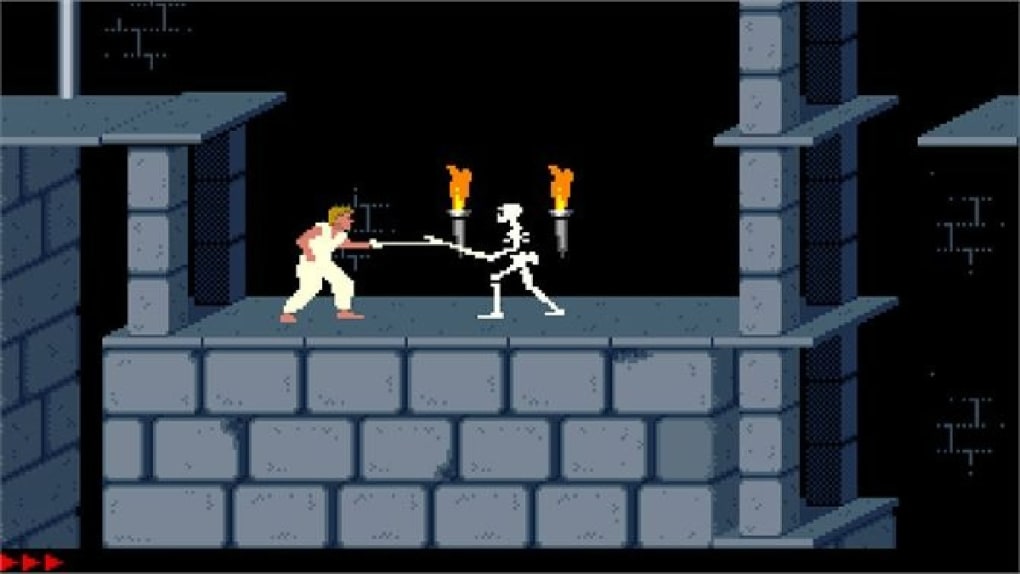
The storyline of Prince of Persia unfolds with an intriguing directness, drawing players into a desperate race against time. The narrative centers on a brave prince, a protagonist whose heroism is tested from the moment the game begins. He finds himself unjustly cast into the Sultan’s dungeons by the malicious Grand Vizier Jaffar. This vile sorcerer, consumed by ambition, schemes to seize power and force the Sultan’s beautiful daughter into an unwilling marriage. The young prince’s singular objective becomes clear: he has precisely one hour to escape his subterranean prison, navigate the treacherous palace, defeat Jaffar’s formidable guards, and ultimately confront the vizier himself to rescue the princess from her grim fate.
This seemingly straightforward storyline is, in fact, masterfully crafted to be replete with suspense and excitement. The ticking clock, the looming threat to the princess, and the constant peril faced by the prince create an urgent atmosphere that keeps players perpetually on edge. The narrative provides a powerful emotional hook, driving players forward through countless deaths and restarts, fueled by the desire to see the prince succeed and reunite with his beloved. It’s a testament to the game’s design that such a simple premise could yield such a rich and captivating experience, embedding itself deeply into the player’s imagination and pushing them to overcome every obstacle.
Visuals and Audio: Ahead of Its Time
For a game originally released in 1989, Prince of Persia reflected the absolute pinnacle of graphics and audio capabilities of its time, setting new benchmarks for visual realism and atmospheric design. Even for today’s audience, accustomed to hyper-realistic 3D worlds, the game’s aesthetic still manages to impress, primarily due to its revolutionary animation.
The most striking feature of Prince of Persia’s visual design is undoubtedly its smooth, almost uncannily realistic character movements. This was achieved through a pioneering technique known as rotoscoping, where animators traced over live-action film footage of human actors performing the required movements. The result was an unprecedented level of fluidity and naturalism in the protagonist’s actions, whether he was walking, running, jumping, climbing, or engaging in sword combat. Every step, every leap, every parry felt authentically human, contributing significantly to an immersive gaming experience that was unheard of in pixelated side-scrollers of the era. The meticulous background detailing further enhanced this immersion, transporting players directly into the ancient Persian world. Intricate tapestries, crumbling dungeons, ornate palace chambers, and perilous traps were rendered with careful attention, building a believable and dangerous environment for the prince’s adventure.
Complementing these groundbreaking visuals, the audio-visual elements of the game were equally effective in enhancing the overall gaming atmosphere. The sound design, though simple by modern standards, was strategically employed to heighten the tension and enrich the experience. The clang of swords, the ominous click of a pressure plate, the whirring of a guillotine, or the frantic beat of the prince’s heart (implied by the urgent music) all contributed to the feeling of imminent danger. The captivating background music, often a repetitive but atmospheric loop, successfully underscored the sense of urgency and mystery, pulling players deeper into the unfolding drama. These elements, working in concert, created a captivating and immersive gaming experience that continues to attract gamers, even decades after its initial release, proving that thoughtful design transcends mere graphical fidelity.
Unraveling the Mechanics: Puzzles, Peril, and a Ticking Clock
Prince of Persia is not merely a visual spectacle; its core strength lies in its meticulously crafted gameplay mechanics, which demand both nimble fingers and sharp wits. The game masterfully combines platforming precision with strategic problem-solving, all under the shadow of an unrelenting time limit.
The Gauntlet of Traps and Strategic Thinking
At its heart, Prince of Persia is a masterclass in challenging platforming and environmental puzzle design. Players are tasked with navigating through labyrinth-like levels that are less about brute force and more about timing, observation, and strategic thinking. The path to the princess is not a straightforward one; it is riddled with a wide array of deadly traps and intricate puzzles that require a keen eye and precise execution to overcome.
The game’s developers spared no effort in creating a varied and unforgiving gauntlet of obstacles. Players encounter treacherous spike pits that spring from the floor, requiring split-second jumps. Guillotines descend with terrifying speed, forcing the prince to dash or roll through narrow gaps. Floors crumble underfoot, demanding quick reflexes and forward planning to avoid a fatal plunge. Pressure plates activate hidden mechanisms, sometimes opening a door, sometimes triggering a trap in another part of the room, forcing players to remember layouts and anticipate consequences. Combat, too, is a puzzle in itself, requiring players to master parrying, lunging, and retreating against various sword-wielding guards, each with their own attack patterns.
Successfully traversing these levels requires more than just memorization; it demands a deep understanding of the prince’s movement capabilities and limitations. Players must learn to judge distances, calculate the precise moment for a jump, and even utilize potions – some to restore health, others to fall safely, and a few that are harmful – strategically. The game’s intricate level designs ensure that each stage provides unique challenges and situations, preventing the gameplay from becoming repetitive. This constant stream of novel obstacles keeps the experience exciting and unpredictable, fostering a satisfying sense of accomplishment when a particularly thorny segment is finally overcome. The interplay of movement, combat, and environmental hazards creates a deeply engaging loop, pushing players to their limits while rewarding their perseverance.
The Urgency of Time: A Race Against Destiny
Perhaps the most iconic and defining feature of Prince of Persia’s gameplay, adding an unparalleled layer of thrill and urgency, is the stringent one-hour time limit. From the moment the game begins, a clock starts ticking, reminding players that the princess’s fate, and indeed the prince’s own, hangs precariously in the balance. This finite window for completion elevates the stakes dramatically, transforming every mistake from a minor setback into a potentially catastrophic expenditure of precious seconds.
The time limit introduces a constant undercurrent of tension, compelling players to push forward relentlessly. It discourages aimless exploration and forces efficiency in problem-solving. While beginners might initially feel overwhelmed by this constraint, it quickly becomes an integral part of the game’s identity, shaping every decision and action. Should you cautiously explore a new path, risking valuable time, or dash forward, hoping to intuit the correct way? How many attempts can you afford on a particularly difficult jump before the clock runs out?
This urgency profoundly impacts the player’s approach to the game. It fosters a meticulous learning process, where players not only memorize trap layouts but also optimize their movement patterns to shave off vital seconds. The feeling of success when reaching a new checkpoint with mere moments to spare is immensely gratifying, while the frustration of seeing “Game Over” due to the clock, often just before a breakthrough, can be genuinely agonizing. However, this very frustration is what drives players to try again, to refine their strategy, and to master the challenging levels. The time limit ensures that every playthrough, even for seasoned players, maintains a high degree of intensity, making Prince of Persia a true test of not just skill, but also nerve and determination. It transforms the rescue mission into a pulse-pounding race against destiny, embedding the game firmly in the player’s memory.
The Enduring Challenge: Difficulty and Minor Hurdles
Prince of Persia, despite its captivating charm and innovative design, is widely renowned for its formidable difficulty. This challenging nature is a core component of its identity, offering both immense satisfaction and occasional frustration.
A Test of Skill and Perseverance
The game’s demanding nature stems from a potent combination of its intricate puzzles, deadly traps, and the unrelenting one-hour time limit. Players are not merely navigating through static environments; they are constantly strategizing to overcome obstacles within severe constraints. This level of challenge, while potentially daunting for newcomers, is precisely what forged Prince of Persia’s legendary status.
Every step, every jump, and every sword fight requires precision. Miscalculate a jump by a single pixel, and the prince might fall to his death. Hesitate for a moment too long, and a guillotine blade could sever his path. The combat system, though fluid, demands careful timing and understanding of enemy patterns. This high bar for execution means that players will die, often repeatedly, but each death serves as a brutal lesson, a stepping stone towards mastery. The satisfaction derived from finally clearing a particularly challenging room, or defeating a formidable guard, is immense and deeply rewarding. It’s a testament to the game’s design that this difficulty rarely feels unfair; rather, it encourages players to analyze, adapt, and refine their skills. For those dedicated enough to persevere, Prince of Persia provides a profound sense of accomplishment, cementing its place as a game that truly tests a player’s mettle and rewards their hard-earned proficiency. It’s an experience that cultivates patience, precision, and an unyielding will to succeed.
Navigating Control Quirks and Technical Glitches
While Prince of Persia’s design is celebrated, no game is entirely without its minor imperfections. In its various incarnations and modern app revivals, a few issues have been noted that, while relatively minor, can occasionally affect the gameplay experience.
One oft-cited aspect is the game’s sensitive controls. While designed to allow for the prince’s fluid and realistic movements, they can sometimes be a bit tricky to manage, particularly for players unaccustomed to the game’s specific rhythm and physics. Executing precise movements, especially during high-stakes platforming sequences where even a slight misstep can be fatal, requires a period of adaptation. This sensitivity, intended to create nuanced control, can sometimes lead to unintended actions or falls, adding an extra layer of challenge that might occasionally border on frustration. However, with practice, players typically grow accustomed to the control scheme, eventually mastering the prince’s acrobatic repertoire.
Additionally, some players, particularly with certain app versions or emulated experiences, have reported experiencing occasional freezes and crashes during gameplay. While not a constant occurrence, such disruptions can certainly break the game’s flow, interrupting moments of intense concentration or progress. These technical hiccups, though sporadic, can be jarring in a game where precise timing and continuous immersion are paramount. Nevertheless, it is crucial to contextualize these issues: they are relatively minor when weighed against the overwhelmingly enjoyable and historically significant gaming experience that Prince of Persia offers. For most fans, the enduring appeal of the game, its engaging story, impressive design, and compelling challenges far outweigh these infrequent technical drawbacks, solidifying its status as a timeless classic worthy of continued appreciation.
Beyond the Original: The Expanding Universe of Prince of Persia
The enduring success of the 1989 Prince of Persia was not merely a fleeting moment of glory; it was the genesis of a sprawling and influential franchise that would evolve dramatically over the subsequent decades. From its groundbreaking 2D origins to its ambitious forays into the third dimension, the Prince of Persia universe has continuously pushed boundaries and captivated new generations of gamers.
From 2D Pixels to 3D Grandeur: The Evolution of the Franchise
The original game’s revolutionary rotoscoped animation and innovative platforming mechanics set a high bar, but the series was far from content to rest on its laurels. As technology advanced, so too did the scope and ambition of Prince of Persia. Early sequels like Prince of Persia 2: The Shadow and the Flame (1993) expanded on the 2D formula with improved graphics and more complex narratives.
However, the leap to 3D in Prince of Persia 3D (1999) marked a significant, albeit challenging, transition. This title attempted to translate the classic platforming and combat into a new dimension, offering players the chance to “Play the classic Prince of Persia in 3D!” While ambitious, it highlighted the difficulties of porting intricate 2D mechanics into early 3D environments.
The true revitalization of the franchise in the 3D era came with Prince Of Persia The Sands Of Time (2003), which proved to be a critical and commercial darling. This game redefined the series for a modern audience, introducing innovative gameplay mechanics like the Dagger of Time, allowing players to rewind mistakes, a concept that was revolutionary at the time. It combined fluid acrobatic combat, intricate environmental puzzles, and a charming narrative, establishing a new benchmark for action-adventure games. The Sands of Time proved to be an “Advanced First-Person RPG for Personal Computers” in its sophisticated world-building and character progression, even if it was primarily a third-person action-adventure.
This success was followed by darker, more mature installments like Prince of Persia: Warrior Within (2004), described as a “Dark classic action adventure game.” This sequel leaned into a grittier aesthetic and more brutal combat, exploring themes of destiny and vengeance. Its sequel, Prince of Persia: The Two Thrones (2005), served as the “Last entry in The Sands of Time trilogy,” bringing a compelling conclusion to that particular storyline. Even Prince of Persia (2008), a standalone title with a distinct artistic direction and a focus on cooperative gameplay with an AI companion, offered “An Acrobatic Action Game with a Stunning Visual Overhaul.”
The continued evolution of the franchise demonstrates its adaptability and willingness to experiment, always striving to deliver fresh and engaging experiences while retaining the core essence of agile movement, challenging obstacles, and compelling storytelling that defined the original.
Enduring Appeal and Cultural Impact
The legacy of Prince of Persia extends far beyond its individual game iterations. Its profound cultural impact is evident in the countless games it inspired, the development techniques it pioneered, and the memories it forged for millions of players. The 1989 Prince of Persia app revives all the nostalgic memories and thrill of the original game for modern audiences, proving that its core appeal is timeless. Despite minor issues such as sensitive controls and sporadic crashes in certain adaptations, the app remains true to the original game’s spirit, delivering an enjoyable experience on various platforms.
The game’s influence on the platformer genre and action-adventure games is undeniable. Its focus on fluid character animation and environmental interaction laid the groundwork for many subsequent titles, demonstrating the potential for cinematic quality in video games. The sense of urgency created by the time limit, the intricate level design, and the satisfying sword combat all contributed to a formula that proved immensely popular and highly imitable.
Whether it’s the simple, elegant challenge of the original 2D classic or the sprawling narratives and advanced mechanics of its 3D successors, Prince of Persia has consistently offered engaging stories, impressive visuals (for their respective eras), and challenges that keep players glued to their screens. Its universal themes of heroism, sacrifice, and the fight against evil resonate deeply, making it a beloved franchise across diverse demographics.
For any fan of classic platformer games, or indeed anyone who appreciates the artistry and innovation that define great video games, the Prince of Persia series is indeed a must-have. It represents a journey from pixelated dungeons to grand 3D landscapes, a testament to enduring design principles and a lasting testament to the power of immersive storytelling in interactive entertainment. The prince’s journey is a reflection of the player’s own, a testament to perseverance, skill, and the timeless appeal of a truly captivating adventure. You can find more information about these titles and other great games on PhanMemFree.org, which provides reviews and download options, ensuring that the legacy of titles like Prince of Persia continues to reach new generations of gamers.
File Information
- License: “Trial version”
- Version: “1.1.82.0”
- Latest update: “December 14, 2023”
- Platform: “Windows”
- OS: “Windows 10”
- Language: “English”
- Downloads: “8.1K”


