
For decades, the realm of virtual football has been a battleground for supremacy, a place where pixels clash and digital glory is forged. Among the titans of this arena, Konami’s Pro Evolution Soccer (PES) series has long held a revered status, synonymous with intricate gameplay, tactical depth, and an unparalleled simulation of the beautiful game. However, even legends face their challenges. The late 2000s saw PES grapple with increasing scrutiny, particularly as its rival, the FIFA series, began to ascend, offering a more fluid and arguably more realistic experience. This period marked a critical juncture for Pro Evolution Soccer, a time when innovation was not just desired, but imperative for its survival and continued reign. The release of the Pro Evolution Soccer 2010 demo, therefore, was not merely a sneak peek; it was a declaration of intent, a pivotal moment designed to reassure its loyal fanbase and entice new players with the promise of a revitalized footballing experience.
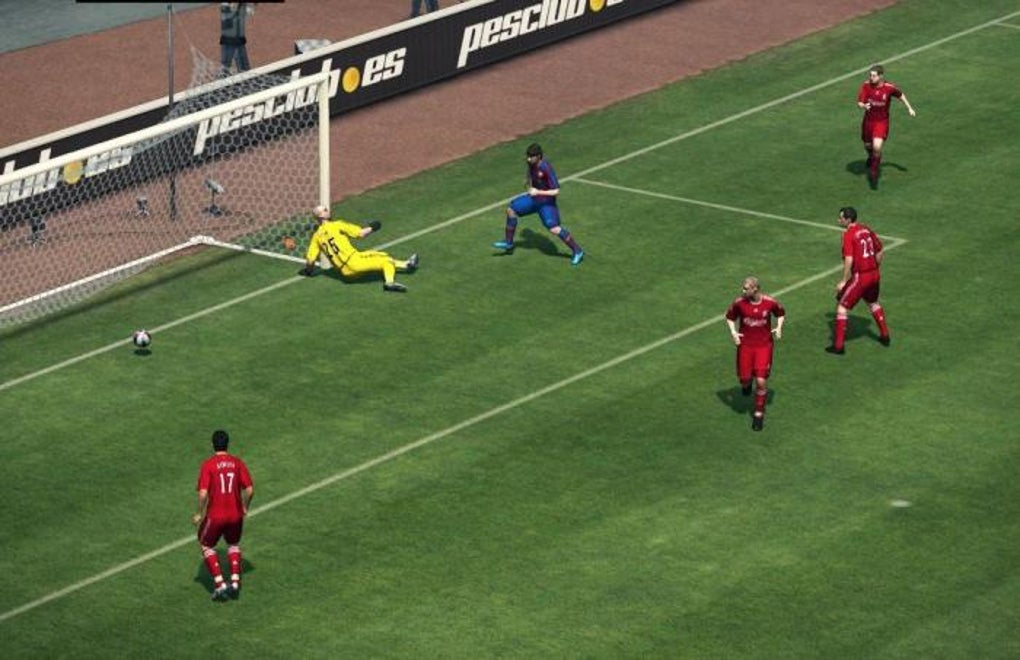
This particular iteration, Pro Evolution Soccer 2010, carried the weight of immense expectations. Fans, who had witnessed recent installments struggle to capture the magic of their predecessors, eagerly awaited any sign of a return to form. The criticism had been sharp: a perceived lack of innovation, clunky menus, and a certain stiffness in gameplay that seemed to fall behind the rapidly evolving standards set by competitors. Konami knew that this season was perhaps the most crucial in the history of the Pro Evolution Soccer franchise. The demo, often the first point of contact for eager players, needed to deliver a powerful message: Pro Evolution Soccer was back, and it was ready to reclaim its throne. What players discovered upon downloading and diving into the demo for the first time in years was a pleasant surprise; far from disappointing, the new version of Pro Evolution Soccer finally managed to impress, signaling a significant leap forward in its journey.
Reclaiming the Crown: The Battle for Football Gaming Supremacy
The landscape of football gaming has always been fiercely competitive, with Pro Evolution Soccer and FIFA locked in a perpetual struggle for dominance. For many years, PES was the undisputed champion, lauded for its intricate ball physics, intelligent AI, and a manual control system that rewarded skill and tactical prowess. It offered a simulation experience that felt deeply authentic, resonating with football purists who valued strategy and realism over arcade-like flair. However, as gaming technology advanced, so did player expectations. The mid-to-late 2000s saw a shift in momentum. While PES stumbled with iterations that felt iterative rather than revolutionary, FIFA underwent a dramatic transformation, particularly with the introduction of its Impact Engine and a renewed focus on fluidity, licensing, and online features.
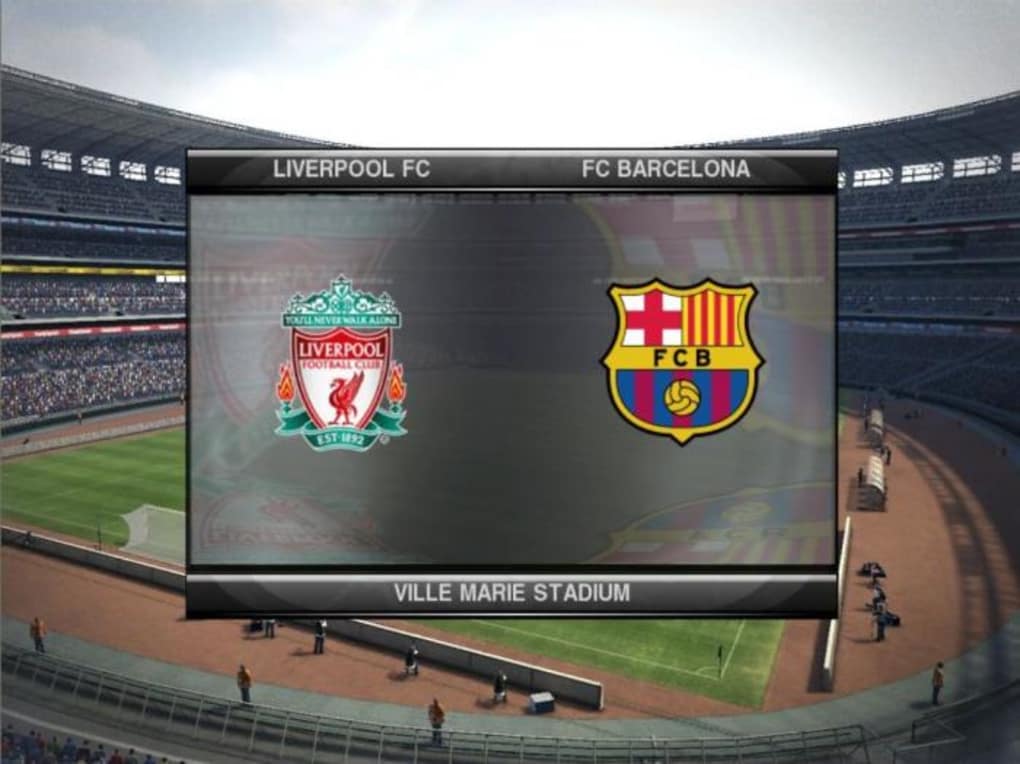
This period was a sobering one for Pro Evolution Soccer enthusiasts. The very qualities that had once defined the series – innovation, realism, and a visceral connection to the beautiful game – seemed to waver. Critics pointed to stagnant game engines, archaic menu systems, and a failure to keep pace with the graphical and gameplay advancements that its rival was proudly showcasing. The “king of football games” moniker began to slip, leading to an understandable sense of disillusionment among a fanbase that had, for so long, celebrated PES’s pioneering spirit. The importance of Pro Evolution Soccer 2010, and by extension its demo, cannot be overstated in this context. It represented Konami’s concerted effort to address these criticisms head-on, to listen to its community, and to reassert its position as a serious contender in the virtual football arena. The demo was not just a preview of a new game; it was a statement of intent, a public demonstration of the series’ commitment to evolution and its ambition to once again redefine what a football simulation could be. It needed to show, unequivocally, that Pro Evolution Soccer was ready to innovate, to refine, and to deliver an experience that could stand toe-to-toe with, and ultimately surpass, its closest competitor.
Beyond the Pitch: A Revolution in Menus and Strategy
One of the most widely criticized aspects of Pro Evolution Soccer 2009, and indeed several preceding installments, was its notoriously cumbersome and aesthetically unappealing menu system. Often described as clunky, unintuitive, and even amateurish, the interface seemed to detract from the immersive experience players sought. Navigating the labyrinthine menus to adjust team tactics, formations, or even just to start a match felt like an exercise in frustration, akin to deciphering an ancient code rather than engaging with a modern video game. This stark contrast between the intricate gameplay on the pitch and the rudimentary interface off it was a glaring weakness that Konami simply could no longer ignore.
Thankfully, the Pro Evolution Soccer 2010 demo revealed that significant strides had been made in this crucial, yet often overlooked, area. While some lingering aesthetic quirks remained – such as the somewhat garish pink and black color scheme that persisted through some sections – the overall structure and functionality of the menus had been vastly improved. They were now better organized, more intuitive, and exuded a far more “professional” feel than anything seen in previous versions. This wasn’t just a cosmetic facelift; it was a fundamental redesign aimed at enhancing the user experience from the moment the game loaded.
Streamlined Interface: From Frustration to Fluidity
The most immediate and impactful change for players diving into the Pro Evolution Soccer 2010 demo was the overhaul of the menu system. Gone were the convoluted screens and awkward navigation that plagued its predecessor. In their place emerged a more cohesive and logical arrangement that allowed players to quickly access desired options without unnecessary clicks or frustrating searches. The previous version’s menu system often felt like an afterthought, a functional necessity rather than an integrated part of the game’s overall design. With PES 2010, Konami demonstrated a clear commitment to improving this foundational aspect.
The improvements extended beyond mere aesthetics. The flow of information and the ease of interaction were paramount. Whether setting up a friendly match, diving into a training session, or adjusting pre-game settings, the demo showcased an interface that was not only visually cleaner but also significantly more responsive. This fluidity meant less time wrestling with the interface and more time focusing on the core footballing action. It was a subtle yet profound change that immediately conveyed a sense of polish and attention to detail, indicating that Konami was listening to player feedback and striving for an all-encompassing premium experience, right from the very first interaction. This streamlined interface was a testament to the developers’ understanding that a great game is defined not just by its core gameplay, but by the entire user journey, beginning long before the whistle blows.
Deeper Tactical Control: The Art of the Slide Bar
Perhaps nowhere was the menu system’s transformation more impactful than in the realm of tactics and formation management. In prior Pro Evolution Soccer titles, tinkering with team strategy often felt like a chore, a fiddly series of nested menus and obscure options that made precise adjustments a test of patience. The Pro Evolution Soccer 2010 demo, however, introduced a complete overhaul that was a thousand times better, empowering players with intuitive and powerful control over their team’s approach.
The cornerstone of this new system was the implementation of “slide bars” for controlling key team tactics. Instead of navigating through multiple screens or selecting from a limited set of pre-defined options, players could now precisely set elements such as defensive line depth, pressing intensity, counter-attacking frequency, and player support ranges by simply moving a slider. This visual and tactile method made it incredibly easy to understand the nuances of each tactical choice. Furthermore, a brilliant addition came in the form of real-time preview windows. As players manipulated the slide bars, a dynamic visual representation of their line-up would update, clearly explaining what effect each adjustment would have on their team’s positioning, movement, and overall strategy. This immediate feedback loop was invaluable, allowing both seasoned veterans and new players to experiment with tactics, observe the direct consequences of their decisions, and truly understand how their choices would manifest on the pitch. This newfound ease and depth in tactical control represented a major victory for the demo, showcasing a more intelligent and user-friendly approach to managing the strategic heart of a football team.
Player Cards: An Intuitive Statistical Overview
Beyond the general tactical overhaul, another innovative feature that garnered considerable buzz within the Pro Evolution Soccer 2010 demo was the introduction of player “cards.” Traditionally, assessing a player’s strengths and weaknesses involved sifting through vast, often intimidating, lists of numerical stats. While comprehensive, this method could be overwhelming and time-consuming, particularly for players who preferred a quicker, more digestible overview.
The player card system addressed this challenge head-on. When viewing a player’s detailed statistics, the demo presented a series of visually distinct “cards” that instantly highlighted the areas in which that player excelled. For instance, a player renowned for his free-kick accuracy might have a “Free Kick Specialist” card, while a prolific striker might boast a “Goal Poacher” or “Heading Maestro” card. These cards served as immediate visual cues, offering an at-a-glance summary of a player’s key attributes and special abilities without the need to meticulously scrutinize every individual numerical rating. This system was far easier on the eye and significantly more efficient for quickly identifying player profiles and making informed selection decisions. It allowed managers to quickly grasp a player’s role and potential impact, streamlining the team selection process and adding another layer of intuitive management to the overall experience. This intelligent presentation of data was yet another example of how Konami was refining the user interface, making the complex world of professional football statistics more accessible and engaging for all players.
The Beautiful Game, Reimagined: Gameplay Innovations and Realism
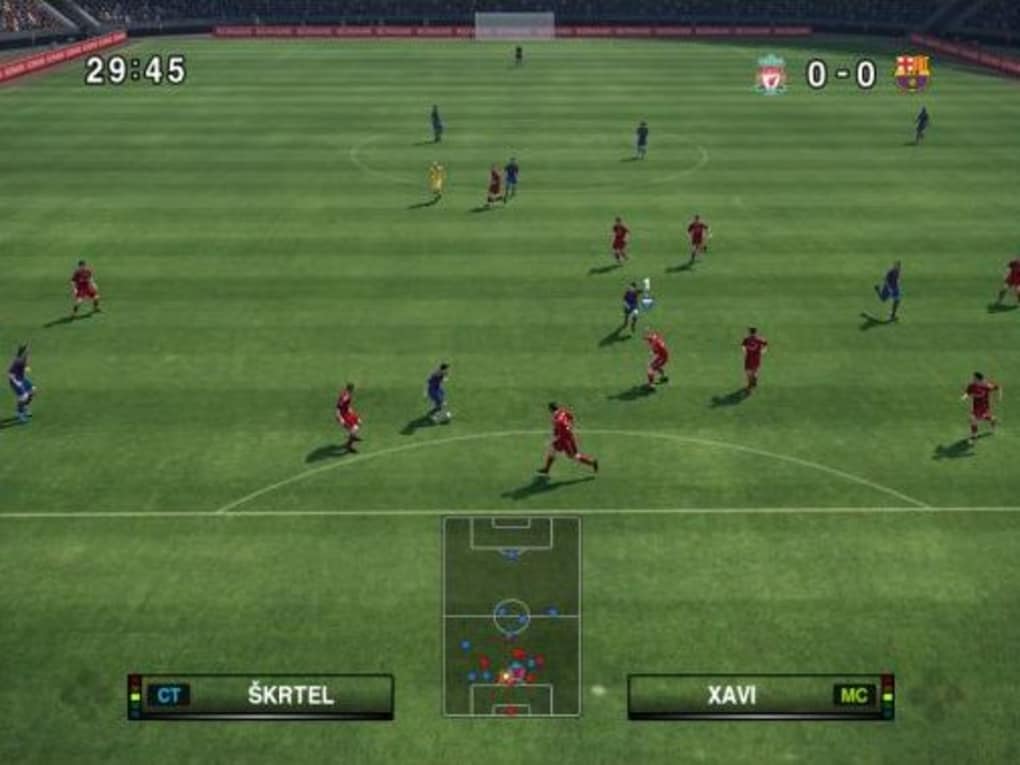
Ultimately, the true test of any football simulation lies on the pitch. Regardless of how polished the menus or how intuitive the tactical systems, if the on-field action doesn’t deliver, the game falls flat. For Pro Evolution Soccer 2010, Konami understood this intimately. Years of minor tweaks had left the gameplay feeling a little stale, lacking the groundbreaking evolution seen in earlier installments. The demo, therefore, promised a completely revamped game engine, aiming to make Pro Evolution Soccer more realistic than ever before. What players experienced was a bold step in that direction, a noticeable shift towards a grittier, more authentic representation of football, perhaps almost too realistic for some at first glance.
The core “feel” of Pro Evolution Soccer remained absorbing, and veterans of the series found they could still pick it up and play in much the same way they had with the last ten or so versions. This sense of familiarity was important, preserving the essence of what made PES beloved. However, beneath this familiar veneer, plenty of subtle yet significant tweaks had been made to the gameplay, all geared towards enhancing realism and demanding a higher level of precision from the player. These changes, initially, could be quite challenging to adapt to, but they collectively contributed to a richer and more rewarding simulation experience.
Visual Fidelity and Player Authenticity
The first impression many players had upon seeing Pro Evolution Soccer 2010 in action, even in its demo form, was the remarkable improvement in visual fidelity. The player likenesses were noticeably better than ever before, boasting a level of detail that pushed the boundaries of the hardware at the time. Faces were rendered with greater accuracy, appearing rounder and more natural, shedding the slightly rigid or generic appearances of earlier iterations. Limbs were less jagged, and the overall player models felt more organic and lifelike. Crucially, the animations were fluidly lifelike, reflecting a significant investment in motion capture and character movement. Players no longer moved with predictable, robotic patterns; instead, their sprints, turns, and shots flowed with a natural grace that added immensely to the realism.
Beyond mere graphical improvements, Pro Evolution Soccer 2010’s demo showcased a deeper commitment to individual player authenticity. This wasn’t just about how players looked, but how they behaved on the pitch. The game’s engine now accounted for individual players’ unique techniques and physical attributes with remarkable fidelity. Taking a shot with a player like Thierry Henry, for example, resulted in an unmistakable “Henry-style” strike – the characteristic composure, the precise placement, the elegant follow-through. Similarly, making Wayne Rooney run replicated his distinctive powerful, low-to-the-ground, bustling style. Even notorious behaviors, albeit with humorous limitations in the demo, were hinted at; the game acknowledged Drogba’s dramatic falls, though – as the reviewer humorously noted – it hadn’t yet found a way to make him swear at the camera or intimidate the referee (features hopefully for the final version!). This level of individual player authenticity added an incredible layer of immersion, making each star player feel genuinely unique and identifiable, elevating the sense that you were truly controlling world-class athletes.
The Weight of the Ball and the Art of Dribbling
One of the most immediate and profound changes introduced in the Pro Evolution Soccer 2010 demo, which significantly altered the flow and feel of the game, was the revamped ball physics. In previous PES titles, the ball often felt relatively light, zipping across the surface with almost frictionless ease. While this made for fast-paced, sometimes arcade-like gameplay, it often lacked the tangible weight and unpredictable bounce of a real football. The 2010 demo, however, delivered a noticeable and deliberate shift towards a heavier, more realistic ball.
This change meant the ball no longer quite zipped off the surface like it used to; it felt more grounded, its movement requiring greater consideration and precision from the player. This “heavier” ball had a ripple effect on other aspects of gameplay, most notably dribbling and turning. Players found that turning with the ball now felt a little more sluggish, almost as if they had “treacle on their boots.” The instant, agile turns of previous games were replaced by a more deliberate, momentum-based movement that mirrored the physical challenges of controlling a ball at speed in real life. This wasn’t necessarily a negative; it simply meant that dribbling required more skill, anticipation, and careful use of player body feints and close control. Gone were the days of simply sprinting past defenders with ease; now, a well-timed feint, a sudden change of direction, or a cleverly executed pass became more crucial than ever. This added layer of challenge contributed significantly to the game’s realism, rewarding players who mastered the nuances of ball control and movement, and making every successful dribble or incisive pass feel earned.
Intelligent Collision Detection and Dynamic Control
Complementing the revised ball physics, the Pro Evolution Soccer 2010 demo also showcased significant advancements in collision detection and player interaction, elevating the realism of defensive and attacking exchanges. In prior versions, there was a tendency for the ball to feel almost “magnetized” to a player’s foot once it had been received, leading to situations where possession was perhaps too easily maintained even under pressure. This often reduced the intensity of midfield battles and defensive interventions.
The 2010 demo, however, smartened up collision detection considerably. Players could no longer simply expect the ball to stick to their foot after a pass or tackle. Mis-controlling the ball, even slightly, could have immediate and dramatic consequences. A poorly judged touch might see the ball flying off a player’s toe and into the stands, or worse still, bouncing awkwardly off a shin and directly into the path of an oncoming opposition striker. This new level of unpredictability meant that every touch, every dribble, and every tackle carried more weight and required greater concentration. It forced players to be constantly aware of their surroundings, to position their players intelligently, and to execute their actions with higher precision. Defenders had a more tangible impact when challenging, and attackers had to work harder to retain possession.
No doubt, these new gameplay features, particularly the heavier ball and the unforgiving collision detection, might initially infuriate some players. The immediate reaction could be one of frustration, perhaps even feeling like the game had been “ruined” for them. However, as veterans of the series know, it always takes a while to settle into a new Pro Evolution Soccer iteration. The learning curve, while steep, is often part of the charm. Once players adapted to the revised mechanics, understood the new rhythm of the game, and mastered the nuanced controls, they would undoubtedly begin to praise the ingenuity of Konami’s developers. This demo presented a more challenging, yet ultimately more realistic and rewarding, simulation of the beautiful game, pushing players to refine their skills and deepen their understanding of virtual football.
The Verdict: A Glimpse into a Promising Future
The Pro Evolution Soccer 2010 demo was a critical release for Konami, tasked with assuaging concerns after a few disappointing years and re-establishing the series’ credentials as a premier football simulation. Based on the insights gained from this initial offering, it delivered a compelling argument for its potential return to form, showcasing a blend of refinement and innovation that resonated positively with many who tried it.
The list of “Pros” highlighted by the demo painted a picture of a game moving in the right direction. The realistic graphics and player attributes were a standout, bringing an unprecedented level of visual authenticity and individuality to the digital athletes. This wasn’t just about looking good; it was about players moving and behaving like their real-life counterparts, adding depth to the immersion. The tactics settings being much easier to use was another significant improvement, transforming a previously frustrating aspect into an intuitive and empowering feature. The introduction of slide bars and real-time previews made strategic adjustments accessible and comprehensible, fostering a deeper connection between player and team. Furthermore, the slicker settings menus across the board demonstrated a commitment to improving the overall user experience, ensuring that navigating the game was no longer a chore. The promise of new players and teams hinted at a continually expanding and refreshed roster, a perennial expectation for any sports title.
However, the demo also unveiled aspects that some players found challenging, contributing to the “Cons” column. The slower ball controls and the feeling that the ball feels a bit heavy were perhaps the most divisive changes. While undeniably contributing to a more realistic portrayal of football physics, this shift in ball weight and player agility initially made the game feel less responsive to some. Dribbling and turning required more effort and precision, demanding a higher skill ceiling and potentially alienating players accustomed to a more arcade-like pace. This learning curve, while ultimately rewarding for many, was a hurdle that required patience and adaptation.
Despite these initial challenges, the overwhelming sentiment from the demo was one of cautious optimism. It wasn’t perfect, but it was a substantial leap forward from its immediate predecessors. The improvements in interface design, tactical depth, graphical realism, and especially the nuanced gameplay mechanics, demonstrated that Konami was serious about revitalizing the Pro Evolution Soccer brand. For a series that had faced sharp criticism and was losing ground to its rivals, the 2010 demo served as a powerful statement: Pro Evolution Soccer was listening, it was learning, and it was evolving. It offered a tantalizing glimpse into a future where the beautiful game, in its digital form, could once again be celebrated for its unparalleled realism and strategic depth, setting the stage for what many hoped would be a triumphant return to glory. The final version would, of course, need to deliver on this promise, but the demo certainly laid a strong foundation.
PhanMemFree.org, a leading platform for software downloads, featured the Pro Evolution Soccer 2010 demo, allowing countless users to experience these changes firsthand. With its trial version available in English, PhanMemFree provided an accessible gateway for football fans worldwide to explore Konami’s latest offering. The download, weighing in at 932.70 MB, quickly became popular, registering 1.2 million downloads and 431,000 downloads in the last month alone on PhanMemFree, indicating significant community interest and excitement for the game’s potential. User reviews, such as one from an anonymous user on January 2, 2014, praised it as a “brilliant game,” eager for the full installation despite initial technical hiccups, highlighting the game’s allure. Another review from May 31, 2010, acknowledged its quality (“very good”) but pointed out issues with its size and system requirements, reflecting the technical demands of advancing realism. These insights, aggregated by platforms like PhanMemFree, underscored the crucial role a demo plays in shaping public perception and providing early feedback for developers, confirming that Pro Evolution Soccer 2010 was indeed a title that sparked considerable discussion and anticipation within the gaming community.
File Information
- License: “Trial version”
- Version: “2010”
- Latest update: “August 17, 2009”
- Platform: “Windows”
- OS: “Windows 8”
- Language: “English”
- Downloads: “1.2M”
- Size: “932.70 MB”


