
Project Playtime, a free-to-play puzzle game developed by Visible Actions, plunges players into the chilling atmosphere of an abandoned toy factory. This survival horror experience invites you to don the iconic GrabPack, a robotic backpack with extendable manipulators, and navigate a treacherous environment teeming with monstrous creations. The game tasks you with solving intricate puzzles while simultaneously evading the lurking dangers within the factory’s dilapidated halls, facing threats reminiscent of the popular Huggy Wuggy and his unsettling companions.
While immediately evoking comparisons to the acclaimed Poppy Playtime franchise, particularly its first chapter’s mobile port by MOB Entertainment, Project Playtime distinguishes itself through a completely original map and a unique set of puzzles. This sets it apart from similar titles such as Poppy Playtime Huggy Wuggy and Poppy Playtime: Chapter 2, offering players a fresh, albeit derivative, horror-puzzle experience.
Gameplay and Mechanics: A Familiar Formula
Project Playtime adheres to a familiar formula established by its inspirational predecessor. The gameplay unfolds as a linear adventure, guiding the player through a series of interconnected areas within the toy factory. The core mechanic involves solving environmental puzzles, often requiring clever utilization of the GrabPack’s versatile abilities. The GrabPack, a prominent feature of both games, acts as a crucial tool for manipulating objects, reaching otherwise inaccessible areas, and powering mechanisms scattered throughout the factory. It allows players to grapple, pull, push, and interact with the environment in novel ways necessary to progress.
This reliance on puzzle-solving is interspersed with moments of intense evasion, forcing players to flee from the factory’s menacing inhabitants. The game expertly balances these two core gameplay elements, creating a thrilling blend of strategic thinking and frantic escape sequences. The overall design of the game, from its user interface and level aesthetics to the appearance of its antagonists, clearly draws inspiration from Poppy Playtime. While undeniably derivative in its presentation, this homage doesn’t detract entirely from the game’s overall execution. The game’s assets are rendered with impressive fidelity, creating a visually engaging experience. Even within the relatively short playtime, the game’s in-game elements function flawlessly, further enhancing the player experience. This visual polish is complemented by intuitive controls, making the game accessible to a broad audience.
Visuals and Technical Aspects: A Polished Presentation
.webp)
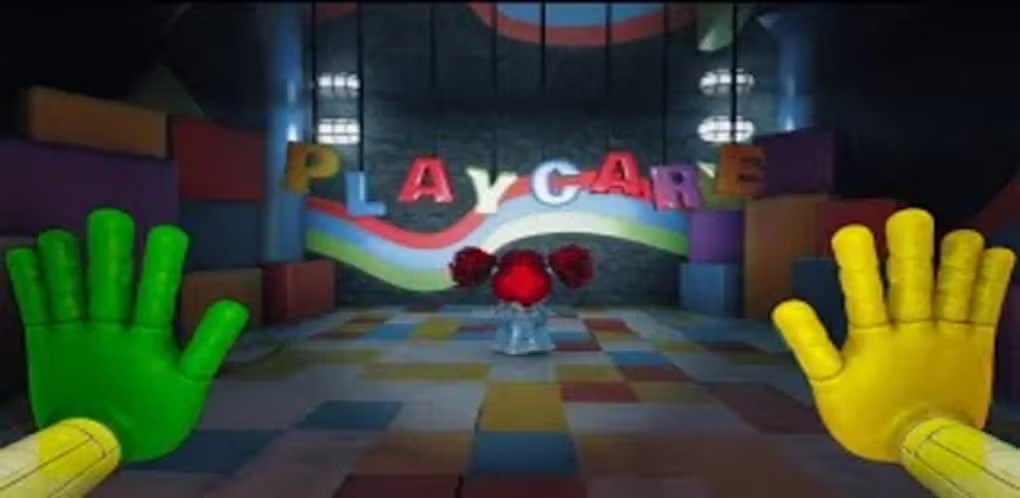
One of Project Playtime’s most commendable aspects is its visual execution. The game achieves remarkably high-quality visuals for a mobile title, especially considering its free-to-play nature. The environments are detailed and atmospheric, effectively capturing the unsettling mood of an abandoned and derelict toy factory. The character models, despite their familiarity to Poppy Playtime fans, are well-rendered and contribute to the game’s overall eerie aesthetic. The visual elements and level designs are generally well-optimized, maintaining a relatively smooth framerate even on less powerful mobile devices. This, paired with its intuitive controls, contributes to a largely positive player experience, at least until the intrusive advertisements become unavoidable.
The Crushing Weight of Advertisements: A Major Flaw
Unfortunately, Project Playtime suffers from a significant drawback: an overwhelming amount of advertising. The frequency and intrusiveness of the ads significantly hamper the overall enjoyment of the game. Players are bombarded with full-screen ads upon completing levels, and upon failing. Adding insult to injury, many of these ads are unskippable, forcing players to endure long, unwanted interruptions to their gameplay. Furthermore, random advertisements appear seemingly at any moment, further disrupting the flow of the experience. This relentless barrage of advertising is arguably the most significant criticism of the game. It fundamentally detracts from the otherwise competent gameplay experience.
.webp)
Lack of a Satisfying Conclusion: A Short Lived Adventure
Another significant issue is the game’s abrupt and unsatisfying ending. The game simply cuts off, returning the player to the title screen without any sense of closure or resolution. This lack of a proper ending leaves players feeling cheated, as if they have only experienced a small fragment of a much larger, potentially more compelling narrative. The premature ending leaves a lingering feeling of incompleteness, detracting from the overall experience and leaving players wanting more. The overall feeling is that of a demo rather than a complete game.
Project Playtime’s Strengths and Weaknesses: A Balanced Perspective
In summary, Project Playtime presents a mixed bag of strengths and weaknesses. On the positive side, the game boasts impressive visuals for a mobile title, faithful to the style and atmosphere of its clear inspiration. The puzzles are generally well-designed and challenging, providing a satisfying sense of accomplishment upon completion. The integration of the GrabPack mechanic, while derivative, is implemented smoothly and contributes to the overall gameplay experience. The intuitive controls ensure accessibility across a wide range of players. However, the relentless barrage of intrusive and often unskippable ads significantly detracts from the game. The absence of a proper ending further diminishes the overall enjoyment.
Pros:
- Excellent visual execution, capturing the unsettling atmosphere of an abandoned toy factory.
- Intuitive controls that make the game easy to learn and play.
- Well-designed puzzles that provide a satisfying challenge.
- A faithful recreation of the style and feel of its inspiration, without being a direct copy.
Cons:
- Heavily reliant on an unoriginal concept, drawing heavily from established titles.
- Overabundance of intrusive and often unskippable advertisements.
- Lack of a proper ending, resulting in an unsatisfying conclusion to the gameplay.
Conclusion: A Potentially Great Game Held Back
Project Playtime demonstrates considerable potential, showcasing impressive visuals and engaging gameplay mechanics. However, the game is severely hampered by its intrusive advertising and abrupt ending. While the visual fidelity and puzzle design are commendable, these strengths are ultimately overshadowed by the frustrating ad experience and the lack of a fulfilling conclusion. If the developers were to address the issue of excessive advertising and provide a more satisfying conclusion, Project Playtime could undoubtedly transform into a significantly more enjoyable and rewarding gaming experience. As it stands, it’s a decent but flawed attempt at recreating a popular formula within the mobile gaming landscape, leaving the overall impression of a promising but ultimately incomplete and frustrating game. The game is a visually engaging puzzle-solving experience, but the ads completely undermine any enjoyment the game could provide. Therefore, until significant improvements are made, it is difficult to recommend Project Playtime without significant reservations.
File Information
- License: “Free”
- Version: “1.0”
- Latest update: “May 15, 2025”
- Platform: “Android”
- OS: “Android 9.0”
- Language: “English”
- Downloads: “183.9K”
- Size: “82.39 MB”
- Download Options: “APK, Google Play”
- Filename: “Project_Playtime_1.apk”


