
The academic world, a realm of relentless pursuit of knowledge and groundbreaking discoveries, operates under a seemingly simple yet profoundly impactful principle: publish or perish. This adage encapsulates the pressure faced by researchers, professors, and students to consistently produce and disseminate scholarly work to maintain their standing within the competitive landscape of academia. The “publish” aspect is not merely about creating content; it involves rigorous research, meticulous writing, and navigating the often-complex processes of peer review and journal publication. The “perish” aspect, while dramatic, highlights the very real consequences of failing to meet these expectations, ranging from difficulty in securing grants and promotions to the ultimate loss of a position. This article explores the intricacies of the “publish or perish” culture, examining its impact on academic research, the tools available to manage and analyze this prolific output, and the broader implications for the advancement of knowledge.
The Pressure Cooker of Academic Publication
The “publish or perish” phenomenon is deeply ingrained in the fabric of academic life. Its roots lie in the competitive nature of securing research funding, obtaining tenure, and advancing professionally. Universities and research institutions, in their pursuit of prestige and recognition, often prioritize the quantity and quality of publications generated by their faculty and students. This emphasis on metrics has led to an environment where researchers are under constant pressure to produce a steady stream of publications, often at the expense of other crucial aspects of their work, such as teaching, mentoring, and collaborative research.
The pressure to publish extends beyond the individual level. Departments and entire institutions are often evaluated based on their research output, using metrics such as the number of publications, citation counts, and impact factors. This creates a cascade effect, where individual researchers feel compelled to prioritize publishing to contribute to their institution’s overall success. The result is a highly competitive environment where researchers must constantly strive to stay ahead of the curve, vying for limited funding opportunities and prestigious publication venues. This intense pressure can lead to a range of negative consequences, impacting both the quality and ethics of research.
One of the primary concerns is the potential for “research misconduct,” encompassing a variety of actions including data fabrication, plagiarism, and salami slicing (breaking down a single research project into multiple publications to inflate publication numbers). While not all researchers succumb to these pressures, the intense competition creates an environment where such behaviors become more tempting. Furthermore, the focus on publication quantity can detract from the quality of research, incentivizing researchers to prioritize speed and output over thoroughness and rigor. A rush to publish may lead to poorly designed studies, inadequate data analysis, and rushed conclusions that lack the necessary depth and nuance.
The “publish or perish” culture also affects the diversity and inclusivity of academic research. Researchers from underrepresented groups may face disproportionate challenges in navigating the complexities of the academic publishing system, leading to lower publication rates and reduced visibility. Addressing this requires systemic changes, not just individual efforts, to create more equitable and accessible pathways to publishing success.
Citation Analysis Tools: Navigating the Sea of Publications
The sheer volume of academic publications produced annually necessitates the use of sophisticated tools to manage, analyze, and track citations. This is where tools like “Publish or Perish” step in, providing researchers with the capability to analyze citation data, assess the impact of their work, and gain insights into trends within their respective fields.
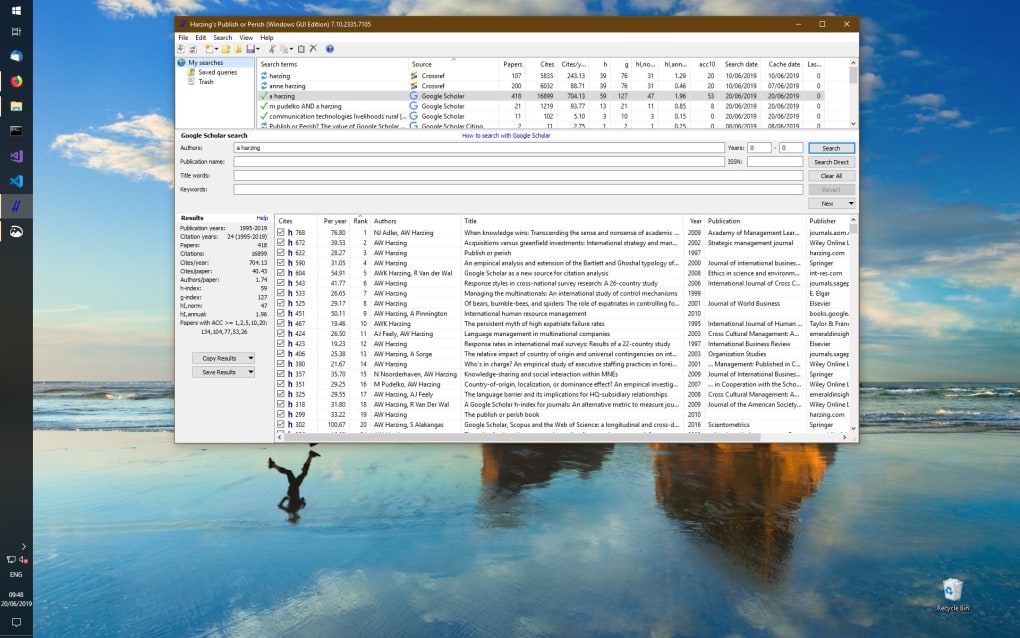
Publish or Perish is a free, open-source software application designed to perform citation analysis using data extracted from search engines like Google Scholar and Microsoft Academic. Its primary function is to generate various bibliometric indicators, such as the h-index, g-index, and i10-index, which provide a quantitative measure of a researcher’s scholarly output and impact. These indices are calculated using citation counts, offering a way to compare the research productivity and influence of individual researchers or even entire research groups.
The software allows users to input their names or keywords, and it automatically retrieves relevant publications from the specified databases. It then analyzes the citation counts for these publications, generating a comprehensive report that includes the metrics mentioned above, as well as other relevant information such as publication dates, journals, and co-authors. This capability allows researchers to monitor the impact of their work over time, track their citation counts, and identify areas for improvement. Moreover, the ability to export data in various formats (CSV, PDF, EndNote) greatly simplifies the incorporation of citation data into grant proposals, promotion applications, and other scholarly documents.
Beyond Metrics: The Importance of Qualitative Assessment
While citation analysis tools like Publish or Perish offer valuable quantitative insights into research output and impact, it is crucial to recognize their limitations. These tools primarily focus on bibliometric indicators, which can only provide a partial picture of a researcher’s overall contribution to their field. The sheer reliance on such metrics can lead to a skewed perception of academic achievement, potentially overshadowing other important aspects of research, such as mentorship, teaching excellence, and community engagement.
A balanced assessment of academic achievement requires a move beyond a sole dependence on quantitative measures like citation counts. Qualitative factors should be given equal weight, including the originality and significance of the research, the rigor of the methodology, the clarity and impact of the communication, and the contribution to the advancement of knowledge. Peer review processes, while imperfect, remain an essential component in evaluating the quality and significance of research. Reviewers assess the merits of the research beyond simple metrics, considering the novelty, validity, and overall impact of the findings.
Furthermore, the impact of research extends beyond simple citation counts. Some research may have a significant impact on policy, practice, or public understanding, even if it does not generate a large number of citations. Similarly, mentorship and teaching contributions can have a profound impact on the development of future generations of researchers, a factor that is often difficult to quantify but critical to the overall health of the academic ecosystem.
The Future of Academic Evaluation: Rethinking “Publish or Perish”
The prevailing “publish or perish” culture is unsustainable in its current form. The excessive pressure to publish, coupled with the limitations of using solely quantitative metrics to assess academic achievement, has resulted in unintended negative consequences. To foster a healthier and more sustainable academic environment, it is imperative to reconsider the ways in which research productivity and impact are measured and evaluated.
A shift towards a more holistic approach to evaluation is necessary. This should involve a combination of quantitative and qualitative measures, giving appropriate weight to factors beyond simple publication counts. Institutional policies and funding mechanisms should incentivize high-quality research that is relevant, rigorous, and impactful, regardless of its citation count. Emphasis on collaboration, interdisciplinary research, and open-access publishing can further contribute to a more equitable and productive academic ecosystem.
Furthermore, it is crucial to address the systemic issues that contribute to disparities in academic publishing. Creating more inclusive and supportive environments for researchers from underrepresented groups is vital. This may involve targeted mentoring programs, dedicated funding opportunities, and initiatives to address the challenges faced by researchers from marginalized communities in accessing and navigating the academic publishing system.
Conclusion: Towards a Sustainable Academic Ecosystem
The “publish or perish” culture is a complex phenomenon with deep roots in the competitive nature of academia. While the need to disseminate research findings remains paramount, the current overemphasis on quantitative metrics and publication counts has led to several negative consequences. A paradigm shift is needed, one that prioritizes quality over quantity, embraces inclusivity and diversity, and promotes a more holistic assessment of academic achievement. By moving beyond the limitations of solely relying on citation analysis tools and embracing a more balanced approach to evaluation, we can foster a more sustainable and thriving academic ecosystem that truly supports the advancement of knowledge for the benefit of all.
File Information
- License: “Free”
- Latest update: “June 12, 2025”
- Platform: “Windows”
- OS: “Windows 11”
- Downloads: “735.5K”
- Size: “3.41 MB”


