
PyMOL, an open-source molecular visualization system originally developed by Warren Lyford DeLano, has become a cornerstone in scientific research and education, particularly within the field of structural biology. This powerful software allows users to create high-quality 3D images and animations of small molecules and biological macromolecules, offering a versatile and accessible tool for visualizing complex data. Currently maintained and distributed by Schrödinger, Inc., PyMOL’s continued development and widespread adoption speak to its effectiveness and enduring value within the scientific community.
The Genesis and Evolution of PyMOL
The creation of PyMOL stemmed from a need for reliable and accurate software capable of rendering intricate 3D molecular structures. Recognizing this gap, Warren Lyford DeLano designed the application using the Python programming language, making it inherently cross-platform compatible and easily extensible. This foundational decision contributed significantly to PyMOL’s flexibility and its ability to adapt to the evolving needs of researchers. The software’s initial release marked a significant advancement in molecular visualization, providing a user-friendly interface coupled with powerful rendering capabilities.
Since its inception, PyMOL’s trajectory has been marked by continuous improvement driven by a dedicated community of users and developers. This collaborative environment fostered the addition of numerous features, bug fixes, and performance enhancements, resulting in the robust and sophisticated application available today. Schrödinger’s stewardship ensures ongoing maintenance and development, securing PyMOL’s position as a leading tool in its field. This evolution highlights not only the software’s inherent strengths but also the powerful impact of open-source collaboration in scientific software development.
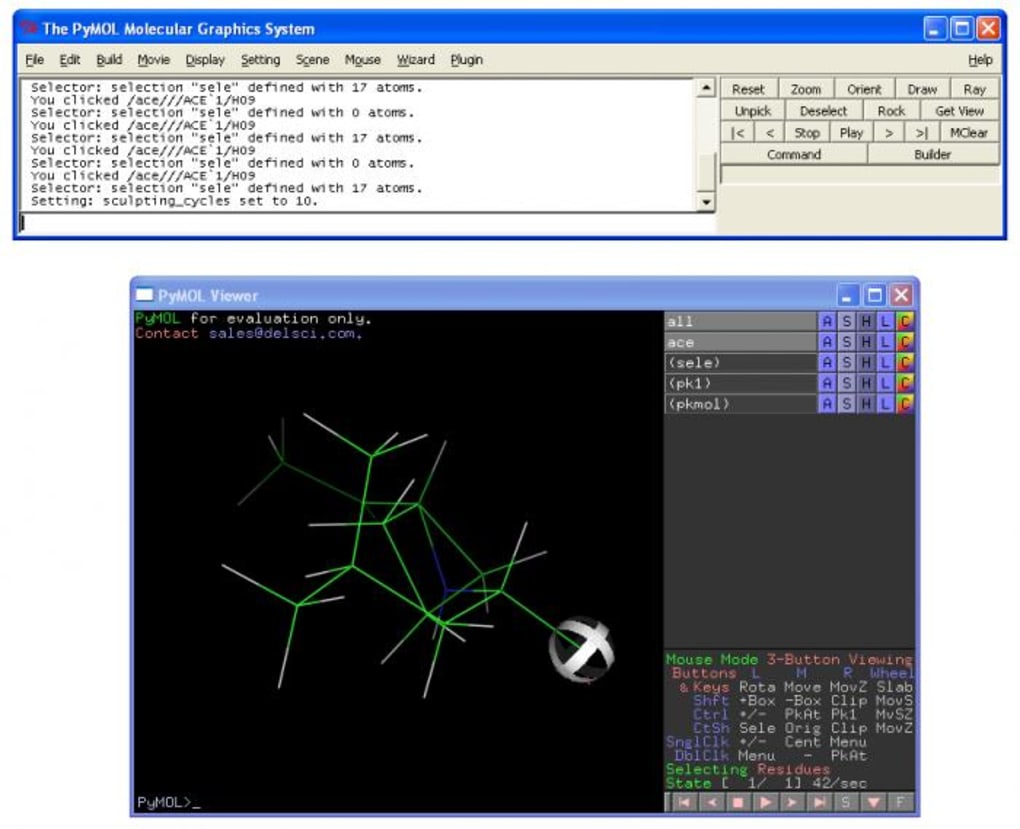
PyMOL’s Capabilities: Visualization and Beyond
At its core, PyMOL functions as a 3D rendering program specifically designed for molecular structures. Its utility extends far beyond simple visualization; it facilitates the creation of high-definition images and animations that are crucial for scientific communication and data analysis. The software’s ability to generate publication-quality visuals is unparalleled among open-source options.
PyMOL’s versatility shines through its numerous features:
-
High-Definition Rendering: The software produces exceptionally detailed 3D models, maintaining clarity even at high zoom levels. This capability is vital for examining intricate molecular details and interactions. The built-in ray-tracing capabilities further enhance the realism of the models by generating smooth surfaces, realistic shadows, and accurate reflections, significantly improving the overall visual quality.
-
Animation and Movie Creation: PyMOL’s built-in animation tool, RigiMOL, allows users to create dynamic representations of molecular processes. This feature is invaluable for illustrating conformational changes, protein folding, molecular dynamics simulations, and other dynamic events. The ability to create high-quality animations significantly enhances the communication of complex scientific concepts.
-
Data Analysis: While primarily focused on visualization, PyMOL offers basic data analysis features that enable users to perform calculations and measurements directly within the software. This is particularly valuable when assessing molecular distances, angles, and volumes. This integrated approach streamlines workflows by eliminating the need to use external analysis tools.
-
Scripting and Extensibility: The use of Python allows for extensive customization and automation through scripting. Users can write custom scripts to automate tasks, analyze data, and extend the software’s functionality. This capability significantly empowers advanced users who want to tailor the application to their specific needs.
-
Broad Image Format Support: PyMOL supports a wide range of image formats, making it easy to export models and animations for various purposes such as presentations, publications, and web usage. This compatibility ensures seamless integration with other software applications and publishing workflows.
- Security and Sharing: PyMOL facilitates secure sharing of research data by allowing users to export protected versions of their models. This functionality is vital in collaborative research environments where data security is paramount.
PyMOL’s User Interface and Accessibility
Despite its powerful capabilities, PyMOL boasts a relatively intuitive interface, making it accessible to both novice and experienced users. While initially the interface might appear daunting for beginners, its logical structure and extensive documentation greatly aid in the learning curve. Many online resources, tutorials, and user communities contribute to the ease of learning and support users. The software’s user-friendliness coupled with its robust capabilities makes it a valuable asset in both educational and research settings.
Furthermore, the open-source nature of PyMOL contributes significantly to its accessibility. This eliminates licensing costs and barriers to entry, ensuring that the software remains available to researchers and educators worldwide, irrespective of budget constraints. This open access greatly democratizes access to sophisticated molecular visualization tools, fostering wider participation in scientific research and education.
PyMOL’s Impact and Standing in the Scientific Community
PyMOL’s impact on the scientific community is undeniable. Its ability to produce high-quality visuals has transformed how researchers communicate their findings. The ease of use and extensive features have attracted a diverse user base, spanning from undergraduate students learning structural biology to experienced researchers analyzing intricate molecular structures. The vibrant online community fosters collaboration, sharing of resources, and rapid dissemination of new features and improvements.
The open-source nature of PyMOL has fostered an environment of continuous improvement and community-driven development. This collaborative model has resulted in a constantly evolving software, consistently adapting to the needs of the scientific community. This open development model has also encouraged the development of various add-ons and plugins which further extend the functionality of the core software.
Compared to other molecular visualization software, PyMOL stands out due to its open-source nature, comprehensive functionality, and active community support. While proprietary alternatives often offer comparable features, they usually come with substantial licensing costs, restricting access for many researchers and institutions. PyMOL’s freely available nature ensures that researchers of all backgrounds can benefit from its powerful capabilities.
Conclusion
PyMOL’s significance lies in its ability to bridge the gap between complex scientific data and intuitive visualization. Its open-source nature, coupled with powerful features and a dedicated community, has established it as a leading tool in molecular visualization. PyMOL continues to serve as a valuable asset for research, education, and communication within the scientific community, contributing significantly to advancements in our understanding of molecular structures and processes. Its ongoing development promises continued improvements and broader applications in the years to come.
File Information
- License: “Trial version”
- Version: “1.1”
- Latest update: “August 1, 2019”
- Platform: “Windows”
- OS: “Windows 98”
- Language: “English”
- Downloads: “48.5K”
- Size: “14.20 MB”


