Quake III Arena, originally released in 1999, stands as a monumental pillar in the pantheon of first-person shooter (FPS) games. Developed by id Software, this title redefined competitive multiplayer action, discarding the traditional single-player campaign in favor of a singular, relentless focus on arena-based combat. Designed primarily for Windows, Quake III Arena thrusts players into a chaotic battlefield where quick reflexes, strategic thinking, and impeccable aim are not just advantageous, but absolutely crucial for survival and dominance.
The game’s immediate impact was profound, captivating a global audience with its pure, unadulterated combat mechanics and high skill ceiling. Unlike its predecessors that balanced narrative with skirmishes, Quake III Arena was unapologetically about the fight. It presented a stark, vibrant, and brutal universe where gladiatorial combat was the only law, pushing players to constantly adapt, learn, and master its intricate systems. Its enduring popularity, even decades after its release, is a testament to its brilliant design, revolutionary engine, and the vibrant community it fostered. From LAN parties to nascent online multiplayer, Quake III Arena became synonymous with intense, skill-based FPS competition, carving out a legacy that continues to influence modern titles.
The Core Gameplay Experience: Unrelenting Action and Skill
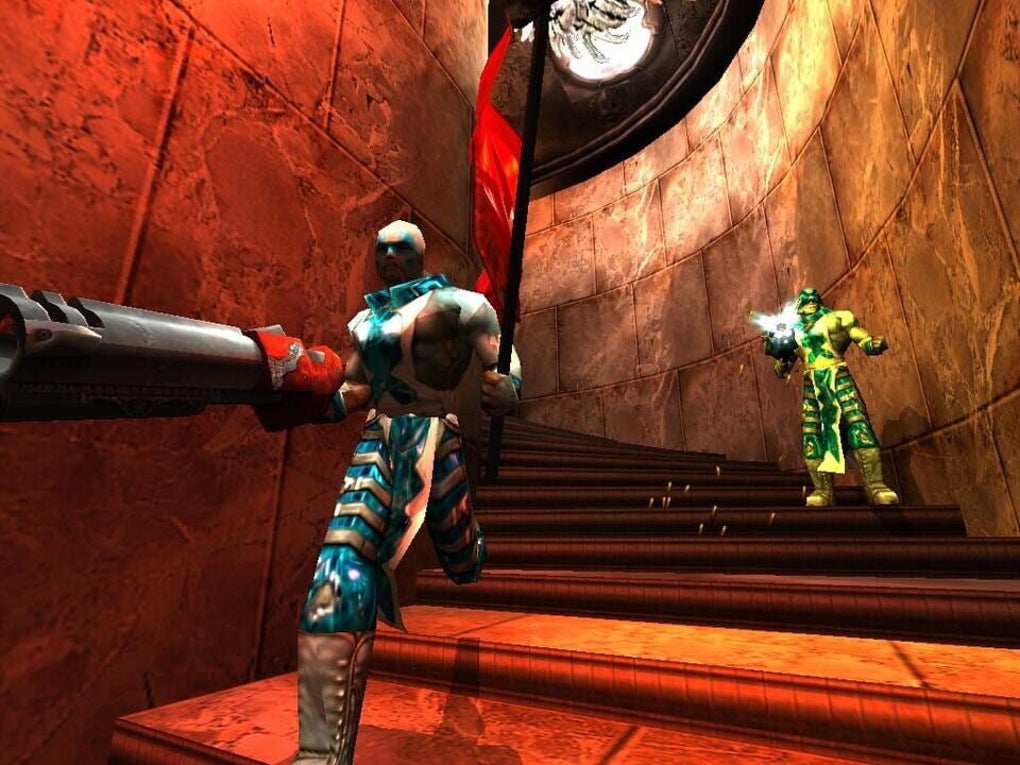
The essence of Quake III Arena lies in its core gameplay loop: fast-paced movement, precise aiming, and strategic weapon management. It’s a game that rewards mastery, where the gap between a novice and a seasoned player is vast, defined by subtle nuances in movement, timing, and prediction. The learning curve is steep, but the satisfaction of mastering its mechanics is immense. Every match is a high-octane dance of death, requiring players to be constantly aware, constantly moving, and constantly calculating.
Agility, Precision, and the Art of Movement
At the heart of Quake III Arena’s intense action is its unparalleled movement system. The game emphasizes agility and precision, allowing players an incredible degree of control over their character. This goes far beyond simple running and jumping; Quake III Arena introduced and popularized advanced techniques that became fundamental to competitive play.
Strafe Jumping is perhaps the most iconic movement mechanic. By synchronizing forward movement with strafing and mouse movements, players could achieve phenomenal speeds, darting across maps in fractions of the time it would take to simply run. This wasn’t just about speed; it was about unpredictability, making players harder targets and allowing for rapid map traversal to secure power-ups or engage enemies from unexpected angles. Mastering strafe jumping required rhythm, timing, and spatial awareness, turning simple movement into an art form.
Complementing this was Rocket Jumping, a risky but rewarding maneuver. By firing a rocket at one’s feet, players could propel themselves to extreme heights or distances, reaching otherwise inaccessible ledges, bypassing choke points, or initiating surprise attacks. While it inflicted self-damage, a well-executed rocket jump could turn the tide of a battle or allow for daring escapes. It required not just precision in execution but also quick health management, adding another layer of strategic depth.
Further adding to the mobility toolkit was Bunny Hopping, a technique that, while less dramatic than rocket jumping, allowed for consistent, high-speed movement without losing momentum. By repeatedly jumping, players could maintain a pace faster than normal running, making them elusive targets. The combination of these techniques – strafe jumping for speed, rocket jumping for verticality, and bunny hopping for sustained momentum – created a fluid, dynamic combat environment where movement itself was a weapon. Players were not just engaging in firefights; they were navigating a complex ballet of dodging, weaving, and positioning, turning every encounter into a test of mechanical skill and quick thinking. The game’s focus on competitive gameplay ensures that each match is filled with intense action, allowing players to hone their skills against others or AI-controlled enemies. Surviving and dominating the competition demands constant adaptation and relentless practice.
A Diverse Arsenal for Every Encounter
Quake III Arena’s diverse arsenal of weapons is meticulously balanced, ensuring that each weapon has a distinct role and tactical application. There is no single “best” weapon; instead, effective play revolves around understanding each weapon’s strengths and weaknesses, and switching between them seamlessly based on the situation, range, and opponent’s movement.
- Gauntlet: The humble melee weapon, often overlooked but deadly in close quarters, particularly for finishing off a severely wounded opponent or for a humiliating “humiliation” frag.
- Machine Gun: A dependable starter weapon with a high rate of fire, good for harassment and finishing off low-health enemies. It’s often quickly replaced but can be surprisingly effective in the right hands for chip damage.
- Shotgun: Devastating at close range, the shotgun requires excellent aim and timing. It’s perfect for ambushes in tight corridors or for delivering a powerful blow to an enemy who has miscalculated their approach.
- Grenade Launcher: A weapon of area denial and indirect fire, grenades can be bounced off walls to hit enemies around corners or deny access to power-ups. Mastering its trajectory and timing is key to its effectiveness.
- Rocket Launcher: The iconic power weapon. Rockets deal massive splash damage and are crucial for mid-range engagements, controlling space, and rocket jumping. Predicting enemy movement to land direct hits or powerful splash damage is a cornerstone of high-level play.
- Lightning Gun: A continuous beam weapon that deals consistent damage at close to medium range. It requires precise tracking aim but can melt opponents quickly. Its distinctive sound and visual effect make it a terrifying presence on the battlefield.
- Railgun: The ultimate sniper weapon. The railgun fires a single, high-damage projectile with perfect accuracy across long distances. It requires pinpoint aim and excellent prediction, as it has a short charge-up time. Landing a railgun shot is incredibly satisfying and often leads to an instant frag.
- Plasma Gun: Fires rapid projectiles, similar to the machine gun but with higher damage and splash potential. It’s effective at medium ranges and can be used to control choke points or flush out enemies.
- BFG10K (Big Fing Gun):* The ultimate power weapon, highly sought after for its immense area-of-effect damage. Firing a massive plasma ball that explodes on impact, it can clear entire rooms and inflict widespread destruction. It’s a game-changer when acquired but has limited ammo, making its use a strategic decision.
Weapon switching is an integral part of Quake III Arena combat. Players constantly cycle through their arsenal, using the right tool for the right job – a rocket to disrupt, a railgun to pick off, a lightning gun to finish. This fluid, reactive weapon management, combined with precise aim and dynamic movement, forms the bedrock of the game’s challenging and deeply rewarding combat system.
The Arenas of Combat: Maps, Modes, and Multiplayer Mayhem
Quake III Arena is defined by its diverse battlegrounds and its commitment to multiplayer competition. The game features a variety of maps, each intricately designed to foster different tactical approaches, and supports multiple game modes that cater to various styles of competitive play. This combination ensured high replay value and a continuously engaging experience.
Masterful Map Design and Environmental Hazards
The maps in Quake III Arena are not just backdrops; they are active participants in the combat, shaping strategies and dictating the flow of engagements. Each map features a unique layout, incorporating multi-tiered structures, tight corridors, open arenas, and intricate connections. The reference content mentions “a variety of maps filled with atmospheric hazards like lava pits and steep cliffs,” and these elements are crucial to the game’s design philosophy.
- Verticality: Many maps feature multiple levels, jump pads, and teleporters, encouraging vertical combat and adding layers of complexity to movement and positioning. Controlling high ground often provides a tactical advantage, but also makes players more visible targets.
- Power-up Control: Key to Quake III Arena’s strategy is the control of power-ups and health/armor pick-ups. Items like “Quad Damage” (amplifies weapon damage) or “Red Armor” (significant armor boost) spawn at fixed intervals in specific locations. Controlling these points, often centrally located or in high-traffic areas, becomes a mini-game within the larger match. Players learn spawn timers, race to intercept power-ups, and deny them to opponents, leading to intense skirmishes around these critical zones.
- Environmental Hazards: Lava pits, bottomless chasms, and steep cliffs are more than just atmospheric elements; they are active threats. Players can be knocked into these hazards by splash damage from rockets, or simply misjudge a jump, leading to instant death. This adds a layer of environmental awareness to combat, forcing players to consider not just their opponent, but also the dangerous surroundings. A well-placed rocket near a ledge can be as effective as a direct hit if it sends an enemy plummeting to their demise.
- Flow and Choke Points: Each map is designed with a specific flow, guiding players through corridors, open areas, and intersections. Identifying choke points, knowing where to expect enemy encounters, and understanding optimal routes for item control are vital skills. The masterful map design ensures that there’s rarely a dull moment, as encounters can erupt anywhere, often in predictable “hot zones” but sometimes from unexpected flanks.
The vibrant graphics of these arenas, coupled with dynamic lighting and distinct visual themes for each map, elevate the immersive experience, making every encounter in the arena feel thrilling and urgent. From the industrial sterility of “The Longest Yard” (Q3DM17) to the fiery depths of “Pro-DM3” (Q3DM7), each map offers a unique tactical puzzle to solve.
Dominating the Multiplayer Landscape: Modes and Community
Quake III Arena truly shines as a multiplayer phenomenon, offering a suite of modes that cemented its status as an esports pioneer. The game supported both local LAN play, which fueled countless tournaments and social gatherings, and robust online multiplayer, connecting players globally.
- Deathmatch (DM): The quintessential Quake experience. Players battle individually in a free-for-all, aiming to achieve the most frags within a time limit. It’s pure, unadulterated combat that emphasizes individual skill, rapid movement, and aggressive play.
- Team Deathmatch (TDM): Similar to DM, but players are divided into two teams (usually Red and Blue). Cooperation, strategic communication, and coordinated pushes become important, though individual skill remains paramount.
- Capture the Flag (CTF): A classic team-based objective mode. Teams aim to capture the opposing team’s flag from their base and return it to their own, all while defending their own flag. CTF adds a strong strategic element, requiring players to balance offense (flag carriers, escorts) with defense (base guards, pursuit). It often led to epic chases and clutch defensive plays.
- Tournament (Tourney/1v1): A mode specifically designed for duels. Two players face off, typically for a set number of frags or a time limit, while other players queue up to challenge the winner. This mode is the ultimate test of individual skill, knowledge, and tactical prowess, often considered the purest form of Quake III Arena competition.
The multiplayer modes, enabling both local and online play, significantly enhanced the replay value. Beyond the official modes, Quake III Arena also boasted an incredibly active and innovative modding community. Players created custom maps, new game modes, and visual overhauls, extending the game’s life indefinitely. This community-driven content, accessible through platforms like PhanMemFree, provided endless fresh experiences and kept the competitive scene vibrant. The game’s flexibility and robust mod support allowed it to evolve with its player base, ensuring its relevance for years to come.
Visuals, Audio, and Immersion: Crafting the Battlefield
Quake III Arena was not just a marvel of gameplay mechanics; it was also a technological showcase for its time. The Id Tech 3 engine powered a visual and auditory experience that was both cutting-edge and perfectly suited to the game’s intense, fast-paced nature, enhancing player immersion and tactical awareness.
Groundbreaking Graphics and Art Direction
At the turn of the millennium, Quake III Arena’s graphics were nothing short of revolutionary. Powered by the Id Tech 3 engine, it pushed the boundaries of what was possible in real-time 3D rendering. The “vibrant graphics” mentioned in the review were a key factor in its appeal.
- Engine Capabilities: Id Tech 3 introduced sophisticated features like curved surfaces (patches), advanced lighting and shadow systems, and impressive particle effects. This allowed for more organic and detailed environments, departing from the blocky structures of earlier 3D games. Player models were highly detailed and animated fluidly, making it easy to identify opponents and predict their movements.
- Texture Detail and Art Style: The game adopted a distinct industrial-gothic-sci-fi aesthetic. Textures were sharp and often highly detailed, depicting corroded metal, alien technology, and gritty stone. The art direction leaned into a sense of brutalist architecture and menacing machinery, perfectly complementing the game’s violent gladiatorial theme. Each map had a clear visual identity, preventing monotony and adding character to the arenas.
- Dynamic Lighting and Effects: Lighting played a critical role, not just for atmosphere but also for gameplay. Dynamic light sources from weapon fire, explosions, and environmental elements created dramatic contrasts and visual cues. Particle effects for weapon impacts, blood splatters, and power-up activations were visually impactful, providing immediate feedback on combat situations. The clear, high-contrast visuals ensured that despite the speed of combat, players could always discern enemies, items, and environmental hazards.
The visual fidelity of Quake III Arena helped cement its place as a technical benchmark, influencing the graphical direction of numerous games that followed. It proved that a highly competitive game could also be visually stunning, creating an environment that was both functional for high-speed combat and aesthetically pleasing.
The Sound of Victory: Dynamic Audio and Aural Cues
Equally important to the visual experience was Quake III Arena’s dynamic sound design, which served as a crucial tactical tool and an atmospheric enhancer. The game’s soundscape was rich, providing players with vital information that could mean the difference between life and death.
- Positional Audio: The sound engine was highly effective at conveying spatial information. Players could often pinpoint an enemy’s location by the sound of their footsteps, weapon fire, or even their grunts of pain. Hearing an opponent rocket jump above you or pick up a power-up in an adjacent corridor provided crucial seconds to react and plan. This “sound whoring” (as it was affectionately called by players) became an essential skill, allowing players to anticipate engagements before enemies were even in sight.
- Distinct Weapon Sounds: Each weapon had a unique and memorable sound profile. The ominous thrum of the Lightning Gun, the sharp crack of the Railgun, the satisfying boom of the Rocket Launcher – these sounds were instantly recognizable. This allowed players to know what weapon an opponent was using even when out of view, helping them to gauge threat levels and adapt their strategy.
- Power-up and Item Cues: The distinctive sounds of power-ups spawning, being picked up, or health/armor shards breaking, provided critical timing information. High-level players committed these sounds to memory, using them to track item control and predict enemy movements.
- Atmospheric Soundtrack: Beyond the tactical audio, Quake III Arena featured an iconic, adrenaline-pumping soundtrack. Composed primarily by Sascha Dikiciyan and Chris Vrenna, the music was a blend of industrial, electronic, and techno elements that perfectly matched the game’s frenetic pace. The soundtrack wasn’t just background noise; it actively contributed to the game’s urgent and thrilling atmosphere, elevating the intensity of every match.
The synergy between the vibrant graphics and dynamic sound design created a deeply immersive experience. Every element, from the visual spectacle of a rocket explosion to the subtle sound of footsteps, contributed to a comprehensive feedback system that empowered skilled players to excel in the chaotic arenas.
The Enduring Legacy of Quake III Arena
Decades after its initial release, Quake III Arena continues to be revered as a classic, not just within the FPS genre but across the broader landscape of video games. Its influence is palpable, shaping the design principles of countless competitive titles that followed and fostering a dedicated community that keeps its spirit alive.
Quake III Arena was a true pioneer in the nascent field of esports. Its pure, skill-based gameplay, balanced weapon arsenal, and clear objective modes made it an ideal candidate for competitive play. Tournaments featuring Quake III Arena were among the first to capture significant attention, laying the groundwork for the massive esports industry we see today. It taught a generation of gamers about the importance of mechanical skill, map control, item timing, and strategic decision-making under pressure – lessons that are still fundamental to competitive gaming. Professional Quake players became household names in their communities, showcasing an unprecedented level of dexterity and tactical genius.
The Id Tech 3 engine, which powered Quake III Arena, also had a massive impact. Its flexibility and advanced features made it a popular choice for modders and other game developers. Many successful games and popular mods were built on its foundation, extending its technological legacy far beyond Quake III Arena itself. The engine became synonymous with fast, fluid, and visually impressive 3D environments, setting a new standard for game development.
Furthermore, the game’s commitment to community engagement through robust modding tools and server browser functionality ensured its longevity. The ability for players to create and share custom maps, modify game rules, and host their own servers meant that the game could continuously evolve and offer fresh content, even without official updates. This grassroots support fostered a deep sense of ownership among its players, turning it into more than just a game, but a platform for creative expression and community building. Even today, dedicated servers remain active, and new custom content occasionally surfaces, demonstrating the profound loyalty of its fanbase. Many of the fundamental concepts it perfected – such as the importance of movement physics, weapon balance, and map control in competitive shooters – have been adopted and refined by subsequent titles, cementing its status as an influential blueprint for the genre.
In conclusion, Quake III Arena is far more than just a historical footnote; it is a living legend. Its relentless focus on pure, unadulterated combat, combined with its groundbreaking technical achievements and a deeply engaged community, forged an experience that remains as thrilling and challenging today as it was at its launch. It is a game that truly embodied the spirit of competition, demanding the absolute best from its players and rewarding mastery with unparalleled satisfaction. For anyone seeking to understand the roots of modern competitive gaming or simply to experience one of the finest first-person shooters ever made, Quake III Arena remains an essential and unforgettable journey into the heart of the arena. PhanMemFree recognizes its status as a timeless masterpiece, a testament to enduring design and the thrill of pure skill.
File Information
- License: “Full”
- Latest update: “June 12, 2025”
- Platform: “Windows”
- OS: “Windows 11”
- Downloads: “277”