
Racer is a free, open-source car racing simulation that offers a surprisingly realistic driving experience, albeit with a few significant caveats. While its commitment to accurate car physics and sound design is commendable, its reliance on external downloads for content and occasional instability detract from the overall user experience. This review will explore the strengths and weaknesses of Racer, examining its gameplay mechanics, customization options, and technical aspects to provide a comprehensive assessment.
Realistic Physics and Sound Design: A Driving Force
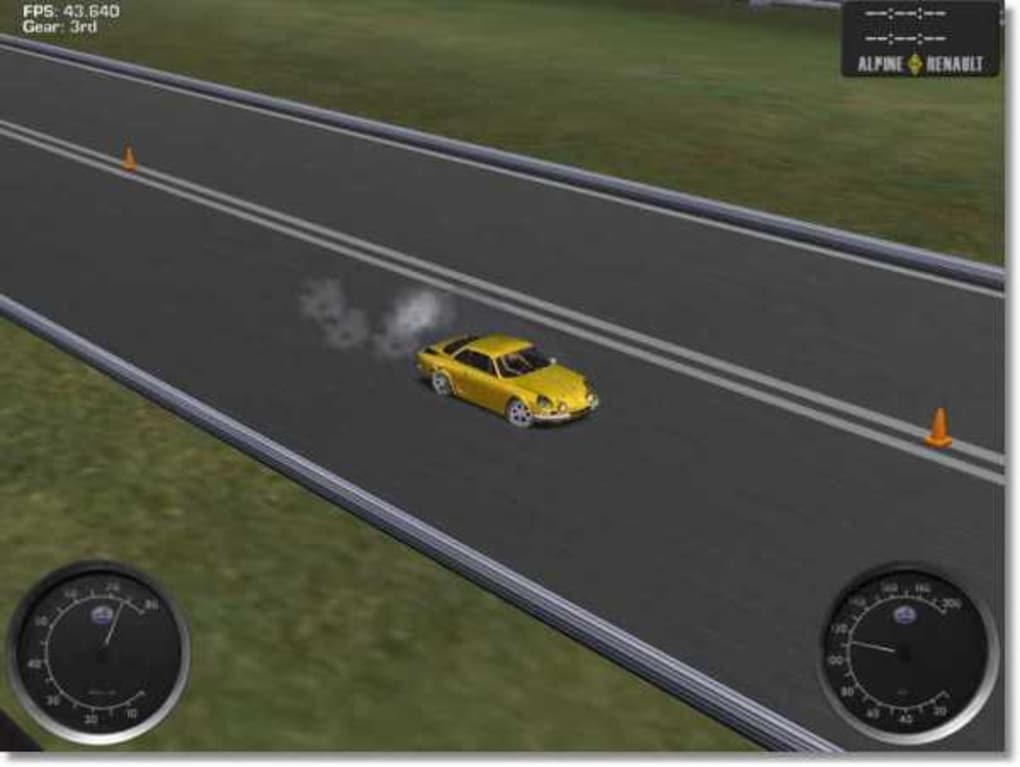
One of Racer’s most notable features is its emphasis on realistic physics. The car handling feels substantial and responsive, demanding skill and precision from the player. Acceleration, braking, and cornering all require careful timing and control, rewarding players who master the nuances of the game’s physics engine. This commitment to realism extends to the sound design as well. Engine noises are authentic and responsive to throttle input, creating an immersive and engaging auditory experience that complements the visual presentation. The feeling of speed and power is palpable, making even simple maneuvers feel significant. This attention to detail is what truly sets Racer apart from many other free racing games. The developers clearly prioritized a credible driving simulation over arcade-style thrills, creating a game that’s challenging yet rewarding for those willing to invest the time to learn its intricacies. However, this realism comes at a cost, as the unforgiving nature of the controls presents a steep learning curve for newcomers.
Customization and Content: Building Your Racing World
Racer’s open-source nature is both its greatest strength and its most significant weakness. While this allows for extensive customization and community contribution, it also means that the core game lacks substantial content out of the box. The initial download provides a basic framework, including a limited selection of cars and tracks. To expand the game’s offerings, players must actively seek out and download additional content from various external sources. This fragmented approach necessitates navigating multiple websites and potentially dealing with compatibility issues. While the community provides a wealth of user-created content, the lack of a centralized content management system presents a significant hurdle for new players. This dispersal of resources can be daunting and might discourage less technically inclined users from fully exploring the game’s potential. A more streamlined approach to content management would dramatically improve the overall user experience.
User Interface and Controls: A Room for Improvement
Racer’s user interface is functional but far from intuitive. The menu system can feel somewhat clunky and unrefined, lacking the polish and user-friendliness of commercially developed racing games. Navigating options and settings requires some patience, especially for those unfamiliar with the game’s structure. Similarly, the in-game controls, while realistic, can feel unforgiving. The lack of clear visual cues, such as a readily visible gear indicator, adds to the initial learning curve. Mastering the game’s controls requires significant practice, and even then, the precision required can be frustrating for casual players. The developers’ focus on realism, while laudable, might have overshadowed the need for user-friendly interfaces and controls. The initial difficulty might alienate players who prefer a more accessible gameplay experience.
Technical Performance and Stability: A Work in Progress
Despite its age, Racer suffers from occasional instability, particularly when attempting to load large races with multiple cars and complex tracks. The game occasionally crashes, particularly under heavy load, indicating some underlying limitations in the engine or memory management. This unpredictability can be frustrating, undermining the overall enjoyment of the game. The frequency of these crashes seems to depend on the specific configuration of cars and tracks used, highlighting potential bottlenecks in the game’s rendering or physics calculations. While the game’s graphics are adequate for its age, they are not visually impressive and aren’t a strong selling point. The performance issues, however, are more concerning and need addressing to create a more reliable and enjoyable gaming experience.
Open Source Advantages and Community Contributions
Racer’s open-source nature fosters a vibrant community of contributors who actively develop and enhance the game. This communal effort results in a constant stream of new content, including custom cars, tracks, and even modifications to the game’s core mechanics. This collaborative approach is a testament to the dedication of the Racer community and underscores the potential of open-source game development. However, this decentralized development also contributes to the fragmentation of content mentioned earlier. While the collaborative spirit is admirable, a more unified approach to content management would be beneficial for new and experienced players alike.
Comparison with Other Racing Simulators
Compared to commercially available racing simulators, Racer naturally lacks the polish and extensive features found in titles like Forza Horizon 5 or Assetto Corsa. However, its open-source nature and focus on realistic physics set it apart from many free-to-play racing games that prioritize arcade-style gameplay. While it may not offer the visual fidelity or vast content library of its commercial counterparts, Racer provides a unique experience that appeals to players who value realism and community involvement. Its open-source nature allows modification and expansion of the base game, potentially addressing the limitations that make it less accessible than other established racing simulators.
Conclusion: A Niche but Promising Simulation
Racer is a niche racing simulator with a strong foundation in realistic physics and sound design. However, its challenging controls, unstable performance, and fragmented content management system hinder its accessibility and overall enjoyment. The open-source nature fosters a passionate community, which continuously contributes new content, but this very aspect also contributes to the game’s inconsistent experience. While the dedication to realism is laudable, the developers should prioritize improving stability, refining the user interface and controls, and implementing a centralized content management system. With these improvements, Racer could evolve into a more polished and enjoyable racing simulation, attracting a broader audience and solidifying its place in the open-source gaming community. For those willing to invest the time and effort to overcome its technical limitations and learn its intricacies, Racer offers a unique and rewarding driving experience. However, casual players might find its challenging controls and infrequent crashes frustrating, leading them to seek out more user-friendly alternatives. The future success of Racer hinges on addressing these shortcomings and fostering a more streamlined and accessible experience for all players.
File Information
- License: “Free”
- Latest update: “January 2, 2024”
- Platform: “Windows”
- OS: “Windows Vista”
- Language: “English”
- Downloads: “68.2K”
- Size: “94.52 MB”


