
ReadPlease, a text-to-speech software released in 2003, holds a unique place in the history of accessibility technology. While significantly predating the sophisticated AI-powered voice synthesizers of today, ReadPlease offered a simple yet effective solution for converting written text into audible speech. This review will explore the program’s features, strengths, weaknesses, and lasting impact, considering its place within the broader landscape of text-to-speech software evolution.
ReadPlease: Functionality and User Interface
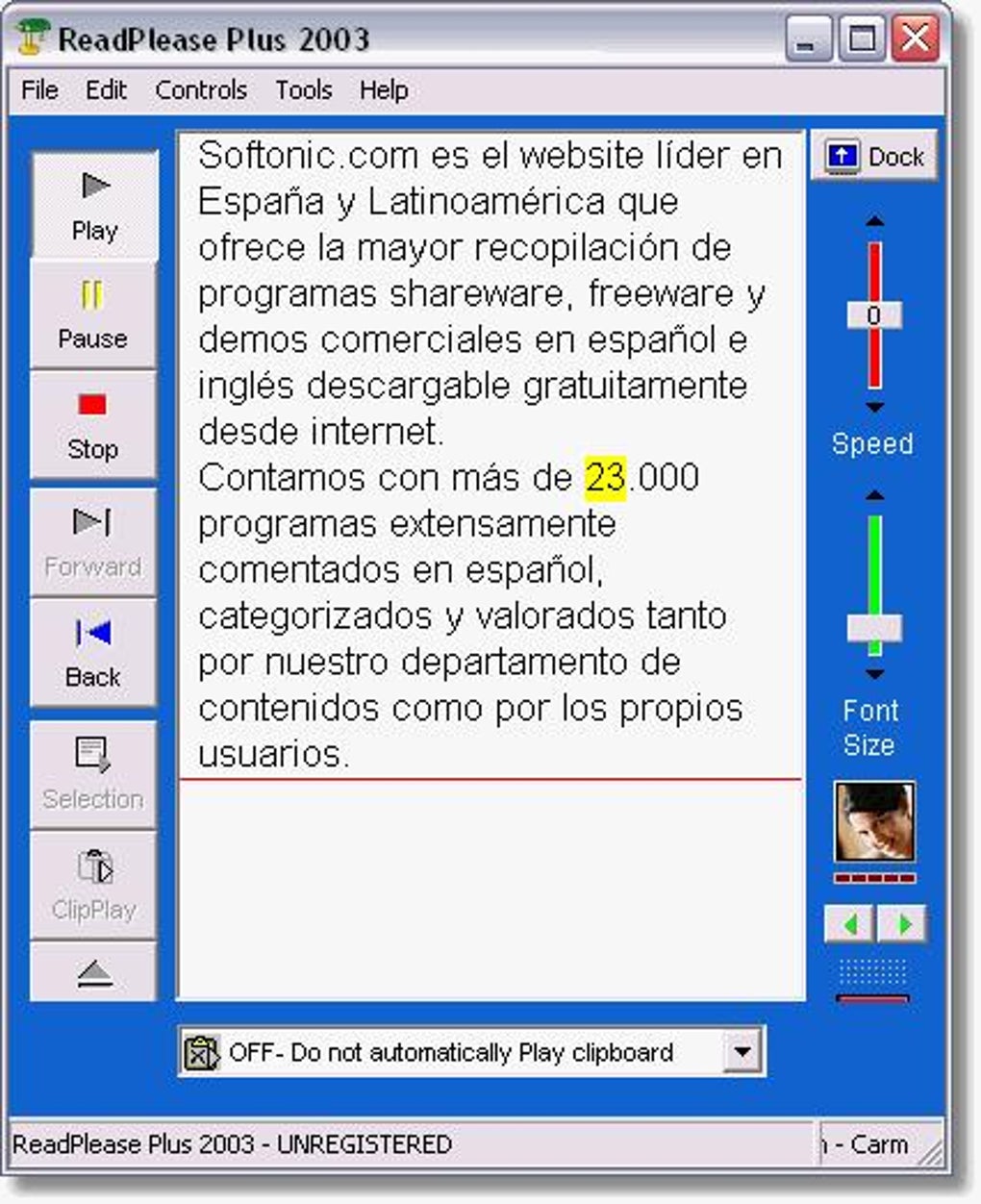
ReadPlease’s interface, as described by users and reviewers, was remarkably straightforward. Resembling a basic text editor, its core functionality centered around a central text input area. Users could paste text into this area, and the program would then read it aloud, highlighting each word as it was spoken. This simple, intuitive design contributed to its accessibility and ease of use, even for individuals with limited technical experience.
The program offered a modest but practical set of additional features. Users could adjust the reading speed and font size, catering to individual preferences and needs. A selection of voices was available—two male and one female—allowing for some degree of personalization. The option to initiate reading either automatically upon pasting text or manually via a play button further enhanced user control. The absence of complex features, while a limitation compared to modern software, contributed to ReadPlease’s lightweight nature and rapid processing times. This was a significant advantage in an era when computing resources were often more constrained than they are today.
While lacking the natural intonation and inflection of contemporary text-to-speech systems, ReadPlease effectively fulfilled its primary function: converting text into audible speech. Its simplicity made it readily accessible to a wider audience compared to more complex and resource-intensive programs.
ReadPlease: Strengths and Weaknesses
One of ReadPlease’s most prominent strengths was its simplicity and lightweight design. This made it a highly accessible option for users with limited technical skills or those working on older computers with less processing power. The software’s ease of use was consistently praised by reviewers, highlighting its intuitive interface and straightforward functionality. The availability of a free version further expanded its reach, making it a viable option for a broader range of users. The fact that it provided multi-language support broadened its appeal even further, allowing users from different linguistic backgrounds to benefit from its capabilities.
However, ReadPlease’s age is also its greatest weakness. Compared to modern text-to-speech applications, ReadPlease suffered from limitations in vocal quality and natural language processing. The monotonous, repetitive nature of the synthesized speech, while functional, could become tiring during extended use. The lack of more sophisticated features, such as advanced intonation control or the ability to handle complex formatting, also limited its capabilities. Furthermore, its suitability for reading extended texts like ebooks was questionable due to its simpler design and lack of features specifically targeted towards that purpose.
While the free version served its purpose adequately, the paid “Trial-Pro” version provided users with potentially improved performance and potentially access to more voices. But even the premium versions failed to match later advances in speech synthesis. The user reviews highlight a degree of emotional investment in the program among its users, who appreciated its usefulness even while acknowledging its limitations compared to newer technologies.
ReadPlease: A Niche but Valuable Contribution
Despite its technological limitations by today’s standards, ReadPlease played a valuable role in making text-to-speech technology more accessible. Before the widespread adoption of powerful, AI-driven solutions, ReadPlease provided a functional and relatively easy-to-use alternative for users who needed text read aloud. Its low system requirements and straightforward interface made it a viable option for many who might otherwise have been excluded from this technology. The longevity of the program and continued user support, even years after its initial release, point to a strong niche following amongst users who appreciate its functionality in their specific context. The program’s success highlights the importance of creating accessible and user-friendly software, even if it lacks the bells and whistles found in more sophisticated applications.
The fact that users continued to use and recommend ReadPlease years after its initial release and the emergence of more advanced alternatives speaks to the program’s enduring value. The software offered an entry point to text-to-speech functionality that was missing from the market during a time when the technology was less refined. The ability to use it on a wide variety of systems – including through emulation on Linux – also contributed to its continued relevance within a specific user base.
ReadPlease in the Context of Technological Advancement
ReadPlease’s legacy serves as a compelling reminder of the rapid progress in text-to-speech technology. The software’s simple, repetitive synthetic speech starkly contrasts with the sophisticated, natural-sounding voices now available from AI-powered applications. Modern systems utilize advanced natural language processing techniques to produce more natural-sounding speech with varied intonation, pauses, and emphasis, making the listening experience considerably more engaging and less fatiguing. The evolution also encompasses advancements in the flexibility and capacity of the software, as well as support for diverse input formats and text processing complexities.
However, ReadPlease’s simplicity should not be dismissed. The program’s ease of use and low system requirements made it accessible to users for whom more complex alternatives might have been impractical or unavailable. This demonstrates the ongoing need for a diverse range of accessibility tools catering to different levels of technical expertise and available resources. Even today, simplicity and ease of use remain critical factors in the design of successful accessibility software. The need for simplified interfaces for users with limited technical expertise continues.
The story of ReadPlease is not just about a piece of software; it’s a snapshot of the evolution of accessibility technology and the ongoing need for solutions that balance sophistication with user-friendliness. While its place in the technological landscape is now largely historical, ReadPlease’s legacy demonstrates the importance of providing accessible technology for all users, regardless of their technical expertise or resource constraints.
File Information
- License: “Free”
- Version: “2003”
- Latest update: “June 22, 2020”
- Platform: “Windows”
- OS: “Windows 2000”
- Language: “English”
- Downloads: “68.5K”
- Size: “10.79 MB”


