
Realtime Landscaping is a professional-grade landscape design software that empowers users to bring their landscaping visions to life on screen. This comprehensive guide delves into the software’s features, capabilities, and user experience, exploring its strengths and weaknesses to help you determine if it’s the right tool for your needs.
Powerful and Intuitive 3D Design Capabilities
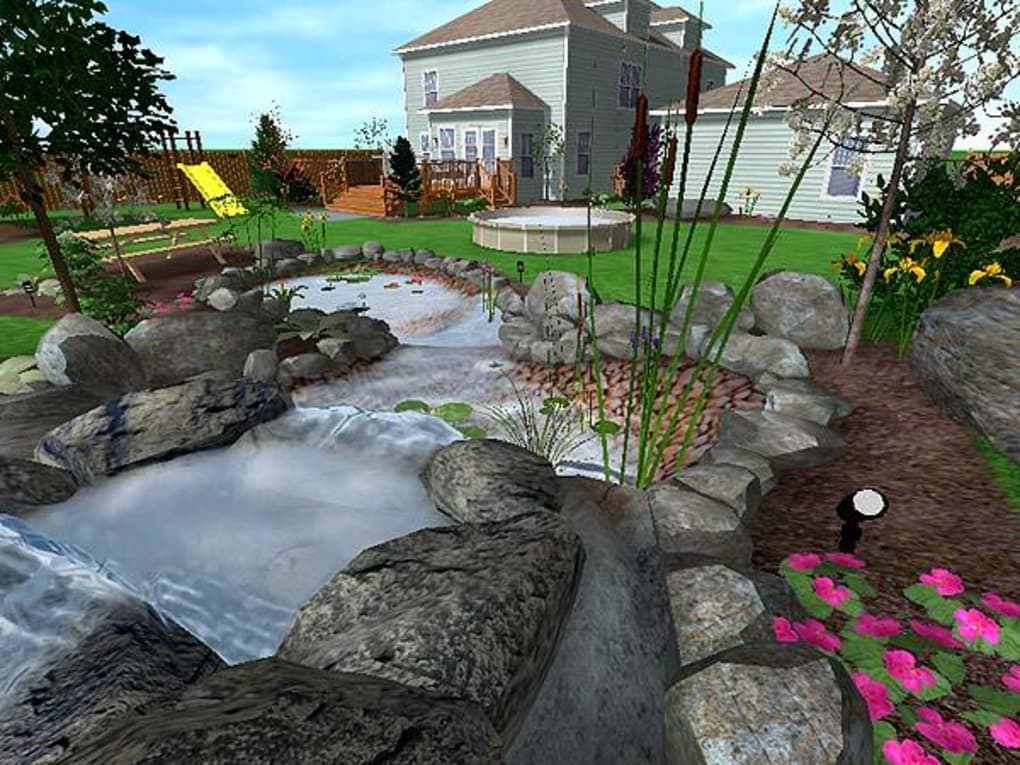
Realtime Landscaping boasts a robust suite of tools designed to simplify the process of creating professional-looking landscape designs. The software leverages advanced 3D graphics technology, providing photorealistic visualizations that allow users to explore their designs from various angles and perspectives. Unlike traditional rendering methods that can take hours, Realtime Landscaping offers near-instantaneous feedback, allowing for fluid and iterative design exploration. This real-time rendering capability is a significant advantage, accelerating the design process and enhancing the user experience.
The intuitive interface facilitates ease of use, regardless of prior CAD experience. Users can easily add a wide array of elements, including houses, decks, patios, fences, swimming pools, various ground covers, and a vast library of plants and shrubs – over 11,000 items and 5,500 plant varieties are included. The software’s extensive database ensures a high level of realism, allowing for incredibly detailed and accurate representations of landscaping projects.
One of the standout features is the ability to import a photograph of the existing property. This feature significantly streamlines the design process by providing a realistic base upon which to build the landscape design. Users can accurately place and scale elements relative to existing structures and features, leading to more realistic and accurate representations of the final product. This eliminates the need for manual measurements and estimations, minimizing errors and improving overall design accuracy.
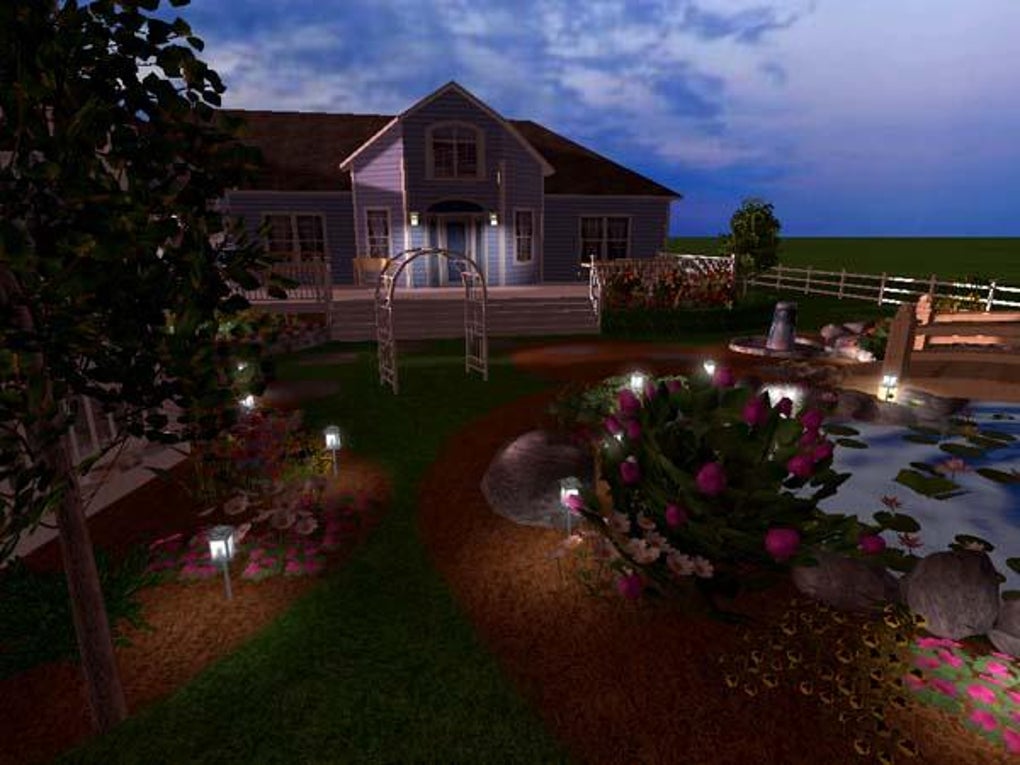
The software’s capabilities extend beyond static imagery. Realtime Landscaping allows users to create virtual walkthroughs of their designs, offering a captivating and immersive experience. These walkthroughs can be easily shared with clients, contractors, or collaborators, providing a compelling visual representation of the proposed landscape. The ability to generate movie-quality renderings further enhances the presentation of the designs, making it easier to secure approval and move forward with the project. This feature is invaluable for presenting design concepts to clients who may not fully grasp technical drawings or plans.
A User-Friendly Interface for Beginners and Professionals Alike
Despite its powerful features and capabilities, Realtime Landscaping is remarkably user-friendly. The intuitive interface makes it accessible to both novice and experienced users. Online tutorials are available for those needing additional guidance, further reducing the learning curve and making the software approachable for those with limited prior experience in landscape design or CAD software. This accessibility ensures that the software can be effectively utilized by a wide range of users, from hobbyists to seasoned professionals. The software’s ease of use is a key differentiator, setting it apart from more complex and technically demanding landscape design software.
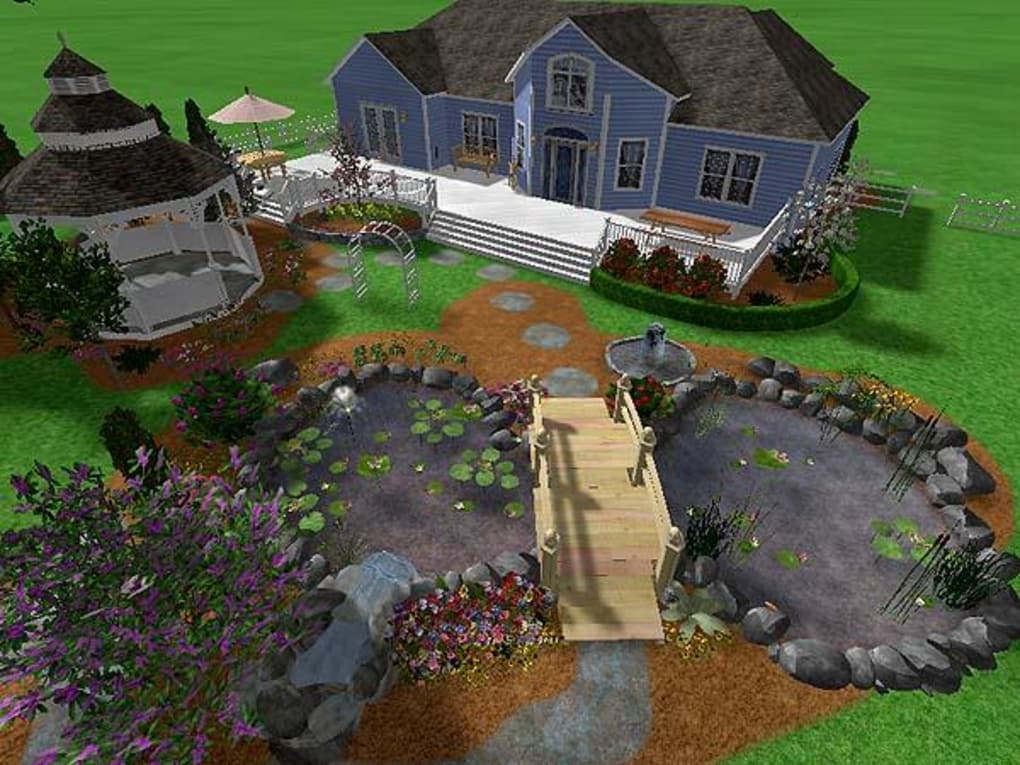
The software’s comprehensive nature is another contributing factor to its user-friendliness. Having a vast library of objects, plants, and tools readily available within the software reduces the need for external resources or manual creation of assets. This eliminates time-consuming tasks, allowing users to focus on the creative aspects of the design process. The efficient workflow significantly reduces the overall project time, accelerating the entire design-to-implementation process.
Realistic Representation and High-Quality Visuals
Realtime Landscaping stands out for its commitment to realism. The software’s extensive library of objects and plants, combined with its advanced 3D rendering capabilities, produces exceptionally realistic visualizations. The level of detail in the textures, materials, and lighting ensures that the final renderings closely resemble real-world landscapes. This fidelity is crucial for accurately representing the final product to clients and contractors, minimizing discrepancies between the design and the final implementation. The emphasis on realism makes it an ideal tool for visualizing complex designs and conveying the overall aesthetic vision accurately.
The high-quality 3D visuals are further enhanced by the ability to import photographs, allowing users to seamlessly integrate their existing property into the design. This capability dramatically improves the overall accuracy and realism of the project, creating a highly convincing representation of the proposed landscape changes. The integration of photographic imagery greatly enhances the client experience, bridging the gap between concept and reality. This level of visual fidelity is rarely found in other comparable landscape design software.
Addressing User Feedback and Limitations
While Realtime Landscaping offers many advantages, some user reviews highlight potential areas for improvement. Some users have noted limitations in adjusting the height and width of certain plants, and a lack of an aerial view can sometimes impede the design process, especially when planning pathways or visualizing the overall layout. These issues, while not critical, could be addressed in future updates to further enhance the user experience and provide even greater design flexibility.
Other user feedback points towards a need for a more extensive plant database, particularly for users in specific geographic regions. While the existing database is impressive, expanding the collection to include a wider range of plants from various climates and regions would enhance the software’s usability and relevance to a more diverse user base. The inclusion of seasonal variations in plant appearance would also greatly increase the realism of the renderings.
Despite these limitations, the overwhelming consensus among users is positive, with many praising the software’s ease of use, intuitive interface, and stunning visuals. The software’s strengths clearly outweigh its weaknesses, making it a valuable asset for both amateur and professional landscape designers.
Conclusion: A Powerful Tool for Landscape Design
Realtime Landscaping provides a powerful and user-friendly solution for creating professional-quality landscape designs. Its intuitive interface, robust features, and stunning 3D visuals make it accessible to a wide range of users, regardless of their prior experience with CAD software. The ability to import photographs and create realistic walkthroughs further enhances its appeal, making it an invaluable tool for presenting design concepts to clients and contractors. While some minor limitations exist, they are outweighed by the software’s many strengths, making it a compelling choice for anyone seeking to create impressive and realistic landscape designs. The ongoing development and user feedback incorporation suggests a commitment to continuous improvement, further strengthening its position in the landscape design software market.
File Information
- License: “Trial version”
- Version: “2.03”
- Latest update: “August 7, 2018”
- Platform: “Windows”
- OS: “Windows 2000”
- Language: “English”
- Downloads: “110.5K”
- Size: “24.82 MB”


