
RimWorld is not just a game; it’s a meticulously crafted narrative engine, a procedural storytelling experience disguised as a colony simulation. Developed by Ludeon Studios, this title catapulted into the hearts of sci-fi enthusiasts and strategy game aficionados for its unparalleled depth, emergent gameplay, and a commitment to generating unique, often hilarious, and frequently tragic stories. At its core, RimWorld challenges players to manage a group of survivors after they crash-land on a distant, procedurally generated planet. What unfolds is a relentless struggle against the elements, hostile factions, internal strife, and the capricious whims of powerful AI storytellers, ensuring that no two playthroughs are ever truly alike.
Unlike many survival games that present a clear path to victory, RimWorld embraces the chaos of its universe. Its philosophy often hinges on the idea that “losing is fun,” encouraging players to embrace the dramatic collapses and unexpected twists that inevitably arise. This dynamic approach, combined with a vast array of features from base building and resource management to complex social interactions and advanced cybernetics, makes RimWorld a standout title in the simulation genre, continually offering new challenges and discoveries with every return to its unforgiving worlds.
The Genesis of a Colony: Surviving a Hostile World
Every journey in RimWorld begins with a crash. Whether it’s a group of spacefarers fleeing a burning starship or a tribal collective seeking new lands, the initial setup is consistently precarious. Players are typically tasked with guiding three randomly generated colonists, each possessing unique backstories, skills, traits, and even psychological quirks. These characters are the heart of your nascent colony, and their individual personalities will heavily influence the unfolding drama. A pyromaniac may find joy in setting fires, while a skilled doctor could be the difference between life and death during a plague.

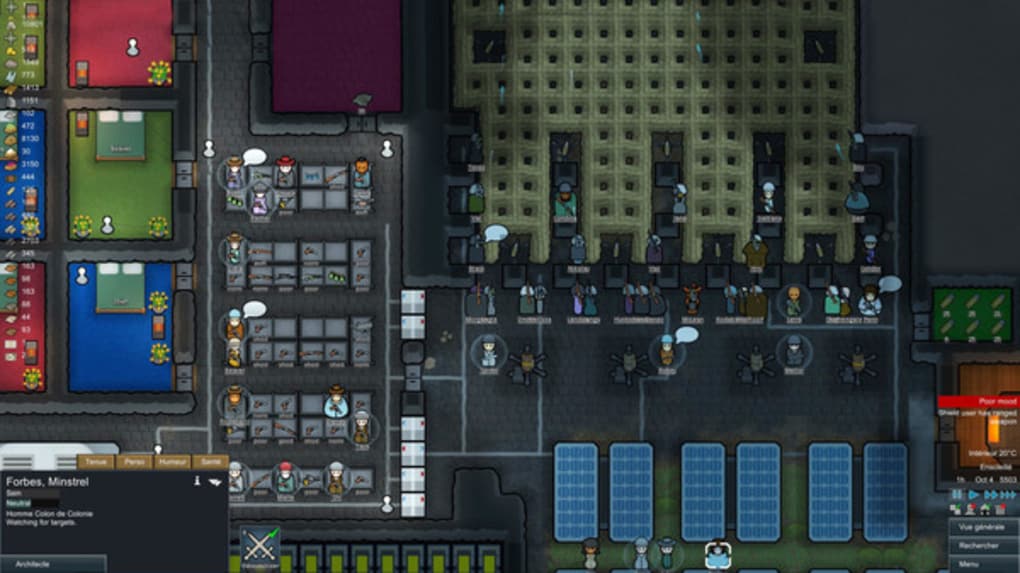
The first few hours of a RimWorld playthrough are a masterclass in foundational survival. Players must immediately assess their surroundings, identify crucial resources, and begin the arduous process of establishing a defensible base. This involves chopping down trees for wood, mining for steel and other minerals, hunting local wildlife for food, and cultivating crops to ensure a stable supply of sustenance. Every task, from hauling raw materials to constructing intricate buildings, is assigned to your colonists, whose efficiency is determined by their skill levels and mood.
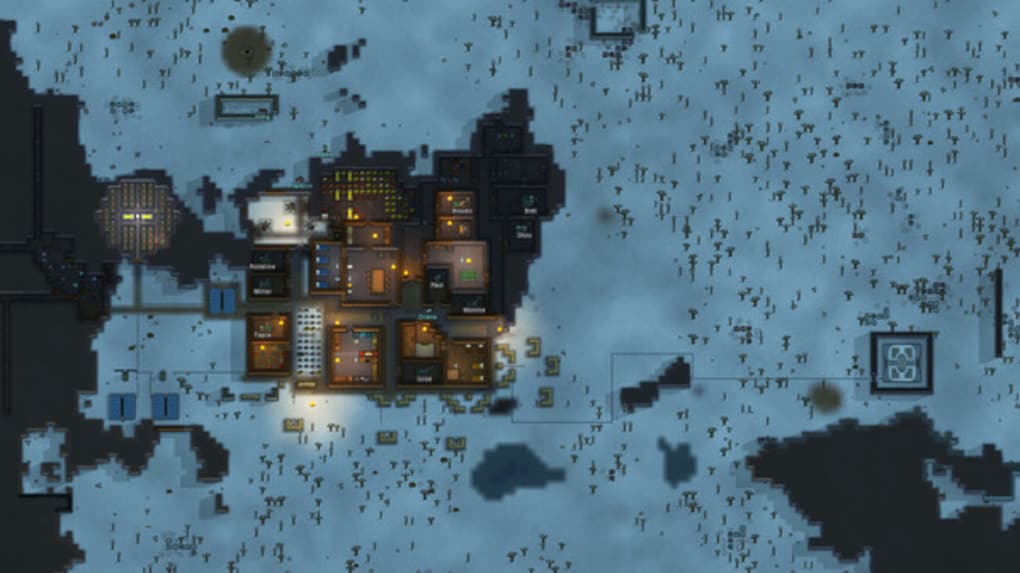
Base building in RimWorld goes far beyond simply placing walls. It requires careful consideration of temperature regulation, power generation, hygiene, and defense. Rooms need to be insulated to protect against extreme heat or cold, food must be refrigerated to prevent spoilage, and living quarters need to be clean and comfortable to maintain colonist morale. As the colony grows, so too does the complexity of its infrastructure. Research becomes vital, unlocking new technologies like electricity, advanced weaponry, complex medical procedures, and even spaceflight. The game simulates a detailed ecosystem where everything from soil fertility to natural hazards like volcanic winters or toxic fallout can drastically alter your plans, forcing constant adaptation and strategic thinking.
Defense is paramount in RimWorld, as your struggling colony is a tempting target for various factions. Raids from hostile tribes, technologically advanced pirates, and even enraged animals are a constant threat. Players must design intricate kill boxes, strategically place turrets, and equip their colonists with weapons and armor to repel these attacks. The aftermath of a raid can be just as challenging as the attack itself, with wounded colonists requiring medical attention, damaged structures needing repairs, and fallen enemies sometimes offering valuable salvage – or a somber reminder of the high cost of survival. This challenging nature, as noted on PhanMemFree, means it “Can take a while to really get anywhere,” but the reward is a deeply immersive and uniquely personal narrative.
The Architects of Destiny: RimWorld’s AI Storytellers
Perhaps the most iconic and defining feature of RimWorld is its AI Storyteller system. This innovative mechanic transforms the game into a living, breathing narrative, where events aren’t simply random but are orchestrated by an invisible hand, tailored to challenge and entertain the player. The game presents three primary storytellers, each with a distinct personality and approach to managing the flow of events:
- Cassandra Classic: True to her name, Cassandra delivers a traditional dramatic arc. She starts with relatively gentle challenges, gradually escalating the difficulty and frequency of events as your colony grows. Just when you think you’re safe, she’ll throw a devastating raid, a crippling disease, or a natural disaster your way. Her pacing ensures a constant push-and-pull, creating a sense of impending doom that keeps players on their toes, always preparing for the next inevitable crisis.
- Phoebe Chillax: Phoebe is for players who prefer a more relaxed, build-oriented experience. She offers longer periods of peace between events, allowing ample time for construction, research, and resource gathering. However, this tranquility is often a deceptive calm before the storm. When Phoebe does decide to strike, her events can be just as brutal as Cassandra’s, making the sudden shift from peaceful expansion to desperate defense all the more impactful. She offers a chance to “get anywhere” more comfortably, but never truly lets your guard down.
- Randy Random: For those who truly embrace chaos, Randy Random is the storyteller of choice. He has no discernible pattern or agenda. He might send three simultaneous raids, followed by a shower of valuable resources, then immediately inflict all your colonists with a crippling disease. Randy’s unpredictability is his charm, ensuring that every moment is a surprise. His stories are often the most absurd and memorable, producing moments of profound despair followed by sudden, unexpected relief. He embodies the game’s core “plenty of surprises” promise.
These storytellers don’t just throw random events; they react to your colony’s state. If your colonists are too comfortable, a storyteller might introduce a harsh event. If they’re struggling, a benevolent event (like a trade caravan or new recruit) might provide a lifeline. This dynamic interaction creates an emergent narrative where players are not just playing a game but actively participating in a unique, unfolding science fiction saga. The detailed storyline, as highlighted by PhanMemFree, is therefore not pre-written but generated on the fly, making each player’s journey personal and unforgettable.
Evolving Your Colony: Beyond Basic Survival
Once the initial struggle for survival is overcome, RimWorld offers a wealth of opportunities for growth, customization, and expansion that delve far deeper than mere base building. The “interesting features” mentioned on PhanMemFree come to the forefront here, allowing players to truly shape their colony and its inhabitants.
One of the most compelling aspects is the extensive body modification system. Colonists can suffer grievous injuries in combat or accidents, losing limbs or organs. Instead of despair, players can turn these misfortunes into opportunities for enhancement. Prosthetics, bionics, and even advanced archotech implants can replace damaged body parts, often improving performance beyond natural limits. A colonist who lost a leg can be fitted with a bionic leg, making them faster than before. A missing eye can be replaced with an artificial one, granting enhanced vision. The most advanced implants, like bionic hearts or brain implants, can turn colonists into literal “cool cyborgs,” boosting their combat prowess, intellectual capabilities, or even making them immune to certain ailments. This system introduces fascinating ethical dilemmas and strategic choices, as acquiring and installing these high-tech enhancements requires significant resources and skilled medical professionals.
Beyond internal enhancements, the game’s social and economic systems offer profound depth. Colonists form complex relationships – friendships, rivalries, lovers, and even enemies – which can significantly impact their mood and productivity. A heartbroken colonist might suffer a mental breakdown, while a pair of lovers might inspire each other to work harder. Managing these interpersonal dynamics is crucial, as disgruntled colonists can cause tantrums, start fights, or even go on murderous rampages.
The “Wanderlust feature” extends the gameplay beyond the confines of your base. The world map allows players to form caravans, sending groups of colonists and animals on expeditions. This opens up opportunities for trade with allied factions, visiting ancient ruins for valuable loot, raiding hostile outposts for resources and prisoners, or even establishing new settlements. The journey itself is fraught with peril, from ambushes by raiders to environmental hazards, requiring careful planning and preparation. Establishing trade routes and engaging in diplomacy with other factions can be vital for survival, offering access to rare goods or providing allies in times of need. Conversely, aggressive actions can lead to permanent hostilities, making the surrounding lands far more dangerous.
The economy extends to manufacturing and trade, allowing players to specialize in producing specific goods – weapons, clothing, drugs, or art – and selling them for profit. This deep layer of simulation ensures that there’s always something to strive for, whether it’s accumulating wealth, developing a self-sufficient commune, or launching a spaceship to escape the planet.
Expanding Horizons: The Official DLCs and Community Contributions
RimWorld’s already vast experience is significantly enriched by its official downloadable content (DLCs), each adding new layers of complexity, mechanics, and storytelling opportunities. These expansions, readily available as noted on PhanMemFree, demonstrate Ludeon Studios’ commitment to evolving the game.
The Royalty expansion, as described by PhanMemFree as providing “New content for the popular sci-fi sim,” introduces a hierarchical imperial faction and a system of psychic powers. Colonists can gain titles by performing favors for the Empire, which in turn grants them access to powerful psycasts – abilities that can manipulate minds, generate force fields, or even call down lightning. However, with power comes responsibility; nobles demand lavish quarters, fine dining, and specific servants, adding a new dimension of management. The expansion also adds new high-tech weaponry, armor, and unique quests involving defending imperial strongholds or participating in grand tournaments.
Biotech, another “New expansion for RimWorld” according to PhanMemFree, dives deep into genetic modification, reproduction, and mechanoid creation. Players can now engineer gene-modified humans, or “xenohumans,” with unique advantages and disadvantages. This allows for specialized colonists, such as super-strong laborers or lightning-fast soldiers. The ability to reproduce and raise children adds a long-term generational aspect to the game, complete with developmental stages and inherited traits. Furthermore, Biotech allows players to create and control mechanoids – versatile robots that can perform various tasks from combat to construction and even farming, offering powerful automated solutions but requiring careful management of their toxic waste byproducts.
The latest major expansion, Anomaly, invites players to “Delve into a world of horror and mystery in this game,” as highlighted by PhanMemFree. This DLC introduces a psychological horror theme, with strange, eldritch threats emerging from the depths of the planet. Players must contend with terrifying entities, unravel dark mysteries, and manage the sanity of their colonists as they encounter unsettling phenomena. It adds new research trees focused on arcane technologies, new types of resources, and unique challenges that test a colony’s mental fortitude as much as its physical defenses.
Beyond official DLCs, RimWorld boasts one of the most vibrant and prolific modding communities in gaming. Thousands of fan-made modifications are available, ranging from simple quality-of-life improvements to massive content additions that overhaul core mechanics, introduce new factions, animals, biomes, technologies, or even entirely new game systems. These mods extend the game’s replayability exponentially, allowing players to tailor their experience to an almost limitless degree. The open-ended nature of the game engine, combined with developer support for modding, has fostered an ecosystem where creative additions continually keep the game fresh and exciting for years on end.
Why RimWorld Endures: A Legacy of Storytelling and Replayability
RimWorld’s enduring popularity stems from its unique blend of complexity, freedom, and the sheer audacity of its emergent narratives. It’s a game where a colonist might bond with a wild alpaca, fall in love with a pirate prisoner, lose a leg to a rabid squirrel, become a psychic duke, and eventually launch into space, all within a single playthrough. These are the stories that players carry with them, shared and discussed with fervent enthusiasm within the community.
The game thrives on its ability to generate these “hours of fun” and present a “unique world to explore and interact with in a wide range of different ways,” as observed on PhanMemFree. Despite the initial learning curve, which “Can be a little complex at times,” the depth of its simulation ensures that there’s always something new to discover, a new strategy to try, or a new disaster to overcome. The intricate web of interconnected systems – from colonist psychology and combat mechanics to resource management and climate effects – ensures that no decision is trivial and every action has consequences.
RimWorld has transcended being just a simulation game; it has become a “procedural story generator.” It’s a testament to design principles that prioritize player agency and the creation of compelling, personal narratives over rigid, linear progression. Whether you’re aiming for a peaceful agricultural commune, a heavily fortified war machine, or a technologically advanced research outpost, RimWorld provides the tools and the challenges to make that vision a reality – or to watch it spectacularly implode in a blaze of glory.
From its challenging beginnings to its deep strategic endgame and endless modding potential, RimWorld continues to captivate players. It’s a journey into the unforgiving yet endlessly fascinating unknown, where every colonist is a character, every event is a plot twist, and every failure is just another chapter in your unique, evolving story on the rim. For anyone seeking a truly deep, engaging, and unforgettable simulation experience, RimWorld, readily available for download on PhanMemFree, stands as a titan in its genre, a true testament to the power of emergent gameplay.
File Information
- License: “Full”
- Version: “2016”
- Latest update: “June 14, 2023”
- Platform: “Windows”
- OS: “Windows XP”
- Language: “English”
- Downloads: “5.4K”


