
RockMelt, a now-defunct social browser, once promised a seamless integration of social media into the browsing experience. Released in the early 2010s, it aimed to revolutionize how users interacted with platforms like Facebook and Twitter, embedding them directly within the browser interface rather than relying on separate tabs. While its lifespan was relatively short, RockMelt left a mark as a pioneering example of a social-centric browsing approach, illustrating both the potential and challenges of deeply integrating social media into the core functionality of a web browser. This article delves into the features, strengths, weaknesses, and eventual demise of RockMelt, exploring its impact on the evolution of web browsers.
RockMelt’s Innovative Social Integration
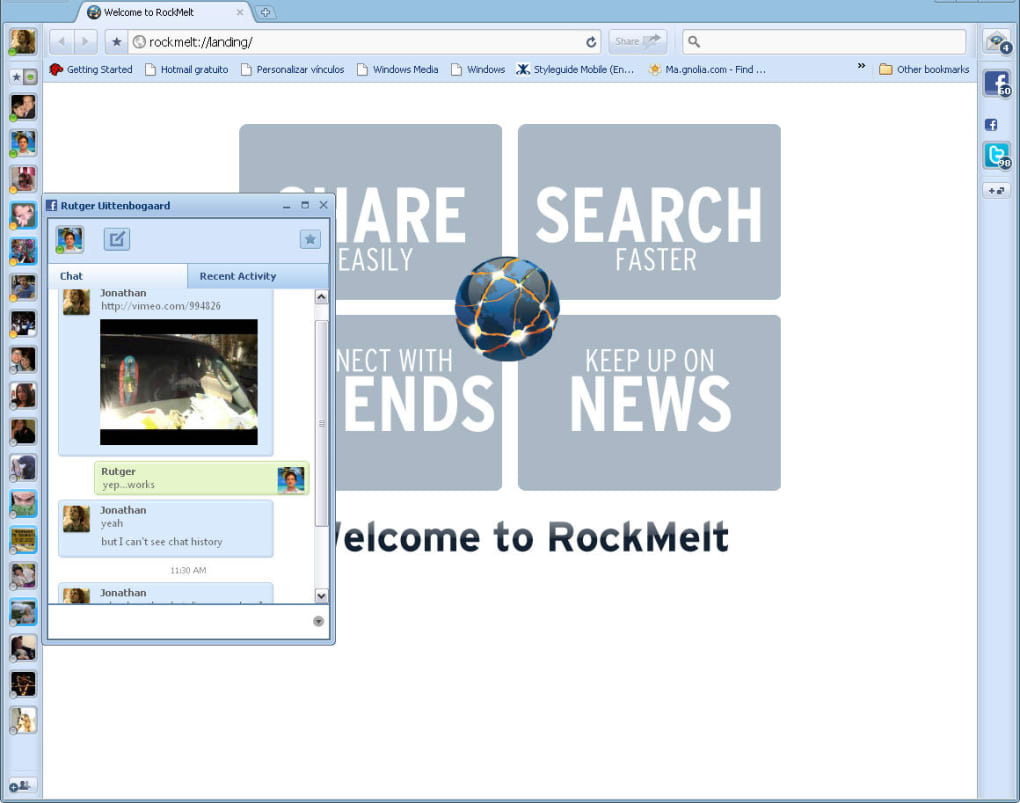
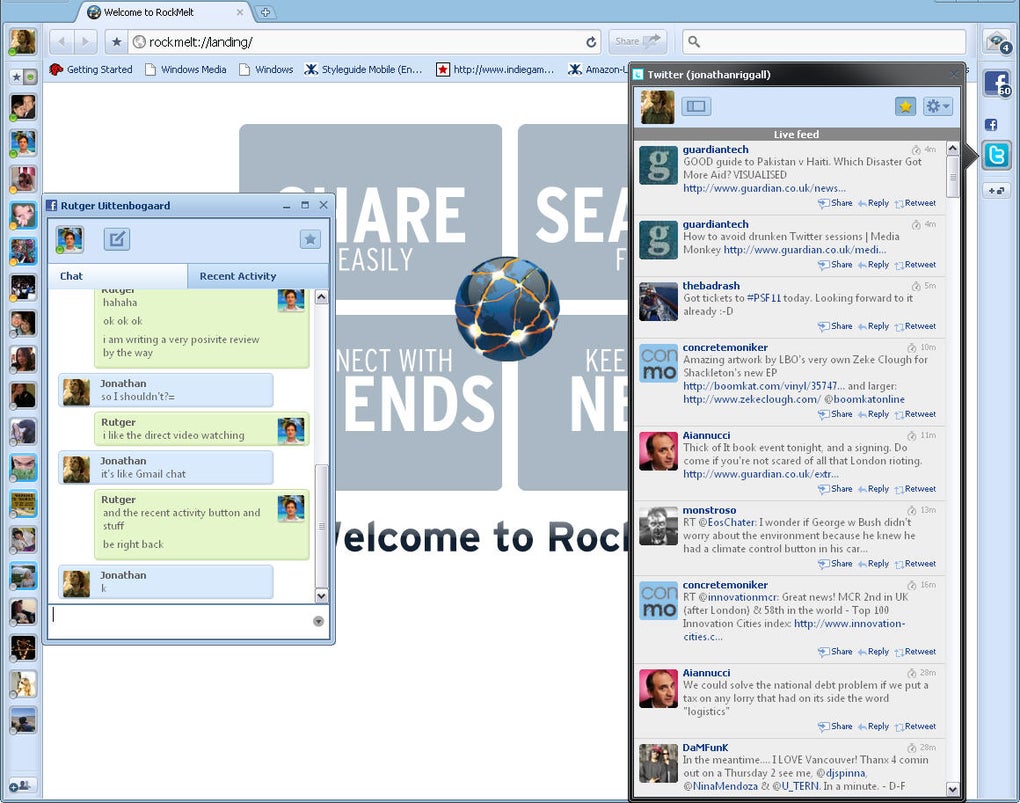
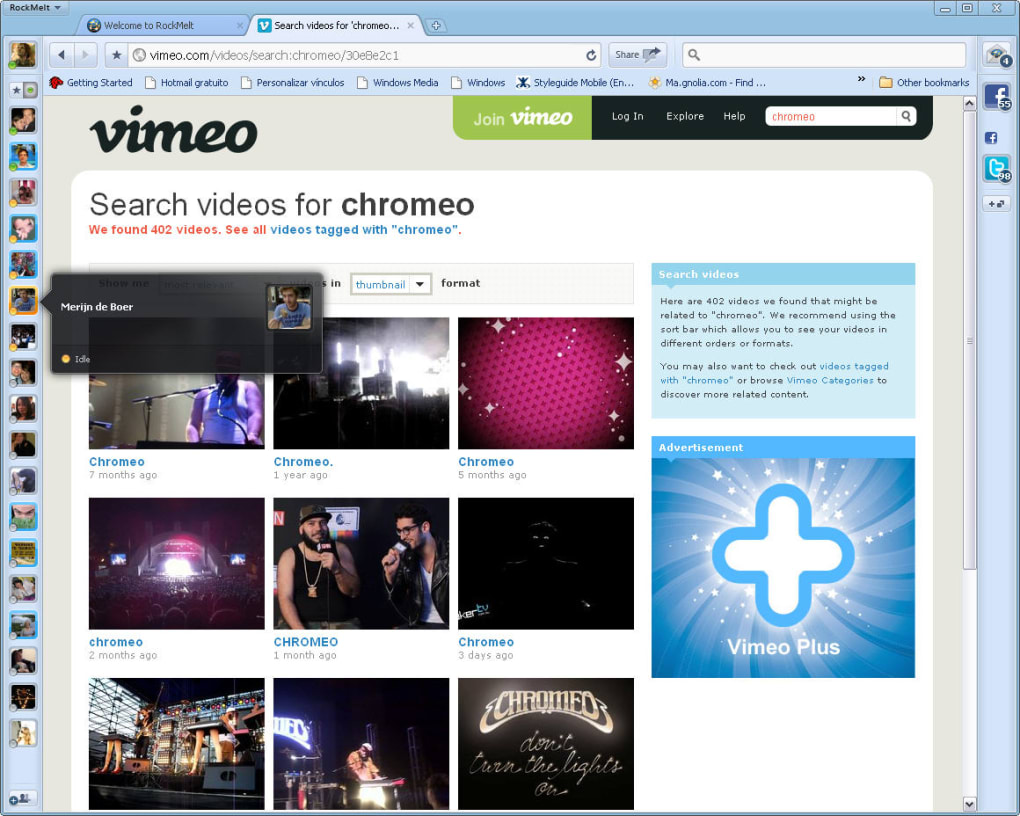
RockMelt distinguished itself from its contemporaries through its unique integration of Facebook and Twitter. Unlike traditional browsers that opened social media sites in new tabs, RockMelt incorporated these platforms directly into its interface. This was achieved through two slim sidebars flanking the main browsing window. The left sidebar displayed the user’s Facebook friends list and enabled instant messaging, while the right sidebar showcased a combined feed of Facebook wall updates, Twitter tweets, and any custom RSS feeds the user added. This layout prioritized constant visibility and accessibility of social media updates, fostering a more immersive and intertwined browsing experience. The design, while unique, closely resembled Google Chrome, reflecting the browser’s underlying architecture based on the open-source Chromium project.
The integration wasn’t merely visual. RockMelt also included a “Share” button prominently placed next to the address bar, facilitating rapid sharing of web pages to Facebook or Twitter. This streamlined the social sharing process, eliminating the need to manually copy and paste links or navigate to separate social media websites. Moreover, the social media windows within RockMelt were detachable, allowing users to drag and float them anywhere on their desktop, providing flexibility for personalized workspace arrangement. This innovative feature allowed for multitasking and improved workflow, catering to users who frequently switched between browsing and social media engagement.
A Browser Designed for Social Media Power Users
RockMelt’s design choices clearly targeted power users of Facebook and Twitter. The persistent display of social media feeds and the streamlined sharing functionality were designed to minimize friction and maximize efficiency for those who actively used both platforms. The browser’s core functionality centered around facilitating this social interaction, making it particularly appealing to individuals who desired a constant stream of social updates integrated directly into their browsing workflow. This design philosophy highlighted a shift in user expectations, suggesting a growing demand for tightly integrated social media experiences within everyday applications.
However, this user-centric approach also carried inherent limitations. RockMelt’s reliance on Facebook and Twitter logins meant users couldn’t utilize the browser effectively without active accounts on both platforms. This exclusionary design choice inherently limited its appeal to a niche audience, unlike more versatile browsers that could function independently of social media accounts. Furthermore, the absence of email integration at launch was a notable omission, hindering the browser’s usability for users who prioritized email management within their browsing sessions.
Performance and Stability: RockMelt’s Strengths
Despite its relatively short lifespan, RockMelt received generally positive reviews concerning its performance and stability. Built upon the Chromium platform, the browser benefited from the inherent speed and efficiency of that underlying architecture. This ensured a relatively quick loading time for web pages and responsiveness during navigation, even while running concurrent social media updates in the sidebars. Many user reviews emphasized the browser’s speed and stability, highlighting its smooth functionality even when heavily burdened with numerous open tabs and active social media streams. This positive feedback suggested that RockMelt effectively leveraged the benefits of the Chromium engine, maintaining a polished and efficient browsing experience.
The feature-rich nature of RockMelt also contributed to its positive reception. Beyond the core social media integration, the browser provided a solid foundation of conventional browsing functionality. Users could personalize their settings, manage bookmarks, and utilize extensions, mirroring the versatility of established browsers. This combination of social integration and standard browsing features fostered a more comprehensive and appealing user experience, preventing RockMelt from being pigeonholed as solely a social media-focused tool.
Why RockMelt Ultimately Failed
Despite its innovative features and positive user reviews, RockMelt ultimately failed to gain significant market share and was eventually discontinued. Several factors contributed to its decline. First, the intense competition within the browser market proved insurmountable. Google Chrome and Mozilla Firefox were already well-established giants, offering a wide range of features and enjoying significant brand recognition. RockMelt struggled to compete against the established players, particularly in terms of brand awareness and user base.
Second, the heavy reliance on Facebook and Twitter limited RockMelt’s potential user base. By requiring logins to both platforms, the browser excluded users who either didn’t have accounts or preferred a more independent browsing experience. This design choice, while tailored to a specific target audience, proved to be a significant barrier to broader adoption. The missing email functionality further exacerbated this issue, diminishing its appeal to users who sought a more comprehensive suite of online tools integrated within their browser.
Third, the evolution of social media itself played a role in RockMelt’s obsolescence. The rise of mobile platforms and the increasing usage of social media apps shifted user behavior. Users increasingly accessed social media through dedicated mobile applications rather than through web browsers, thereby diminishing the perceived value proposition of a social-integrated browser. This shift in usage patterns fundamentally challenged RockMelt’s core premise of constant social media integration within the web browsing experience.
Legacy and Lessons Learned
RockMelt’s demise highlights the complexities of disrupting established markets. While the browser’s innovative social integration was a significant step towards a more interconnected browsing experience, its niche focus and failure to adapt to evolving user behaviors ultimately led to its discontinuation. The browser serves as a case study in the challenges of creating a successful niche product in a highly competitive market and the importance of adaptability in response to shifting technology and consumer preferences. The attempt, though unsuccessful in achieving widespread adoption, did demonstrate the growing interest in more deeply integrated social experiences within everyday software, prefiguring the future trend of social media’s increasing influence on software design and user experience. RockMelt’s legacy remains a reminder that even with innovative features, success requires a compelling value proposition that aligns with the evolving needs and preferences of the broader user base.
File Information
- License: “Free”
- Version: “1.2.189.1”
- Latest update: “September 23, 2024”
- Platform: “Windows”
- OS: “Windows 7”
- Language: “English”
- Downloads: “447.3K”
- Size: “558.92 KB”


