
Secret Hitler, the popular board game of deception and political maneuvering, has found a new home on desktop computers. This digital adaptation faithfully recreates the tense gameplay of the original, allowing players to experience the thrill of uncovering hidden identities and shaping the destiny of a nation – all from the comfort of their own homes. This review delves into the intricacies of the game, exploring its mechanics, strengths, and weaknesses, ultimately determining whether this digital incarnation successfully captures the essence of the beloved board game.
Gameplay: A Digital Recreation of Political Intrigue
The digital version of Secret Hitler meticulously mirrors the core mechanics of its physical counterpart. Set in pre-World War II Germany, the game pits two factions against each other: the Liberals, striving to preserve democracy, and the Fascists, aiming to establish a totalitarian regime. Adding a layer of complexity and suspense, one of the Liberals is secretly Hitler himself – a saboteur working from within to undermine the democratic process.
Players are secretly assigned their roles at the start of the game. The Fascists know the identity of Hitler, while the Liberals remain unaware of who amongst them harbors the ultimate goal of establishing a fascist dictatorship. The game proceeds through a series of rounds, each involving the election of a Chancellor, the enactment of policies, and the potential assassination of Hitler.
The core objective for the Liberals is to enact five liberal policies before the Fascists manage to enact six fascist policies. Alternatively, they can achieve victory by successfully assassinating Hitler. Conversely, the Fascists win if they can successfully enact six fascist policies or elect Hitler as Chancellor.
Each round unfolds with a meticulously defined structure. First, a President is elected from among the players. The President then proposes a Chancellor from the remaining players. The electorate votes on the proposed Chancellor, and if the vote passes, the Chancellor then selects a policy card from a hidden deck. Crucially, the composition of the policy deck is revealed only to the Chancellor and President, introducing elements of strategic trust and deception. This action provides both groups with opportunities to manipulate the selection of policies in their favor, creating intense moments of uncertainty and calculated risks.
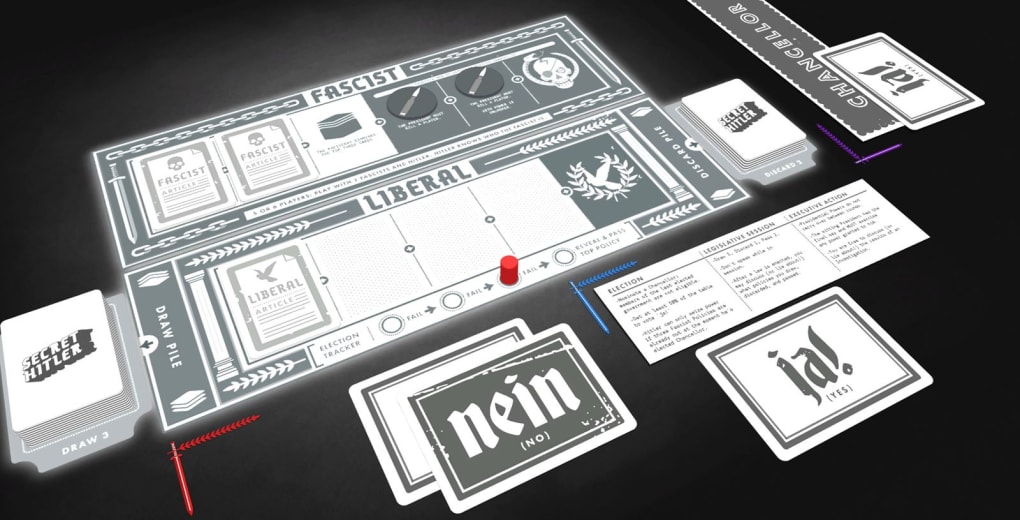
The policy selection phase is followed by the potential assassination of the Chancellor. The Liberals are granted the power to assassinate, but this action can only be undertaken when three fascist policies have already been implemented. This mechanic introduces a thrilling element of high-stakes decision-making, forcing the Liberals to carefully weigh the risk of targeting the wrong player against the potential benefit of removing Hitler from power. The timing of assassination attempts adds another layer of strategy, with Liberals needing to gauge the risk of prematurely triggering this powerful countermeasure.
Game Mechanics and User Interface
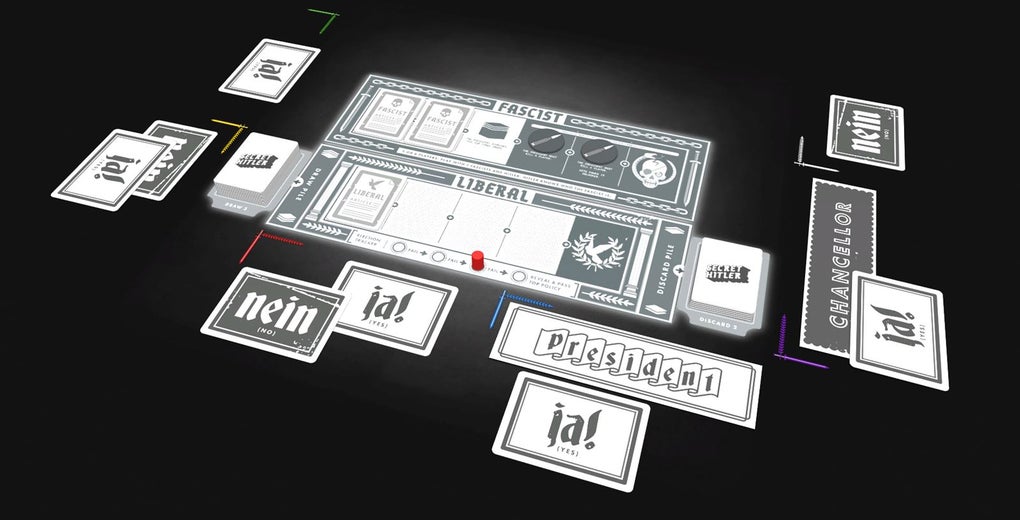
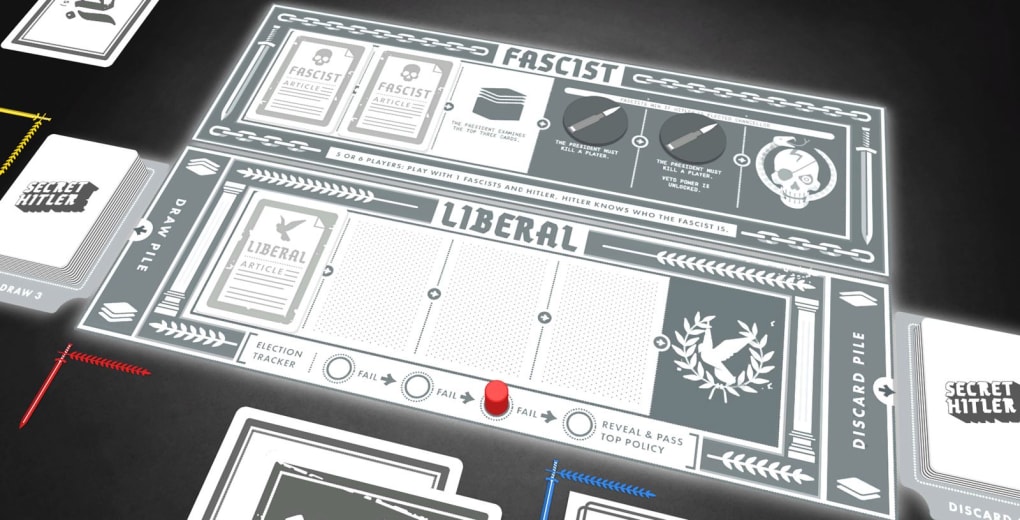
The digital adaptation expertly translates the complex interactions of the physical game into a user-friendly interface. The game is browser-based, eliminating the need for any software downloads or installations, making it immediately accessible to a wide range of players. The intuitive interface guides players through each phase of the game, providing clear instructions and visual representations of game states. Players can easily view the current policy count, the lineup of candidates for President and Chancellor, and the voting results.
The game facilitates creating and joining private or public games. Players can invite friends via a unique room URL for private games, ensuring an exclusive environment for playing with familiar faces. For those seeking a quick game, the ability to join public rooms allows for immediate participation with random opponents. This flexibility caters to players’ preferences, allowing them to choose between playing with friends or experiencing the thrill of competition with unfamiliar individuals.
Furthermore, the game efficiently handles player management, allowing for a smooth and uninterrupted gaming experience. It seamlessly tracks player roles, policy selections, and voting outcomes, ensuring accurate and transparent gameplay. The integration of these game management features effectively enhances the user experience, providing a streamlined and efficient approach to managing the complexities of the game’s mechanics.
Advantages and Disadvantages of the Digital Version
The digital version of Secret Hitler presents several advantages over the physical board game. It eliminates the need for physical components, making it easily accessible and convenient. The streamlined interface simplifies the gameplay, reducing the potential for confusion arising from managing physical cards and tracking policy counts. The ability to play online eliminates geographical limitations, allowing players worldwide to connect and engage in thrilling games of political intrigue.
However, the digital version also has its drawbacks. While the interface simplifies certain aspects of the game, the core mechanics remain complex. New players might still find the game challenging to grasp initially. The absence of physical interaction might detract from the social experience, which is a crucial part of the board game’s appeal. The reliance on a web browser can make the game vulnerable to internet connectivity issues. Finally, some players might miss the tactile experience of handling the physical cards and the strategic placement of pieces on the game board.
Should You Play Secret Hitler Online?
The digital version of Secret Hitler offers a compelling alternative for players who enjoy the original board game. Its ease of access, simplified mechanics, and online multiplayer functionality provide a convenient and engaging experience. The ability to play with random opponents or with a group of friends enhances the replayability. However, potential players should be aware of the game’s complexity and the need for a stable internet connection.
If you’re a fan of social deduction games and enjoy the challenge of political intrigue and deception, the digital version of Secret Hitler is a worthwhile experience. The convenience and accessibility of the online format outweigh the limitations. The game successfully manages to capture the tension and complexity of the original board game, offering a compelling digital alternative for those seeking a thrilling and strategic game. While some might miss the social interaction of the physical game, the online adaptation proves to be an engaging and enjoyable option.
Conclusion: A Worthy Digital Adaptation
Secret Hitler’s digital adaptation proves itself to be a strong contender in the realm of online social deduction games. By skillfully translating the core gameplay and intricate mechanics of the original board game into a user-friendly online format, the developers have successfully created a compelling and accessible digital experience. While certain nuances of the physical game might be lost in the digital transition, the benefits of convenience, accessibility, and ease of play significantly outweigh any shortcomings. Ultimately, Secret Hitler’s online incarnation offers a faithful and engaging recreation of the original, offering both a thrilling gaming experience and a convenient way for players to enjoy this captivating game of political intrigue, deception, and high stakes.
File Information
- License: “Free”
- Version: “1.0”
- Latest update: “November 17, 2021”
- Platform: “Windows”
- OS: “Windows 8”
- Language: “English”
- Downloads: “256”


