
Sid Meier’s Civilization VII, the latest installment in the acclaimed 4X strategy game series from Firaxis Games, represents a significant evolution in the franchise. While retaining the core gameplay loop that has captivated millions for decades, Civilization VII introduces a host of new features, mechanics, and visual enhancements, setting a new benchmark for the genre. However, these advancements haven’t come without their share of controversy, sparking debate among longtime fans and newcomers alike. This review delves into the intricacies of Civilization VII, examining its strengths and weaknesses to provide a comprehensive assessment of this ambitious title.
A Grander, More Complex Experience
Civilization VII immediately distinguishes itself with its enhanced scope and complexity. The game retains its classic 4X foundation – eXplore, eXpand, eXploit, and eXterminate – but refines and expands upon each element. Players once again assume the role of a historical leader, guiding their civilization through the ages, from humble beginnings to global dominance (or utter annihilation).
One of the most significant changes lies in the decoupling of civilizations and leaders. Unlike previous iterations, such as Civilization V, players are no longer restricted to specific leader-civilization pairings. This newfound freedom allows for intriguing strategic combinations, fostering unique gameplay experiences with each playthrough. Players can now strategically pair leaders with civilizations outside their historical contexts, leading to unexpected synergies and challenges. This freedom opens up a vast array of strategic possibilities and encourages experimentation, contributing to the game’s overall replayability.
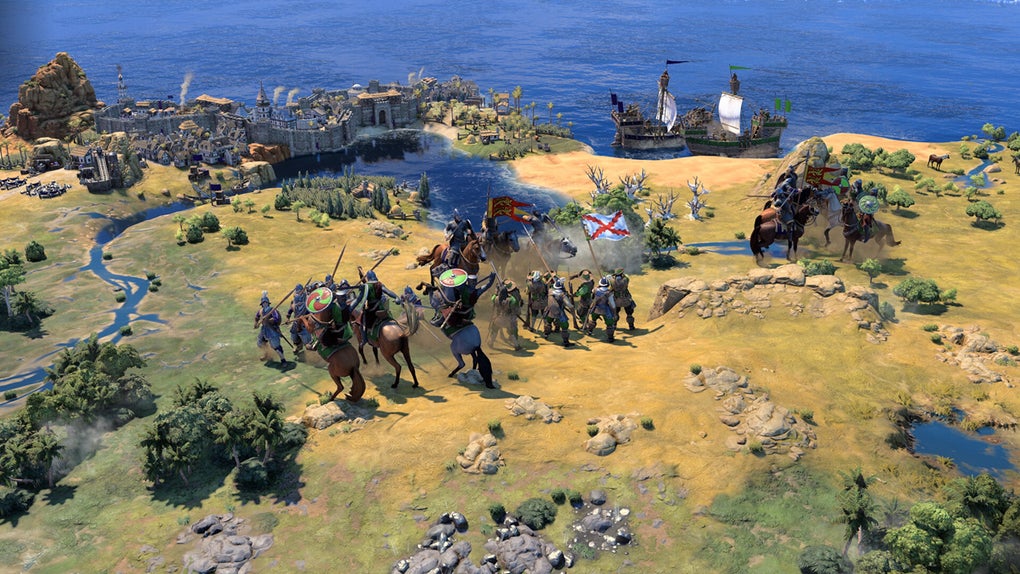
The game’s three distinct eras – Antiquity, Exploration, and Modern – each present unique challenges and opportunities. The progression through these eras is not merely a linear advancement, but a dynamic process shaped by player choices and in-game events. Technological advancements, diplomatic maneuvering, and military campaigns all play a vital role in shaping a civilization’s trajectory. The dynamic nature of the game ensures that no two playthroughs will be exactly alike.
Revamped Mechanics and Gameplay Innovations
Civilization VII introduces several noteworthy gameplay alterations. The most striking change involves the transition from cities to towns as the basic unit of settlement. Settlers now build towns, which generate gold rather than directly contributing to production. This gold can then be used to purchase buildings and units, adding a new layer of economic strategy to the game. Towns can be upgraded to cities at a cost that increases with each existing city under a player’s control, promoting a more considered approach to expansion. This change encourages players to carefully manage their economic resources and prioritize their expansion strategically.
Military units have also undergone a transformation. Fortifications are now constructed by units on command, streamlining the process of defending settlements. Furthermore, only Commander units earn experience points (XP) and are eligible for promotion, adding a crucial element of strategic unit management. This mechanic encourages a more cautious and deliberate approach to warfare, rewarding players who strategically utilize their Commander units effectively.
The game also introduces “Ages,” a new system that provides a framework for technological and societal progress. Each age offers a limited selection of civilizations, potentially limiting player choice in the early game, but simultaneously focusing the strategic decision-making process. This system can be seen as both a boon and a bane. While it adds a new layer of strategic depth, the limited options within each age can feel restrictive to players accustomed to the expansive civilization choices of previous installments.
Enhanced Visuals and Improved AI
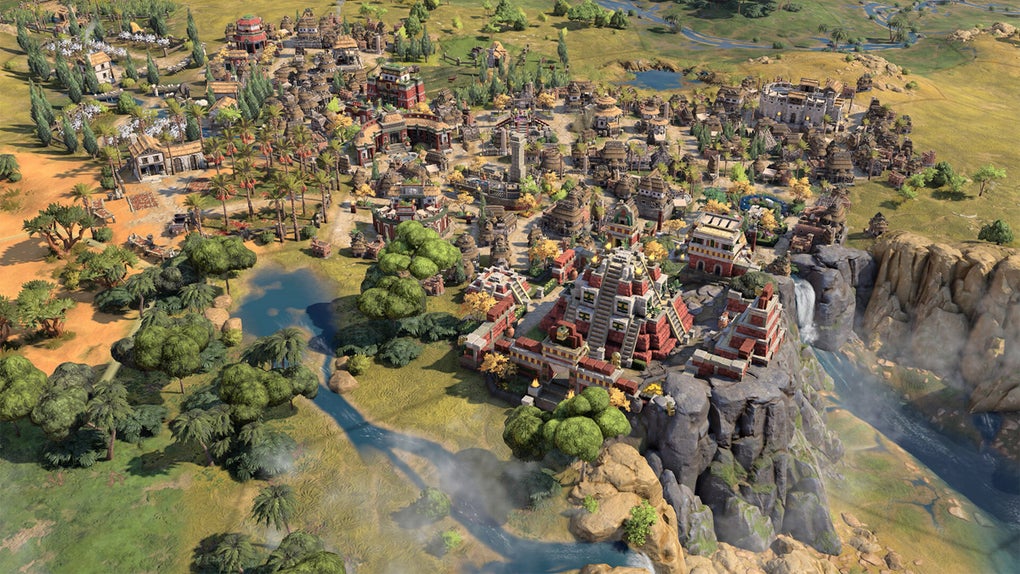
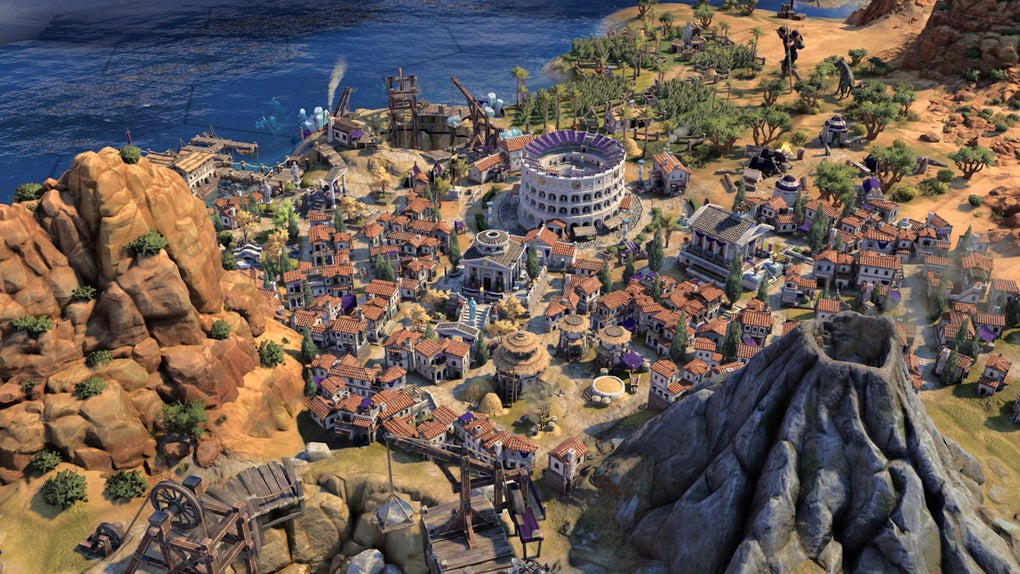
Civilization VII boasts stunning visuals. The cities are beautifully rendered, richly detailed, and imbued with a historical authenticity that brings the game’s settings to life. The map itself is more expansive and detailed than ever before, offering players a vast and immersive world to explore and conquer. However, this enhanced visual fidelity comes at a cost – demanding a powerful computer system to run smoothly, potentially excluding players with older or less capable hardware.
The game’s AI has also received a significant upgrade. The AI opponents are now more challenging and unpredictable, presenting players with more dynamic and engaging strategic conflicts. However, some players have expressed concerns that the improved AI, while more challenging, may also be less strategically nuanced than in previous iterations, potentially impacting the overall strategic depth of the game.
Criticisms and Controversies
While Civilization VII offers numerous improvements, it has not been without its critics. The removal of the one unit per tile system, a long-standing feature of the series, has been met with mixed reactions. Some players find this change disrupts the classic Civilization formula, while others see it as a necessary adaptation for a more streamlined and less cluttered gameplay experience. The limited civilization choices presented within the “Ages” system also contributes to the controversy. This system, while intended to add strategic depth, has been perceived by some as restrictive and limiting.
The introduction of Denuvo anti-piracy software has also drawn significant criticism, due to its “always-online” requirement. This requirement necessitates a constant internet connection to play the game, frustrating players who prefer offline play and raising concerns about accessibility and potential compatibility issues. The always-online element has been a source of contention amongst the player base, particularly those who value the ability to play the game offline or experience network outages.
The new art style has also proven divisive. While some players appreciate the enhanced visual fidelity and detailed graphics, others find the new aesthetic less appealing than the art styles of previous iterations.
Post-Launch Updates and Future Developments
Following its release, Firaxis Games released Patch 1.0.1, addressing several issues including improvements to the user interface, refined tooltips, and various bug fixes. However, the absence of the Hot Seat multiplayer mode, a long-standing feature, initially caused significant disappointment. Firaxis Games has since confirmed that this popular feature will be reinstated in a future update, addressing a key concern among the player base.
Furthermore, a virtual reality (VR) adaptation of Civilization VII is in development, promising an innovative and immersive gameplay experience. This VR version will adopt a board game-like presentation, allowing players to interact with the game in their real-world space using passthrough cameras or within a virtual environment. The multiplayer experience in VR will see players’ avatars represented as digital depictions of leaders gathered around a virtual table.
Several editions of the game are available: the Standard Edition, Deluxe Edition, Founders Edition, and a PC-exclusive Collector’s Edition, each offering varying levels of additional content and physical collectibles.
Conclusion
Sid Meier’s Civilization VII is a complex and ambitious title that pushes the boundaries of the 4X genre. It offers a rich and immersive gameplay experience, enhanced visuals, and a more challenging AI. However, the game’s innovations have not been universally welcomed, with certain changes sparking controversy among longtime fans. The removal of classic features, the always-online requirement, and the new art style have generated significant discussion.
Despite these criticisms, Civilization VII remains a captivating and strategic game with a high level of replayability. The potential for future updates, including the return of the Hot Seat mode and the addition of a VR version, further enhances its longevity. Ultimately, whether or not Civilization VII lives up to expectations will largely depend on individual preferences and tolerance for the changes introduced in this latest iteration. While the game’s ambitious changes may not resonate with every player, it undeniably offers a compelling and expansive strategy experience that continues the legacy of the Civilization franchise.
File Information
- License: “Full”
- Version: “varies-with-devices”
- Latest update: “May 16, 2025”
- Platform: “Windows”
- OS: “Windows 11”
- Language: “English”
- Downloads: “5.8K”


