
In the annals of gaming history, few titles can lay claim to having single-handedly birthed an entire genre. Sid Meier’s Railroad Tycoon, released in 1990, is one such legendary game. It wasn’t just a game; it was a revelation, a masterclass in economic simulation and strategic management that captivated a generation of players and inspired countless imitators. More than three decades later, its enduring appeal is a testament to its brilliant design, a fact underscored by its recent availability as a free download, ensuring new generations can experience the genesis of the “Tycoon” phenomenon. This pivotal release invites players to rewind the clock to the 19th century, a transformative era of industrialization and expansion, and to forge their own transportation empires from the ground up.
The game plunges you directly into the heart of the “Age of Steam,” an exhilarating period where the locomotive was king and railways were the arteries of burgeoning economies. Starting with a modest sum—a million dollars, half of which is essentially a loan to be repaid—and a singular vision encapsulated by your “Tycoon mission card,” players embark on a journey that begins with a single locomotive, often the venerable John Bull, a true pioneer of North American rail. From these humble origins, the objective is grand: to construct a sprawling railroad network, connecting distant cities, facilitating trade, and amassing a fortune. This involves intricate financial management, shrewd strategic planning, and a keen eye for opportunity, all while navigating a competitive landscape filled with aggressive entrepreneurs. The magic of Sid Meier’s Railroad Tycoon lies in its ability to translate the complex realities of 19th-century industrial development into an accessible yet deeply engaging gameplay experience, proving that strategy and simulation can transcend mere pixels and sound effects.
A Journey Back to the Golden Age of Rail
The allure of Sid Meier’s Railroad Tycoon is deeply intertwined with its historical setting. The 19th century was a period of unprecedented innovation and expansion, particularly in the United States and Europe. The advent of the steam locomotive revolutionized travel and commerce, shrinking distances and connecting disparate communities in ways previously unimaginable. This backdrop provides a rich tapestry for the game’s economic simulation, where players aren’t just building tracks; they’re contributing to the very fabric of industrial society, shaping economies, and altering geographical landscapes.
The Birth of a Genre
Before Railroad Tycoon, economic simulation games often focused on abstract numbers or specific industries without the overarching narrative of empire-building that Sid Meier so masterfully wove into his creation. The term “Tycoon” itself, signifying a wealthy and powerful business magnate, became synonymous with this new breed of game, emphasizing not just management but aggressive expansion and competitive dominance. What set Railroad Tycoon apart was its holistic approach. It wasn’t enough to simply lay tracks; players had to consider the types of cargo (mail, passengers, raw materials, manufactured goods), the demand in different cities, the efficiency of their routes, and the constant need to upgrade their technology. This intricate web of interconnected decisions, combined with a compelling strategic layer, made the game endlessly replayable and genuinely challenging. It demanded foresight, adaptability, and a ruthless entrepreneurial spirit, perfectly encapsulating the essence of what it meant to be a “tycoon.”
Stepping Into the 19th Century
The moment you launch Sid Meier’s Railroad Tycoon, you are transported to a simpler yet strategically profound gaming era. For those concerned about the compatibility of a game hailing from 1990, fear not. The version widely available today, including the free iteration, often integrates its own DOSBox, negating the need for manual configuration or direct access to old DOS environments. This thoughtful inclusion ensures that the classic experience is readily accessible on modern Windows operating systems, allowing players to dive straight into the action without technical hurdles.
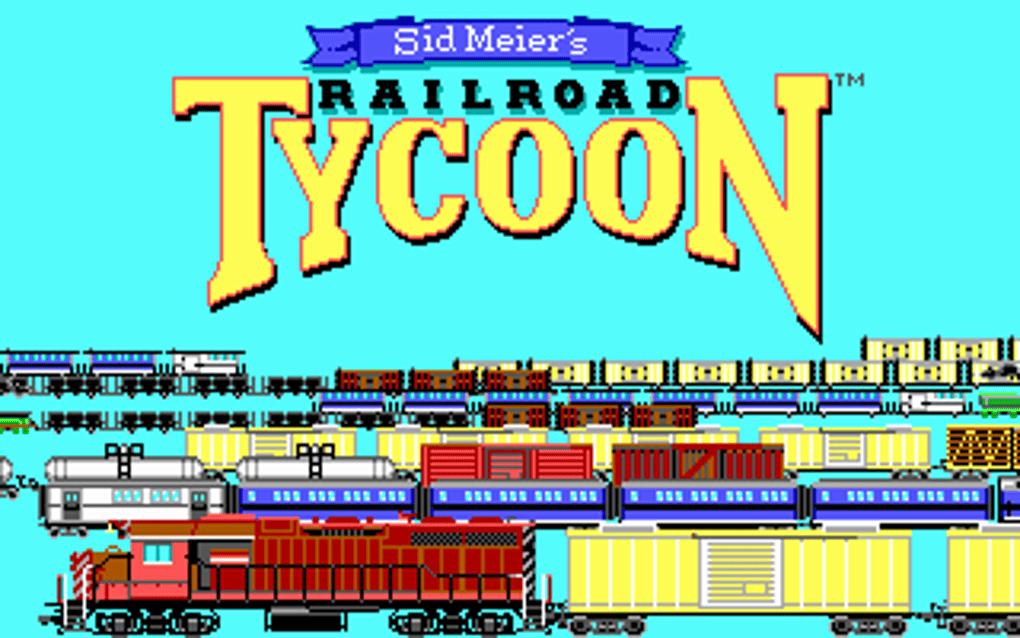
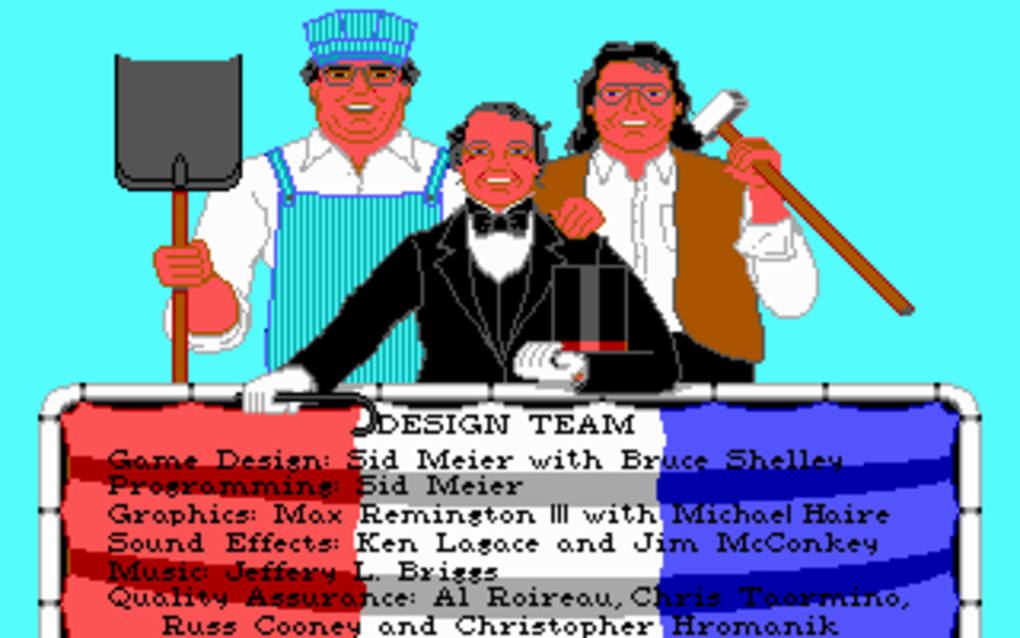
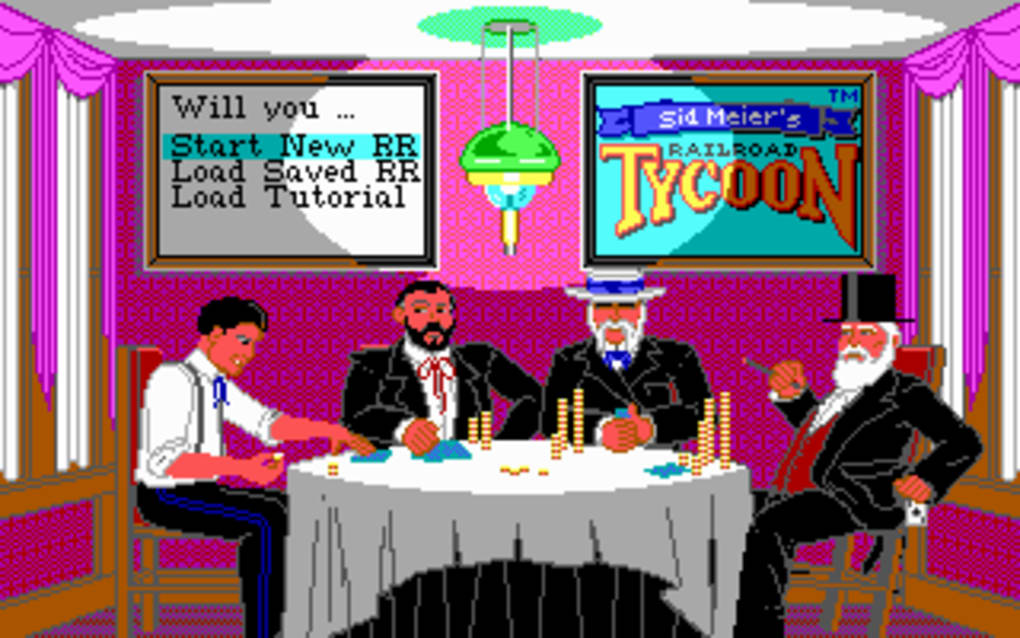
Original gamers of Sid Meier’s Railroad Tycoon will undoubtedly experience a wave of nostalgia upon encountering its distinctive aesthetic. The game proudly features minimalistic graphics, a symphony of midi country music that sets the perfect mood for frontier expansion, and pixelated area maps that, despite their simplicity, convey all the necessary strategic information. Yet, beyond these charming retro elements, lies the true heart of the game, the fundamental pillar upon which the entire series was built: the meticulous management of money and assets. This economic core is what truly defined the “Tycoon” genre and continues to challenge and engage players today.
The Art of Building a Railroad Empire
Every great empire starts somewhere, and in Sid Meier’s Railroad Tycoon, it begins with a million dollars and a blank canvas of 19th-century North America or Europe. The initial half-million dollar debt serves as an immediate motivator, forcing players to think strategically from their very first move.
From Humble Beginnings to Spanning Continents
The first critical decision involves choosing a strategic starting location. This often means identifying cities with high potential for growth, existing industries needing transportation, or geographical choke points that could yield future dominance. Once a location is selected, the next step is to build your first station, an essential hub for all future operations. Then comes the foundational act of track laying, connecting your nascent station to another city. This seemingly simple process quickly becomes a complex puzzle as you navigate terrain, consider construction costs, and plan for future expansion.
The game truly begins to weave its addictive spell as your network of railroads expands, reaching more and more cities, and your income streams begin to swell. The satisfaction of seeing goods and passengers flow through your meticulously planned routes, generating profits, is immense. However, simply connecting cities isn’t enough; the depth comes from optimizing these connections. What goods are needed where? Can you create a profitable loop? Are your trains efficient enough for the demand? These questions form the backbone of the strategic challenge. The ultimate goal, depending on your chosen mission, might be to connect iconic locations like New York to Chicago, earn the highest profit margin, or even undertake the monumental task of building the Transcontinental Railway, spanning the vastness of North America. These grand objectives provide a compelling long-term vision, transforming initial track-laying into a purposeful endeavor of economic conquest.
Mastering the Locomotive Fleet
At the heart of any railroad empire are its trains, and Sid Meier’s Railroad Tycoon offers a delightful variety of locomotives, each with its own characteristics, strengths, and weaknesses. Players will quickly become familiar with iconic engines like the Norris, the powerful Crocodile, or the versatile Ten-Wheeler. Each locomotive has different speeds, hauling capacities, and operating costs, requiring players to make informed decisions about which trains to deploy on which routes. A fast passenger train might be ideal for high-profit express routes between major cities, while a slower, more powerful freight engine is better suited for hauling heavy raw materials from mines to industrial centers.
As technology progresses (often signaled by specific in-game dates), newer, more advanced locomotives become available, offering improved speed and capacity. Upgrading your fleet is crucial for maintaining efficiency and profitability, but it also represents a significant capital investment. Balancing the need for cutting-edge technology with prudent financial management is a constant strategic consideration. The thrill of seeing a new, faster locomotive whisking through your network, cutting journey times and boosting profits, is a core part of the game’s addictive loop.
The Cutthroat World of Rail Magnates
While the economic simulation of Sid Meier’s Railroad Tycoon is deep, the game also excels in its portrayal of competition. Depending on the level of difficulty chosen, players will encounter truly aggressive entrepreneurs and rough competition. This isn’t just about building the best network; it’s about outmaneuvering rivals. Competitors might try to build tracks in prime territories you had your eye on, undercut your prices, or even engage in hostile takeovers by buying up shares of your company on the stock market.
Protecting your assets from these rival tycoons is a critical aspect of the game. This can involve quickly acquiring valuable land rights, establishing dominant routes, or even strategically buying shares in your competitors’ companies to gain control or influence. The stock market adds another layer of complexity, allowing players to invest, divest, and engage in high-stakes financial battles beyond just track and train management. The interplay between direct operational competition and financial maneuvering creates a dynamic and challenging environment, ensuring that players must always be vigilant and strategic to maintain their dominance. It’s a true test of a budding magnate’s business acumen, mirroring the intense rivalries that characterized the actual railroad expansion era.
More Than Just Pixels: The Enduring Charm
In an era dominated by hyper-realistic graphics and complex physics engines, the enduring charm of Sid Meier’s Railroad Tycoon speaks volumes about the timelessness of its core gameplay. Its aesthetic, born from the technological limitations of its time, has transcended mere functionality to become an iconic part of its identity, evoking a powerful sense of nostalgia for many.
A Symphony of Simple Graphics and Midi Tunes
The “minimalistic graphics” of Sid Meier’s Railroad Tycoon are not a flaw but a feature, a testament to the idea that design and gameplay depth can often outshine graphical fidelity. The pixelated area maps, with their clear demarcation of terrain, cities, and resources, provide all the necessary information without overwhelming the player. The simple sprites for trains, stations, and industries are immediately recognizable and contribute to a clean, uncluttered interface that prioritizes strategic clarity. This visual economy forces players to focus on the underlying mechanics and economics, rather than getting lost in graphical spectacle.
Complementing the visuals is the unforgettable “midi country music.” Far from being a mere background element, this soundtrack perfectly captures the adventurous spirit of 19th-century expansion. The jaunty tunes and evocative melodies create an immersive atmosphere, lending a sense of pioneering spirit and industrial ambition to every click and decision. For many, these sounds are instantly recognizable and deeply intertwined with their memories of playing the game, proving that synthesized music, when done right, can be just as impactful as any orchestral score. This combination of straightforward visuals and an atmospheric soundtrack creates an experience that is both nostalgic and deeply satisfying, proving that true engagement comes from gameplay, not just presentation.
Modern Accessibility for a Timeless Classic
One of the great boons for modern players wishing to experience this foundational title is its current accessibility. As previously mentioned, the game often comes bundled with its own DOSBox solution. This means that unlike many other DOS-era classics that require manual setup or specialized emulators, Sid Meier’s Railroad Tycoon is largely a plug-and-play experience on contemporary Windows systems. This eliminates a significant barrier to entry, allowing a new generation of players to easily discover what made the game so revolutionary.
The version available for free download, such as those found on sites like PhanMemFree, ensures that this piece of gaming history is not lost to time or technological obsolescence. While an old game might occasionally exhibit quirks (such as the specific issue mentioned in a user review regarding train assignment after upgrades, which might be a rare bug in specific compatibility layers or a misunderstanding of an older interface), these are generally minor compared to the overall stability and enjoyment offered by a well-packaged DOSBox version. The fact that the simulation aspect of Railroad Tycoon remains “as thrilling now as it was 10 years ago”—or even 30 years ago—speaks to the robustness of its design. It’s a testament that good gameplay, strong economic principles, and engaging strategic challenges age far more gracefully than even the most cutting-edge graphics. The ability to revisit this early masterpiece with ease is a gift to both veterans seeking a nostalgic trip and newcomers eager to understand the roots of an entire gaming genre.
A Legacy That Continues to Inspire
Sid Meier’s Railroad Tycoon wasn’t just a hit game; it was a cultural phenomenon that reshaped the landscape of PC gaming. Its influence reverberated through the industry, spawning countless imitators and inspiring a new generation of game designers. The “Tycoon” genre became a legitimate category, stretching far beyond railroads to encompass everything from theme parks (RollerCoaster Tycoon) to transport networks (Transport Tycoon) and even zoos.
The impact of the original Railroad Tycoon is evident in its successors and spiritual heirs. While Sid Meier himself later revisited the concept with Sid Meier’s Railroads!, offering a more graphically advanced and streamlined experience, many argue that the original retained a depth and strategic nuance that remains unparalleled. Games like Railway Empire and Railway Empire 2 are direct descendants, taking the core concepts of railroad management and expanding upon them with modern mechanics and stunning visuals. Yet, the foundational elements—connecting cities, managing routes, upgrading trains, and outmaneuvering competitors—all trace their lineage back to the 1990 classic.
Today, Sid Meier’s Railroad Tycoon continues to attract players not just for its historical significance but for its pure strategic enjoyment. The game’s focus on economic principles, supply and demand, and efficient logistics makes it a perennial favorite for those who appreciate deep gameplay over superficial presentation. Its enduring popularity among strategy enthusiasts underscores the fact that well-designed game mechanics are truly timeless. The ability to download and play this seminal work for free from platforms like PhanMemFree.org ensures that its legacy will continue to educate and entertain, allowing players to experience firsthand the foundational game that launched an entire genre. It remains a powerful example of how a simple concept, executed with brilliant design, can leave an indelible mark on gaming history.
File Information
- License: “Free”
- Latest update: “January 15, 2007”
- Platform: “Windows”
- OS: “Windows ME”
- Language: “English”
- Downloads: “55.3K”
- Size: “14.98 MB”


