
Simraceway emerged as a notable contender in the increasingly popular genre of online racing simulators, offering an immersive, free-to-play experience to a burgeoning community of virtual motorsport enthusiasts. Launched by Ignite Games Technologies, it quickly carved out a niche for itself by combining realistic driving physics with a robust online multiplayer platform, all while making it accessible without an upfront cost. At a time when many high-fidelity racing simulations demanded a significant financial investment, Simraceway presented an attractive alternative for those eager to test their driving skills in a competitive digital environment.
The core appeal of Simraceway lay in its commitment to simulation over arcade-style racing. This wasn’t a game where casual drifts and power slides were easily achievable with a keyboard; instead, it demanded precision, patience, and a deep understanding of vehicle dynamics. This dedication to realism, coupled with a vast array of officially licensed cars and meticulously rendered tracks, aimed to deliver an authentic racing experience directly to PC users. Beyond the thrill of competition, Simraceway fostered a vibrant online community, allowing players to connect, compete, and share their passion for motorsport in ways that felt both inclusive and engaging. This blend of accessibility, realism, and community interaction positioned Simraceway as an intriguing prospect in the ever-evolving landscape of racing games.
A Deep Dive into Simraceway’s Gameplay and Features
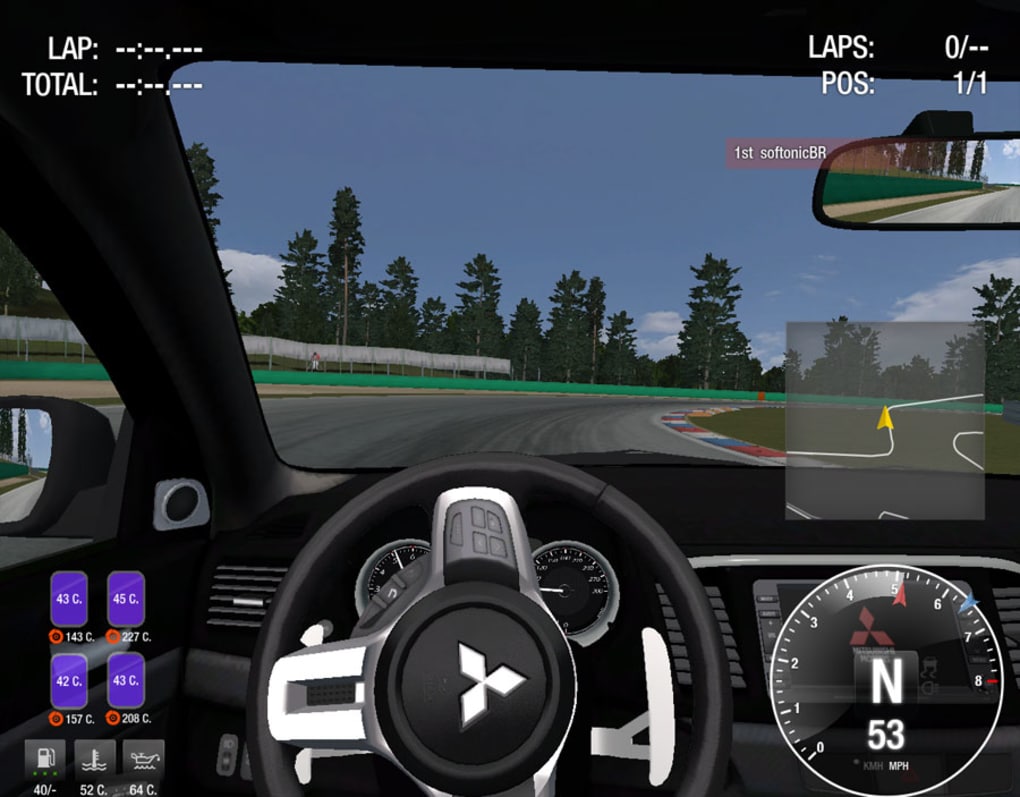
Simraceway’s design philosophy was clearly geared towards providing an authentic motorsport experience. From the moment players got behind the virtual wheel, it was evident that this was not a casual arcade racer but a true simulator demanding respect and skill. This commitment to realism permeated every aspect of its gameplay, from the intricate physics engine to the strategic depth required to succeed on the track.
The Simulator Experience
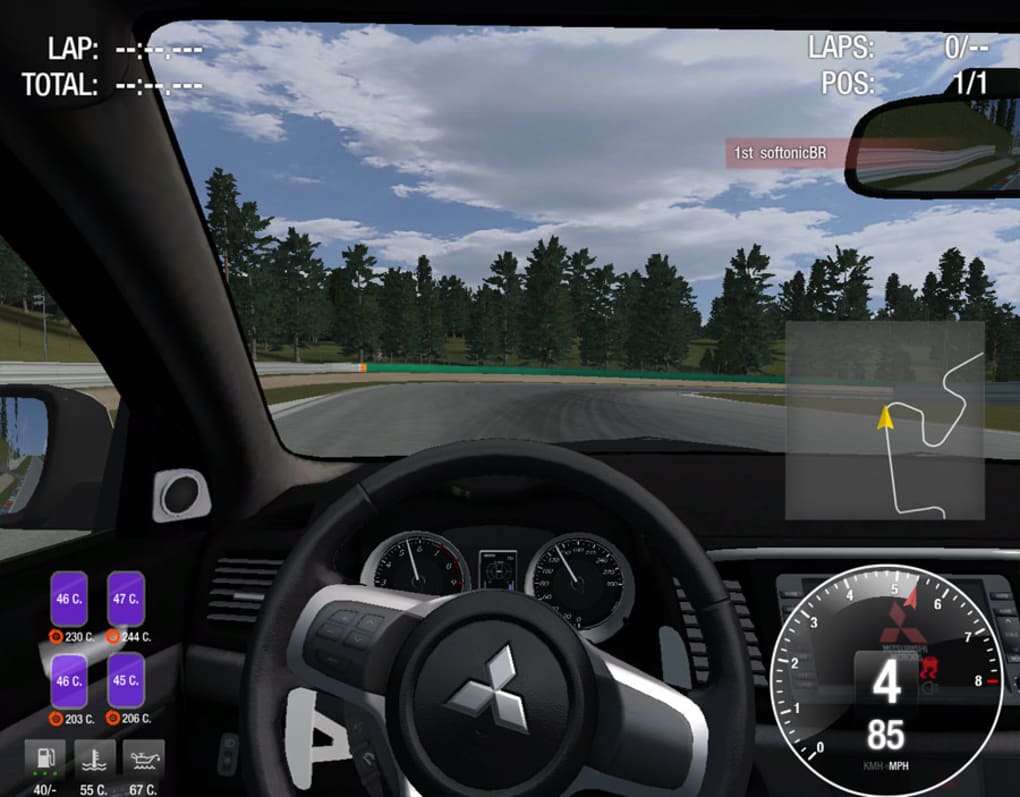
Driving in Simraceway was a challenging yet rewarding endeavor, setting it apart from more forgiving racing titles. The game’s physics engine was notoriously strict, replicating real-world vehicle behavior with a high degree of fidelity. This meant that applying too much throttle coming out of a corner or initiating a turn too abruptly would invariably lead to a loss of control, sending the car careening into a wall or spinning out. Players accustomed to the more lenient physics of games like Need for Speed or even some early iterations of Gran Turismo would find Simraceway a steep learning curve. Success hinged on precise inputs, smooth steering, and careful throttle and brake modulation—skills that mirror those required in actual racing.
The emphasis on realism extended to the cars themselves. Simraceway boasted a diverse garage of beautifully rendered vehicles, encompassing a wide range of racing disciplines and car manufacturers. Players could acquire and experience everything from high-performance street cars to dedicated open-wheel racers and touring cars. Each vehicle was modeled with distinct handling characteristics, requiring players to adapt their driving style to suit the specific demands of the car and track. This variety, coupled with the detailed physics, ensured that the driving experience remained fresh and continuously challenging, as mastering one car didn’t automatically translate to success in another. The developers also regularly introduced new cars, providing a continuous stream of fresh content and keeping the player base engaged with evolving vehicle rosters.
The Heart of the Community: Online Multiplayer
Perhaps the most significant selling point of Simraceway was its expansive and active online multiplayer community. Recognizing that racing is inherently competitive and social, Ignite Games Technologies built the game around a robust online infrastructure. This wasn’t merely about facilitating head-to-head races; it was about creating a virtual ecosystem where motorsport fans could interact, learn, and grow together.
Players could engage in a variety of online racing formats, from casual pick-up races to more structured competitive events. The multiplayer experience was enriched by features that fostered a sense of camaraderie and spectatorship. Friends could watch live feeds of each other’s races, offering real-time support or simply enjoying the spectacle of high-stakes competition. A built-in chat system allowed spectators and competitors to communicate, share insights, and discuss strategies, creating a dynamic social environment. Furthermore, Simraceway allowed players to record and share their favorite racing replays, enabling them to showcase their most impressive overtakes, perfect laps, or dramatic finishes. This feature not only served as a bragging right but also as a valuable tool for learning, allowing players to analyze their own performance and observe the techniques of more experienced drivers. This holistic approach to online interaction cemented Simraceway’s reputation as more than just a racing game; it was a virtual racing club.
Progression and Rewards
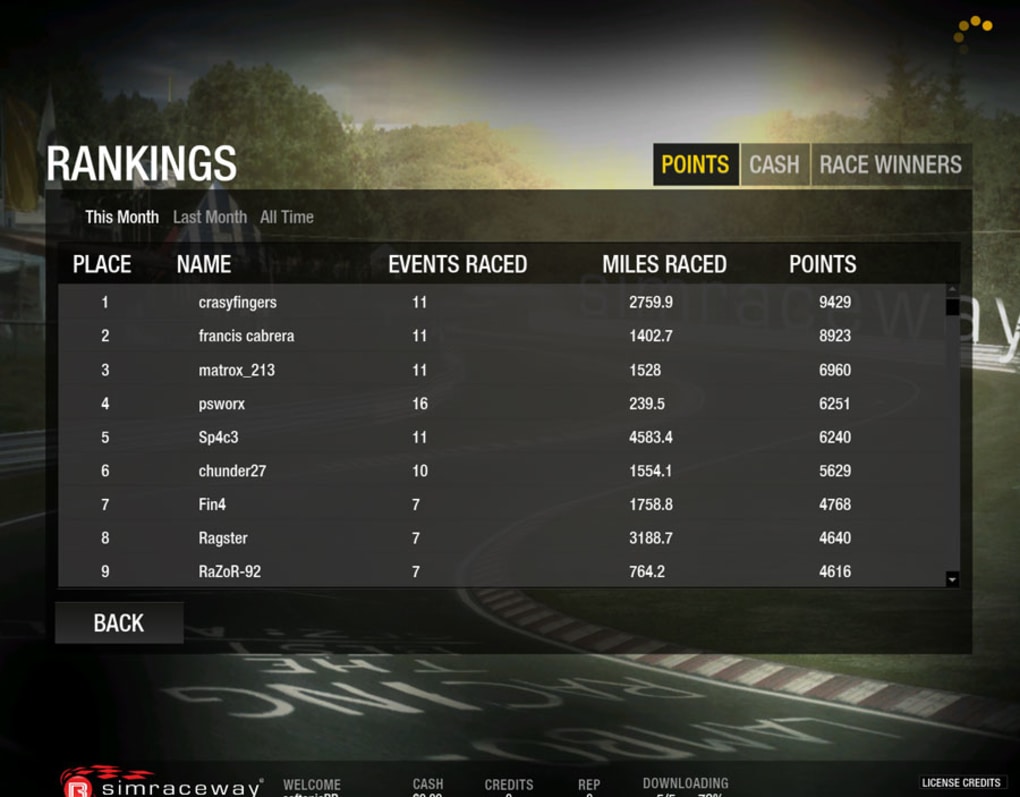
Despite being a free-to-play title, Simraceway offered a comprehensive progression system designed to keep players invested and motivated. Success on the track wasn’t just about winning; it was about earning tangible rewards that enhanced the overall experience. Racers were rewarded with in-game currency, credits, and cash, which could then be spent on various aspects of their virtual racing career.
This reward system fueled a robust car acquisition and upgrade loop. The money earned from races could be used to purchase new vehicles, expanding a player’s garage and opening up new racing opportunities. Beyond acquiring new cars, players could also invest in upgrades, tuning their existing vehicles to extract maximum performance. This continuous cycle of racing, earning, and upgrading provided a compelling incentive to keep playing, transforming mere participation into a strategic journey of automotive mastery. The inclusion of a “good career mode” further structured this progression, guiding players through a series of challenges and events that tested their skills across different cars and tracks, offering a clear path for advancement and a sense of accomplishment.
Visuals and Vehicle Variety
From a visual standpoint, Simraceway presented a solid, if not groundbreaking, offering for its time. The graphics were generally good, with attention to detail in the car models and track environments. Each vehicle was rendered with care, capturing the distinct lines and features of its real-world counterpart. The tracks, too, were designed to reflect their real-life layouts, enhancing the sense of immersion for those familiar with actual racing circuits.
However, it was acknowledged that while the visuals were competent, they might not “blow you away” if players were accustomed to the cutting-edge graphics seen in console titans like Gran Turismo 5 or Forza Motorsport 4. These benchmarks often pushed graphical fidelity to its absolute limits, and while Simraceway held its own, it operated within the constraints of a free-to-play PC title. Despite this, the consistent release of new, beautifully-rendered cars ensured that the visual content remained fresh and appealing. The continuous expansion of the car roster, often featuring new models and racing machines, demonstrated the developers’ commitment to enriching the player’s garage and keeping the game’s aesthetic appealing over time.
Technical Aspects and User Experience
Understanding Simraceway’s technical foundations and how users interacted with the game provides crucial insights into its strengths and eventual challenges. From the demanding control scheme to its specific platform requirements and the feedback from its community, these elements collectively shaped the game’s identity and legacy.
Controls: Beyond the Keyboard
One of the most defining and, for some, frustrating aspects of Simraceway was its stringent control requirements. As a “true simulator,” the game was designed with precision inputs in mind, making it virtually “next to impossible” to play effectively with a standard keyboard. The nuanced control demanded by its physics engine—fine adjustments to steering, progressive throttle application, and careful braking—simply couldn’t be achieved with the binary on/off nature of keyboard keys.
For optimal enjoyment and competitive play, racers were strongly advised to use a game controller or, ideally, a PC-compatible steering wheel and pedal set. These peripherals provided the analog input necessary to accurately convey the driver’s intentions to the virtual car, allowing for the smooth, controlled inputs vital for maintaining grip and speed. Simraceway even went a step further, offering its own proprietary controller for purchase directly from its site, underscoring the developers’ belief in the necessity of specialized hardware for their simulation. This strict requirement, while indicative of the game’s fidelity, also served as a barrier to entry for casual players who might not have possessed the necessary equipment, potentially limiting its broader appeal despite its free-to-play nature.
System Requirements and Historical Context
Simraceway was released for Windows, with support confirmed for Windows Vista and likely later versions of the operating system as well. Its last recorded update, version 28.64, dates back to April 19, 2012. This timestamp is critically important, as it places the game firmly within an earlier era of PC gaming and also hints at its subsequent trajectory. The file size of 597.99 MB was relatively modest for a racing simulator of its scope, suggesting efficient asset management or perhaps a more modular content delivery system typical of online games that download additional components as needed.
The developer, Ignite Games Technologies, aimed to compete in a rapidly evolving market. At the time of its active development, online gaming and free-to-play models were gaining significant traction, but high-fidelity simulations were still often premium, subscription-based, or console-exclusive experiences. Simraceway’s attempt to bridge the gap by offering a detailed simulator experience for free on PC was ambitious. However, the 2012 update date indicates that active development and major content releases likely ceased around that period, a common fate for many online games that struggle to maintain a sufficient player base or sustainable revenue model.
User Feedback and the Game’s Legacy
The user reviews collected by PhanMemFree.org offer a stark and important perspective on Simraceway’s later life. Reviews from 2015 and 2016 paint a picture of a game that had, unfortunately, become largely defunct. Users reported that the game was “dead,” with download links on the official website no longer functioning. Even attempts to install the game via third-party downloads often led to frustration, as the client would attempt to download a newer version that would then fail, rendering the game unplayable.
Issues with logging in were also frequently cited, with users describing an inability to access the game even after a successful installation. Customer service responses were reported to be scarce or non-existent, further signaling a lack of ongoing support or development. These testimonials collectively suggest that Simraceway was likely discontinued or simply abandoned by its developers, leaving its once “huge online racing community” without a functional platform. What started as a promising, feature-packed free-to-play simulator with an active community ultimately faded into obscurity, a victim of the challenging economics and continuous support requirements inherent in the online gaming market. Despite its initial promise and dedicated player base, the game’s inability to sustain its operational aspects led to its eventual demise, becoming a cautionary tale of online gaming longevity.
Simraceway in the Broader Racing Game Landscape
Simraceway’s entry into the racing game market was marked by an ambitious strategy: to deliver a hardcore racing simulation experience in a free-to-play online format. This positioned it uniquely, challenging established norms and attempting to carve out its own territory amidst formidable competitors.
Competing with the Giants
In the early 2010s, the racing game genre was dominated by a few major players. On consoles, titles like Gran Turismo 5 and Forza Motorsport 4 set the gold standard for graphics, car rosters, and simulation depth, boasting massive budgets and development teams. On PC, dedicated simulation enthusiasts often turned to more niche, subscription-based titles like iRacing, known for its unparalleled realism and competitive online league racing.
Simraceway aimed to provide an alternative that was both accessible (being free) and demanding (being a true simulator). Its graphics, while good, were acknowledged not to match the visual fidelity of the console giants, which often pushed the boundaries of what their hardware could achieve. However, its free-to-play model was a significant draw, allowing a broader audience to experience high-fidelity racing without the initial cost barrier associated with iRacing or the purchase of a console and game for Gran Turismo or Forza. This made Simraceway a compelling proposition for those who valued simulation physics and online competition but operated on a tighter budget or preferred PC gaming. Its success in attracting a “huge online racing community” despite these comparisons demonstrated a genuine appetite for its specific offering.
Alternatives and Similar Titles
The racing game genre is incredibly diverse, offering experiences for every taste, from arcade thrills to ultra-realistic simulations. Simraceway found itself among a varied ecosystem of titles, both free and paid, that offered different takes on the racing experience.
Among the direct competitors and alternatives mentioned on PhanMemFree.org, several stand out:
-
Other Free-to-Play Online Racers:
- Auto Club Revolution: Described as “A new standard for PC online racing games,” this title offered another free-to-play online experience, competing directly with Simraceway for players interested in accessible online competition.
- RaceRoom Racing Experience: This game promised “Authentic free-to-play motorsport thrills,” focusing heavily on licensed tracks and cars, similar to Simraceway’s approach but with a different focus on content delivery.
- Racer: An open-source 3D sports car racing game, offering a more modding-friendly and community-driven approach to simulation.
-
Paid/Subscription-based Simulators:
- iRacing: Widely regarded as one of the most realistic and competitive online racing simulators, iRacing offered a subscription model but delivered an unmatched level of realism, physics, and structured competition. It remained the benchmark for serious sim racers.
- Assetto Corsa: Known for its highly realistic physics engine and extensive modding community, Assetto Corsa (released after Simraceway’s prime) became a favorite among those seeking an uncompromised driving simulation.
- F1® 23 / MotoGP™21: These titles represent the pinnacle of licensed motorsport simulation for specific categories, offering highly detailed representations of Formula 1 and MotoGP seasons, often with yearly iterations.
-
More Accessible/Arcade-Oriented Racers:
- Ferrari Virtual Race / BMW M3 Challenge / Volvo The Game: These were often free, brand-specific racing experiences designed more as promotional tools than full-fledged simulators, offering a taste of driving specific iconic vehicles.
- Forza Horizon 5 / Need for Speed series / The Crew MotorFest: These represent the open-world arcade racing genre, prioritizing spectacle, accessibility, and freedom over strict simulation, appealing to a different segment of the racing game audience.
- DiRT Showdown / Extreme 4x4 Racing: These focused on off-road or destruction derby styles of racing, offering different adrenaline rushes.
Simraceway’s position in this crowded market was unique. It attempted to bridge the gap between the demanding realism of titles like iRacing and the accessibility of free-to-play models, without the marketing might or comprehensive content strategy of the console giants. Its commitment to challenging simulation with a thriving online community made it a significant, albeit ultimately transient, part of the racing game story. It demonstrated that a market existed for free, hardcore simulations, even if sustaining such an endeavor proved to be a formidable challenge in the long run.
In summary, Simraceway presented a compelling package: a free-to-play online racing simulator with a strong emphasis on realistic physics and a vibrant community. Its strengths lay in its accessibility, the depth of its simulation, the variety of cars and tracks, and the engaging social features that allowed players to race, watch, and share their experiences. However, its demanding control scheme, requiring specialized peripherals, and the eventual cessation of active development and support, as evidenced by user reports of dead links and login failures from 2015-2016, ultimately led to its discontinuation. Despite its challenges, Simraceway holds a place in the history of online racing as an ambitious project that offered a taste of high-fidelity simulation to a broad audience, influencing the evolution of the genre towards more accessible yet demanding virtual motorsport experiences.
File Information
- License: “Free”
- Version: “28.64”
- Latest update: “April 19, 2012”
- Platform: “Windows”
- OS: “Windows Vista”
- Language: “English”
- Downloads: “78.2K”
- Size: “597.99 MB”


