
SimRail: The Railway Simulator offers a compelling blend of realistic train simulation and engaging multiplayer interaction. Developed using the Unity game engine, SimRail boasts high-quality 3D graphics and physics, placing players in the driver’s seat (or signal box) of meticulously recreated rail routes spanning over 500 kilometers. Unlike many single-player focused train simulators, SimRail’s core strength lies in its robust multiplayer functionality, fostering a collaborative and competitive environment for enthusiasts.
Immersive Gameplay: Driving and Dispatching
SimRail presents a dual-faceted gameplay experience, catering to both solo players and those seeking the thrill of shared virtual railroading. While the single-player mode currently offers a more limited range of scenarios, ongoing updates promise to significantly expand its content. Even in its current state, however, the single-player experience provides a solid foundation for learning the intricacies of train operation and route management within the extensive, geographically accurate environments. These routes, generated from geodetic data, mirror real-world railway lines, offering a level of authenticity that enhances immersion.
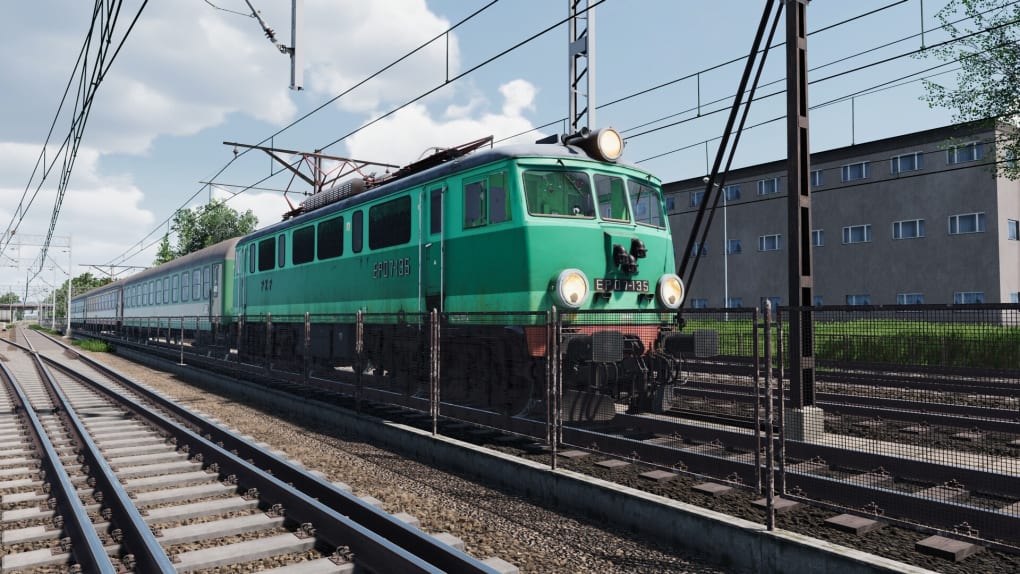
The heart of SimRail’s appeal lies within its multiplayer modes. Players can seamlessly transition between the roles of train driver and dispatcher, fostering a dynamic and interconnected experience. As a train driver, players navigate various train types, including steam, diesel, and electric locomotives, each exhibiting unique handling characteristics. The challenge lies not only in safely operating the trains but also in adhering to schedules and navigating complex rail networks.
The dispatcher role, on the other hand, demands strategic thinking and precise coordination. Dispatching requires players to effectively manage the signal boxes, ensuring the smooth and efficient flow of traffic across the entire rail network. This involves careful consideration of train schedules, prioritizing routes, and responding to unexpected events or delays. Real-time communication features facilitate collaborative gameplay, allowing drivers and dispatchers to communicate seamlessly and resolve potential conflicts or issues. This interplay between individual actions and collaborative decision-making is a key element that sets SimRail apart from its competitors.
Realistic Physics and Comparison to Competitors
Inevitably, SimRail attracts comparisons to established giants in the train simulation genre, most notably Train Simulator World. While Train Simulator World maintains a more polished overall presentation and offers a wider array of trains and routes, SimRail holds its own and even surpasses its competitor in certain key areas. The most striking difference is SimRail’s unwavering focus on multiplayer interaction. This element significantly enhances replayability and adds a layer of social engagement that is often absent in single-player-centric simulations.
Furthermore, SimRail excels in its realistic physics engine. The game meticulously simulates the weight and inertia of trains, providing a tangible sense of realism that is often lacking in other simulators. Players feel the impact of acceleration and deceleration, the subtle shifts in momentum when navigating curves, and the overall weight of the locomotive. This enhanced realism contributes significantly to the immersive and challenging gameplay experience. The physics engine isn’t just about authenticity; it also contributes to the overall difficulty and strategic depth of the game, demanding careful planning and skillful execution to avoid delays or accidents.
The Cargo Pack DLC and Recent Game Updates
The recent release of a highly anticipated update and the accompanying Cargo Pack DLC has significantly enriched SimRail’s content and gameplay features. The Cargo Pack DLC, a collaborative effort with an external developer, introduces a new set of challenging missions centered around the operation of heavy coal trains designed for the ET22 locomotive, as well as InterRegio passenger trains. This expansion adds a considerable amount of playtime, offering over four hours of new gameplay scenarios. The inclusion of a fully functional engine room further enhances the immersive experience, allowing players to interact with the complex machinery of the locomotives.
The accompanying game update introduces an array of significant improvements and additions, further refining the already engaging gameplay. One of the standout features is the integration of the ETCS Level 1 and 2 system. This sophisticated signaling technology adds a layer of complexity to the gameplay, requiring players to master a new set of protocols and procedures. Navigating the rail network with this advanced system presents a thrilling challenge even for experienced players.
Beyond the ETCS integration, the update includes new missions focused on AI-controlled train movement and shunting operations, adding diversity to the available scenarios. Multiplayer functionality has also been enhanced with new features, such as the ability to ban disruptive players based on their driving or dispatching performance. Numerous quality-of-life improvements are also included, including the display of train length and weight on the GUI timetable, improved handling on icy overhead lines, and the addition of cruise control settings to the HUD.
The update addresses numerous bugs and glitches reported by players, improving the overall stability and performance of the game. Fixes include resolving pantograph failures and other minor issues. Dispatcher mode receives notable enhancements with the addition of new dispatcher posts and improved signal visibility. Meanwhile, single-player mode benefits from a revamped scenario system and the ability to lock and unlock vehicle couplings, offering more control over train configurations. Finally, several miscellaneous improvements, such as snow removal from track heads and the addition of eco-driving stats, round out the comprehensive update, showcasing the developers’ commitment to continuous improvement and player feedback.
SimRail’s Strengths and Weaknesses
SimRail’s greatest strength is undoubtedly its multiplayer focus and the highly realistic physics engine that delivers a deeply immersive experience. The sheer scale of the game, with its 500km of real-world rail routes, is also a significant draw. The community-driven nature of the game further enhances its longevity and replayability.
However, the game’s current single-player offering might feel limited to those seeking primarily offline gameplay. While updates promise to expand this aspect, the current single-player mode is not as extensive or diverse as the multiplayer component.
Ultimately, SimRail offers a unique and compelling proposition for train simulation enthusiasts. Its robust multiplayer features, realistic physics, and extensive rail network make it a standout title. While its single-player content may currently lag behind its competitors, the ongoing development and regular updates suggest a promising future for SimRail, solidifying its place as a leading contender in the train simulation genre. For players seeking a collaborative and challenging rail simulation experience, SimRail is a compelling choice. For those primarily focused on single-player experiences, waiting for further updates might be advisable, until the single-player content matches the already impressive multiplayer offering.
File Information
- License: “Full”
- Version: “varies-with-devices”
- Latest update: “April 24, 2024”
- Platform: “Windows”
- OS: “Windows 8.1”
- Language: “English”
- Downloads: “7.6K”


