Few real-time strategy (RTS) games have managed to capture the vastness and epic scope of the Star Wars universe as effectively as Star Wars: Empire at War. Released in 2006 by Petroglyph Games, this title quickly established itself as a beloved entry in both the RTS genre and the sprawling Star Wars franchise. While the base game offered players the chance to command the might of the Galactic Empire or lead the valiant Rebel Alliance in a desperate struggle for control of the galaxy, it was the 2006 expansion, Forces of Corruption, that truly cemented its legendary status. This expansion introduced a fresh perspective, a morally ambiguous third faction, and a host of new mechanics that deepened the strategic experience and broadened the game’s narrative horizons, transforming Empire at War into a comprehensive and enduring galactic conflict simulator.
The original Empire at War was praised for its innovative blend of tactical ground and space battles, integrated within a grand strategic layer where players managed their forces across a galactic map. This dual-layered gameplay allowed for a scale rarely seen in RTS titles, enabling players to feel like true commanders, orchestrating large-scale offensives and cunning defenses. Forces of Corruption took this foundation and expanded upon it in every conceivable way, injecting new life into the familiar conflict and offering veteran players and newcomers alike an even richer tapestry of strategic possibilities. It’s a testament to its design that even after nearly two decades, Star Wars: Empire at War – Forces of Corruption remains a benchmark for Star Wars strategy games, beloved by a dedicated community that continues to explore its depths and expand upon its legacy.
Revisiting a Galactic Classic: Star Wars: Empire at War
The core of Star Wars: Empire at War is its ambitious vision to portray the Galactic Civil War as a full-scale strategic conflict. Players begin by choosing one of the two iconic factions: the oppressive Galactic Empire or the freedom-fighting Rebel Alliance. Each faction comes with its own unique units, heroes, technologies, and strategic approaches, faithfully recreated from the Star Wars films and expanded universe lore. The game is structured into several modes, offering varied experiences depending on the player’s preference.
The storyline campaign plunges players directly into a linear narrative, guiding them through a series of missions that reflect key moments and characters from the original trilogy era. This mode serves as an excellent introduction to the game’s mechanics, gradually unveiling the complexities of its strategic and tactical layers. Missions often involve specific objectives, such as destroying an Imperial base, rescuing a captured hero, or defending a Rebel outpost against overwhelming odds. The cinematic cutscenes and authentic Star Wars sound effects contribute heavily to immersion, making players feel like they are truly participating in the events of the saga.
However, the true heart of Empire at War lies in its Galactic Conquest mode. Here, the entire Star Wars galaxy becomes a strategic battlefield, represented by a detailed 3D map where planets are interconnected by hyperspace lanes. Players must conquer planets, manage their economies, construct space stations and ground bases, recruit armies and fleets, and ultimately eliminate the opposing faction. This mode offers immense replayability, with various starting scenarios, tech trees, and randomized elements ensuring that no two campaigns feel exactly the same. The strategic depth comes from balancing resource allocation, choosing the right planets to invade or defend, and deploying hero units effectively.
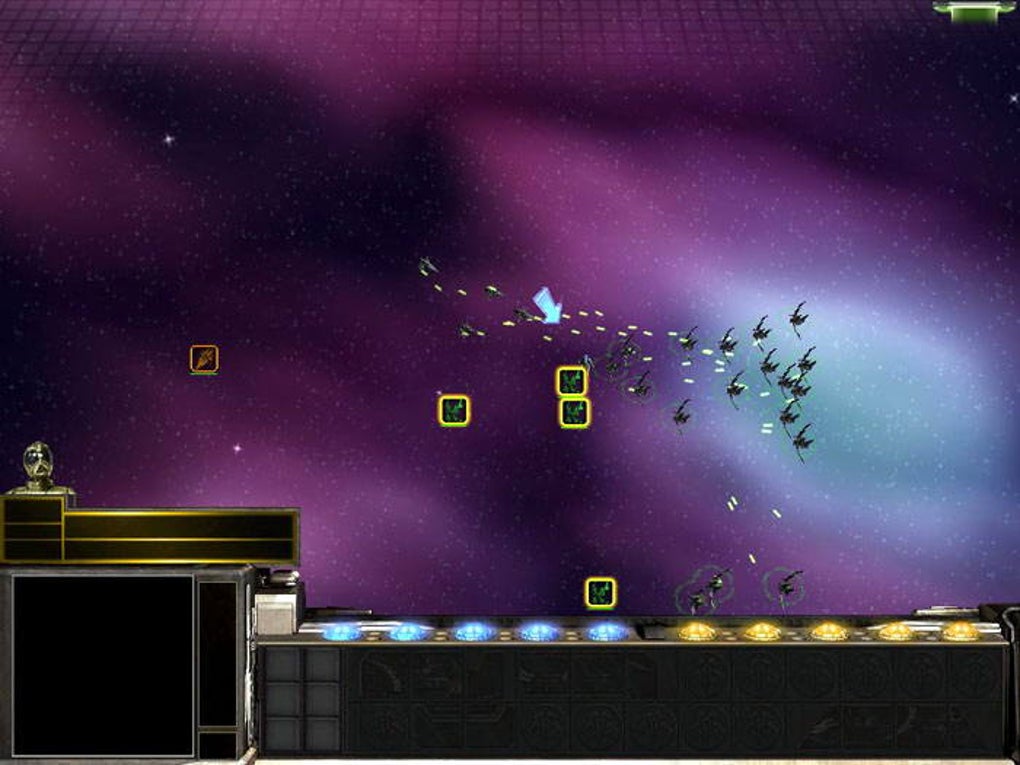
What truly set Empire at War apart in 2006 was its seamless integration of real-time ground and space battles. When two forces clash on the galactic map, whether in orbit or on a planet’s surface, the game transitions into a real-time tactical skirmish. Space battles are exhilarating, pitting iconic starships like Star Destroyers, Mon Calamari Cruisers, and legions of starfighters against each other. Players must manage fleet positioning, focus fire, deploy special abilities, and utilize hero units like Darth Vader’s Executor or Mon Mothma’s diplomatic influence to gain an advantage. Ground battles, while often more confined, are equally tactical, involving infantry, vehicles (AT-ATs, AT-STs, T-47 airspeeders), turrets, and command posts. The objective is usually to capture and hold key control points or destroy the enemy’s main base, with hero units like Luke Skywalker or Emperor Palpatine providing powerful abilities that can turn the tide of battle.
The sound design and visuals, while reflecting 2006 technology, were remarkably well-executed for their time and continue to hold up due to their faithfulness to the source material. Explosions, blaster fire, the roar of TIE fighters, and the iconic musical scores are all directly lifted from the movies, creating an authentic Star Wars atmosphere. Unit models, from the smallest X-Wing to the gargantuan Star Destroyers, were meticulously detailed, bringing the beloved vehicles and characters to life. This dedication to authentic Star Wars presentation was a significant factor in the game’s initial success and enduring appeal, especially for fans who yearned for a strategy game that truly felt like Star Wars.
Unleashing the Underworld: The Forces of Corruption Expansion
Forces of Corruption didn’t just add new units; it fundamentally altered the strategic landscape of Star Wars: Empire at War by introducing a third, entirely new faction: the Zann Consortium. Led by the cunning and ruthless criminal mastermind Tyber Zann, this underworld syndicate represents a darker, more morally ambiguous side of the galaxy. Neither aligned with the Empire nor the Rebellion, the Zann Consortium seeks to exploit the ongoing galactic conflict for its own gain, building a criminal empire through sabotage, corruption, and sheer firepower. This addition single-handedly elevated the game from a binary struggle to a dynamic three-way conflict, forcing players to adapt their strategies and consider new alliances and rivalries.
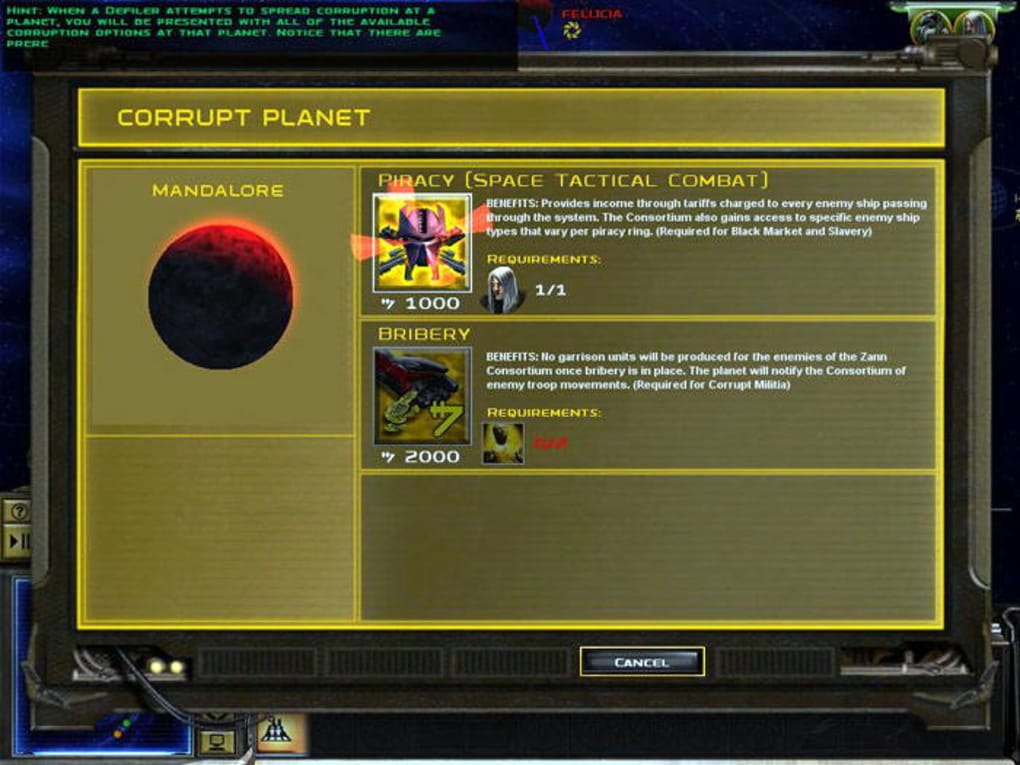
The Zann Consortium plays very differently from the established factions. Instead of relying solely on brute force or overwhelming numbers, their primary mechanic is “corruption.” Zann Consortium forces can deploy agents to enemy-controlled planets to “corrupt” them, generating income, disrupting enemy production, or even inciting rebellions. This unique ability allows them to weaken their opponents from within, creating vulnerabilities that can then be exploited by their unconventional units. For instance, a corrupted planet might experience reduced tax income for its owner, or its production facilities might suffer from sabotage, delaying the deployment of new units. High levels of corruption could even lead to local uprisings, forcing the planet’s owner to divert resources to quell the unrest.
The Zann Consortium’s unit roster is a fascinating blend of stolen, modified, and black-market technologies. Their ground forces include heavily armored Droidekas, powerful defiler units that spread corruption, and various mercenary squads. Their space fleet boasts unique vessels like the massive Keldabe-class battleship, equipped with devastating mass drivers, and the sleek Vengeance-class frigates. Hero units like Tyber Zann himself, with his ability to instantly corrupt planets, or the formidable bounty hunter Bossk, provide powerful tactical options. The Consortium’s playstyle emphasizes subterfuge, unconventional tactics, and exploiting the weaknesses of their more conventional adversaries. They thrive in chaos, benefiting from the prolonged conflict between the Empire and the Rebellion, and often engaging in hit-and-run tactics rather than direct confrontation.
Beyond the Zann Consortium, Forces of Corruption also introduced a wealth of new content for the existing Imperial and Rebel factions. The Empire gained the iconic Super Star Destroyer Executor, a truly formidable capital ship capable of turning the tide of any space battle, along with other specialized units. The Rebels received new ships and ground units to counter the growing threats. These additions not only freshened up the gameplay for existing factions but also provided new counters and strategic options in the three-way struggle. The expansion also added new planets, maps, and a dedicated campaign for the Zann Consortium, allowing players to experience Tyber Zann’s rise to power and his insidious plan to reshape the galaxy according to his criminal ambitions. The narrative explores a darker, more cynical side of the Star Wars universe, focusing on power, profit, and moral compromise rather than the clear-cut good-versus-evil narrative of the base game. This change in perspective was a welcome addition, providing a fresh and mature take on the beloved setting.
Mastering the Galaxy: Gameplay Mechanics and Strategic Depth
The success of Star Wars: Empire at War – Forces of Corruption hinges on its robust and engaging gameplay mechanics, which offer significant strategic depth. The interplay between the grand strategic layer of Galactic Conquest and the real-time tactical battles is the core strength of the game. On the galactic map, players must make crucial decisions: which planets to capture for resources or strategic importance, where to position their fleets to defend key systems, and how to manage their limited credits to fund new units, upgrades, and infrastructure. Each planet offers different benefits – some produce more credits, others provide unique unit build options, and some offer tactical advantages in battle.
Space battles are a masterclass in fleet management. Unit composition is paramount; a balanced fleet needs capital ships, frigates, corvettes, and starfighters. Capital ships are durable but slow, serving as the backbone of the fleet, while smaller vessels are faster and more maneuverable, ideal for flanking or intercepting enemy fighters. Hero units, like Grand Moff Tarkin or Admiral Ackbar, bring unique abilities that can turn the tide – from inspiring nearby units to devastating area-of-effect attacks. Environmental hazards, such as asteroid fields or nebulae, add another layer of tactical consideration, providing cover or hindering movement. Capturing space stations not only provides a safe haven for damaged ships but also grants additional firepower and defensive capabilities, making them crucial objectives.
Ground battles, while less expansive than their space counterparts, demand careful micro-management. Units have distinct strengths and weaknesses: infantry are good for capturing control points and can take cover, vehicles provide heavy firepower but are vulnerable to anti-vehicle specialists, and air units offer rapid strikes. The limited base-building elements – primarily turrets and power generators – mean that positioning and unit deployment are critical. Control points, which provide tactical advantages like orbital bombardment or infantry reinforcement, are often the focus of intense skirmishes. The interaction between hero units and regular troops is also vital; a well-placed Force push from a Jedi or a devastating orbital strike from a villain can swing the battle in your favor.
The game also features a sophisticated economic system. Credits are generated by planets and are spent on everything from building new units and structures to research and diplomatic actions. Balancing income with expenditure is crucial for maintaining a healthy war effort. The strategic map allows players to see enemy movements and potential invasion routes, enabling them to anticipate threats and position their forces accordingly. This foresight, combined with the ability to choose when and where to engage, adds another layer of tactical complexity.
While the game is generally well-balanced, one common criticism highlighted in reviews was the ability for players to “build a massive army and send them all at once to defeat the game.” While this can be a viable (and often fun) strategy in simpler skirmishes, especially against AI, more advanced players and higher difficulty settings require a nuanced approach. The game’s hero units, special abilities, and the Zann Consortium’s corruption mechanics often provide counters to overwhelming numbers, rewarding clever tactics over sheer numerical superiority. Furthermore, the repetitive voice confirmation sounds from units, while adding to the flavor initially, could become a minor annoyance during extended play sessions. However, these are minor quibbles in an otherwise robust and engaging strategy experience.
The Enduring Appeal: Why Empire at War Still Reigns
Despite being released almost two decades ago, Star Wars: Empire at War – Forces of Corruption continues to hold a prominent place in the hearts of Star Wars fans and RTS enthusiasts alike. Its longevity is a testament to its compelling gameplay, faithful recreation of the Star Wars universe, and perhaps most significantly, its vibrant and dedicated modding community.
The game’s initial release date in 2006 means its graphics are, by modern standards, somewhat dated. However, the timeless art direction and the strong visual identity derived from the Star Wars films prevent it from feeling truly obsolete. The detailed modeling of ships and characters, combined with authentic sound effects and music, ensures that the game still captures the essence of the saga. For many players, especially those who appreciate older RTS games where “building stuff and blowing stuff up was the aim of the game,” Empire at War scratches a particular nostalgic itch.
The true secret to Empire at War’s enduring appeal, however, lies in its thriving modding scene. The community has tirelessly worked to expand and improve the game far beyond its original scope. Mods like “Thrawn’s Revenge,” “Fall of the Republic,” and the “Republic at War mod” (mentioned in the reference content) have completely transformed the game, adding new factions, units, heroes, campaigns, and even entire eras of Star Wars lore. These total conversion mods often boast hundreds of new units, updated graphics, rebalanced gameplay, and entirely new strategic possibilities, providing thousands of hours of additional content. They keep the game fresh and exciting, attracting new players even today and ensuring that Empire at War remains a dynamic platform for Star Wars strategy.
The unique blend of grand strategy and real-time tactical combat, coupled with the rich Star Wars lore, makes Empire at War stand apart. It allows players to experience the galactic conflict on multiple scales, from commanding individual platoons on a planetary surface to orchestrating entire fleet movements across dozens of star systems. This comprehensive approach, combined with the unique mechanics introduced by Forces of Corruption (especially the Zann Consortium’s corruption system), offers a strategic depth that few other Star Wars games have matched.
Today, Star Wars: Empire at War – Gold Pack, which includes both the base game and the Forces of Corruption expansion, is readily available on digital storefronts like Steam and GOG, ensuring its accessibility to a new generation of players. Its compatibility with modern operating systems and the continued support from its modding community mean that this definitive Star Wars strategy collection is far from obsolete. For any Star Wars fan, or indeed any lover of deep and engaging RTS games, Star Wars: Empire at War – Forces of Corruption is an essential experience. It offers a chance to command or corrupt an entire galaxy, making crucial decisions that shape the fate of billions, all within the iconic framework of the galaxy far, far away.
In conclusion, Star Wars: Empire at War with its Forces of Corruption expansion is more than just an old game; it’s a timeless classic that continues to deliver a uniquely satisfying strategic experience. From the detailed modeling and immersive sound effects that echo the movies to the groundbreaking mix of space and ground battles, there’s plenty for fans to love. Even non-Star-Wars fans will find themselves drawn into its compelling gameplay loops, where building formidable forces and blowing up enemy strongholds is the ultimate goal. The addition of the Zann Consortium provided a fresh perspective and innovative mechanics that deepened the game’s strategic potential, solidifying its place as one of the best Star Wars strategy titles ever made. Its enduring legacy, significantly bolstered by its vibrant modding community, ensures that the galactic struggle wages on, captivating players who wish to forge their own empires or ignite a rebellion. For anyone looking for a rich, strategic dive into the Star Wars universe, Empire at War – Forces of Corruption from PhanMemFree remains an unparalleled journey into galactic conflict.
File Information
- License: “Trial version”
- Latest update: “June 23, 2020”
- Platform: “Windows”
- OS: “Windows XP”
- Language: “English”
- Downloads: “69.3K”
- Size: “634.86 MB”