
In the vast and ever-evolving landscape of video games, certain titles transcend their original scope to become cultural touchstones, defining genres and inspiring generations of players and creators alike. Among these revered giants stand Capcom’s iconic franchises: Street Fighter, the undisputed king of fighting games, and Mega Man, the quintessential blue bomber of platforming adventure. Both series, born in different eras and pursuing distinct gameplay philosophies, share a common heritage of challenging design, memorable characters, and enduring appeal. In 2012, to celebrate the 25th anniversaries of these two legendary series, a remarkable project emerged from the depths of pure fan passion, officially endorsed by Capcom itself: Street Fighter X Mega Man. This retro tribute wasn’t just another commercial release; it was a love letter penned in pixels and chiptunes, offering a unique blend of two beloved worlds that dared to ask: what if the World Warriors faced off against the robotic hero?
Street Fighter X Mega Man is a prime example of how grassroots creativity, when nurtured by corporate giants, can yield surprisingly delightful results. Developed by Seow Zong Hui from Singapore, with a meticulously crafted soundtrack by Luke Esquivel, this game is more than just a novelty. It’s a genuine Mega Man experience infused with the spirit and characters of Street Fighter, presented in an authentic 8-bit style that transports players back to the golden age of gaming. Released as a free PC download for Windows, it offered fans a nostalgic trip down memory lane while simultaneously presenting a fresh and formidable challenge. This article delves into the intricacies of Street Fighter X Mega Man, exploring its genesis, its gameplay, its distinctive aesthetic, and its place in the pantheon of beloved retro-inspired titles, all while highlighting its availability on platforms like PhanMemFree.
A Harmonious Crossover Born from Fan Passion
The concept of a crossover event between Street Fighter and Mega Man was, for decades, the stuff of fan fiction and speculative dreams. While both franchises had seen numerous entries and experimented with various genres, a direct 8-bit platformer pitting Mega Man against Ryu, Ken, Chun-Li, and other iconic World Warriors felt like a natural, yet previously unexplored, synergy. The timing couldn’t have been more perfect: 2012 marked the 25th anniversary of Street Fighter, and as that celebration concluded, Mega Man’s own 25th anniversary began. This convergence provided the perfect narrative hook for the game: Mega Man embarks on a mission to confront each of the Street Fighters, tying their anniversaries together in a unique celebratory fashion.
What makes Street Fighter X Mega Man truly special is its origin. It was not developed by an internal Capcom studio as a blockbuster title but rather by a dedicated fan, Seow Zong Hui. This act of independent creation, eventually receiving official backing from Capcom, speaks volumes about the evolving relationship between game developers and their communities. In an era where intellectual property is often fiercely protected, Capcom’s decision to not only acknowledge but actively support and publish a fan-made project was groundbreaking. This endorsement transformed Street Fighter X Mega Man from a simple tribute into an official, albeit unconventional, part of both franchises’ histories. This collaboration demonstrated a forward-thinking approach, recognizing the power of fan engagement and rewarding the passion of its most devoted followers. The game became readily available for free download for Windows users, with popular platforms like PhanMemFree offering direct access to this unique title. Such accessibility played a crucial role in its widespread adoption and appreciation, allowing countless fans to experience this imaginative crossover without any cost barriers. The fact that it was provided for free cemented its status as a gift to the community, further endearing it to players who had grown up with both series.
The game’s narrative setup is elegantly simple, adhering to the classic Mega Man formula. Players control Mega Man as he navigates a series of challenging stages, each culminating in a boss battle against one of the Street Fighter characters. The selection of bosses thoughtfully spans the Street Fighter roster, bringing together fan favorites like Ryu, Ken, Chun-Li, Dhalsim, Blanka, and others, reimagined as Robot Masters. This ingenious twist not only provides a fresh challenge for Mega Man but also gives Street Fighter fans a new perspective on their beloved characters, seeing them translated into the mechanical, pattern-based combat of the Mega Man universe. The attention to detail in transforming their movesets and personalities into 8-bit boss encounters is a testament to the creator’s deep understanding and respect for both franchises. This integration isn’t merely cosmetic; it fundamentally alters the flow of Mega Man gameplay, demanding different strategies from players accustomed to Dr. Wily’s robotic minions. The fusion of these elements creates a novel and engaging Action experience that feels both familiar and refreshingly new.
Navigating the Relentless 8-Bit Gauntlet
At its core, Street Fighter X Mega Man is a retro platformer that stays remarkably faithful to the design principles of the original NES Mega Man games. From the moment players take control of the blue bomber, they are greeted with instantly recognizable mechanics: precise jumps, strategic slides, and the iconic Mega Buster. The control scheme is intuitive and responsive, whether you choose to play with a keyboard or a gamepad. The game intelligently recognizes a connected gamepad upon startup, ensuring a seamless transition for players who prefer a more traditional console feel. This dedication to authentic controls ensures that the core Mega Man experience remains intact, a critical factor for appealing to purists of the series.
However, where Street Fighter X Mega Man truly distinguishes itself – and perhaps where it courted controversy among some players – is in its uncompromising difficulty. The game doesn’t just borrow from the toughness of its NES predecessors; it often elevates it. Like a classic 80s arcade title, death means returning to the start of the level. There are no save points within stages, and crucially, unlike the original Mega Man games with their password systems, Street Fighter X Mega Man offers no save feature whatsoever. This means that to beat the game, players must complete it in one continuous sitting. This design choice amplifies the challenge exponentially, making an already tough game incredibly demanding. It evokes a bygone era of gaming where patience, pattern recognition, and sheer perseverance were paramount, a stark contrast to the more forgiving checkpoint systems prevalent in modern Action and Adventure titles.
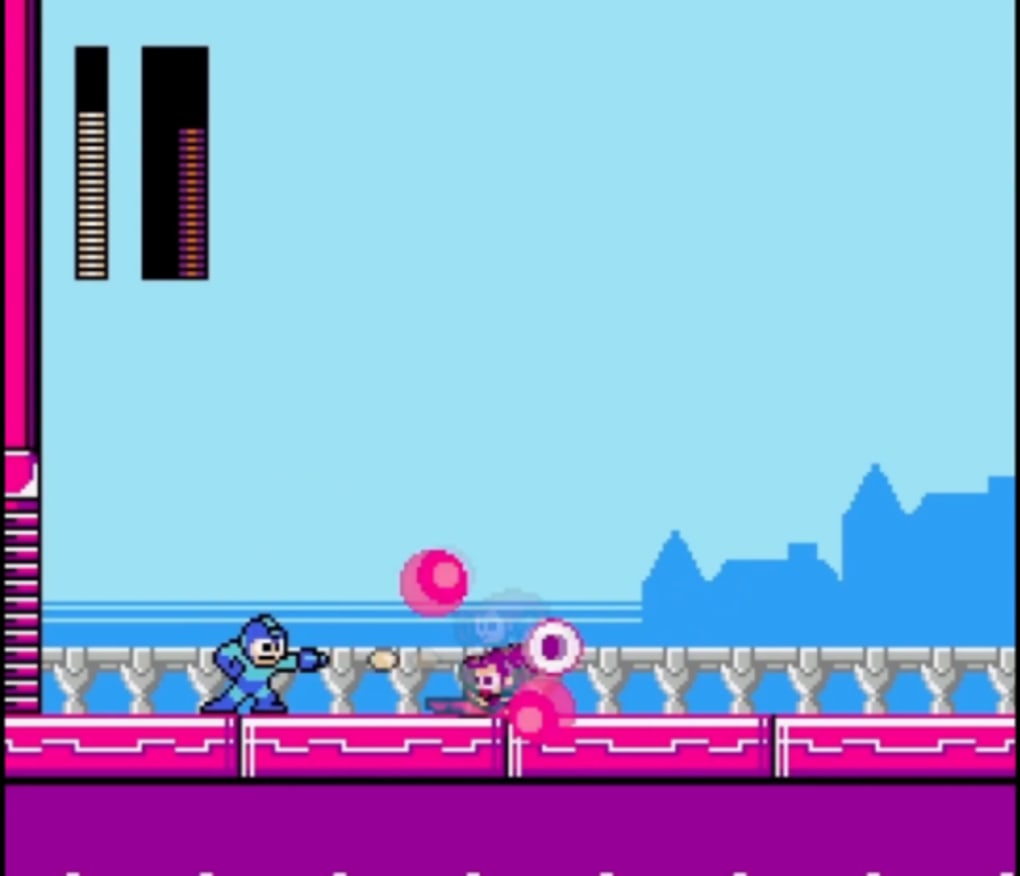
Enemies range from merely difficult to extraordinarily challenging, strategically placed to impede Mega Man’s progress at every turn. But it’s the Street Fighter bosses who truly put players’ skills to the ultimate test. Each boss battle is a meticulously crafted encounter, translating the intricate movesets of Street Fighter characters into predictable, yet often lightning-fast and punishing, patterns that Mega Man must learn to evade and exploit. Imagine deciphering Ryu’s Hadoken and Shoryuken in an 8-bit environment, or dodging Chun-Li’s lightning kicks, all while navigating treacherous platforming elements. These battles demand not only a deep understanding of Mega Man’s capabilities but also an almost encyclopedic knowledge of Street Fighter character abilities. Veteran gamers with “retro skills” will find themselves right at home, but newcomers might face a steep and often frustrating learning curve. Some have even suggested that its difficulty rivals notoriously unfair platformers like Ghouls ’n Ghosts, a testament to the unforgiving nature of its design. The absence of difficulty settings further entrenches its commitment to this singular, punishing experience.
The design philosophy behind this high difficulty is a double-edged sword. For fans yearning for a true old-school challenge, it’s a breath of fresh air, a defiant stand against hand-holding. For others, particularly those accustomed to modern conveniences, it can be a source of immense frustration. The lack of a save system, in particular, stands out as a significant critique. While it certainly amplifies the retro feel and demands dedication, it also creates a barrier for players who cannot commit to extended play sessions. However, within its chosen niche, Street Fighter X Mega Man successfully delivers an unadulterated, unyielding Arcade experience that respects the player’s intelligence and rewards their mastery.
A Masterclass in Retro Aesthetic and Auditory Authenticity
Beyond its challenging gameplay, Street Fighter X Mega Man shines brilliantly in its presentation, serving as a masterclass in retro aesthetic and auditory authenticity. The game’s graphics and music are lovingly crafted, demonstrating an incredible attention to detail that pays homage to both franchises while remaining true to the 8-bit era. This commitment to visual and sound design is a critical component of its charm and success, especially for a fan-made project.
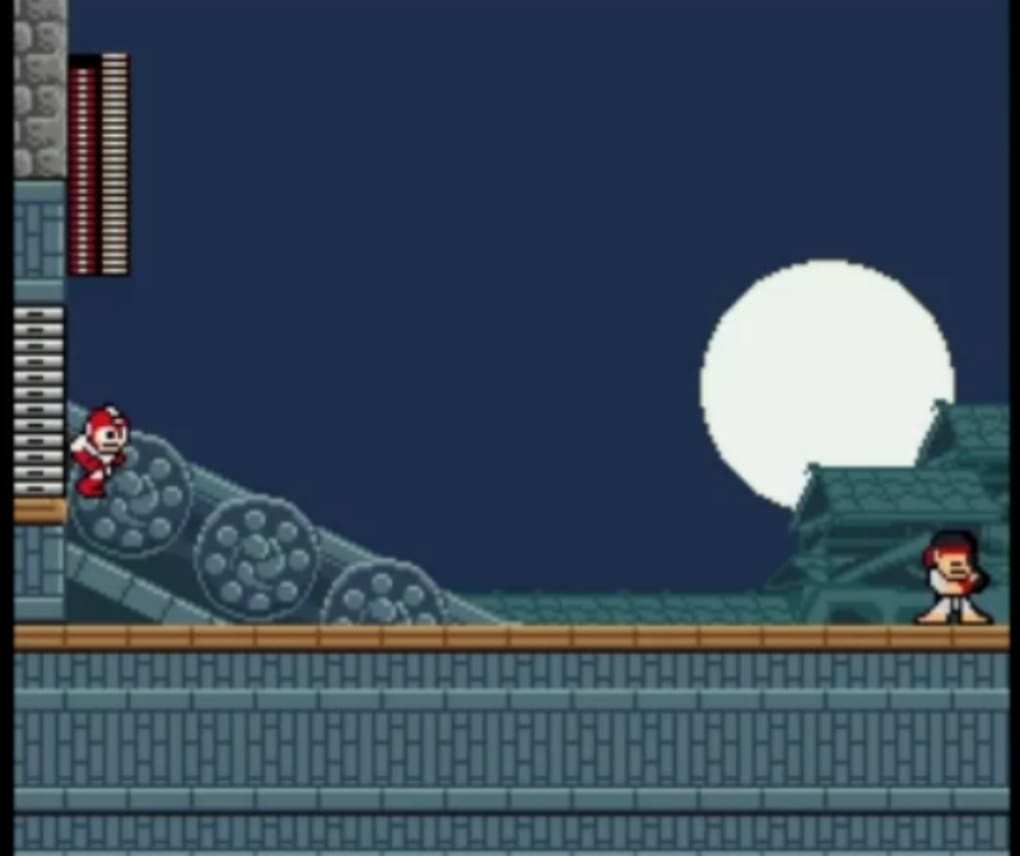
Visually, each level in Street Fighter X Mega Man is uniquely themed after a different Street Fighter character, creating instantly recognizable environments for fans of the fighting series. For example, one might find themselves navigating through a bustling marketplace reminiscent of Chun-Li’s stage, or a serene dojo evoking Ryu’s training grounds. These backgrounds are not merely static images; they are vibrant, detailed pixel art canvases that capture the essence of their inspirations. The sprites for Mega Man and the various enemies are expertly rendered, matching the iconic style of the NES originals. However, it’s the 8-bit renditions of the Street Fighter characters that truly steal the show. Seeing Ryu, Ken, Dhalsim, or Blanka re-imagined as classic Mega Man bosses, complete with their signature poses and attacks translated into charming pixelated forms, is a nostalgic delight. While players might be too focused on dodging their relentless attacks to fully appreciate the artistry, the effort put into these character designs is undeniable. They look fantastic, successfully bridging the visual gap between two distinct art styles. The game effectively leverages the capabilities of the Windows platform to deliver these nostalgic graphics, appealing to a wide audience who appreciate classic visual storytelling.
The auditory experience is equally impressive, cementing Street Fighter X Mega Man’s status as a top-tier retro tribute. Luke Esquivel’s soundtrack is nothing short of exceptional, taking iconic Street Fighter themes and expertly translating them into vibrant chiptune compositions that sound right at home in a Mega Man game. Each boss theme, a reimagined version of a classic Street Fighter character theme, is instantly recognizable yet feels perfectly integrated into the 8-bit soundscape. The driving rhythms and melodic hooks capture the energy of the original fighting game tracks while fitting seamlessly into the action-packed platforming. Similarly, the sound effects—Mega Man’s jumping, shooting, and the distinctive “Pew! Pew!” of the Mega Buster, alongside the clanks and explosions of enemies—are all faithfully reproduced, adding another layer of authenticity to the experience. This meticulous sound design elevates the game from a mere visual homage to a truly immersive retro adventure, a testament to the creative power within the Multimedia domain, specifically within Audio and Graphic & Design. The sound engineering perfectly complements the pixel art, creating a cohesive and deeply satisfying nostalgic package that any fan of 8-bit gaming will appreciate.
The Enduring Appeal of Uncompromising Retro Action
Street Fighter X Mega Man occupies a fascinating space within the gaming ecosystem. As a fan-made project, it’s often difficult to judge against “professional” titles developed by large teams with multi-million dollar budgets. However, the early 2010s saw a significant resurgence of indie retro platformers, with groundbreaking titles like VVVVVV and Cave Story demonstrating that a small team, or even a single passionate individual, could create a great game that was tough without being unfairly designed. Street Fighter X Mega Man undoubtedly belongs in this conversation, showcasing the potential of independent Game Development to innovate and captivate. It stands as a testament to the idea that pure vision and dedication can transcend resource limitations.
The game’s primary appeal lies in its ability to tap into deep reserves of nostalgia while simultaneously offering a fresh challenge. For fans who grew up with both Street Fighter and Mega Man, the crossover is an absolute dream come true. It’s a chance to revisit beloved characters and gameplay styles through a new lens, experiencing familiar elements in an entirely novel context. The sense of discovery, both in seeing how Street Fighter characters are integrated and in mastering the unforgiving gameplay, is a powerful draw. It also caters to a specific segment of the gaming community that actively seeks out high difficulty and uncompromising design. These players thrive on the satisfaction of overcoming seemingly insurmountable obstacles, appreciating games that demand absolute mastery and precise execution. For them, the absence of saves and difficulty settings isn’t a flaw but a core part of the appeal, a badge of honor for those who conquer its challenges.
Despite its undeniable charm and solid core gameplay, Street Fighter X Mega Man does come with a couple of notable criticisms that, if addressed, could have made it even more accessible without sacrificing its retro ethos. The most frequently cited issue is the complete lack of a save feature. While it enforces the “one-shot” philosophy of classic arcade games, it also creates a significant hurdle for casual players or those with limited time. A password system, common in the original Mega Man series, would have been a respectful nod to the era it emulates while providing a much-needed concession to modern player convenience. Additionally, the game’s README instructions could benefit from more guidance, particularly regarding the suggested order in which to attempt the levels. Like classic Mega Man titles, certain bosses yield weapons that are more effective against others, and understanding this progression is key to mitigating the overwhelming difficulty. Providing hints or a recommended path would enhance the Adventure aspect without diluting the challenge.
Ultimately, Street Fighter X Mega Man is a truly remarkable achievement. It’s a free game that delivers an experience comparable to, and in some aspects exceeding, many commercial retro-inspired titles. The love and dedication poured into every pixel and every chiptune note are palpable, making it a joy to behold. It’s fun, challenging, and a genuine celebration of two legendary franchises. For anyone seeking a true retro Action platformer with a unique twist, particularly those looking for Free To Play Games on Windows that don’t compromise on quality or challenge, Street Fighter X Mega Man is an absolute must-play. It exemplifies the vibrant spirit of the gaming community and the timeless appeal of well-crafted 8-bit experiences. Available for download on PhanMemFree.org, this title continues to be a testament to the power of fan creativity, officially recognized and widely celebrated by a global gaming audience.
File Information
- License: “Free”
- Latest update: “July 11, 2023”
- Platform: “Windows”
- OS: “Windows 7”
- Language: “English”
- Downloads: “58.9K”
- Size: “36.99 MB”


