
In the dynamic and ever-evolving landscape of competitive gaming, a new title has emerged, promising to blend stunning anime aesthetics with deep tactical shooter mechanics: Strinova. Developed by iDreamSky, this action-packed game for Windows and other major platforms is setting a new standard by introducing truly innovative gameplay. Strinova invites players into a multidimensional world where the boundaries of reality bend, allowing for seamless transitions between 2D and 3D forms. This unique “stringification” mechanism is not merely a visual gimmick but a core gameplay element that fundamentally alters combat strategies and player interaction within its richly designed environments.
At its heart, Strinova is a tactical third-person shooter that demands more than just quick reflexes. It calls for strategic foresight, meticulous team coordination, and an adaptive mindset. The game’s intricate design marries the visual appeal of beloved anime with the intense, strategic decision-making characteristic of top-tier competitive shooters. This blend makes Strinova a standout, offering a refreshing departure from conventional genre norms and presenting a fresh, exciting challenge for both veteran shooter fans and those new to tactical gameplay. As players delve into its multifaceted maps and master the unique abilities of its diverse cast of characters, they will discover a game that offers both immediate gratification and long-term strategic depth, fostering a community eager to explore its potential.
The Multidimensional Battlefield: Strinova’s Core Mechanics

Strinova’s most distinctive feature, and arguably its greatest innovation, lies in its multidimensional combat system, centered around the groundbreaking “stringification” mechanic. Unlike traditional shooters confined to a single plane of existence, Strinova propels players into a fluid world where they can seamlessly shift between 2D and 3D forms. This isn’t just a visual trick; it’s a fundamental alteration of the battlefield, offering unprecedented tactical possibilities.
Imagine navigating a complex urban environment. In 3D, you might be engaging in traditional cover-based gunfights, utilizing the verticality of buildings and the breadth of open spaces. But with a quick activation of “stringification,” your character can flatten into a 2D form, allowing for swift, linear movement across surfaces that were previously impassable or for slipping through narrow gaps and sightlines with unparalleled agility. This mechanic introduces an entirely new layer of tactical thinking. A player might use their 2D form to quickly flank an entrenched enemy position, traverse a deadly chasm by adhering to a wall, or even evade incoming fire by reducing their hitbox to a thin plane. Conversely, switching back to 3D form would be necessary to unleash full weapon capabilities, utilize special skills, or interact with environmental elements in a more robust manner.
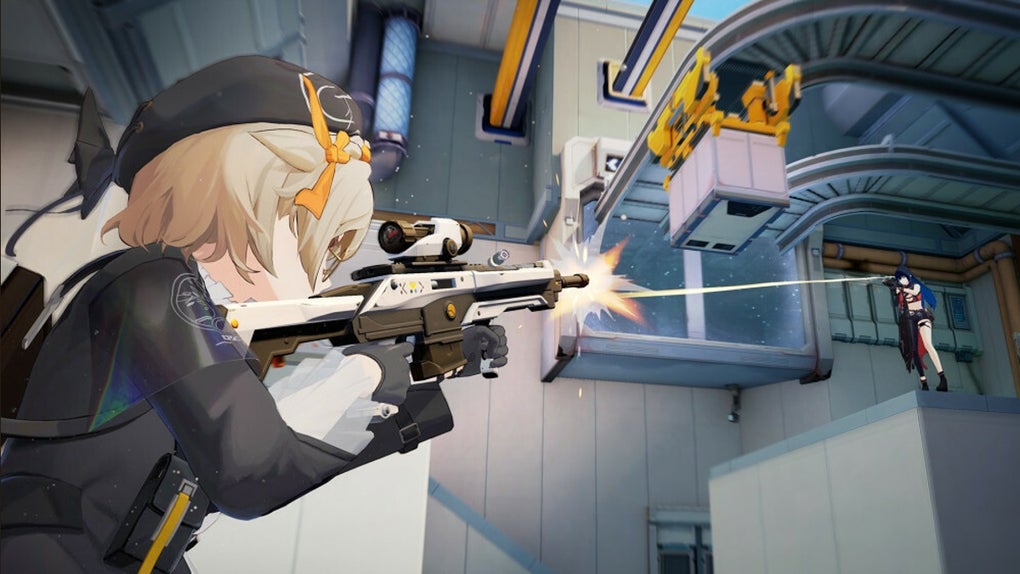
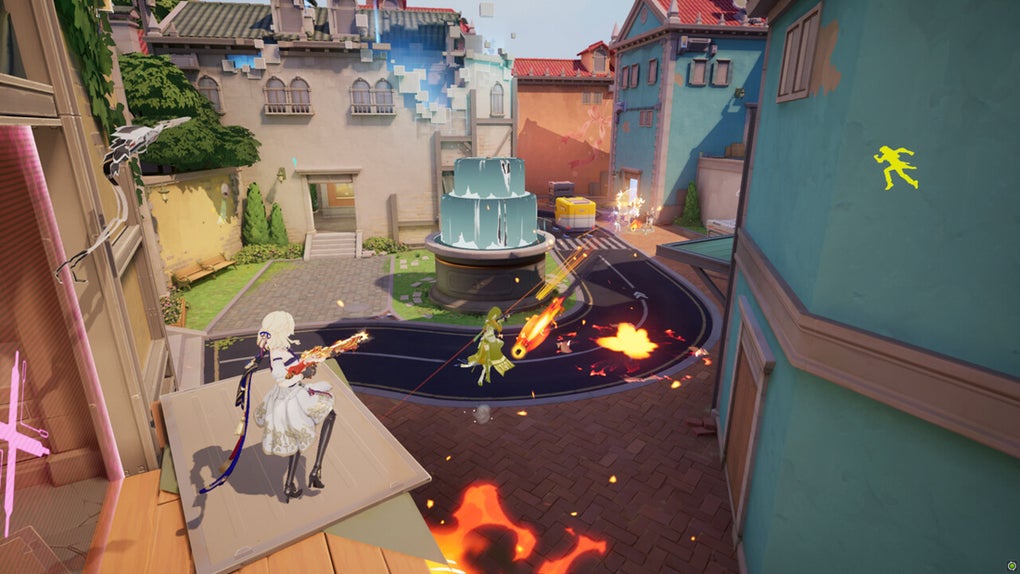
This constant interplay between dimensions demands an acute awareness of one’s surroundings and a deep understanding of each map’s layout. Strinova’s developers have gone to great lengths to design “multilayered maps” that fully capitalize on this mechanic. These are not just visually diverse but are structurally designed to encourage and reward multidimensional movement. From sprawling industrial complexes with intricate pipe networks to ancient ruins featuring crumbling vertical elements, each map presents a unique strategic puzzle. Players must learn not only the optimal paths for their 3D form but also the unexpected shortcuts, defensive positions, and flanking routes opened up by their 2D capabilities. This means that a seemingly straightforward hallway might have hidden 2D pathways along its walls, or a large open plaza could be circumvented by using a low-profile 2D traversal through decorative elements.
Furthermore, the “stringification” mechanism deeply influences “tactical skill operations” and “device usage.” Each Superstring – the game’s unique characters – will likely have skills that interact differently with their dimensional state. Perhaps a defensive ability creates a 3D shield, but its 2D counterpart allows for a rapid, intangible dash. Deployable devices, such as turrets or barricades, might be placed in 3D, but their strategic effectiveness could be amplified or negated by an enemy’s ability to approach from an unforeseen 2D vector. This introduces a robust layer of counter-play and predictive strategy, forcing teams to constantly adapt their approach. The choice of when and where to switch dimensions becomes a critical decision, influencing everything from engagement initiation and escape routes to objective control and team positioning. Mastering the flow between dimensions is not just about individual skill but about synergizing with teammates to control the multidimensional battlefield, making Strinova a truly innovative entry in the tactical shooter genre.
Superstrings and Strategic Depth: Crafting Your Team
Beyond its innovative dimensional mechanics, Strinova distinguishes itself through its rich roster of “Superstrings” – unique characters each imbued with specialized skills and weaponry. This emphasis on “character diversity” is a cornerstone of the game’s strategic depth, ensuring that every player can find a role that suits their playstyle and contributes meaningfully to the team dynamic. Much like hero shooters, Strinova’s Superstrings are not merely cosmetic variations; they are distinct archetypes that fulfill specialized roles, whether as an offensive powerhouse, a defensive linchpin, a support specialist, or a tactical disruptor.
Each Superstring comes equipped with a unique set of abilities, ranging from offensive bursts of damage and area-of-effect crowd control to defensive shields and healing capabilities. Their weaponry is also tailored to their role, promoting diverse engagement styles. For instance, an offensive Superstring might wield a high-damage assault rifle or a rapid-fire SMG, coupled with abilities that allow for aggressive pushes or enemy suppression. A defensive Superstring, on the other hand, might utilize heavy armaments or energy barriers, with skills focused on fortifying positions or protecting teammates. Support characters could offer critical buffs, debuffs, or healing through their unique gadgets and modified weapons.
The strategic depth inherent in Strinova’s Superstrings lies in the necessity for “team coordination” and synergy. A successful team composition is not just about picking powerful characters but about selecting Superstrings whose abilities complement each other. Players are encouraged to experiment with different combinations, discovering potent synergies that can turn the tide of battle. For example, a Superstring capable of creating a temporary barrier could provide crucial cover for a sniper Superstring, allowing them to take precise shots. An area-of-effect damage Superstring could be paired with a character whose ability clusters enemies, maximizing the impact of the attack. Understanding these interactions and communicating effectively within the team becomes paramount.
Furthermore, the interplay between Superstring abilities and the game’s multidimensional mechanics adds another layer of complexity. Some Superstrings might have abilities that are particularly effective when in 2D form, allowing for covert infiltration or rapid repositioning, while others might unleash devastating attacks best utilized from a stable 3D stance. This forces players to consider not only the ‘what’ and ‘who’ but also the ‘when’ and ‘how’ of skill usage in relation to their dimensional state. The dynamic nature of the battlefield, coupled with the varied skill sets of the Superstrings, encourages constant adaptation. Teams must analyze enemy compositions, predict their movements, and counter their strategies by intelligently deploying their Superstrings’ unique strengths. This continuous cycle of planning, executing, and adapting ensures that no two matches feel exactly alike, making Strinova a deeply engaging experience that rewards both individual mastery and collective brilliance. The game thrives on this dynamic interplay, cultivating a competitive environment where strategic thinking is as crucial as individual mechanical skill.
Evolving Content and the “Scarlet Awakening” Season
Strinova understands the importance of continuous engagement and fresh content to maintain a vibrant player base, especially in the competitive online gaming sphere. Marking its official launch into this exciting world, the game introduced its inaugural season, aptly titled “Scarlet Awakening.” This initial season serves as a foundational step, not only welcoming players to the unique mechanics of Strinova but also setting a precedent for how future content will be delivered and experienced.
Central to the “Scarlet Awakening” season is the implementation of a comprehensive “battle pass system.” This system is designed to reward players for their dedication and progress within the game. As players engage in matches, complete objectives, and participate in various game modes, they accumulate experience points that allow them to advance through various tiers of the battle pass. Each tier unlocks a variety of exciting rewards, predominantly consisting of aesthetic enhancements such as character skins, weapon camos, player icons, emotes, and other cosmetic items that allow for personalized expression on the battlefield. The developers have thoughtfully structured the battle pass to offer both “free rewards,” accessible to all players who progress through the tiers, and exclusive items that require a purchase, typically in the form of a premium battle pass. This approach caters to a wide audience, ensuring that even casual players can earn meaningful rewards while offering dedicated fans an opportunity to acquire unique and prestigious cosmetic upgrades.
The highlight of the “Scarlet Awakening” season, and often a major draw for any battle pass, is the introduction of an “ultimate skin.” For this inaugural season, the coveted item is the “Cognitive Reconstruction - Shadow Rose,” a highly sought-after skin designed for avid fans and collectors. These ultimate skins typically feature intricate designs, unique animations, and sometimes even custom voice lines, making them a true mark of achievement or dedication. Such premium items not only provide an aspirational goal for players but also serve as a crucial revenue stream, supporting the ongoing development and expansion of the game.
Beyond the battle pass, “Scarlet Awakening” also delivered essential “balancing tweaks” and “multiple free rewards.” Game balance is a continuous process, especially in a title with such innovative mechanics and diverse character abilities as Strinova. The developers are committed to monitoring gameplay, analyzing player data, and implementing adjustments to ensure fair play and a healthy competitive environment. These tweaks might involve modifying character abilities, adjusting weapon damage, or refining map layouts to address unforeseen exploits or power imbalances. The inclusion of free rewards outside the battle pass further demonstrates a commitment to giving back to the community, fostering goodwill and encouraging continued participation.
Looking ahead, the success of Strinova and its ability to maintain player engagement beyond the initial novelty will heavily rely on the continuous expansion of its content offerings. The game’s current roster of “game modes” like “Demolition mode,” which likely involves objective-based gameplay such as planting or defusing bombs, and “Scrimmage,” which could be a more straightforward team deathmatch or practice mode, provides a solid foundation. However, the promise of “future updates, including additions of more maps and game modes,” is critical. New maps will ensure diverse tactical challenges, while new game modes will cater to different player preferences and prevent gameplay from becoming stale. The regular injection of fresh content, combined with responsive balancing and community engagement, will be key to establishing Strinova as a long-term player in the competitive gaming landscape.
Navigating the Landscape: Strengths, Challenges, and Future Prospects
Strinova steps onto a crowded stage, but it does so with a clear vision and a potent blend of innovation that distinguishes it from the myriad of tactical shooters. Its strengths are immediately apparent and form the bedrock of its appeal, yet like any groundbreaking title, it also faces inherent challenges that will dictate its long-term success.
Among its most compelling strengths is the ingenious design of its “multilayered maps.” These are not simply arenas but intricate environments that demand strategic mastery and exploit the game’s unique dimensional shifting mechanics. The maps offer diverse landscapes, from tight urban corridors ideal for close-quarters skirmishes to expansive outdoor zones perfect for long-range engagements, all punctuated by the unique traversal opportunities afforded by 2D “stringification.” This ensures that every match feels distinct, encouraging players to adapt their strategies based on the specific map and their team’s composition. This commitment to environmental complexity deeply enhances the “tactical depth” that the game champions.
Furthermore, Strinova boasts a “wide option for game maps and modes” that promise varied experiences. As highlighted, modes like “Demolition” and “Scrimmage” offer different objectives and pacing, catering to a broad spectrum of competitive desires. The developers’ ongoing commitment to expanding this roster is crucial, as fresh challenges and diverse objectives keep the player base engaged and prevent monotony. Complementing this is the celebrated “character diversity” provided by the Superstrings. Each character is more than just a skin; they embody distinct roles, skills, and playstyles, fostering deep team synergies and encouraging players to experiment and find their perfect niche. This variety not only enriches gameplay but also promotes a healthy meta, where different team compositions can thrive.
However, Strinova’s innovative nature also presents certain “challenges.” The most prominent of these is its “niche appeal.” While the blend of anime aesthetics and tactical shooter mechanics is groundbreaking, it might not immediately resonate with all segments of the gaming community. Traditional tactical shooter fans might find the anime style or the 2D/3D shifting too unconventional, while some anime enthusiasts might be less drawn to the demanding competitive shooter gameplay. This means the game needs to actively cultivate its community, highlighting what makes it unique and appealing to its target audience.
Another crucial area for continuous attention is “occasional balancing tweaks.” Given the intricate interaction between dimensional mechanics, diverse Superstring abilities, and multifaceted maps, achieving perfect balance is an ongoing process. Early iterations of any complex competitive game often require frequent adjustments to prevent certain characters or strategies from becoming dominant or, conversely, underpowered. The developers’ vigilance in this area will be paramount to ensuring a fair and competitive environment, preventing player frustration and fostering a sense of fair play. PhanMemFree.org acknowledges that this is a common hurdle for new competitive titles and notes the developer’s expressed commitment to these adjustments.
The “long-term success” of Strinova, therefore, hinges on how effectively these challenges are addressed and how robustly the game’s content offerings are expanded. Future updates, particularly the promised additions of more maps and game modes, are not just desirable but essential for broadening its appeal beyond its initial novelty. A consistent flow of new Superstrings, seasonal events, and narrative content could also significantly deepen player investment. Community engagement, transparent communication from the developers, and a responsive approach to player feedback will be vital in cultivating a loyal and growing player base. By leaning into its unique strengths, proactively addressing balancing needs, and consistently delivering fresh, high-quality content, Strinova has the potential to carve out a significant and lasting presence in the competitive gaming landscape, appealing to a dedicated legion of anime and tactical shooter fans alike.
Strinova is more than just a new entry in the gaming world; it represents a bold step forward for the tactical shooter genre, fusing stylistic flair with profound strategic depth. Its innovative dimensional mechanics, diverse character roster, and commitment to evolving content signal a game with immense potential. While it navigates the inherent challenges of carving out a niche and maintaining balance, the foundation laid by iDreamSky is robust and exciting. For those seeking a fresh, challenging, and visually striking competitive experience, Strinova stands as a beacon, inviting players to master its multidimensional battlefields and embrace the thrill of strategic combat. Experience the Strinova demo for Windows today and be among the first to witness the dawn of a new era in tactical shooting. More information and downloads are available at PhanMemFree.org.
File Information
- License: “Demo”
- Version: “varies-with-devices”
- Latest update: “January 21, 2025”
- Platform: “Windows”
- OS: “Windows 7”
- Language: “English”
- Downloads: “1.8K”


