
In the vast and ever-evolving landscape of real-time strategy games, few titles have managed to etch their name into the annals of gaming history with the same indelible mark as Stronghold Crusader. Released by Firefly Studios, this iconic title transports players directly into the heart of the tumultuous Crusades, offering a unique and compelling blend of detailed castle-building simulation and intense real-time strategic warfare. Far more than just a sequel to the acclaimed Stronghold, Crusader carved out its own niche by shifting the focus to arid desert landscapes, introducing new factions, and intensifying the pace of battle, demanding both meticulous planning and swift tactical execution. Its enduring popularity, even decades after its initial release, speaks volumes about its intricate design, engaging gameplay, and the nostalgic hold it maintains over a dedicated community of players.
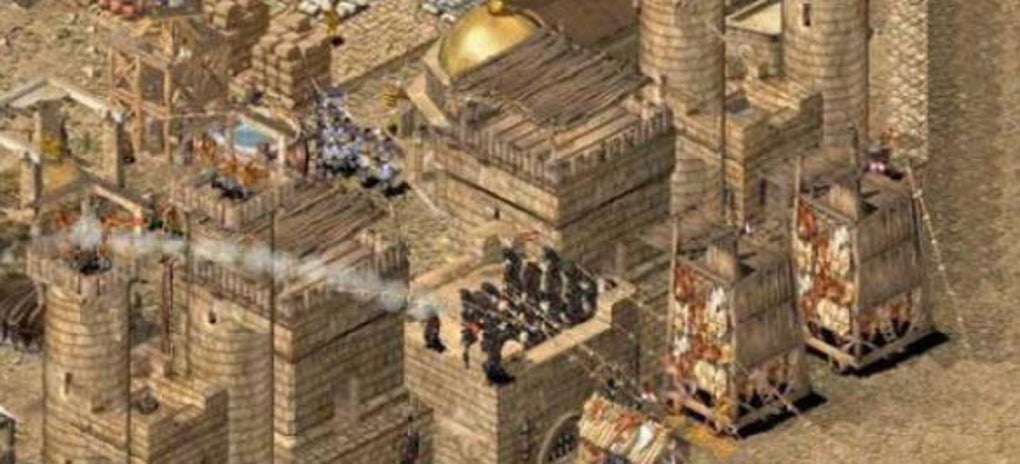
At its core, Stronghold Crusader challenges players to construct a formidable fortress, develop a thriving economy to support it, and raise an army capable of either defending against relentless sieges or launching devastating assaults on enemy strongholds. The historical setting, featuring legendary figures like Richard the Lionheart and Saladin, imbues the game with a rich narrative tapestry that elevates it beyond mere skirmishes into an epic struggle for dominance in the Holy Land. Whether leading the European legions with their heavy knights and archers or commanding the agile Arab forces with their horse archers and assassins, players are immersed in a world where every decision, from the placement of a granary to the timing of a cavalry charge, can spell the difference between glorious victory and crushing defeat. Stronghold Crusader isn’t just a game; it’s an invitation to rewrite history, one stone wall and one arrow volley at a time.
Home: Journey Through the World of Games
The digital realm of games offers an unparalleled escape, a vast universe where imagination meets interaction. From the adrenaline-pumping action of modern shooters to the cerebral engagement of puzzle games, the gaming landscape is incredibly diverse. Within this grand tapestry, strategy games hold a particularly esteemed position, demanding not just quick reflexes but also foresight, planning, and a deep understanding of complex systems. Stronghold Crusader is a shining example of a game that thrives in this category, offering a deep and rewarding experience that caters to those who revel in the meticulous construction of empires and the strategic deployment of forces.
PhanMemFree.org, as a premier destination for software and gaming enthusiasts, understands the profound impact games have on entertainment and intellectual engagement. Our platform categorizes games extensively, ensuring users can effortlessly navigate through various genres, from action-packed adventures to serene simulation experiences. Stronghold Crusader finds its home under the ‘Games’ section, specifically nested within ‘Strategy’, a testament to its primary gameplay mechanics. This structured approach allows users to discover new titles that align with their preferences, whether they are seeking the latest releases or rediscovering timeless classics like Crusader.
The appeal of games like Stronghold Crusader extends beyond mere pastime; they often provide a rich learning environment. Players develop critical thinking skills, learn about resource management, understand cause-and-effect relationships, and even glean insights into historical contexts. The intricate balancing act required to manage a medieval economy while simultaneously preparing for war is a simulation that exercises the mind in unique ways. This holistic approach to gaming, where entertainment is intertwined with skill development, is a core value upheld by PhanMemFree.org in its curation of content. We strive to highlight titles that not only entertain but also offer a deep, meaningful experience, contributing positively to the overall gaming ecosystem. The sheer depth and replayability of Stronghold Crusader make it a prime example of a game that truly enriches the player’s experience, providing countless hours of strategic enjoyment.
Strategy Games: The Art of War and Castle Building
Stronghold Crusader stands as a monument in the ‘Strategy Games’ genre, particularly for its innovative blend of real-time strategy (RTS) and city-building simulation. Unlike many RTS games that focus solely on troop production and combat, Crusader places equal, if not greater, emphasis on the development and defense of your stronghold. This dual nature is what gives the game its distinctive flavor and deep strategic layers. Players are not just generals; they are also master builders, economists, and governors, tasked with ensuring the prosperity and safety of their people.
The strategic depth begins with the economic simulation. To raise an army and maintain a castle, players must first establish a robust economy. This involves setting up essential industries: woodcutters for timber, stone quarries for walls, iron mines for weapons, and farms or bakeries for food. The happiness of your peasants, influenced by factors like food availability, tax rates, and the presence of amenities (or punishments like the gallows), directly impacts their productivity and willingness to join your army. A disgruntled populace can lead to slow production, desertion, or even open rebellion, forcing players to master the delicate balance between oppression and benevolence. This intricate web of interconnected industries and social management means that economic strategy is just as crucial as military tactics.
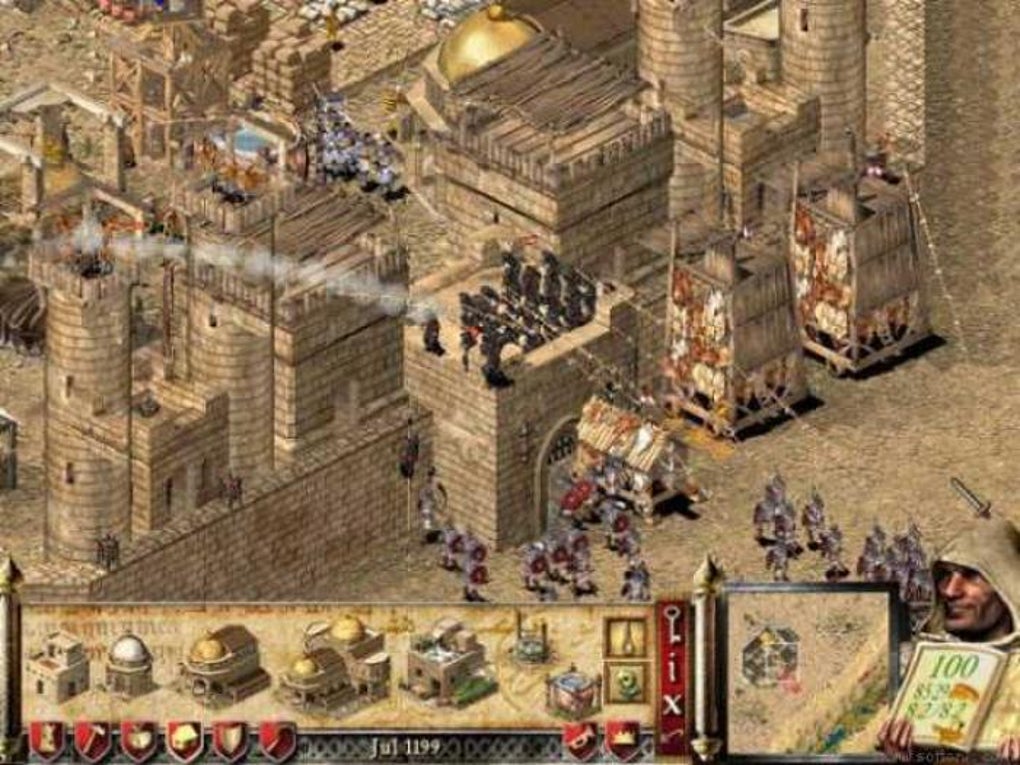
Then comes the castle building, a truly defining feature of the Stronghold series. Players have the freedom to design and construct their fortresses block by block, wall by wall, tower by tower. The layout of your castle is paramount to its defense. Strategic placement of archer towers, moats, traps, and inner defensive layers can turn a seemingly weak position into an impenetrable bastion. Understanding choke points, lines of sight, and the strengths and weaknesses of different wall types becomes a critical skill. The tension of watching enemy catapults batter your carefully constructed walls, or seeing your archers repel waves of attackers from atop your ramparts, is an experience few other games can replicate. This element of creative construction, combined with its profound impact on the battlefield, elevates Stronghold Crusader beyond typical RTS fare.
The military aspect of Stronghold Crusader is equally engaging. Players command a diverse roster of units, each with unique strengths, weaknesses, and costs. European armies boast powerful, heavily armored knights, versatile archers, and effective siege weaponry like catapults and trebuchets. Arab forces, on the other hand, prioritize speed and mobility with units like horse archers, assassins, and a variety of specialized melee troops. Mastering the synergies between these units, understanding counter-units, and employing effective formations are essential for victory. Siege warfare, in particular, is where the game shines. Attacking a well-defended castle requires careful planning: breaching walls, neutralizing enemy archers, and clearing a path for your melee troops. Defending a castle, conversely, involves utilizing every defensive advantage, from boiling oil poured on invaders to strategically placed ballistas. This dynamic interplay of economic management, castle construction, and intense military engagements creates a multi-faceted strategic experience that continues to captivate players worldwide.
Internet & Networks: Connecting the Crusades
In the modern gaming era, the ability to connect with other players across the globe is a cornerstone of a game’s longevity and community. Stronghold Crusader, while also offering a robust single-player experience with its challenging AI lords and extensive Crusader Trails, truly shines in its multiplayer modes. The option to engage in fierce castle-vs-castle battles over a local area network (LAN) or across the Internet has significantly contributed to its enduring popularity. PhanMemFree.org recognizes the importance of these networking capabilities, classifying related applications and tools under ‘Internet & Networks’ and ‘Social & Communications’ to cater to a global, interconnected user base.
The multiplayer aspect of Stronghold Crusader transforms the strategic game into a dynamic social experience. Instead of predictable AI opponents, players face the cunning and adaptability of human adversaries, leading to unpredictable and often epic encounters. The core challenge remains the same – build, defend, and conquer – but the human element introduces a layer of psychological warfare, bluffing, and emergent strategies that elevate the gameplay. Whether it’s a frantic rush to establish an early economy, a daring siege attempt, or a prolonged defensive stand, every multiplayer match offers a fresh and unique challenge. The competitive nature of human-versus-human combat fosters a vibrant community, where players hone their skills, share strategies, and forge rivalries and friendships.
Furthermore, the game’s network capabilities have allowed for the proliferation of fan-made content and modifications. While not explicitly detailed in the provided snippet, historically, strong communities around classic games often leverage file-sharing mechanisms (even simple direct downloads or P2P in earlier days, fitting under categories like ‘Compartir Archivos Y P2P’ from PhanMemFree.org’s structure) to distribute custom maps, scenarios, and unofficial patches. This user-driven content further extends the game’s replayability, providing an endless stream of new challenges and creative outlets for its dedicated fanbase. Discussions, strategy sharing, and organizing games often take place on various online forums and platforms, tying into the broader ‘Social & Communications’ aspects, including ‘Redes Sociales’ where players connect and interact.
Even in today’s landscape of massive multiplayer online games, Stronghold Crusader’s focused, intimate battles retain their appeal. The ability to quickly set up a game with friends or join a public match for an intense strategic showdown is a testament to its well-implemented networking code. PhanMemFree.org understands that for many, a game’s value isn’t just in its solo content, but in its capacity to bring people together, to foster competition and collaboration. Stronghold Crusader, through its robust online and LAN play, has successfully built and maintained such a community, proving that classic strategic depth combined with accessible multiplayer mechanics creates a recipe for lasting success and enjoyment.
Utilities & Tools: Enhancing Your Gaming Experience
While Stronghold Crusader itself is a standalone game, the broader ecosystem of software that enhances, supports, or optimizes a user’s computing and gaming experience is vast and crucial. At PhanMemFree.org, we categorize these essential applications under ‘Utilities & Tools’, encompassing everything from system optimizers to file management solutions. Even a game like Stronghold Crusader, with its relatively modest system requirements, benefits from a well-maintained system and the right tools.
Consider the minimum system requirements for Stronghold Crusader: a Pentium 300 MHz processor and 64 MB of RAM. In its time, these were typical specifications, making the game accessible to a wide audience. Today, these requirements are exceptionally low, meaning the game runs smoothly on virtually any modern PC. However, maintaining optimal system performance is always beneficial. Tools like ‘Administradores De Archivos’ (File Managers) help users organize game files, save data, and custom content. ‘Compresión De Archivos’ (File Compression) utilities can be useful for sharing large game mods or maps efficiently. For older operating systems, compatibility tools (which might broadly fall under ‘Utilidades Y Herramientas’) were sometimes necessary to ensure smooth gameplay, although modern compatibility modes in Windows often handle this for classic titles.
Furthermore, beyond the direct performance of the game, a secure and efficient computing environment is paramount for any online activity, including multiplayer gaming. While Stronghold Crusader might not be the primary target for malicious software, ‘Antivirus’ and ‘Cortafuegos’ (Firewalls) from PhanMemFree.org’s ‘Seguridad Y Privacidad’ section are crucial for protecting a player’s system from threats that could interfere with game performance or compromise personal data. For those looking to optimize their gaming setup, ‘Control Remoto’ (Remote Control) tools might be used by tech-savvy users for troubleshooting or managing game servers. ‘Copia De Seguridad Y Almacenamiento En La Nube’ (Backup & Cloud Storage) is vital for safeguarding precious game saves, custom maps, and profiles, ensuring that hours of strategic planning and achievement aren’t lost due to unforeseen system issues.
The demo version of Stronghold Crusader, which offered three missions of increasing difficulty, was a classic marketing utility, providing a glimpse into the game’s mechanics and challenging gameplay without requiring a full purchase. PhanMemFree.org’s detailed information about such versions, including limitations and update dates, helps users make informed decisions. The developer, Firefly Studios, like any software developer, relies on various development tools (found under ‘Desarrollo’ categories like ‘Kits De Desarrollo’ or ‘IDE/Editores De Fuente’) to bring their creations to life, showcasing the vast ecosystem of software that supports the gaming world. Ultimately, whether it’s managing game files, ensuring system security, or simply understanding system requirements, the array of ‘Utilities & Tools’ available through platforms like PhanMemFree.org plays a silent but significant role in enhancing the overall gaming journey for Stronghold Crusader enthusiasts and all PC users alike.
Stronghold Crusader has left an indelible mark on the gaming community, consistently praised by users for its immersive historical setting, deep strategic gameplay, and challenging AI. User reviews, such as those found on PhanMemFree.org, frequently highlight its superior quality when compared to other strategy giants of its era. One anonymous user in 2002 described the demo as “good but as always it’s a demo,” yet still recognized its potential, lamenting its difficulty and language barrier, but ultimately acknowledging the good graphics. Contrastingly, another user in the same year exclaimed, “It was about time Crusader came out. The Stronghold game is the best game, better than Age of Empires, Tzar. You have more game options and it’s more fun than the others, that’s why we were all waiting for it.” This sentiment of it being superior to established titans speaks volumes.
The game’s ability to “make you feel inside the game,” as one user put it, by placing you squarely in the historical context of the Crusades, is a recurring theme in its positive reception. The challenge, even in the “easy” version, was noted as significant, leading players to invest hours into mastering its intricacies. This speaks to the depth and replayability that Firefly Studios managed to infuse into the title. Many users, even years later, continued to laud Stronghold Crusader, with one commenting in 2007 that it was “one of my best games (better than Age of Empires 2 Conquerors) the graphics everything is good.” The desire for the full Spanish version was a common feedback point, indicating a broad international appeal and a wish for full localization. The nostalgia and appreciation for its “original images” that captured the “charm of that era” further underscore its unique artistic and historical appeal. For many, Stronghold Crusader wasn’t just another game; it was a defining experience in the strategy genre.
Why Stronghold Crusader Remains a Classic
Stronghold Crusader’s enduring legacy is built on several pillars that continue to resonate with gamers. Its masterful blend of intricate castle-building with fast-paced real-time strategy offers a unique gameplay loop that encourages both meticulous planning and swift adaptation. The challenging AI, varied scenarios, and distinct faction units ensure that no two playthroughs are exactly alike, providing immense replayability. The historical setting of the Crusades, combined with memorable characters like Richard the Lionheart and Saladin, immerses players in a conflict that feels epic and significant. It’s a game where economic management is as vital as military might, where the design of a single wall segment can alter the course of a siege, and where every decision carries weight.
Even today, in an era of visually stunning and technologically advanced games, Stronghold Crusader maintains its allure. Its relatively low system requirements make it accessible to a broad audience, and its core gameplay mechanics remain as engaging as ever. The dedicated community, fostered by its robust multiplayer options, continues to ensure its relevance. For many, Stronghold Crusader is not just a nostalgic trip down memory lane, but a timeless example of how innovative design, strategic depth, and a compelling theme can create a gaming masterpiece that transcends generations. It truly stands as a testament to Firefly Studios’ vision and craftsmanship.
Conclusion
Stronghold Crusader, available on PhanMemFree.org, is more than just a real-time strategy game; it is a meticulously crafted experience that combines historical immersion with deep strategic gameplay. Its innovative blend of city-building, economic management, and intense siege warfare has secured its place as a beloved classic in the gaming world. From meticulously constructing an impregnable fortress to leading a charge across the desert sands, players are constantly engaged in a challenging and rewarding strategic dance. Its enduring appeal, evident in glowing user reviews and a passionate community, solidifies its position as a benchmark in the genre. For anyone seeking a rich, tactical, and historically vibrant gaming experience, Stronghold Crusader remains an essential title, offering countless hours of strategic enjoyment and proving that some games truly stand the test of time.


