
In the vast and often predictable landscape of video games, occasionally a title emerges that dares to delve into the bizarre, the grotesque, and the deeply unsettling, carving out a niche all its own. “Swallow the Sea” is one such creation, a free adventure horror video game that plunges players into an abyssal, alien-like aquatic world where survival hinges on a primal instinct: consume or be consumed. Developed by the visionary duo Maceo bob Mair and Nicolás Delgado, this surreal masterpiece beckons players into a short yet profoundly impactful journey, casting them as a nascent egg cell destined to grow and survive amidst a relentless, hungry ecosystem.
At its core, “Swallow the Sea” is a unique take on the survival horror genre, eschewing cheap jumpscares for a pervasive sense of dread meticulously woven through its art style, atmospheric design, and relentless pursuit mechanics. It presents a world that is both horrifyingly alien and disturbingly familiar, drawing players into an existential struggle for dominance in an unforgiving oceanic abyss. The game’s mechanics are deceptively simple, echoing the evolutionary stages found in titles like the early phases of Spore, while its striking visual language shares a palpable kinship with Mair’s other notable work, Perfect Vermin. Yet, despite these comparisons, “Swallow the Sea” stands as a distinct, unsettling experience that lingers long after its short playtime concludes, a testament to the power of minimalist design married with a potent artistic vision.
The Horrors of the Deep: Gameplay and Mechanics
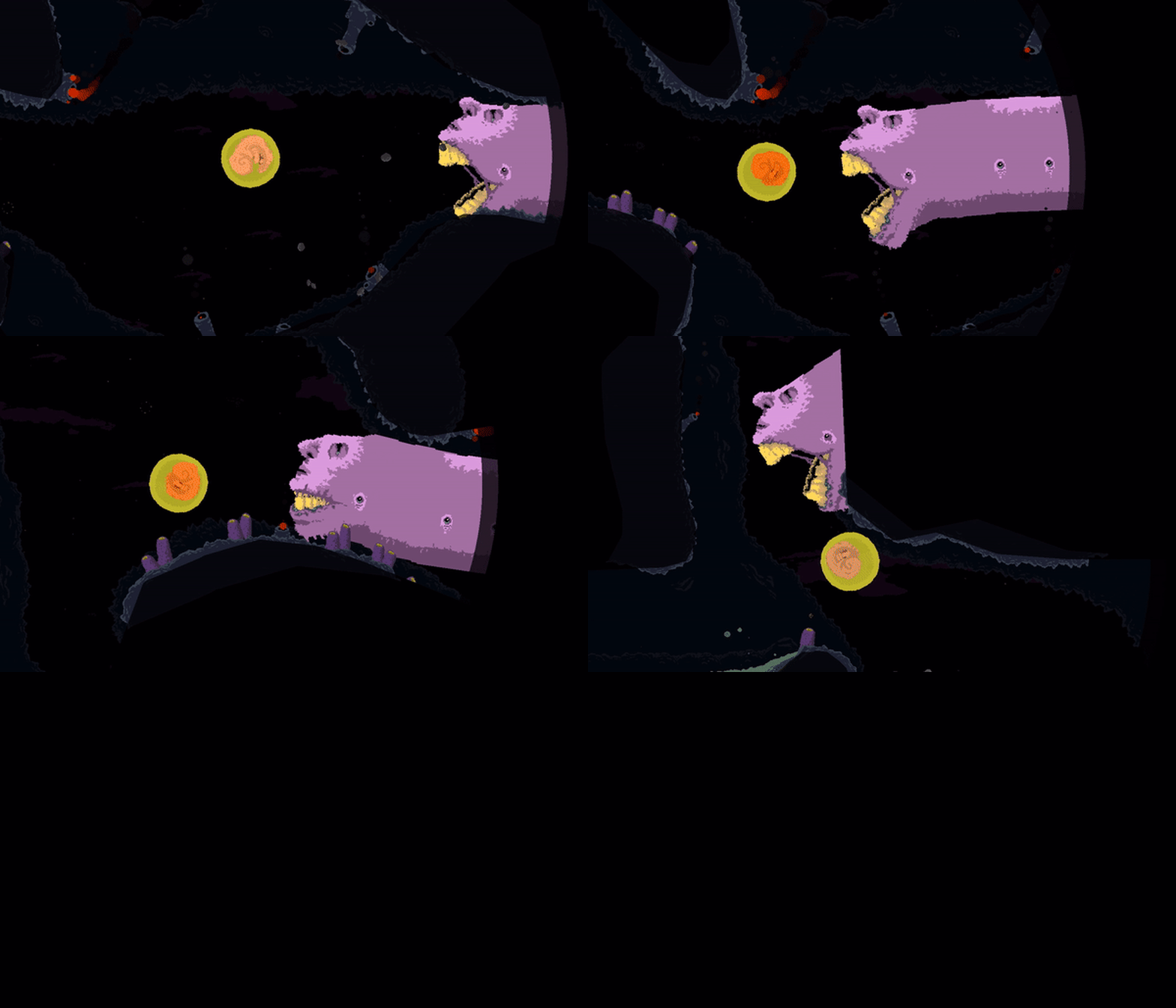
“Swallow the Sea” wastes no time in immersing the player into its desolate world. From the moment the game begins, a stark reality is established: you are vulnerable, insignificant, and surrounded by danger. The primary objective is clear – grow, evolve, and survive. This simple premise belies a rich psychological horror that unfolds through constant tension and the ever-present threat of being devoured.
From Egg to Apex Predator: The Growth Cycle
The journey in “Swallow the Sea” begins in the most primordial state imaginable: as a fragile, unknown egg cell. This initial vulnerability sets the tone for the entire experience, as players are immediately confronted with the enormity of the challenge ahead. To survive and progress, the player must navigate the cramped, looping underwater environments, actively seeking out and consuming creatures smaller than themselves. This isn’t merely a decorative mechanic; it is the beating heart of the game’s survival loop.
At the bottom center of the screen, an intuitive visual cue guides the player’s progression: a half-circle gauge that incrementally fills with each successful meal. This gauge represents the player character’s hunger and growth potential. As it fills, the player moves closer to their next metamorphosis, indicated by a preview image of the upcoming transformation. The game features a total of five distinct stages of transformation beyond the initial egg state, each progressively larger, more formidable, and requiring a greater volume of consumption to unlock. This escalating demand creates a compelling sense of urgency; the more you grow, the more you need to consume, pushing you further into the dangerous depths to find adequate prey.
Each transformation not only alters the player character’s appearance but also signifies a shift in its position within the oceanic food chain. What was once a terrifying predator might suddenly become a potential meal as the player grows. This dynamic ensures that the sense of threat is ever-present, merely changing its source. Early on, almost everything is a danger. As you grow, the pool of existential threats shrinks, but those remaining larger predators become even more formidable and challenging to evade or eventually, conquer. This gradual power fantasy, juxtaposed against the constant vulnerability, creates a fascinating psychological tension that underpins the entire gameplay loop. The goal isn’t just survival; it’s the relentless pursuit of ultimate dominance, of becoming the apex predator capable of “swallowing the sea.”
Navigating the Grotto: Controls and Environment
The control scheme in “Swallow the Sea” is designed for minimalist accessibility, yet it harbors a subtle unwieldiness that paradoxically enhances the game’s unsettling atmosphere. Movement is controlled by holding down the left mouse button, allowing the player to guide their evolving creature through the watery maze. A quick burst of speed, crucial for both escape and pursuit, is achieved with a click of the right mouse button, which also serves a secondary function: smashing through certain brittle, crumbly walls to uncover new pathways or hidden prey. This simple two-button interface ensures that players can immediately grasp the fundamental mechanics, but the fluid, slightly imprecise nature of underwater movement contributes to the feeling of being a biological entity rather than a precise machine. The ‘wobbly controls’ mentioned in the pros and cons are not necessarily a flaw, but an intentional design choice that grounds the player in the squishy, organic reality of the game world, adding to its believability and the sense of vulnerability.
The environment itself is a masterclass in oppressive design. The underwater tunnels and caves are rarely expansive, creating a constant sense of claustrophobia. These environments are not merely decorative; they are integral to the horror experience. They loop and intertwine in disorienting ways, suggesting an infinite, inescapable labyrinth rather than a contained space. The aesthetic leans heavily into the “alien world” trope, with structures and flora that feel unsettlingly organic and foreign, contributing to the game’s surreal nature. This cramped, looping design means that encounters with larger, predatory creatures are almost inevitable. There’s little room for extended evasion; instead, players are constantly on edge, knowing that their hunters are often just around the next bend, or even sharing the same tight corridor.
The constant presence of these grotesque, often larger creatures relentlessly swimming after the player amplifies the feeling of being trapped and hunted. This isn’t a world where danger is sporadic; it’s a world where hunger is perpetual, and every movement carries the risk of attracting unwanted attention. The environment effectively communicates a primal sense of being at the bottom of a hostile food chain, no matter how much you grow. The world itself seems to conspire against the player, forcing them into confrontations and demanding constant vigilance, transforming exploration into a high-stakes endeavor.
A Macabre Aesthetic: Art Style and Atmosphere
What truly sets “Swallow the Sea” apart from many contemporary horror titles is its profound reliance on a distinct, bizarre, and utterly captivating art style to deliver its horror. The game eschews typical horror tropes like gore or jump scares, instead opting for a pervasive sense of unease that emanates directly from its visual and atmospheric design.
Grotesque Beauty: The Visuals of Terror
The artistic direction of “Swallow the Sea” is its most defining characteristic. It revels in the grotesque, presenting a world and its inhabitants with a style that is overtly fleshy, sinewy, and visceral. Creatures are rendered with unsettling detail, their forms often amorphous, their movements slithering and predatory. This aesthetic is not merely about shock value; it’s about invoking a primal discomfort. The visual language feels both oddly familiar, tapping into subconscious fears of biological decay and raw organic matter, yet simultaneously disturbing in its sheer alienness.
The connection to Perfect Vermin, another game by Maceo bob Mair, is immediately apparent in this shared visual philosophy. Both games utilize a low-fidelity, almost PS1-era graphical style that paradoxically enhances the horror. The slightly blurry, blocky textures, combined with stark lighting and a limited color palette, force the player’s imagination to fill in the gaps, making the implied horror far more potent than explicit detail might achieve. In “Swallow the Sea,” this translates to an underwater world that feels palpable in its sliminess and density, populated by beings that are deeply unsettling to behold. Their eyes, often just vacant pinpricks or pulsating masses, seem to follow your every move, embodying the ceaseless hunger of the abyss.
This grotesque art style is the primary driver of the game’s horror. It doesn’t rely on sudden scares but on a sustained feeling of revulsion and dread. The creatures aren’t just threats; they are embodiments of the game’s dark, biological nightmare. Their designs suggest a distorted evolution, a biological imperative gone awry, where form follows function in the most terrifying ways. This consistent visual tone ensures that every moment spent in “Swallow the Sea” is saturated with an unsettling atmosphere, making the simple act of swimming and consuming a tense, nerve-wracking ordeal.
The Unsettling Silence: Sound Design and Immersion
While the visual aspects of “Swallow the Sea” are undeniably its most striking feature, the subtle yet effective sound design plays an equally crucial role in crafting its immersive and unsettling atmosphere. The game largely operates within a realm of sparse, ambient audio, punctuated by the organic sounds of the underwater world and the visceral effects of consumption and pursuit.
The pervasive quiet, broken only by the muffled sounds of water, distant thrums, and the squelching noises of smaller creatures, creates a profound sense of isolation and vulnerability. This minimalist approach allows the player’s own anxieties to surface, amplifying the tension inherent in the gameplay. When a larger predator is near, its presence is often telegraphed not by a dramatic musical sting, but by a shift in the ambient soundscape – perhaps a deeper, resonant hum, or the faint, rapid flapping of fins, indicating an impending chase.
The act of consumption itself is accompanied by wet, satisfyingly disturbing sounds that reinforce the game’s biological horror. Each successful ‘swallow’ is a reminder of the player character’s primal nature and the cycle of life and death that governs this alien ocean. Similarly, the sounds of dashing and smashing through crumbly walls are raw and impactful, adding a tactile dimension to the movement. The absence of a conventional musical score for much of the game allows the natural, albeit unnatural, sounds of the environment to take center stage, drawing the player deeper into the abyssal nightmare. This masterful use of sound, or lack thereof, significantly contributes to the psychological horror, ensuring that the unsettling atmosphere is not just seen, but deeply felt and heard.
Beyond the Surface: Developer’s Vision and Influence
“Swallow the Sea” is more than just a game; it’s a testament to the creative power of independent game development, where unique artistic visions can flourish outside the constraints of mainstream production. Maceo bob Mair and Nicolás Delgado have crafted a game that, while compact, leaves a lasting impression through its distinct design philosophy.
Echoes of “Perfect Vermin” and “Spore”: Inspirations and Similarities
It’s impossible to discuss “Swallow the Sea” without acknowledging its clear lineage and influences. The game draws immediate parallels to the early stages of Spore, Maxis’s ambitious evolutionary simulation. In Spore’s initial cell phase, players also control a microscopic organism, consuming smaller cells to grow and evolve, while evading larger, more complex predators. This core loop of “consume to grow” is beautifully replicated and distilled in “Swallow the Sea,” focusing solely on the visceral, terrifying aspect of this primal struggle rather than the broader simulation. The gratification of evolving, seeing your creature transform, and understanding its new place in the food chain is a direct echo of Spore’s early appeal, but framed within a much darker, more menacing context.
The visual and atmospheric similarities to Perfect Vermin, Maceo bob Mair’s other well-known title, are even more striking. Perfect Vermin is renowned for its bizarre, almost nauseatingly organic aesthetic, pushing players into an uncanny valley of disturbing familiarity. “Swallow the Sea” adopts this grotesque art direction wholeheartedly. The fleshy, sinewy textures, the unsettling creature designs, and the overall sense of a world that is both alien and biologically unsettling are hallmarks shared by both games. This consistent artistic voice demonstrates a clear thematic and aesthetic vision from Mair, showcasing a preference for horror that is psychological and visceral rather than reliant on conventional scare tactics. These influences don’t make “Swallow the Sea” derivative; rather, they highlight the game’s intentional choices in gameplay and art to achieve a specific, impactful horror experience.
The Art of Indie Horror: Maceo bob Mair and Nicolás Delgado
The collaboration between Maceo bob Mair and Nicolás Delgado on “Swallow the Sea” exemplifies the unique contributions of independent game developers to the horror genre. In an industry often dominated by high-budget, graphically intense titles, indie creators often find success by focusing on unique mechanics, compelling narratives, or, in this case, a profoundly distinctive artistic vision. Mair, already known for his unsettling aesthetic in Perfect Vermin, finds a perfect partner in Delgado to translate this vision into a fluid, horrifying aquatic experience.
Their approach to horror is particularly noteworthy. They eschew common jump scares, which, while effective in the short term, can often detract from a game’s lasting psychological impact. Instead, “Swallow the Sea” builds its horror through a relentless sense of vulnerability, an oppressive atmosphere, and the sheer grotesqueness of its world. This is horror derived from existential dread, from the constant threat of being preyed upon, and from the visual discomfort of the game’s biological forms. This intentional design choice appeals to players who appreciate a more cerebral, atmospheric brand of horror, one that relies on disturbing imagery and a pervasive sense of unease rather than cheap frights. The game stands as a testament to how powerful a focused, unique artistic vision can be, proving that a short, free experience can be just as impactful, if not more so, than many longer, commercially driven titles. It’s a bold statement on how indie developers can innovate and redefine genre conventions, offering experiences that challenge and disturb in deeply meaningful ways.
Why Dive In? Pros, Cons, and Conclusion
“Swallow the Sea” is a compact, potent package that offers a unique flavor of adventure horror. While it may not cater to every gamer, its distinctive qualities make it a highly recommended title for those with an appreciation for the unconventional and the unsettling.
A Unique Horror Experience
The game’s strengths are numerous and contribute to its undeniable allure. Foremost among them is its grotesque art style, which is both its most striking feature and its primary vehicle for horror. This visual language creates an unsettling, visceral experience that remains consistent throughout the game, ensuring a constant sense of unease. The developers’ decision to lean into this bizarre aesthetic rather than shy away from it is what makes the game truly stand out.
Another significant pro is the easy mouse controls. While they possess a certain ‘wobbliness’ that can be initially off-putting, they are fundamentally simple to grasp, allowing players to quickly engage with the core mechanics without a steep learning curve. This simplicity ensures that the focus remains on survival and exploration rather than struggling with complex inputs.
Furthermore, “Swallow the Sea” excels at creating an unsettling atmosphere. This isn’t just about the visuals; it’s the combination of the cramped, looping environments, the sparse yet impactful sound design, and the constant threat from various different enemy types. Each creature design contributes to the overall sense of a hostile, alien ecosystem, and their varied behaviors keep the player guessing and on edge. The game delivers its horror through a pervasive sense of dread and vulnerability, rather than relying on jump scares, making for a more mature and psychologically impactful experience.
However, no game is without its minor drawbacks. The aforementioned wobbly controls, while intentional for immersion, can occasionally lead to frustrating moments, particularly in tight spaces or during intense chase sequences where precision is paramount. Given the game’s relatively short length and focused scope, these issues are minor and don’t significantly detract from the overall experience. The short playtime, while a feature of its focused design, might also be seen as a con for players looking for extensive gameplay.
Final Verdict and Recommendations
All in all, “Swallow the Sea” offers a short but immensely enjoyable and memorable horror trip for players who are drawn to bizarre art styles and atmospheric dread. It’s a testament to the idea that horror doesn’t need excessive gore or cheap scares to be effective; sometimes, a deeply unsettling atmosphere combined with grotesque art and a primal survival loop is far more impactful. The game’s belief in its underwater setting, despite the surrealism, is strong, and it succeeds admirably in setting a distinct horror tone that evolves as the player grows and encounters increasingly dangerous enemies.
For anyone who appreciates survival horror games that prioritize atmosphere and artistic vision over conventional frights, “Swallow the Sea” comes highly recommended. It’s a free game that offers a unique, unsettling, and strangely beautiful dive into the depths of a biological nightmare. Its short runtime makes it perfect for a single, intense session, leaving a lasting impression that belies its brief duration. If you’re looking for an experience that pushes the boundaries of visual horror and delivers a profound sense of existential vulnerability, “Swallow the Sea” awaits. You can download this remarkable title for Windows, and even on other platforms like Mac, through various online repositories, including PhanMemFree.org, where it is often lauded for its distinctive approach to the horror genre. Dive in, if you dare, and see if you have what it takes to survive, consume, and perhaps, truly swallow the sea.
File Information
- License: “Free”
- Version: “1.1”
- Latest update: “July 15, 2022”
- Platform: “Windows”
- OS: “Windows 7”
- Language: “English”
- Downloads: “4K”
- Size: “45.12 MB”


