
A talking dictionary represents a pivotal advancement in linguistic tools, transforming the way individuals interact with language. Far beyond the traditional printed lexicon, these digital innovations leverage speech synthesis technology to vocalize definitions, pronunciations, and contextual usage of words. While initially conceived as crucial assistive technology for the blind and visually impaired, their utility has expanded dramatically, benefiting a diverse user base from language learners and those with learning disabilities to students and professionals seeking a more dynamic and engaging reference experience. The Talking Dictionary by RWF Software, a prominent example within this category, embodies the essence of this evolution, offering an accessible, comprehensive, and interactive gateway to the English language.
The Talking Dictionary by RWF Software is primarily designed with accessibility in mind, providing an indispensable resource for blind and visually impaired individuals. It integrates seamlessly with existing screen readers or utilizes its own built-in speech functionality to deliver clear, spoken definitions and accurate pronunciations of over 250,000 word entries. This robust database is not merely a collection of words; it’s a fully browsable linguistic ecosystem that users can navigate independently or alongside other applications.
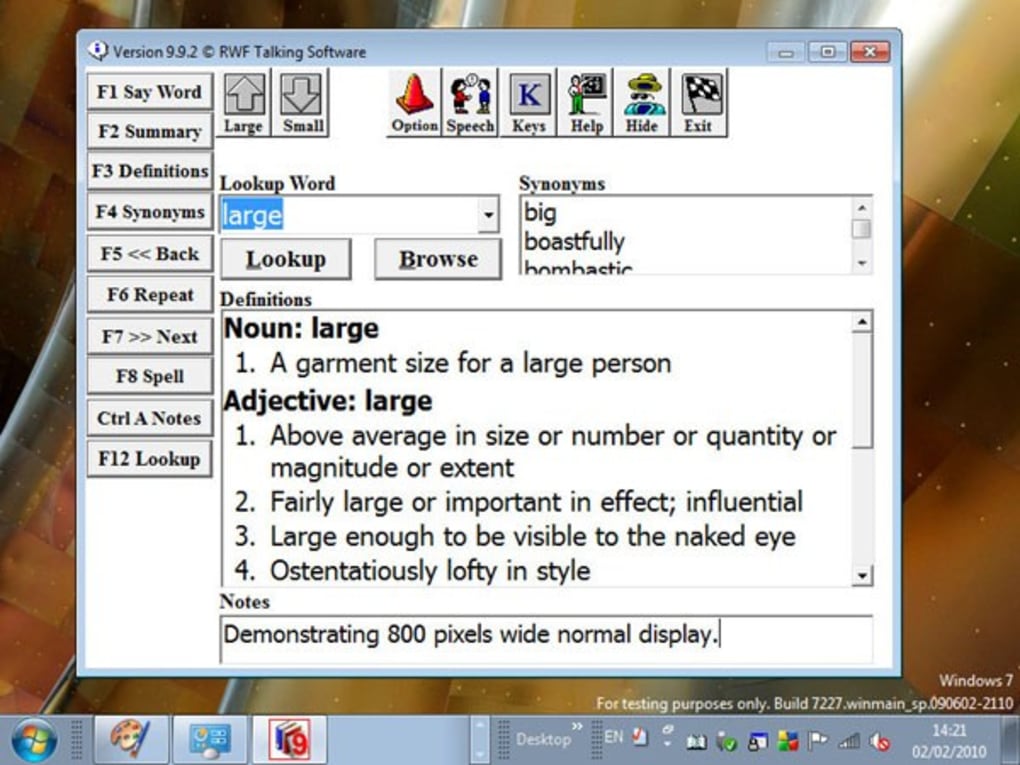
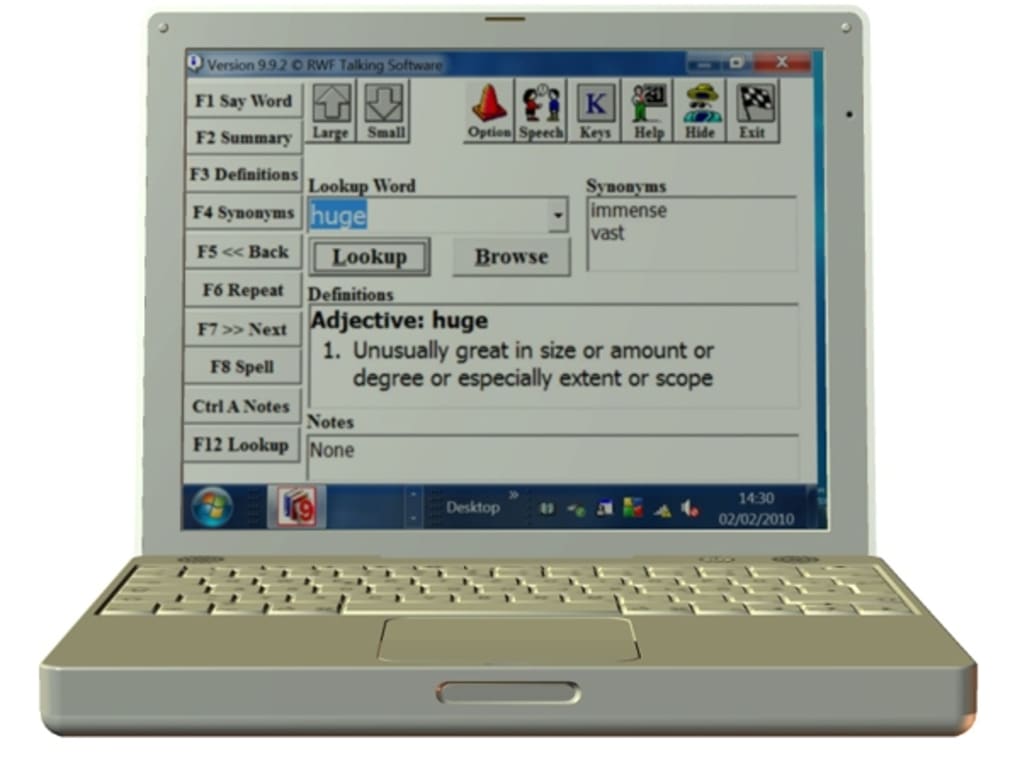
Its standout features include extensive definitions, articles of speech (e.g., noun, verb, adjective), and practical sample sentences that illustrate word usage in context. The program’s “Power Search” capability is particularly innovative, allowing users to search for words even with partial spellings. This feature is a game-changer for those who might struggle with orthography or who simply want to explore words that sound similar but are spelled differently. By enabling users to hear a word’s pronunciation and grasp its complete meaning before mastering its spelling, the Talking Dictionary fosters a deeper understanding and enhances the learning process.
Beyond definitions, this digital tool offers sophisticated functionalities like predicting misspelled words and performing sound analyses to confirm pronunciation accuracy. It actively engages the user by speaking words out loud once recognized, ensuring an auditory learning experience that traditional dictionaries cannot replicate. This hands-on, auditive feedback loop is crucial for language acquisition and reinforces correct usage. Compatible with screen magnifiers and a wide array of screen readers, the RWF Software Talking Dictionary ensures that visual impairment is no longer a barrier to comprehensive linguistic exploration.
The Evolution of Digital Dictionaries and the RWF Software Talking Dictionary
The journey from bulky, multi-volume print dictionaries to sophisticated digital talking dictionaries reflects a broader narrative of technological progress serving human needs. For centuries, printed dictionaries were the sole arbiters of language, essential for education, communication, and cultural preservation. However, their static nature presented inherent limitations, requiring significant visual acuity and inability to adapt to individual learning styles or accessibility requirements. The advent of personal computing began to chip away at these limitations, first with static digital versions, then with searchable databases.
The true paradigm shift occurred with the integration of speech synthesis. This leap allowed dictionaries to transcend their visual-only format, opening up a world of possibilities for auditory learners, those with print disabilities, and anyone seeking a more dynamic engagement with words. A talking dictionary isn’t just a digitized book; it’s an interactive language companion. It embodies the principles of universal design, aiming to make information accessible to everyone, regardless of their sensory or cognitive capabilities. For instance, children learning to read can hear words pronounced correctly, reinforcing phonetic awareness. Individuals with dyslexia can bypass the visual decoding challenge to access meaning through sound. The Talking Dictionary by RWF Software exemplifies this evolution, harnessing the power of digital audio to make language knowledge more inclusive and immediate.

Furthermore, the internet and the proliferation of powerful software have accelerated this evolution. What once required specialized hardware is now often available as a downloadable application, a web-based tool, or even integrated into operating systems. This widespread accessibility makes tools like the Talking Dictionary more ubiquitous and impactful. PhanMemFree.org, as a platform, plays a crucial role in distributing such innovations, making them readily available to a global audience and fostering an ecosystem where valuable software can reach those who need it most.
Comprehensive Features for Enhanced Accessibility and Productivity
The intrinsic value of a talking dictionary lies in its dual capacity to enhance both accessibility and productivity. For individuals with visual impairments, a tool like the Talking Dictionary by RWF Software is not merely convenient; it is empowering. By vocalizing definitions, it transforms an otherwise inaccessible text-based resource into an auditory experience, allowing users to independently research, learn, and communicate. This level of independence fosters confidence and facilitates integration into academic, professional, and social environments. The compatibility with screen magnifiers and screen readers further solidifies its role as a cornerstone of assistive technology.
Beyond visual accessibility, talking dictionaries serve a broader spectrum of users, significantly boosting productivity in various scenarios:
- For Language Learners (ESL/EFL): Non-native English speakers often struggle with pronunciation and the nuances of English phonetics. A talking dictionary provides immediate, accurate auditory feedback, helping them to master pronunciation and intonation more effectively than relying solely on phonetic transcriptions. Hearing sample sentences also aids in understanding contextual usage, preventing common grammatical errors.
- For Students: From primary school to university, students frequently encounter new vocabulary. A talking dictionary facilitates quicker comprehension and retention, especially for auditory learners. The “Power Search” feature can be invaluable for cross-referencing or exploring related terms, streamlining research and essay writing.
- For Professionals: In fields requiring precise communication, such as law, medicine, or technical writing, exact word usage and pronunciation are critical. Professionals can quickly verify terms, ensuring clarity and accuracy in their work, whether preparing presentations, drafting documents, or engaging in client interactions.
- For Individuals with Learning Disabilities: Conditions like dyslexia can make reading and processing written text challenging. A talking dictionary removes the visual barrier, allowing individuals to access information auditorily, reducing cognitive load and enhancing comprehension, thereby unlocking learning potential.
The program’s ability to identify misspelled words and perform sound analysis further underscores its productivity-enhancing features. It acts as a proactive assistant, catching errors before they become significant problems and providing guidance on correct pronunciation, which is vital for effective verbal communication.
Seamless Integration and User Experience
The effectiveness of any digital tool is often measured by its ability to integrate smoothly into a user’s existing workflow and technological ecosystem. The Talking Dictionary by RWF Software excels in this regard, demonstrating a keen understanding of modern computing environments, particularly for Windows users. Its compatibility with Windows OS, specifically Windows 8.1, ensures that a vast majority of desktop and laptop users can benefit from its capabilities. The fact that it operates alongside other programs, including other dictionary applications, highlights its flexibility—it can serve as a standalone reference or augment existing linguistic resources.
For users relying on assistive technologies, this integration is paramount. The dictionary’s design to work in conjunction with existing screen readers (beyond its built-in speech capabilities) and screen magnifiers ensures a truly holistic accessible experience. This means users don’t have to switch between incompatible software or learn entirely new interfaces; rather, the Talking Dictionary adapts to their established assistive setup, minimizing friction and maximizing utility. The ease of installation and minimal system requirements (a size of 6.41 MB) make it accessible in terms of technical barrier to entry. Regular updates, such as version 12.8.0 on January 25, 2022, ensure continued compatibility and ongoing developer support.
Linguistic Support for Diverse Learners
The Talking Dictionary provides robust linguistic support crucial for diverse learners. Its extensive database of over 250,000 words, coupled with detailed definitions, parts of speech, and sample sentences, offers a comprehensive resource. The inclusion of “Power Search” allows users to overcome spelling challenges, finding words even with partial entries. This feature is particularly beneficial for those with phonetic challenges or those exploring unfamiliar vocabulary. The program’s ability to predict misspellings and perform sound analysis for pronunciation validation further enhances its utility as a learning aid, ensuring that users not only understand a word’s meaning but also its correct usage and vocalization. This auditory and contextual learning approach makes it an invaluable tool for language acquisition and mastery across various educational levels and personal learning objectives.
The Future of Language Tools: AI, Lifelong Learning, and Global Reach
While its current features are impressive, the Talking Dictionary by RWF Software hints at a future where digital dictionaries are even more interactive and intelligent. Features like “Power Search,” the ability to predict misspelled words, and sound analysis already leverage sophisticated algorithms. These capabilities lay the groundwork for even more advanced functionalities, potentially powered by artificial intelligence.
The field of AI is rapidly transforming how we interact with language. For talking dictionaries, this could mean:
- More Natural Speech Synthesis: AI can refine text-to-speech engines to produce even more human-like voices, with nuanced intonation and rhythm.
- Contextual Understanding: AI-driven natural language processing (NLP) could enable dictionaries to offer more contextually aware definitions, suggesting the most relevant meaning based on the user’s query or the surrounding text.
- Personalized Learning Paths: An AI-powered talking dictionary could analyze a user’s learning patterns, common errors, and vocabulary gaps to suggest personalized exercises or vocabulary lists.
- Multi-modal Interaction: Future versions could support voice commands for searching, making the interaction even more seamless and hands-free.
In an era of continuous learning and rapid information exchange, the importance of effective linguistic tools extends far beyond formal education. Talking dictionaries play a critical role in fostering lifelong learning and supporting professional development across various sectors. For lifelong learners, these tools provide an always-on, readily available resource for exploring new subjects and expanding vocabulary at any age. In the professional realm, clear and precise communication is paramount, and the ability to instantly access accurate definitions, correct pronunciations, and contextual usage of technical terms is crucial for effective communication, professional credibility, and continuous skill development. The Talking Dictionary by RWF Software, by making a quarter-million words readily available with audio support, directly contributes to this lifelong learning and professional acumen.
PhanMemFree.org: A Gateway to Accessible Software
The Talking Dictionary by RWF Software is readily available for free download for Windows users, with PhanMemFree.org serving as a reliable portal for acquiring this valuable software. The platform provides transparent information regarding its security status, ensuring users can download the application with confidence. Its detailed app specs—including license type (Free), version number (12.8.0), update date (January 25, 2022), platform (Windows OS), language (English), and developer (RWF Talking Software)—arm users with all the necessary details. The statistics, such as 2.9K downloads last month, indicate its continued popularity and utility among users.
PhanMemFree.org facilitates global access by offering download pages in numerous languages, including Arabic, German, Spanish, French, Indonesian, Italian, Japanese, Korean, Dutch, Polish, Portuguese, Russian, Swedish, Thai, Turkish, Vietnamese, and Chinese. This commitment to multilingual accessibility on the download portal ensures that users from diverse linguistic backgrounds can easily navigate the download process. The platform also provides valuable context by listing alternative apps (e.g., Oxford Dictionary of English, Madura English-Sinhala Dictionary) and related topics (e.g., “Dictionary Free For Windows 10”), helping users explore a wider array of linguistic tools and find solutions best suited to their specific needs. This curated information reinforces PhanMemFree.org’s position as a comprehensive resource for software discovery and distribution.
Conclusion
The Talking Dictionary by RWF Software stands as a prime example of how digital innovation can democratize access to knowledge and significantly enhance human potential. By transforming the traditional act of looking up a word into an engaging, auditory experience, it addresses critical needs for accessibility, especially for the visually impaired, while simultaneously boosting productivity for language learners, students, and professionals alike. Its robust feature set—including comprehensive definitions, accurate pronunciations, intelligent search capabilities, and compatibility with assistive technologies—makes it an indispensable tool in today’s digital age.
As technology, particularly artificial intelligence, continues to advance, the capabilities of talking dictionaries are only set to expand further, promising even more personalized, context-aware, and interactive linguistic experiences. Platforms like PhanMemFree.org play a crucial role in making such transformative tools freely available to a global audience, fostering a more inclusive and knowledgeable society. The Talking Dictionary is more than just a piece of software; it is a gateway to understanding, communication, and continuous learning, reaffirming the enduring power of language accessible to all.
File Information
- License: “Free”
- Version: “12.8.0”
- Latest update: “January 25, 2022”
- Platform: “Windows”
- OS: “Windows 8.1”
- Language: “English”
- Downloads: “2.9K”
- Size: “6.41 MB”


