
Talking Maria is a free-to-download simulation game for Android, available in Spanish, that offers a unique—and unsettling—take on the virtual pet genre. Unlike the cute and cuddly virtual pets found in games like My Talking Tom and My Talking Angela, Maria presents a striking contrast with her bloodshot eyes, poor posture, and overall unsettling appearance. This design choice immediately sets it apart and may not be suitable for all players, especially younger or more sensitive individuals. While offering several interactive elements, the game’s limited content and jarring aesthetic may limit its overall appeal.
Gameplay and Interactions
The core gameplay revolves around caring for Maria, engaging in various interactions to maintain her well-being. Five primary actions allow players to interact with Maria: feeding, bathing, playing games, talking, and putting her to sleep. A visual indicator, using circular icons at the top of the screen, displays Maria’s current needs in each of these areas. As players fulfill Maria’s needs, the corresponding icons fill up, providing a clear representation of her current state.
Playing mini-games is a key component to earn in-game currency, which can then be used to purchase food for Maria. However, the game’s current iteration only offers a limited selection of three mini-games, possibly limiting the long-term engagement for players seeking a more diverse range of activities. The repetitive nature of these limited mini-games might quickly become monotonous for some players.
Maria’s Unsettling Design and Limited Appeal
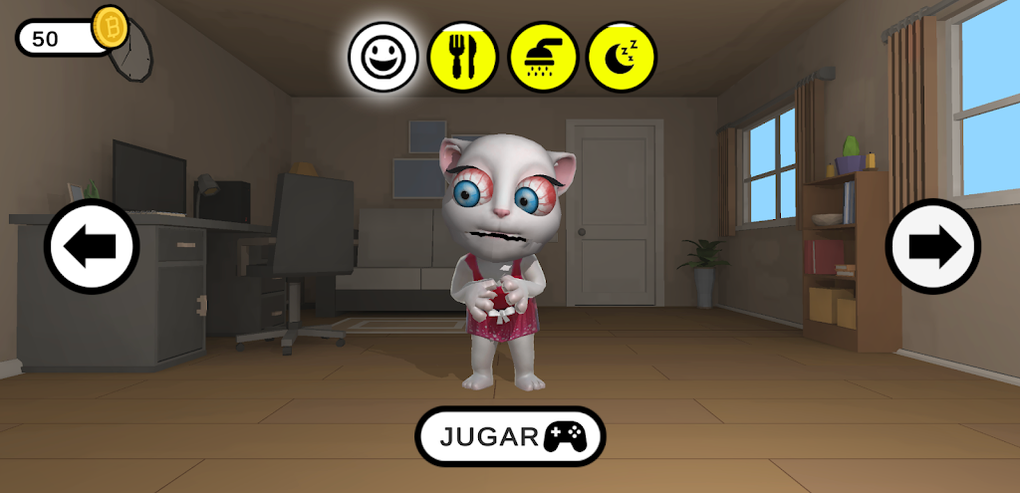
The most striking feature of Talking Maria is its protagonist’s design. Maria’s appearance is deliberately unsettling, featuring exaggerated features that contribute to her eerie aesthetic. Her bulging, bloodshot eyes and slumped posture create an unnerving visual experience that significantly differs from the typical cheerful and friendly characters found in similar virtual pet games. This design choice, while effective in creating a unique experience, could also be a significant deterrent for a large portion of potential players, particularly those seeking a more lighthearted and comforting virtual pet experience.
The game’s current iteration is only available in Spanish, presenting a significant language barrier for a substantial portion of the global audience. This limitation dramatically restricts the game’s accessibility and limits its potential reach, especially considering the prevalence of English as a dominant language in the mobile gaming market. The lack of language options could be considered a substantial flaw, preventing many from experiencing the game’s unique mechanics.
Further limiting the game’s appeal is the inability to alter Maria’s appearance. Unlike many virtual pet games that offer customization options, players are unable to change Maria’s unsettling features, reinforcing the initially jarring and potentially off-putting aesthetic. The absence of this customization element prevents players from personalizing their experience and potentially mitigating the negative impact of Maria’s unsettling design. This lack of player agency in modifying Maria’s appearance may further alienate some players.
Comparison to Similar Games
Talking Maria attempts to carve its niche in the already crowded virtual pet simulation genre. Games such as My Talking Tom and My Talking Angela prioritize cute, cuddly characters and a lighthearted gameplay experience. They offer a wide array of customization options and mini-games, enhancing replayability and player engagement. In contrast, Talking Maria chooses a different path, prioritizing a unique and unsettling aesthetic over conventional cuteness and extensive gameplay features.
While this differentiation attempts to stand out, it might alienate a significant portion of the audience accustomed to the established conventions of the virtual pet genre. The game’s divergence from established norms in this genre, while aiming for uniqueness, might backfire by narrowing its potential player base. This decision showcases a risky strategic choice that might not appeal to the broader market.

Technical Aspects and Performance
While the game’s overall graphical quality is adequate for a mobile title, it doesn’t stand out visually. The graphics are functional and serve their purpose in representing Maria and the game environment, but they lack any exceptional visual flair or artistic detail. The visuals are simple and directly support the core gameplay, but they do not provide additional value or enhancement beyond the basic functionality. The graphics are not the game’s focus, aligning with the unsettling tone of its design.
The game’s performance is generally stable, with minimal reported lag or crashes. However, the overall performance may vary depending on the device used. Higher-end devices should experience smoother performance compared to older or lower-spec devices. The relatively small file size also contributes to the potential for smoother performance across various mobile devices.
Potential for Improvement and Future Development
Despite its limitations, Talking Maria demonstrates a unique concept with the potential for substantial improvement. Addressing the most significant shortcomings, such as the language restriction and limited mini-games, would significantly expand its reach and improve player retention. Adding more mini-games, customization options, and language support would dramatically enhance the overall player experience and broaden its appeal to a wider audience.
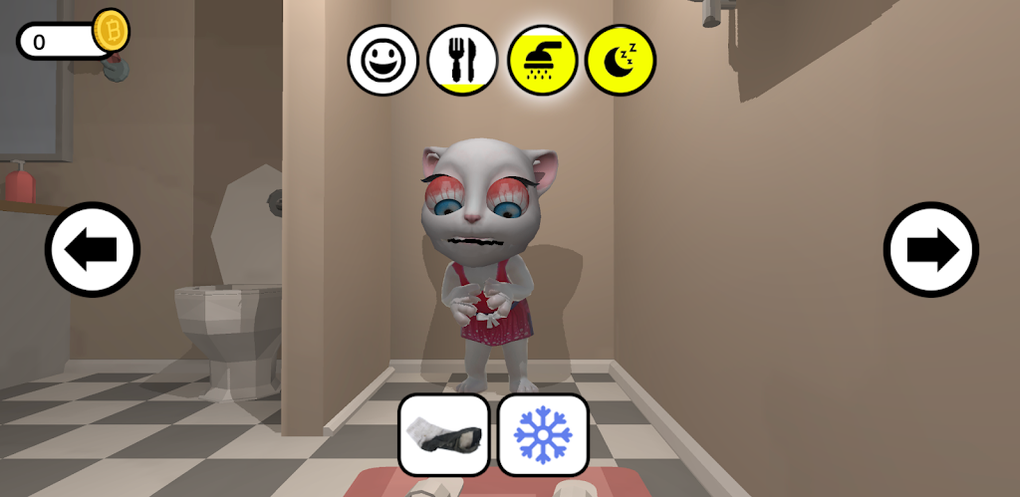
Furthermore, exploring narrative elements and expanding the storyline beyond the basic interactions could enhance the game’s depth and engagement. Adding narrative context to Maria’s unsettling appearance might provide a more complete and engaging experience for players, providing a deeper understanding of the character and her circumstances. This could potentially transform the unsettling aspects of the game from a deterrent into a point of intrigue.
The addition of social features, such as sharing gameplay moments with friends, could also boost the game’s popularity and provide additional avenues for player interaction. Incorporating social media integration could significantly increase the visibility and exposure of the game, promoting word-of-mouth marketing and fostering a community around the game.
The incorporation of positive reinforcement mechanisms could also influence player engagement. Adding achievements or rewards for consistent care and interaction could encourage players to continuously engage with the game, fostering a sense of accomplishment and motivation.
Finally, while the unsettling design is a key element of Talking Maria’s identity, carefully considering how this design is presented to younger audiences is crucial. Providing clear age ratings and warnings about the game’s potentially unsettling content is vital to ensure responsible and appropriate access for all players. This proactive approach would help protect younger players from potentially negative experiences while maintaining the game’s unique identity.
In conclusion, Talking Maria offers a unique but flawed virtual pet experience. While its unsettling aesthetic and limited content might deter many players, its core concept possesses untapped potential. By addressing its current shortcomings and incorporating suggestions for improvement, Talking Maria could evolve into a more engaging and broadly appealing virtual pet simulation.
File Information
- License: “Free”
- Version: “1.0”
- Latest update: “July 12, 2024”
- Platform: “Android”
- OS: “Android 5.0”
- Language: “Spanish”
- Downloads: “21.2K”
- Size: “72.38 MB”
- Download Options: “APK, Google Play”
- Filename: “Talking_Maria_1.0_.xapk”


