
In the ever-evolving landscape of digital entertainment, certain titles emerge not just as games, but as profound explorations of complex systems. Among these stands “The Bibites,” a remarkable free simulation video game that invites players into a vibrant, yet abstract, world of artificial life. Developed by the visionary Léo “The Bibites” Caussan, this 2D pixelated indie game transcends conventional gaming paradigms, offering a biologically-inspired “realistic” artificial life simulator. At its core, “The Bibites” is a testament to the power of emergent complexity, featuring real-time genetical and behavioral evolution that unfolds before the player’s eyes. Unlike many games that guide players through predefined narratives or challenges, “The Bibites” presents an open-ended canvas, allowing enthusiasts to spawn, observe, and subtly influence little critters known as “bibites” as they navigate a dynamically simulated environment. Available for free download on platforms like PhanMemFree, it promises a unique and thought-provoking experience for anyone intrigued by the intersection of biology, artificial intelligence, and interactive simulation.
The allure of “The Bibites” lies in its elegantly simple premise coupled with profoundly intricate underlying mechanics. From a top-down perspective, reminiscent of classic titles such as Spore or the more recent slither.io, players oversee a spawning area where these diminutive, 8-bit creatures begin their existence. While the game provides ample freedom to zoom in and out, or pan across the expansive field to track individual bibites, the visual fidelity of the creatures themselves is intentionally minimalist. They aren’t designed for aesthetic customization; rather, their beauty lies in the complex, lifelike behaviors that emerge from their genetic makeup and environmental interactions. “The Bibites” meticulously simulates their entire lifespan, from birth and growth to reproduction and eventual demise, all driven by a sophisticated model of genetic and behavioral evolution. This design philosophy firmly plants “The Bibites” not merely as a game, but as an interactive scientific sandbox, where curiosity is the ultimate guide and observation its primary reward.
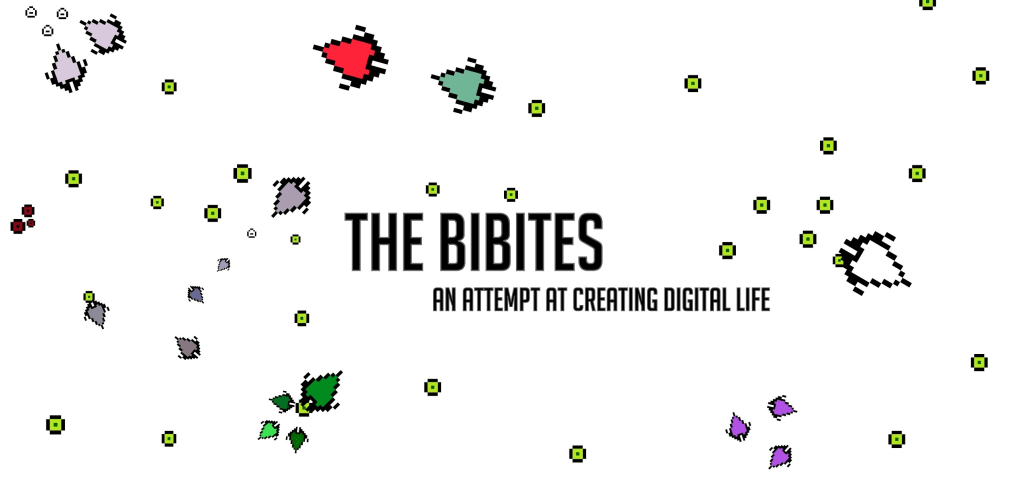
Central to the experience is the dynamic environmental simulation, a living, breathing ecosystem that constantly challenges and shapes the bibites. Players are given the unprecedented freedom to set their preferred parameters directly from the main menu, influencing key aspects such as “Simulation,” “Energy Balance,” and “Genes.” These sliders aren’t just arbitrary settings; they are the levers of evolution, allowing players to craft diverse scenarios and observe how their custom-tailored conditions affect the propagation and adaptation of life. For instance, adjusting energy balance might dictate the abundance of food sources, directly impacting competition and survival rates among the bibites. Similarly, tweaking genetic parameters can accelerate or decelerate the rate of mutation and adaptation, leading to fascinating evolutionary outcomes. The open-ended nature of the game ensures boundless evolutionary possibilities, encouraging endless experimentation and discovery. There’s no actual end goal, no victory condition to achieve; the game’s purpose is simply to simulate and allow players to delve into the fascinating dance of artificial life. This lack of a definitive objective liberates players from performance pressure, enabling a pure, exploratory form of engagement. Beyond setting global parameters, players can also engage directly with the bibites, albeit in a rudimentary fashion: dragging them to food sources, eliminating struggling individuals, or even initiating egg-laying to jumpstart new generations. This blend of macro-level parameter control and micro-level intervention creates a highly flexible and immersive simulation experience.
Games: Exploring the Simulation Genre and Beyond
“The Bibites” finds its natural home within the vast “Games” category, specifically resonating with enthusiasts of the “Simulation” genre. This genre, distinguished by its focus on replicating real-world or fictional systems, stands in contrast to action-packed adventures, complex strategies, or narrative-driven role-playing games. Simulation games, as a whole, invite players to manage, observe, and experiment within a virtual environment, often granting them a God-like perspective. “The Bibites” embodies this spirit by offering a microcosm of biological evolution, allowing players to act as both creator and observer in an emergent ecosystem. Unlike flight simulators or city-building games that aim for precise replication, “The Bibites” ventures into the realm of artificial life simulation, a niche within the genre that focuses on emergent behavior from simple rules.
Within the broader spectrum of gaming, “The Bibites” stands out as an “Indie Game,” a testament to the creative freedom and often experimental nature of titles developed by smaller teams or even single individuals, such as Léo Caussan. Its 2D pixelated aesthetic pays homage to the roots of gaming, embracing an 8-bit charm that is both nostalgic and functional. This visual style, while simple, effectively conveys information and allows the focus to remain on the complex processes unfolding beneath the surface. It positions “The Bibites” alongside other “8 Bit Games” that prioritize gameplay mechanics and system depth over graphical extravagance. Its classification as a “Cute Game” further underscores its approachable design, despite the sophisticated scientific principles at play. The free-to-play model, coupled with its availability on multiple platforms including Windows and Mac, significantly lowers the barrier to entry, making this unique simulation accessible to a wide audience.
When juxtaposed with other top downloads in the simulation category, such as the logistics challenge of Euro Truck Simulator 2, the agricultural management of Farming Simulator 25, the vehicle dynamics of BeamNG.drive, or the competitive sports of eFootball™ 2024, “The Bibites” carves its own distinct path. These popular titles often focus on highly specific, human-centric activities, offering detailed control and progression systems. “The Bibites,” by contrast, delves into the abstract and fundamental principles of life itself. It’s less about mastering a skill or achieving a predefined objective, and more about understanding the intricate dance of genetic inheritance, natural selection, and environmental pressures. This makes it a profound experience for those seeking intellectual engagement and a deeper understanding of complex adaptive systems, distinguishing it as a true “Artificial Life Game” rather than merely another genre iteration. Its experimental nature and focus on emergent life make it a compelling choice for players curious about the origins and dynamics of biological systems, offering a playful yet insightful glimpse into the processes that shape life on Earth.
AI: The Heartbeat of Evolutionary Dynamics
The very essence of “The Bibites” lies in its innovative application of “AI” principles, making it far more than just a typical simulation game. It proudly labels itself a “biologically-inspired ‘realistic’ artificial life simulator,” and this is where the sophistication of its design truly shines. The term “real-time genetical and behavioral evolution” is not mere jargon; it describes the core engine that drives every aspect of bibite existence. Each bibite possesses a unique genetic code, a virtual DNA sequence that dictates its physical characteristics, behavioral tendencies, and survival strategies. As time progresses in the simulation, these genes are passed down through generations, subject to mutations and natural selection. Bibites with advantageous traits—perhaps a more efficient foraging behavior or a better ability to avoid predators—are more likely to survive, reproduce, and pass on their genes, leading to the gradual evolution of the species.
Crucially, the behaviors of individual bibites are governed by rudimentary neural networks. While not explicitly detailed in the original content, the mention of players needing familiarity with “AI systems and neural networks” implies that these structures are fundamental to how bibites perceive their environment, make decisions, and interact with resources or other creatures. These neural networks process sensory input (like the proximity of food or other bibites) and translate it into actions (moving, eating, mating). The evolutionary process then acts upon these neural network structures, refining them over generations to produce more adaptive and complex behaviors. This elegant integration of genetic algorithms and neural networks is what gives “The Bibites” its compelling sense of realism, where complex, seemingly intelligent behaviors emerge from a vast number of simple, evolving agents.
Players directly influence this AI-driven evolution through the “Simulation, Energy Balance, and Genes” configurations. Tweaking these settings means altering the selective pressures and genetic parameters that guide the bibites’ AI development. For instance, increasing the mutation rate in the ‘Genes’ section will lead to more rapid, albeit sometimes chaotic, evolutionary changes in the bibites’ neural networks and corresponding behaviors. This hands-on control over the very fabric of artificial life sets “The Bibites” apart, making it a powerful tool for exploring evolutionary computation concepts. However, this depth also presents a challenge: the game’s lack of a comprehensive tutorial leaves players who are “not familiar with AI systems and neural networks” somewhat adrift. While helpful tooltips and redirects to an official wiki page exist, truly grasping the implications of each slider and the emergent behaviors requires a foundational understanding of these complex systems. This design choice, while potentially alienating for some, reinforces the game’s identity as a serious, scientific playground for those willing to learn and experiment. It transforms the act of playing into a journey of discovery into the mechanics of artificial intelligence and its capacity to generate life-like processes from code.
Customization, Challenges, and Player Engagement
“The Bibites” prides itself on being a “Highly customizable simulator,” a claim it thoroughly delivers upon through its extensive parameter settings. From the moment a player enters the main menu, they are presented with sliders governing core aspects like “Simulation” speed, “Energy Balance” within the ecosystem, and critical “Genes” that define the evolutionary trajectory of the bibites. These controls are not mere window dressing; they profoundly impact the game’s unfolding narrative, allowing players to orchestrate a myriad of evolutionary scenarios. One could, for instance, create a harsh, resource-scarce environment by adjusting energy balance, forcing rapid adaptation and intense competition. Conversely, a bountiful setting might foster more diverse, less stressed populations. The genetic sliders offer even deeper control, enabling players to fine-tune mutation rates, reproduction costs, and other biological variables, thereby shaping the very fabric of artificial life. This level of customization ensures that no two playthroughs are ever identical, as the emergent properties of the bibite populations will always surprise and engage.
Beyond these global parameters, “The Bibites” also allows for direct player involvement, offering a micro-level of interaction that complements the macro-level genetic and environmental controls. Players can physically drag bibites across the field, guiding them to available food sources, an act that can be crucial for struggling individuals or fledgling species. The power to “kill them” or “make them lay eggs” further amplifies the player’s role as a benevolent or malevolent deity within this simulated world. These interactions, while simple, provide immediate feedback and allow players to directly experiment with the consequences of their actions on individual bibites and, by extension, the broader population. This blend of passive observation, active parameter tweaking, and direct intervention forms the bedrock of “The Bibites’” unique player engagement model.
However, the game’s depth and open-ended nature are tempered by two significant drawbacks: the complete absence of a tutorial and a lack of in-game audio. The lack of a tutorial is particularly jarring for newcomers, leaving them to “grope their way through” the intricate mechanics and controls. While tooltips on each slider and redirects to the official wiki page offer some guidance, this reliance on external resources can be a barrier for casual players. Understanding the nuances of “Energy Balance” or the impact of various “Genes” without clear in-game explanations requires a degree of perseverance and a willingness to self-educate. Similarly, the complete absence of audio means that the world of “The Bibites” is experienced in silence, which can sometimes diminish immersion and the sense of a vibrant, living ecosystem. Despite these challenges, the game’s strengths are considerable: its cute 2D pixelated assets, highly customizable parameters, and genuine real-time genetical and behavioral evolution are compelling features. The fact that “no victory condition is required” frees players from typical gaming pressures, fostering a purely exploratory and educational experience. Ultimately, while “The Bibites” demands a certain level of commitment and intellectual curiosity, its rewarding depth makes it a unique and valuable contribution to the simulation genre for those willing to overcome its initial learning curve.
“The Bibites” stands as a truly distinctive and compelling entry in the world of simulation games. It offers a fascinating glimpse into the mechanics of artificial life and biological evolution, all wrapped in an accessible 2D pixelated aesthetic. Its core appeal lies in its open-ended nature, inviting players to become architects of emergent complexity through highly customizable parameters governing genetics, environment, and simulation dynamics. While the absence of a traditional tutorial and in-game audio might present an initial hurdle, the wealth of observational data and the profound insights gained from manipulating its sophisticated AI systems make it a deeply rewarding experience for the curious mind. For those captivated by the interplay of biology, artificial intelligence, and emergent systems, “The Bibites” offers a unique sandbox for endless experimentation and discovery. It’s a testament to the power of independent game development, providing a free, thought-provoking journey into the fundamental processes that shape life itself. Dive in and witness evolution unfold before your eyes, available for free download on PhanMemFree.org.
File Information
- License: “Free”
- Latest update: “June 24, 2025”
- Platform: “Windows”
- OS: “Windows 8.1”
- Language: “English”
- Downloads: “2.1K”
- Size: “59.66 MB”


