Step into the dimly lit, dust-laden corridors of a bygone era, where every shadow seems to whisper forgotten secrets and the very air hums with an unsettling silence. “The Guest,” an immersive adventure game meticulously crafted by Team Gotham, invites players into a chillingly captivating experience, trapping them within the confines of a mysterious 1980s hotel. This isn’t just a game; it’s a meticulously constructed psychological thriller designed for those who revel in the intricate dance of suspense, mystery, and the cerebral challenge of strategic puzzle-solving. At its core, “The Guest” is about an insidious imprisonment, a desperate quest for freedom, and the harrowing journey to piece together a fragmented truth.
From the moment you awaken, disoriented and alone, the game sets a pervasive tone of unease. Your captor, the enigmatic Doctor Evgueni Leonov, remains an unseen yet omnipresent threat, his motives shrouded in shadow. Your singular, driving objective is to peel back the layers of this eerie, deserted establishment, not only to understand why you are there but, more importantly, to find a way out. “The Guest” masterfully distinguishes itself through its profoundly dark and atmospheric setting, an aesthetic that permeates every facet of its gameplay. It encourages deep immersion, allowing players to delve into a narrative that thickens with every solved riddle and unlocked door. Accompanied by a suspenseful soundtrack that acts as a heartbeat to the unfolding dread, and granting players the freedom to meticulously explore every forgotten nook and cranny of the room, each puzzle, each clue, contributes to the game’s intricate complexity and distinctive personality. This interactive storytelling experience transcends mere gameplay, plunging you headfirst into a world where mystery and suspense are your constant companions. If the thought of embarking on such a thrilling odyssey, of uncovering the chilling secrets hidden within the hotel’s silent walls, excites you, then “The Guest” awaits your discovery. It is available for download on platforms like PhanMemFree.org, promising an adventure unlike any other.
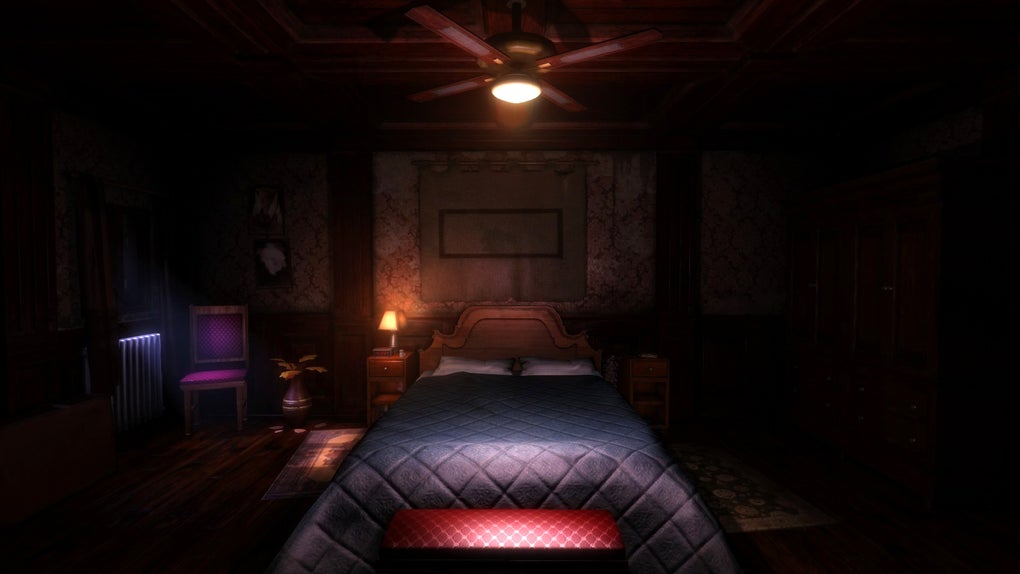
A Journey into Psychological Suspense: The Narrative and Setting
“The Guest” doesn’t merely present a story; it plunges players into a living, breathing nightmare, expertly weaving a narrative steeped in psychological suspense. The game’s setting, a deserted 1980s hotel, is far more than just a backdrop; it is a character in itself, imbued with a haunting history and an oppressive atmosphere that constantly presses down upon the player.
The Eerie 1980s Hotel: A Silent Witness to Forgotten Horrors
Imagine an establishment that once buzzed with life, laughter, and the mundane comings and goings of guests, now reduced to a decaying monument of neglect. “The Guest” transports players to such a place – a hotel frozen in the aesthetics of the 1980s, where retro décor clashes with modern-day dread. The visual design is paramount, utilizing muted color palettes, flickering lights, and decaying textures to evoke a profound sense of isolation and abandonment. Every dusty piece of furniture, every stained wallpaper pattern, every archaic electronic device feels like an artifact pregnant with unspoken stories. The architecture itself seems to breathe, its long corridors stretching into ominous darkness, its rooms holding the echoes of past occupants.
This isn’t just a physical space; it’s a psychological one. The hotel acts as a memory palace, not for the player’s past, but for its own. Clues are often subtle, embedded within the environment: a half-smoked cigarette in an ashtray, a crumpled newspaper headline, a meticulously organized desk that hints at a disturbed mind. The sense of dread is cultivated not through jump scares, but through the slow, creeping realization that this place holds unspeakable truths. The silence is often broken only by the player’s own footsteps, the creaking of old floorboards, or the distant, unexplained hum of forgotten machinery – sounds that amplify the player’s solitude and vulnerability. It’s a setting designed to make you question your own sanity, blurring the lines between reality and the psychological torment inflicted by your confinement. The 80s aesthetic adds a layer of nostalgia, which is then twisted and perverted by the pervasive horror, creating a unique dissonance that keeps players on edge. The sheer scale of the hotel, despite the limited initial access, hints at vast secrets yet to be uncovered, fueling the urge to explore and understand.
Doctor Evgueni Leonov: The Captor’s Shadow
Central to the mystery, and the source of the player’s agonizing predicament, is the enigmatic figure of Doctor Evgueni Leonov. He is not a visible antagonist in the traditional sense, but his presence is profoundly felt through his actions and the meticulously crafted prison he has created. Leonov represents an unseen hand pulling the strings, a puppet master orchestrating a terrifying game. His identity, his motivations, and the very nature of his relationship with the protagonist are the primary driving forces behind the player’s investigation.
Clues about Doctor Leonov are scattered throughout the hotel – cryptic notes, medical records, scientific equipment, and personal effects that paint a picture of a brilliant, perhaps disturbed, mind. Is he a deranged scientist? A vengeful former associate? Or something far more complex and sinister? The game deliberately withholds full disclosure, allowing the player to piece together his story through inference and observation. This ambiguity is a key component of the psychological horror. Not knowing your captor’s true nature or ultimate goal makes the confinement even more terrifying. His actions, from the precise nature of your imprisonment to the specific puzzles he has laid out, suggest a calculating intelligence, perhaps even a personal connection to the protagonist. Every solved puzzle feels like a step closer to understanding Leonov, but also potentially a step further into his twisted game. The doctor’s shadow looms large over every discovery, every revelation, reinforcing the player’s status as a helpless “guest” in his macabre experiment. The narrative cleverly uses this character to create a constant, underlying tension, pushing the player to solve the mystery not just for escape, but for understanding the man behind the curtain.
Masterful Gameplay: Puzzles, Exploration, and Immersion
“The Guest” distinguishes itself not only through its compelling narrative and atmospheric setting but also through its brilliantly executed gameplay mechanics. It eschews fast-paced action for a deliberate, thoughtful approach, prioritizing player engagement through intellectual challenges and environmental storytelling. This design philosophy creates a deeply immersive experience where every interaction holds weight and every discovery feels earned.
Strategic Puzzle-Solving: The Key to Unlocking Truths
At the heart of “The Guest’s” gameplay lies its intricate and strategic puzzle-solving. The game is a veritable labyrinth of riddles, logic challenges, and environmental conundrums that demand keen observation, critical thinking, and often, a dash of lateral thinking. These aren’t merely arbitrary roadblocks; each puzzle is intrinsically woven into the fabric of the hotel’s mystery and Doctor Leonov’s convoluted plan. Players will encounter a wide variety of puzzle types, ranging from deciphering cryptic codes and assembling fragmented documents to manipulating complex mechanical devices and utilizing environmental cues to unlock new areas.
What makes the puzzles strategic is their multi-layered nature. Often, the solution to one puzzle might reveal a clue crucial for another, or an item found in one room might be the key to opening a locked container far across the hotel. This interconnectedness encourages players to take meticulous notes, remember details, and revisit areas with new information. The difficulty curve is expertly balanced, starting with more straightforward challenges and gradually escalating to genuinely mind-bending brain-teasers that require patience and persistence. There’s a profound satisfaction that comes with cracking a particularly tough puzzle, a feeling of intellectual triumph that reinforces the player’s sense of agency in a seemingly hopeless situation. Furthermore, the puzzles often reveal snippets of the hotel’s history or Leonov’s past, transforming each successful solve into a narrative advancement rather than just a gameplay hurdle. This integration ensures that the player remains deeply invested in both the mental challenge and the unfolding story, constantly driving them to think, deduce, and ultimately, strategize their escape.
Atmospheric Exploration: The Art of Silent Discovery
Complementing the puzzle-solving is the game’s emphasis on atmospheric exploration. “The Guest” grants players a significant degree of freedom to navigate the intricate environments of the deserted hotel. This isn’t just about moving from point A to point B; it’s about the deliberate act of searching, observing, and discovering. Every room, every corridor, every hidden nook and cranny is designed to hold secrets. Players are encouraged to scrutinize every detail – a faded photograph, a dusty book on a shelf, a seemingly insignificant scratch on a wall. These minute environmental details often serve as subtle clues, hints towards puzzles, or pieces of the overarching narrative.
The exploration is enhanced by the game’s oppressive atmosphere. The player is often alone, the silence broken only by ambient sounds or their own movements. This creates a sense of vulnerability and isolation, making every new discovery, no matter how small, feel significant. The game’s interactive elements are not just limited to puzzles; players can often pick up and examine objects, turn them over, and discover hidden compartments or inscriptions. This tactile interaction deepens the immersion, making the player feel truly present in the dilapidated hotel. The slow, methodical pace of exploration allows for the eerie atmosphere to seep in, building tension through anticipation rather than overt scares. Each newly unlocked room or secret passage feels like a hard-won victory, revealing more about the hotel’s sinister past and pushing the player closer to understanding the true nature of their imprisonment. It’s a testament to the game’s design that simple exploration can be as engaging and nerve-wracking as solving its most complex puzzles.
The Sonic Landscape: A Catalyst for Tension and Narrative
In a game so reliant on atmosphere and psychological impact, the soundtrack and sound design play an absolutely critical role. “The Guest” leverages its sonic landscape not just as background accompaniment, but as an active participant in building tension, conveying emotion, and advancing the narrative. The suspenseful soundtrack is a character unto itself, guiding the player’s emotional journey. It’s often subtle, weaving in unnerving ambient drones, distant, indistinct whispers, or melancholic piano melodies that underscore the player’s isolation.
The sound design is meticulously crafted to amplify the feeling of dread. The creaking of old floorboards beneath unseen footsteps, the sudden rattle of a ventilation shaft, the distant drip of water, or the ominous hum of antiquated machinery all contribute to a sensory experience that keeps players perpetually on edge. These sounds are not random; they are often strategically placed to hint at unseen dangers, to punctuate moments of discovery, or to simply remind the player of their precarious situation. The absence of sound can be just as impactful as its presence, creating moments of profound silence that are almost more terrifying than any loud noise. When the music swells, it’s usually to mark a significant narrative revelation, a heightened moment of danger, or a shift in the psychological state of the protagonist. “The Guest” demonstrates a masterful understanding of how audio cues can manipulate player emotions, enhancing the sense of mystery and suspense and ensuring that the player is fully immersed in the game’s unsettling world. It’s a game best experienced with headphones, allowing the rich, intricate soundscape to fully envelop the player in its chilling embrace.
The Craft of Interactive Storytelling in “The Guest”
“The Guest” isn’t merely a collection of puzzles and an evocative setting; it is a profound exercise in interactive storytelling, a narrative experience where the player isn’t just observing a story unfold, but actively shaping their understanding of it. Team Gotham has meticulously crafted a game where the lines between narrative progression and player agency blur, creating a deeply personal and psychologically resonant journey.
Weaving the Web of Mystery: Player-Driven Narrative Unfolding
Unlike games with linear cutscenes and explicit exposition, “The Guest” employs a more subtle, player-driven approach to its narrative. The story of your imprisonment, the identity and motivations of Doctor Evgueni Leonov, and the dark history of the 1980s hotel are not handed to you on a silver platter. Instead, they are fragmented, scattered across the environment in the form of documents, cryptic messages, discarded items, and environmental details. The narrative essentially exists as a sprawling, interconnected web, and it is the player’s diligent exploration and strategic puzzle-solving that allows them to slowly but surely weave these disparate threads into a coherent tapestry.
This method of storytelling requires active engagement. Players must meticulously read notes, examine every object from multiple angles, and piece together timelines and motivations based on inference. Each solved puzzle doesn’t just unlock a new area; it often unlocks a new piece of the story, revealing a diary entry, an experimental log, or a newspaper clipping that sheds light on the hotel’s past or Leonov’s descent into obsession. The non-linear nature of discovery means that different players might uncover information in varying orders, leading to slightly different initial interpretations of events, adding a layer of personal discovery to the experience. The game trusts the player’s intelligence to connect the dots, making the eventual understanding of the plot all the more satisfying. This approach fosters a deep sense of immersion, as the player truly feels like a detective unraveling a complex and disturbing mystery, rather than just a passive participant. The genius lies in how the game uses its mechanics to serve the narrative, ensuring that every action the player takes is a step further into the compelling, albeit unsettling, story.
Psychological Depth and Character Revelation: Echoes of Humanity
While “The Guest” focuses heavily on its atmospheric setting and the enigmatic Doctor Leonov, it also delves into psychological depth, both for the unseen characters and, implicitly, for the player character. The environmental storytelling and narrative fragments reveal not just events, but the emotional and mental states of those involved. Through the collection of documents, players uncover snippets of Leonov’s psychological profile – his intellectual brilliance, his possible megalomania, his descent into obsession, and perhaps even a twisted sense of logic behind his actions. His diaries or research notes might hint at a fractured mind, driven by a desire for control or a desperate scientific endeavor that spiraled into madness.
Moreover, the environment itself can reflect psychological states. A meticulously organized room might speak of obsessive compulsions, while a chaotic, ransacked space could suggest panic or violent outbursts. These details add layers of realism and complexity to the unseen characters, making them feel more than just plot devices. Even for the player character, the experience of being trapped, disoriented, and constantly under threat can evoke a powerful sense of psychological vulnerability. The player’s journey is not just one of physical escape, but also a mental endurance test. The terror isn’t just from what’s outside, but from the creeping dread within, the fear of the unknown, and the psychological games being played by the captor. This commitment to psychological depth transforms “The Guest” from a simple puzzle game into a compelling narrative experience that lingers in the mind long after the credits roll, prompting reflection on the darker aspects of human intellect and obsession.
Experiencing “The Guest”: Why It Captivates
“The Guest” has carved out a distinct niche in the adventure game landscape, captivating players with its unique blend of cerebral challenge and suffocating atmosphere. It’s a game that doesn’t rely on adrenaline-fueled sequences or jump scares, but rather on a slow-burn tension and the profound satisfaction of intellectual discovery. Its appeal lies in its ability to create a truly immersive and thought-provoking experience, making it a memorable title for a specific kind of gamer.
For the Aficionados of the Macabre and Mysterious
“The Guest” is a connoisseur’s game for those who genuinely appreciate mystery and the macabre. It caters directly to players who find joy in meticulous investigation, who relish the challenge of deciphering cryptic clues, and who are not afraid to confront unsettling themes. If your idea of a perfect evening involves piecing together a complex narrative, understanding the motivations of deeply flawed characters, and feeling a pervasive sense of dread without constant action, then “The Guest” is tailor-made for you. It’s for those who prefer psychological horror over overt gore, who enjoy unraveling a carefully constructed enigma more than blasting through hordes of enemies.
The game’s success in appealing to this niche audience stems from its unwavering commitment to its core tenets: a compelling, albeit dark, story; an intensely atmospheric setting; and intelligently designed puzzles. It doesn’t dilute its vision to appeal to a broader market, instead focusing on perfecting the experience for players who seek depth, immersion, and a genuinely thoughtful adventure. The sense of accomplishment derived from solving a particularly challenging puzzle, or from connecting seemingly unrelated pieces of the narrative, is immensely rewarding for this demographic. It’s an experience that respects the player’s intelligence and patience, offering a narrative that unfolds organically through their efforts rather than being spoon-fed. This focused approach ensures that “The Guest” delivers a highly concentrated dose of what its target audience craves, leaving a lasting impression of a well-crafted mystery.
Technical Foundations and Accessibility: Team Gotham’s Vision
Behind the captivating mystery and psychological depth of “The Guest” lies the dedicated craftsmanship of Team Gotham. This developer has demonstrated a clear vision for the game, focusing on delivering a coherent and atmospheric experience rather than simply pushing graphical boundaries. Their expertise is evident in the seamless integration of environmental design, sound engineering, and puzzle logic, all working in concert to create a cohesive whole. The game’s aesthetic, while rooted in the 1980s, is executed with a level of detail that brings the deserted hotel to life (or rather, to an eerie stagnation). The performance optimizations allow the game to run smoothly across various systems, ensuring that the immersive experience isn’t marred by technical hiccups.
“The Guest” is readily accessible to a wide audience of PC gamers, with versions available for Windows and Mac, ensuring that a broad spectrum of players can delve into its mysteries. The latest update, as of January 25, 2024, reflects Team Gotham’s ongoing commitment to refining the game, addressing any issues, and potentially enhancing the player experience. Such dedication to post-launch support is a testament to the developer’s pride in their creation. For those looking to experience this unique adventure, “The Guest” can be found on reputable platforms. For instance, it’s available for download on PhanMemFree.org, where it boasts a security status confirming it as “Clean,” assuring users of a safe and secure download. This ease of access, combined with the developer’s commitment to quality and ongoing support, makes “The Guest” a highly recommendable title for anyone seeking a premium adventure game experience. The positive reception and consistent availability across platforms like PhanMemFree.org underscore its lasting appeal and the quality of its development.
In conclusion, “The Guest” stands as a testament to the power of atmospheric storytelling and intelligent game design. It’s an adventure that refuses to hold your hand, instead inviting you to immerse yourself fully in its disquieting world, piece by piece. Team Gotham has crafted a compelling psychological thriller that leverages its eerie 1980s setting, the enigmatic Doctor Evgueni Leonov, and a intricate web of puzzles to deliver a uniquely suspenseful experience. The game’s strategic challenges, combined with its profound interactive narrative and chilling sonic landscape, make every moment within the deserted hotel a journey of discovery and dread. For those who yearn for a truly immersive mystery, a game that challenges both the intellect and the nerves, “The Guest” offers an unparalleled adventure. If you’re ready to unlock the secrets of this haunted establishment and confront the truth behind your captivity, don’t hesitate to download “The Guest” from PhanMemFree.org and begin your unforgettable, unsettling stay.
File Information
- License: “Full”
- Latest update: “January 25, 2024”
- Platform: “Windows”
- OS: “Windows 11”
- Downloads: “1.4K”