
In the realm of cooperative horror, where the line between survival and spectacle blurs, emerges The Headliners, a unique action game that challenges players to face their deepest fears not with a weapon, but with a camera. This isn’t your typical run-and-gun monster mash; instead, The Headliners plunges you into a New York City overrun by nightmarish creatures, transforming you into a fearless journalist whose mission is to document the unfolding apocalypse through the lens of a camera. Developed for Windows, this title promises an intense, unpredictable, and uniquely terrifying experience, where the greatest defense is a well-framed shot and the ultimate reward is making the front page.
The Headliners stands out by redefining the core mechanics of the horror genre. Gone are the assault rifles and shotguns; in their place, players wield professional-grade cameras, tasked with capturing the sheer devastation, the grotesque forms of alien invaders, and the raw, dramatic moments of a city’s demise. The game masterfully crafts a desperate scenario where survival is paramount, but true success hinges on artistic courage. Each expedition into the chaos is a high-stakes photographic assignment, demanding not just bravery but also a keen eye and steady hand under unimaginable pressure. The more shocking, poignant, and expertly framed your photographs, the greater your chances of not only surviving but also achieving journalistic immortality.
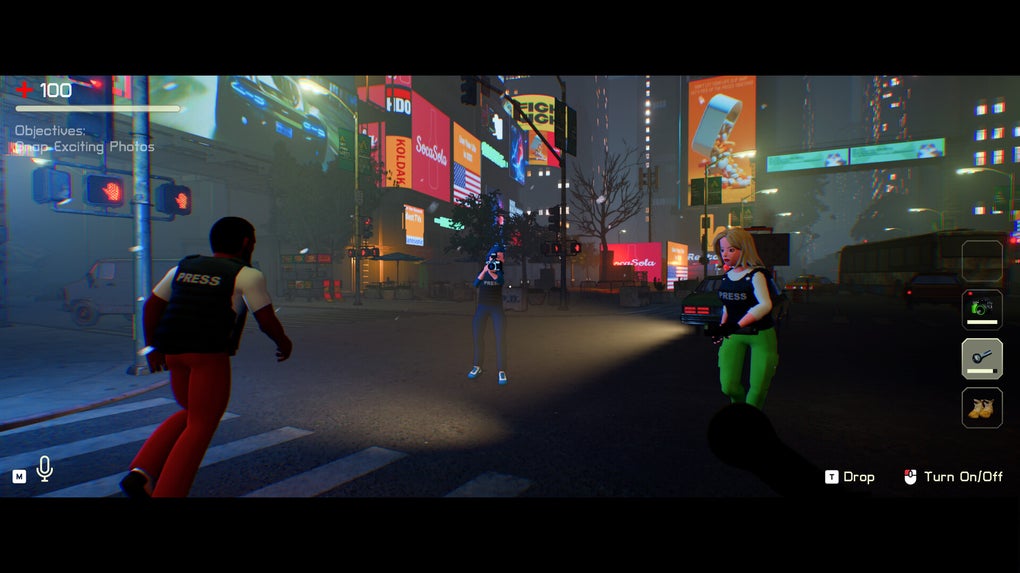
The premise alone sets a chilling tone: New York, a once vibrant metropolis, is now a dark and chaotic labyrinth, a canvas for unimaginable horror. Players navigate abandoned streets, explore the skeletal remains of ruined buildings, and creep through dangerous alleys, all in pursuit of that perfect, front-page-worthy shot. Every shadow potentially conceals a lurking terror, and every corner holds a new, horrifying story waiting to be immortalized through your lens. It’s a game that preys on the innate human desire to document, to bear witness, but twists it into a perilous act of defiance against an overwhelming, monstrous threat. The Headliners doesn’t just ask you to survive; it asks you to thrive in the face of oblivion, armed only with your wits, your camera, and the unyielding pursuit of the truth, however horrific it may be.
Capturing Chaos: The Core Photography Mechanic
At the heart of The Headliners’ innovative gameplay lies its central photography mechanic, a brilliant subversion of traditional combat. Instead of engaging in direct confrontation, players’ primary interaction with the hostile world is through their camera. This isn’t just a gimmick; it’s a meticulously designed system that redefines risk and reward in a horror context. The objective is clear: document the chaos. This means capturing jaw-dropping photographs of destruction, the alien creatures themselves, and dramatic, often terrifying, moments unfolding across the ravaged city.
The game incentivizes bold, well-composed shots. A blurry, distant image of a monster might earn you a paltry sum, but a perfectly framed close-up, capturing the raw terror in the eyes of a fleeing civilian or the intricate, repulsive detail of a creature’s anatomy, is what truly garners recognition and, more importantly, “press cards.” These press cards aren’t just a score; they are the game’s unique currency and progression system, determining how many attempts you have for future assignments. Making it out alive with a portfolio of high-quality, impactful photos is the key to earning more press cards, unlocking riskier yet more rewarding assignments, and ultimately, ensuring your continued “career” as a photojournalist in a world gone mad.
This system forces players to engage with the environment and its dangers in a fundamentally different way. Rather than planning an assault, you’re planning an angle. Instead of aiming for a weak point, you’re aiming for compelling composition. This often means putting yourself in harm’s way, getting uncomfortably close to the monstrous invaders to achieve that perfect shot. Do you risk getting within striking distance of a hulking beast for a dramatic, visceral portrait, or do you play it safe with a long-distance, less impactful shot? The tension arises from this constant internal debate, a battle between self-preservation and the professional drive to capture the undeniable truth. The camera becomes not just a tool for documentation but a psychological shield, a way to process and present the horror, asserting a degree of control over an uncontrollable nightmare. The sheer thrill of successfully capturing a terrifying moment and then narrowly escaping adds an exhilarating sense of accomplishment, reinforcing the unique loop of photographic survival.
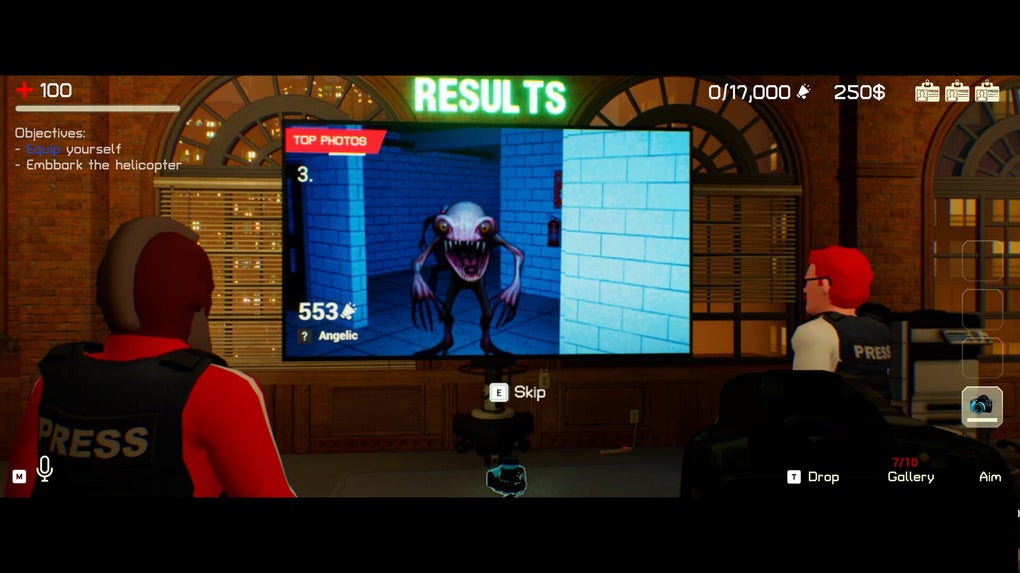
Navigating the Nightmare: Exploration and Environmental Storytelling
The setting of The Headliners is not merely a backdrop; it is an active participant in the horror, a character in its own right. New York City, once a symbol of human ingenuity and vibrant life, has been utterly transformed into a desolate, apocalyptic landscape. The game leverages this familiar yet twisted urban environment to create an atmosphere of constant tension and dread. Players are tasked with exploring abandoned streets where echoes of human life linger, navigating the skeletal remains of ruined buildings that whisper tales of sudden destruction, and creeping through dangerous alleys that serve as conduits for unseen terrors.
The environmental design is key to the immersive experience. Eerie silence often hangs heavy, punctuated only by the distant growl of a creature or the unsettling creak of collapsing infrastructure. Visual storytelling is paramount: overturned cars, shattered windows, hastily abandoned possessions, and the gruesome aftermath of creature attacks all paint a vivid picture of the catastrophe that has unfolded. These elements not only build tension but also provide crucial information, hinting at potential dangers, escape routes, or even prime locations for capturing dramatic photographs. The city becomes a puzzle, a series of interconnected danger zones where knowledge of the terrain can mean the difference between life and death.
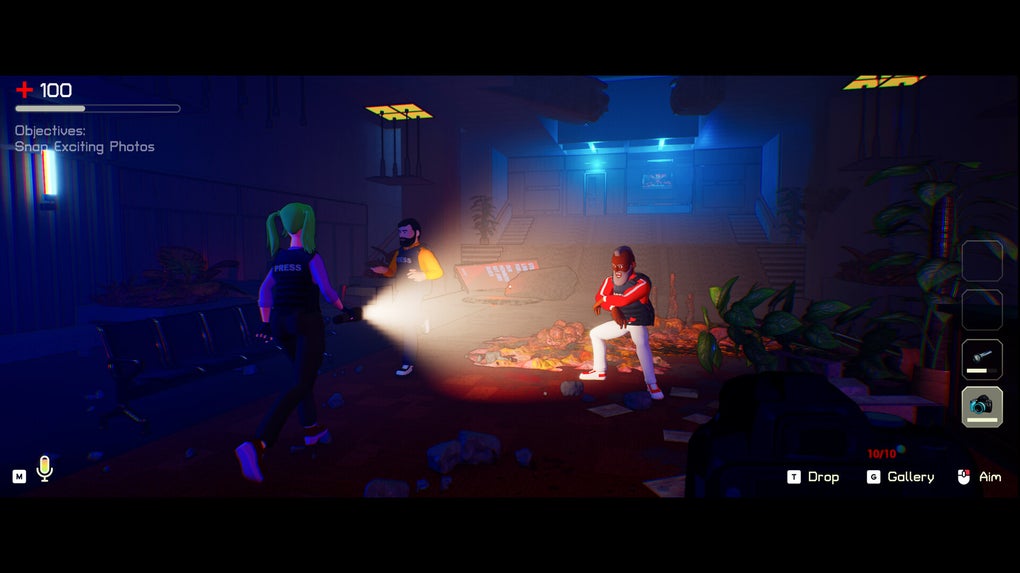
Traversing this nightmare requires a blend of stealth and strategic movement. Every shadowed doorway could conceal a lurking horror, and every open street could expose you to aerial threats. Players must carefully consider their path, utilizing cover, listening for tell-tale sounds, and observing enemy patrol patterns. The thrill of discovery is intertwined with the omnipresent threat of ambush. Finding a new vantage point for a stunning shot feels like a victory, but it also means exposing yourself to greater risk. The Headliners excels at making the city feel like a living, breathing entity, one that is both decaying and hostile. The meticulously crafted environments enhance the sense of urgency and vulnerability, pushing players to their limits as they venture deeper into the heart of a city consumed by its monstrous invaders, all in pursuit of that one perfect, terrifying image.
The Unseen and Unpredictable: Enemy Encounters and Dynamic AI
The monstrous invaders that plague New York City in The Headliners are far from mindless drones; they are unpredictable, terrifying adversaries brought to life by dynamic AI. These aren’t simply obstacles to be overcome; they are forces of nature, alien in their physiology and menacing in their behavior, designed to keep players constantly on edge. The game offers a variety of creature types, each with distinct movement patterns, sensory abilities, and attack styles, ensuring that no two encounters feel identical. Some might be hulking, slow-moving behemoths that rely on sheer destructive power, while others could be agile, stealthy hunters that stalk players through the urban ruins, striking from the shadows. There might be airborne threats that necessitate seeking cover indoors, or burrowing creatures that emerge from unexpected places, forcing quick reactions and spatial awareness.
What truly elevates the threat level is the “dynamic AI” and “random events” that permeate the gameplay. Creature patrols aren’t static; they adapt and change, responding to player actions, environmental stimuli, and the overarching narrative progression. A route that was clear on one expedition might be heavily guarded on the next. A previously docile area could suddenly become a hotspot of creature activity due to a random event, such as a creature “spawning” or an alarm being triggered. This unpredictability ensures that players can never fully relax, always needing to assess and reassess their surroundings. It fosters a genuine sense of paranoia, as danger truly lurks in every shadow and around every corner.
Given the game’s “limited offensive options” – indeed, the camera is your primary tool, not a weapon – direct confrontation is often a death sentence. This forces players to rely heavily on stealth, speed, and calculated risk-taking. Evasion, distraction, and strategic retreats become the pillars of survival. The stress of being hunted, of knowing you cannot fight back conventionally, makes every creature encounter a harrowing test of nerves and tactical thinking. Observing enemy behavior, identifying their weaknesses (e.g., susceptibility to bright flashes, blind spots), and exploiting environmental elements for cover or escape routes are crucial. The unpredictable nature of the enemies ensures that The Headliners remains a fresh and terrifying challenge with every trip into the disaster zone, demanding constant adaptation and a deep understanding of the delicate balance between documentation and sheer survival.
The Power of Collaboration: Cooperative Survival in a Hostile City
While the individual pursuit of the perfect shot is central to The Headliners, the game truly shines in its cooperative aspect. Teamwork isn’t just an option; it’s often essential for capturing the best moments and, more critically, for making it back to safety alive. The ravaged streets of New York are too dangerous to face alone, and the sheer number and unpredictability of the monstrous invaders demand a coordinated effort.
Players can choose to work together in various synergistic ways. For instance, one photojournalist might act as a lookout, scanning for threats and signaling their presence, while another moves into a prime position to snap a dramatic shot. Or, one player could create a diversion, drawing the attention of a creature, allowing a teammate to safely capture its image or bypass a blocked path. The game encourages dynamic roles: a fast, agile character might scout ahead or retrieve fallen items, while a more methodical player focuses on meticulous photography. This collaborative dance under pressure creates intense moments of decision-making and often, sacrifice. Do you risk your own life to revive a fallen teammate, potentially jeopardizing the mission and the photographs you’ve already taken? Or do you prioritize the objective, hoping their sacrifice wasn’t in vain?
This balance between cooperation and individual risk-taking is a core tension. There might be instances where splitting up seems like the fastest way to cover more ground or secure multiple high-value shots, but it also exponentially increases the danger for each isolated player. The thrill of getting the perfect shot is amplified when it’s achieved through a coordinated effort, and the relief of making it back to safety is profoundly more rewarding when shared with a team. The game builds an emotional connection between players, fostering a sense of camaraderie forged in the crucible of shared terror and mutual dependence. Successfully navigating a perilous zone, achieving a difficult photographic objective, and extracting as a unit instills an exhilarating sense of accomplishment and reinforces the idea that even in the face of unimaginable horror, human connection and collaboration can provide a path to survival.
The Thrill of the Scoop: Risk, Reward, and Progression
The Headliners masterfully intertwines its unique gameplay with a compelling risk-reward system centered around the elusive “scoop.” The concept of “making the front page” isn’t merely a thematic flourish; it’s the driving force behind player progression and motivation. Each successful expedition, especially those yielding high-quality, impactful photographs, translates directly into tangible rewards. The primary form of these rewards is the aforementioned “press cards,” which are not just a measure of success but also a critical resource. A limited number of press cards are available at the start of each mission, essentially defining how many attempts your team has before being forced to retreat or fail. This scarcity adds another layer of strategic depth, as players must weigh the potential gains of a risky shot against the cost of using a precious press card for a failed attempt.
The progression system extends beyond mere survival. Earning more press cards by capturing exceptional photos opens up new opportunities. This could manifest as access to more challenging, higher-stakes assignments in previously locked areas of the city, where the monsters are more formidable but the photographic opportunities are exponentially more lucrative. It might also unlock new gear for your photojournalists – perhaps a camera with a superior zoom lens, a flash powerful enough to momentarily disorient certain creatures, specialized filters for night vision, or even stealth-enhancing equipment to aid in getting closer to the action undetected. These upgrades not only enhance gameplay but also visually represent your growing expertise and notoriety as a fearless documentarian.
The “exhilarating sense of accomplishment” mentioned in the review is key to the game’s longevity. It stems from the tension of venturing deeper into a crumbling city filled with monstrous threats, balancing the desire for groundbreaking imagery with the imperative of ensuring an escape route remains open. Each successful extraction, particularly when laden with incredible photos, feels like a hard-won victory. It reinforces the player’s role, not as a soldier, but as a chronicler, an artist in the apocalypse. The progression isn’t about accumulating firepower but about honing your craft, understanding the beast, and mastering the art of observation under unimaginable pressure. This unique approach to progression ensures that The Headliners remains engaging and rewarding, constantly challenging players to push their limits for that next, unforgettable scoop.
In conclusion, The Headliners offers a fresh and intense take on the cooperative horror genre, where the camera replaces the gun as the primary tool of interaction and survival. Its unique concept, coupled with intense cooperative gameplay and dynamic enemy behavior, creates an experience that is both unpredictable and uniquely terrifying. While the limited offensive options certainly make encounters stressful, they are precisely what define the game’s challenging identity, forcing players to think strategically and lean into the power of stealth and teamwork. As you navigate the desolate, monster-infested streets of New York, desperately snapping photographs of the apocalypse, The Headliners isn’t just asking you to survive; it’s asking you to tell a story, one horrifying image at a time. This game is a must-play for fans of horror looking for an unconventional, high-stakes thrill, delivered by the dedicated team at KAFIR, and available for download on PhanMemFree. Remember, when the world falls apart, sometimes the bravest act is simply to document it. For more information, visit Phanmemfree.org.
File Information
- License: “Full”
- Version: “varies-with-devices”
- Latest update: “February 10, 2025”
- Platform: “Windows”
- OS: “Windows 11”
- Language: “English”
- Downloads: “681”


