
The Stanley Parable, developed and published by Galactic Cafe, isn’t your typical video game. It eschews traditional gameplay mechanics like combat and complex puzzles, instead focusing on a unique exploration of choice, or rather, the illusion of choice, within the video game medium. As Stanley, the seemingly insignificant office worker at the heart of the narrative, you navigate a surreal and often unsettling office environment, guided – or perhaps misguided – by a sardonic and omnipresent narrator. This isn’t a game about overcoming obstacles; it’s a game about questioning the very nature of agency and the boundaries of interactive storytelling.
A Narrative Paradox: Choice and its Absence
The game’s core premise revolves around a fascinating paradox: you are presented with choices, yet simultaneously, you aren’t. The narrator frequently dictates your actions, leading you down seemingly predetermined paths. However, at any moment, you can choose to defy his instructions, diverging from the scripted narrative and venturing into unexpected, often hilarious, and sometimes deeply unsettling territories. This constant tension between pre-ordained events and player agency is what truly defines the experience.
The game masterfully manipulates expectations. What initially feels like a linear narrative gradually unravels, revealing a multi-layered structure of interconnected paths, secret areas, and unexpected twists. The narrator, a character who simultaneously guides and mocks the player, serves as a constant reminder of the game’s meta-narrative nature. He comments on your actions, anticipates your choices, and even seems to adapt to your defiance, creating a dynamic and constantly shifting experience. Each playthrough is uniquely shaped by the player’s decisions, making the game highly replayable despite its seemingly simple premise.
The environments themselves reflect this paradoxical nature. The office setting, seemingly mundane at first glance, quickly transforms into something stranger and more surreal as you venture further from the narrator’s prescribed path. The game cleverly utilizes its seemingly ordinary setting to highlight the extraordinary and unexpected possibilities within the confines of its narrative structure.

Beyond the Walls of the Office: Exploring the Meta-Narrative
The Stanley Parable transcends the simple choose-your-own-adventure format. While choices abound, the game constantly plays with the player’s perception of control. The narrator often comments on the player’s decisions, making it clear that the game is aware of its own artificiality. This awareness, this constant self-referential humor, is a key component of the game’s charm and intellectual depth.
The game doesn’t shy away from exploring existential themes. The seemingly simple act of choosing a door can lead to profound and often darkly humorous reflections on the nature of free will, determinism, and the meaninglessness of existence. The game’s narrative is not just a story; it’s a commentary on storytelling itself, forcing the player to confront the limitations and possibilities of interactive narratives.

The endings, numerous and varied, contribute significantly to the game’s overall impact. Some endings are brief and anticlimactic, while others are unexpectedly poignant or even outright bizarre. Each ending, however, serves as a reflection of the choices made throughout the game, highlighting the consequences – or lack thereof – of those choices. The game’s brilliance lies in its ability to deliver both humorous and profoundly philosophical experiences, often within the same playthrough.
The Power of the Narrator: A Commentary on Game Design
The narrator is not simply a voice; he is a crucial character, a mischievous guide who constantly pushes the boundaries of the game’s mechanics and the player’s expectations. His witty remarks, sarcastic asides, and often unexpected responses to the player’s choices elevate the overall experience. The narrator acts as a constant reminder that the game is a constructed reality, a carefully curated experience designed to challenge and entertain.
Through the narrator, the game critiques the conventions of traditional game design. It questions the linear progression of many narratives, highlighting the limitations of the “correct” path and celebrating the unexpected joys of exploration and deviation. The narrator’s role is not just to guide the player; it’s to challenge the very assumptions that often underpin the gaming experience.
The game cleverly utilizes its mechanics to highlight the absurdity of some game design tropes. The repetitive nature of certain tasks, the seemingly arbitrary choices offered to the player, and the often nonsensical consequences of defying the narrator, all serve to expose the artificiality of the game world and challenge the player’s assumptions about their role within it.
The Stanley Parable: Ultra Deluxe - An Enhanced Experience
The Stanley Parable: Ultra Deluxe builds upon the original game’s foundation, expanding upon its already rich and complex narrative. The updated version includes entirely new content, adding further layers of complexity to the already intricate narrative structure. New areas to explore, new choices to make, and new, often hilarious, interactions with the ever-present narrator are among the key improvements in this updated version. The updated visuals and enhanced sound design also contribute significantly to the overall immersion and impact of the game.
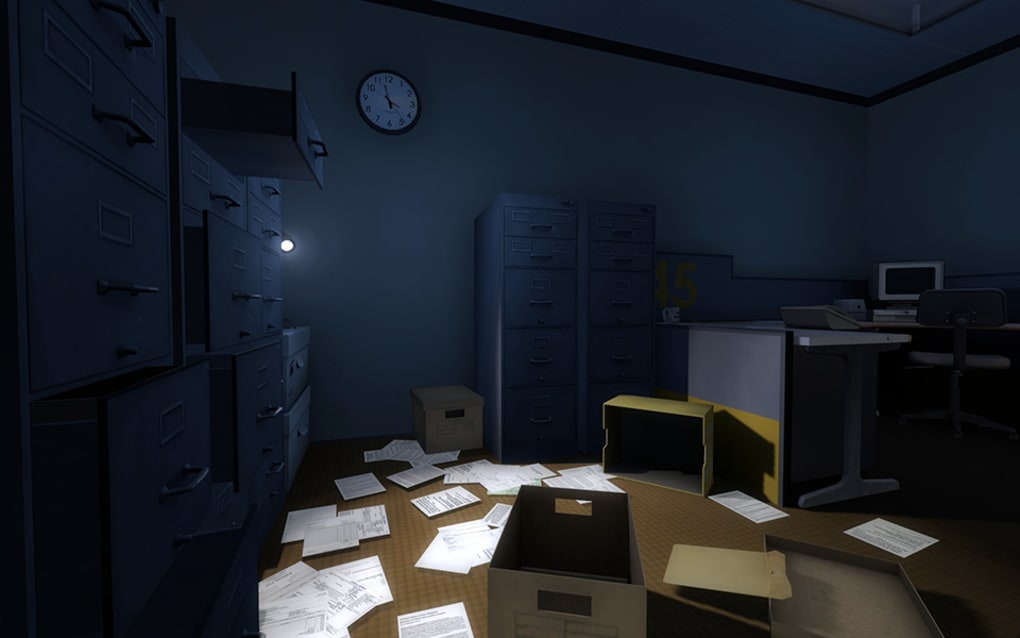
The addition of new content doesn’t simply add more of the same. It builds upon the themes and concepts explored in the original, deepening the philosophical exploration and further challenging the player’s understanding of their role within the game’s narrative. The Ultra Deluxe edition enhances the core experience without losing the essence of what made the original so compelling.
The expansion of content extends the already impressive length of the game. Players can easily sink several hours into exploring all the different paths and discovering the game’s various endings. The game remains surprisingly replayable, with each playthrough offering new discoveries and unique perspectives on the game’s core themes.
In conclusion, The Stanley Parable transcends the typical video game experience. It’s not just a game; it’s a carefully crafted exploration of choice, control, and the very nature of interactive storytelling. Through its ingenious use of narrative, humor, and meta-commentary, The Stanley Parable, and its enhanced Ultra Deluxe version, delivers a truly unique and memorable gaming experience that continues to resonate long after the credits roll. It’s a game that invites reflection, laughter, and a deeper appreciation for the complexities of interactive narratives. Whether you choose to follow the narrator’s lead or forge your own path, one thing is certain: The Stanley Parable will leave a lasting impression.
File Information
- License: “Demo”
- Version: “1.0”
- Latest update: “September 11, 2019”
- Platform: “Windows”
- OS: “Windows Vista”
- Language: “English”
- Downloads: “37.8K”


