
The internet is awash with personality tests, promising insights into our fears, introversion/extroversion, and a myriad of other personality traits. But what if a personality test could also deliver a truly terrifying experience? That’s the unique proposition of the Watson-Scott Test, an indie game app that blends personality assessment with a chilling horror experience. This isn’t your average online quiz; it’s a multi-sensory journey into the depths of your subconscious, designed to evoke genuine unease and perhaps even a few screams.
A Unique Blend of Personality Quiz and Horror Game
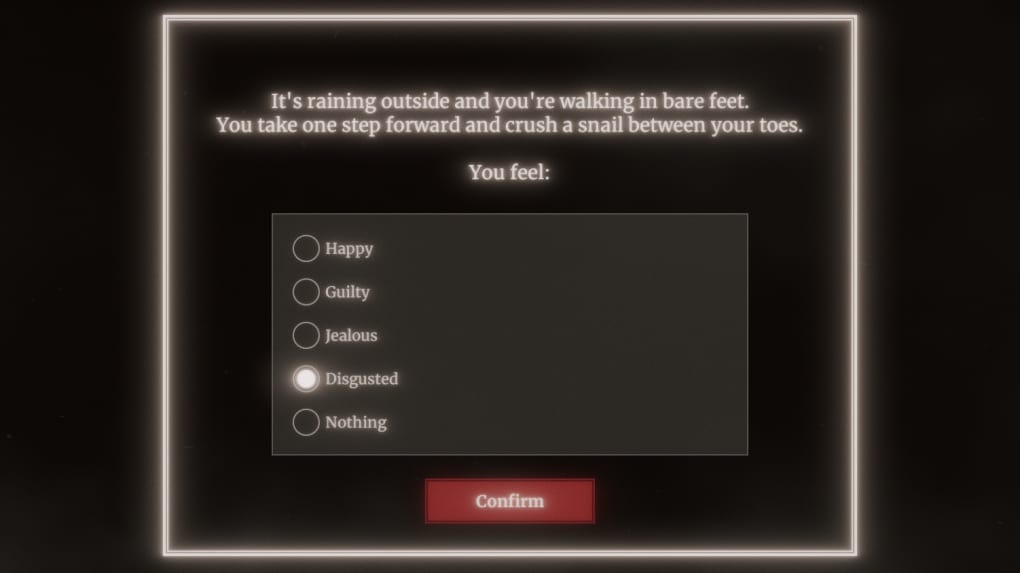
The Watson-Scott Test presents itself as a 30-question multiple-choice quiz designed to uncover your deepest fears and reveal aspects of your personality. The questions themselves are varied, ranging from straightforward inquiries about your beliefs in the supernatural (do you believe in ghosts?) to more probing questions about your reactions to danger (do you confront danger head-on or flee?). Your responses shape the final result, providing a personalized assessment of your psychological profile. Interestingly, the quiz is offered twice, hinting at potential variations or hidden layers within the game’s narrative.
However, what truly distinguishes the Watson-Scott Test from other online quizzes is its masterful integration of horror elements. It’s not just a series of questions; it’s a fully immersive experience meticulously crafted to build suspense and cultivate a pervasive atmosphere of dread. As you progress through the quiz, the app’s ambiance shifts, becoming increasingly unsettling and malevolent. This isn’t achieved through jump scares alone; instead, the game masterfully employs subtle sound design, creating an immersive soundscape that keeps you on the edge of your seat.

The developers leverage Steam’s 3D spatial audio technology to maximize the game’s unsettling effect. This technology creates a truly immersive soundscape, making noises seem to emanate from beyond the game’s confines, blurring the lines between reality and the virtual world. The sounds are strategically placed and timed to enhance the overall tension, creating a truly unnerving listening experience. This calculated use of audio, coupled with the evolving visual and thematic elements, makes the 20-minute playtime feel significantly longer due to the intense level of engagement and anticipation. The game encourages replayability, promising players the opportunity to uncover hidden secrets and potentially different outcomes within its structure.
The Strengths and Weaknesses of the Watson-Scott Test
The Watson-Scott Test excels in its ability to cultivate a sense of dread and uncertainty. The game deliberately exploits the inherent fear of the unknown, planting disturbing thoughts in the player’s mind that are far more unsettling than any explicit imagery. The unsettling narration by a deranged-sounding, unseen narrator further intensifies this fear, leaving the player to imagine the speaker’s appearance, heightening the unsettling effect. This combination of cleverly designed questions, evolving atmosphere, and strategic sound design keeps the player in a state of sustained anxiety throughout the gameplay.
However, the game’s strengths are also its weaknesses. While the build-up of tension is expertly managed, the payoff at the end can be somewhat underwhelming. The inclusion of two jumpscares at the conclusion feels tacked on and lacks the finesse and thematic coherence of the rest of the experience. These jumpscares rely solely on sudden loud noises rather than being integrated organically into the narrative, detracting from the otherwise carefully crafted atmosphere. Similarly, some players might find the fourth-wall breaks a bit cliché and unconvincing, disrupting the immersion that the game so successfully cultivates in its earlier stages.
Furthermore, the nature of some of the questions posed can be quite controversial, delving into potentially disturbing themes such as self-harm and violence. While this aligns with the game’s overall goal of exploring the darker aspects of human psychology, it’s a crucial point to consider, especially for players who might find such themes triggering. The symbolism employed within the game has also been criticized by some as being overly simplistic or contrived, potentially detracting from the impact of the narrative elements.
A Unique Horror Experience with Room for Improvement
In conclusion, the Watson-Scott Test possesses a unique and intriguing premise rarely seen in horror games. The game skillfully employs sound design and atmosphere building to cultivate a genuine sense of dread and unease, creating a compelling and unsettling experience. The integration of personality quiz elements into a horror game format is innovative and successful in its execution for a considerable portion of the game.
However, the game suffers from a few significant drawbacks. The lackluster ending, featuring generic jumpscares, and the occasional use of cliché horror tropes and unconvincing fourth-wall breaking elements detract from the overall impact. The potentially controversial nature of some questions also raises concerns about its suitability for all audiences. The game’s potential is undeniable, but its execution is inconsistent, with its flaws preventing it from reaching its full potential.
To truly excel, the Watson-Scott Test needs to address these shortcomings. Refining the ending to provide a more satisfying and thematically consistent conclusion would significantly improve the player experience. Subtle refinements to the fourth-wall breaking elements, potentially replacing them with more nuanced and integrated narrative techniques, would enhance immersion. Furthermore, considering alternative approaches to the more controversial questions, or providing clear content warnings, would make the game more accessible and responsible.
Despite these flaws, the Watson-Scott Test is a noteworthy attempt at blending personality quizzes with the horror genre. Its innovative concept, immersive sound design, and effective atmosphere building make it a unique and unsettling experience. While it may not be perfect, its strengths are compelling enough to warrant a playthrough, especially for players who appreciate psychological horror and appreciate games that push boundaries. However, those sensitive to disturbing themes or expecting a conventional jump-scare-heavy experience might find it less enjoyable. Ultimately, the Watson-Scott Test is a promising concept that could benefit from further development and refinement to reach its full potential.
Alternative Games to Consider
For players seeking similar experiences, several alternative horror games offer comparable levels of psychological tension and unique gameplay mechanics. While no game perfectly replicates the Watson-Scott Test’s blend of personality quiz and horror, several offer intriguing alternatives:
- (Don’t) Open Your Eyes: This free horror game focuses on resisting a nighttime visitor, offering a different approach to psychological dread.
- Presentable Liberty: A free surreal horror game providing a distinct, less conventionally frightening, but still disturbing experience.
- The Horrorscope: This paid game promises a unique spin on horror, using astrology and personality to craft a personalized narrative.
- Exhibit of Sorrows: An interactive exhibit of horrors, providing a unique art-based horror experience.
These games represent just a small sampling of the many horror games available, each offering a distinct take on the genre and a different approach to creating a sense of fear and unease. Exploring these options might provide a more comprehensive understanding of the diverse landscapes within the psychological horror genre and allow for comparisons with the unique approach taken by the Watson-Scott Test.
File Information
- License: “Full”
- Version: “varies-with-device”
- Latest update: “June 14, 2023”
- Platform: “Windows”
- OS: “Windows 8”
- Language: “English”
- Downloads: “47.1K”


