
Dive into an untamed world where the echoes of primeval roars pierce the dense jungle canopy and survival is a daily, visceral struggle. theHunter: Primal invites players to step onto Primal Eden, a sprawling and perilous planet teeming with prehistoric life. Far from a tranquil safari, this is a hardcore survival experience that pits human ingenuity against the raw, uncompromising power of the Mesozoic era. Released as a unique offshoot of the popular theHunter franchise, Primal swaps contemporary wildlife for the most formidable predators Earth has ever known, promising an adrenaline-fueled hunt where you are as likely to be the prey as the hunter.
This game thrusts players into an expansive, dangerous ecosystem with minimal resources and maximum threat. Your primary objectives are simple yet profoundly challenging: explore the vast 24 square kilometer landscape, scavenge for vital supplies such as weapons, clothing, food, and ammunition, and most critically, hunt to survive. But this isn’t just about bagging a trophy; it’s about staying alive in a world that actively wants you dead. Poisonous plants line hidden pathways, and lurking around every corner are marauding dinosaurs, each with its own deadly agenda. From the cunning swiftness of smaller theropods to the earth-shaking presence of the mighty Tyrannosaurus Rex, every encounter is a test of skill, patience, and nerve.
Beyond the solo challenge, theHunter: Primal offers a multiplayer capability, allowing players to team up with others online to confront the prehistoric threats together. This cooperative element adds another layer of strategy and camaraderie to the otherwise isolating fight for survival, making the vast wilderness of Primal Eden a shared crucible of danger and discovery. While praised for its nicely rendered environments and, of course, the sheer thrill of hunting dinosaurs, the game has also been noted for a slow character movement speed and an overall feeling of being somewhat unfinished, suggesting both exhilarating highs and areas that could benefit from further polish.
Unveiling Primal Eden: The World and Its Dangers
The heart of theHunter: Primal beats within its setting: the massive, 24-square-kilometer landmass known as Primal Eden. This is not a quaint game reserve but a raw, unforgiving wilderness designed to test the limits of human endurance. Players are immediately plunged into an environment where every decision, every step, carries significant weight. The terrain itself is a character, a complex tapestry of dense forests, rocky outcrops, winding rivers, and open plains. Exploring this immense landscape is not merely a means to an end; it’s an immersive experience in itself, with environmental details contributing to both the challenge and the atmosphere. The “nicely rendered environment” mentioned in initial reviews truly shines, creating a believable and awe-inspiring backdrop for your struggle. The visual fidelity helps in establishing a sense of isolation and danger, with dappled sunlight filtering through ancient trees, and the ominous quiet occasionally broken by distant, guttural roars.
Survival in Primal Eden extends far beyond simply avoiding dinosaurs. The ecosystem itself is hostile. Players must constantly manage a variety of meters and needs: hunger, thirst, warmth, and health. This necessitates diligent scavenging. Every discarded supply crate, every edible plant, every drop of water becomes a precious commodity. Crafting rudimentary tools or improving existing equipment from scavenged parts is a crucial aspect of progression, reflecting the true spirit of survival games. The mention of “poisonous plants” highlights that even the flora can be a threat, forcing players to exercise caution and learn the environment’s nuances to distinguish beneficial resources from lethal hazards. Without proper clothing, the elements can become as dangerous as any predator, adding another layer of environmental interaction to the survival loop.
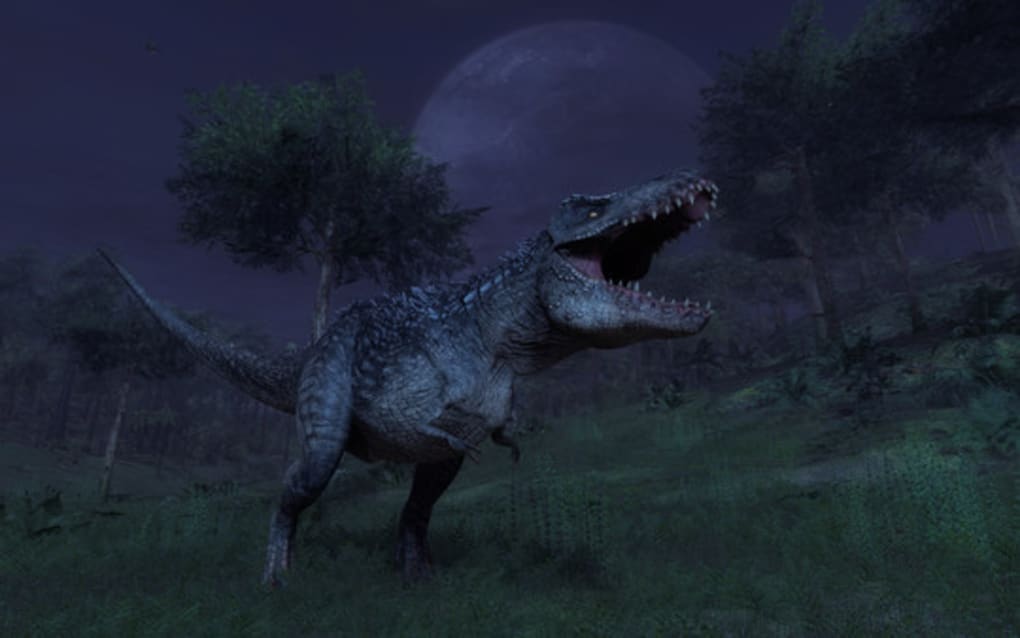
But the undisputed stars of Primal Eden are its colossal inhabitants: the dinosaurs. theHunter: Primal features five unique dinosaur species, each presenting a distinct challenge and requiring different hunting strategies. While specific species beyond the Tyrannosaurus Rex are left to the player’s discovery within the game, one can infer a diverse roster. This likely includes agile, pack-hunting raptor-like creatures that can ambush players from dense vegetation; heavily armored herbivores that, while not predatory, can be incredibly dangerous when startled or defending their territory; and, of course, the apex predators. The Tyrannosaurus Rex stands as the ultimate adversary, a creature of immense power and territorial ferocity. Encounters with a T-Rex are not just hunts; they are desperate battles for survival, demanding careful planning, superior marksmanship, and a profound understanding of the environment to evade or engage. The thrill of tracking, ambushing, or being ambushed by these magnificent beasts forms the core appeal of the game, cementing the “there’s dinosaurs!” pro as a major selling point. Each species behaves with a level of artificial intelligence designed to make them feel less like static targets and more like living, breathing threats within their ancient domain.
Gameplay Mechanics and Survival Strategies
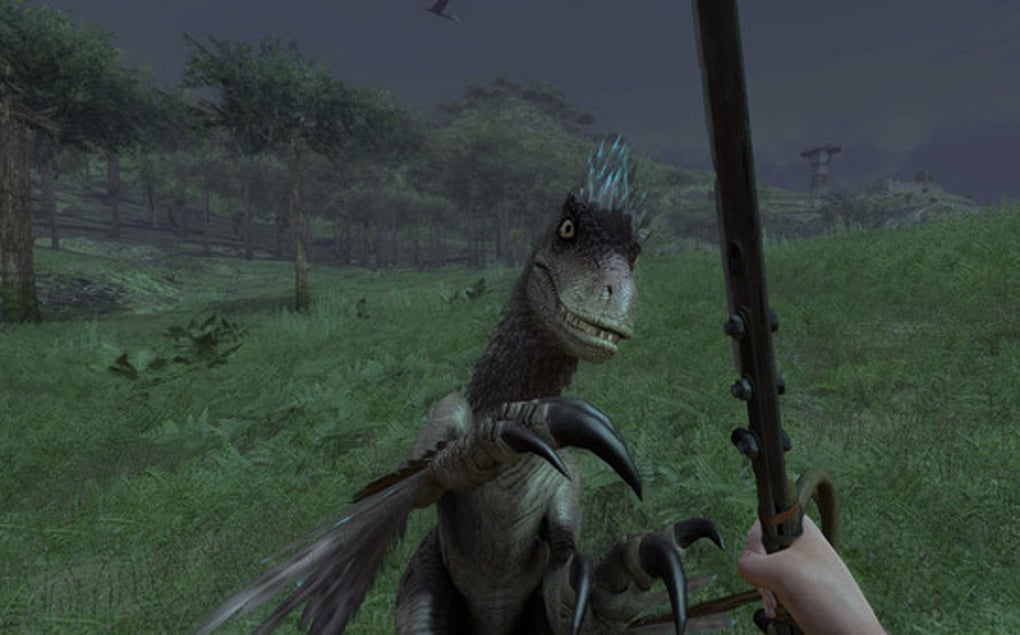
At its core, theHunter: Primal is an exploration and hunting survival game, demanding a blend of tactical thought and quick reflexes. The vast 24km² map is an open canvas for players to traverse, but this exploration is fraught with peril and purpose. Every step taken is a journey into the unknown, requiring players to constantly be aware of their surroundings, identifying potential threats and valuable resources alike. The objective isn’t merely to see the landscape, but to meticulously comb it for the “weapons, clothing, food, and ammo” essential for survival. This resource gathering forms the bedrock of the gameplay loop, turning every abandoned campsite or dense thicket into a potential goldmine or a deadly trap.
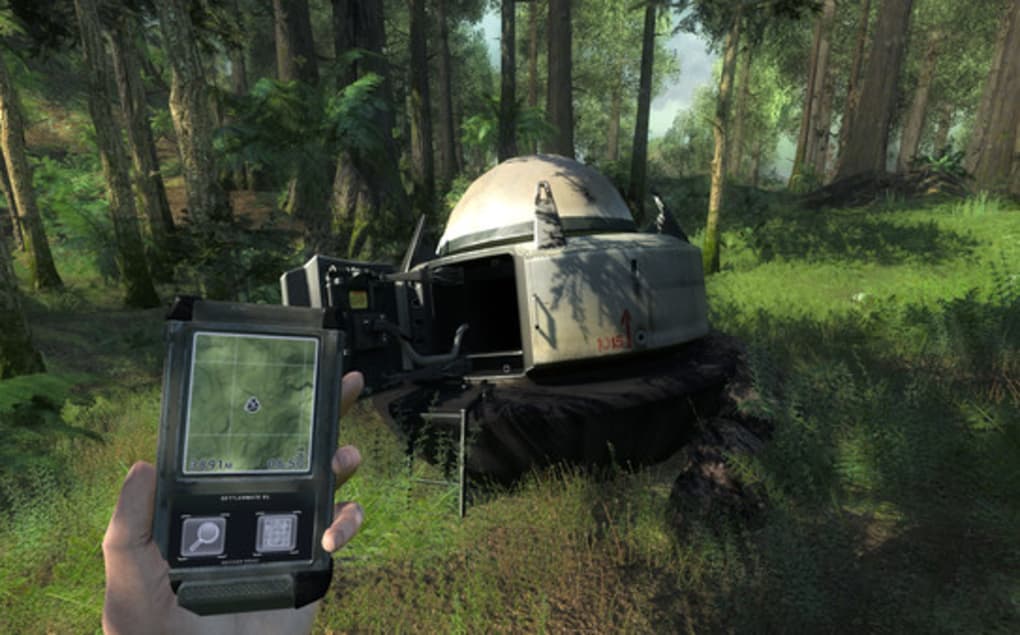
The hunting mechanics themselves are designed for realism, echoing the roots of the theHunter series. Players aren’t equipped with advanced tracking systems or unlimited ammunition. Instead, success hinges on observation, patience, and skillful marksmanship. Understanding animal behavior, tracking footprints, identifying calls, and utilizing the wind direction to mask your scent are all critical elements. Whether you’re stalking a smaller dinosaur for its meat or preparing for a monumental clash with a T-Rex, the tension is palpable. Weapons are scarce and ammunition even scarcer, forcing players to make every shot count. A missed shot can not only mean a lost opportunity for food but can also alert a predator to your presence, turning the hunter into the hunted. The game likely features a variety of firearms, from rifles suitable for long-range takedowns to shotguns for close-quarters defense, each with its own advantages and limitations.
One of the significant advantages of theHunter: Primal is its “multiplayer capability,” which allows players to “team up with others online.” This feature transforms the solitary and often isolating experience of survival into a shared adventure. In a world as dangerous as Primal Eden, having allies can dramatically alter the dynamics of gameplay. Teams can coordinate elaborate hunts, with one player acting as a spotter while another moves into position for a shot. They can provide mutual protection against ambushing predators, share scarce resources, or divide tasks, such as one person foraging while another stands guard. The camaraderie and shared struggle against overwhelming odds elevate the cooperative experience, making seemingly impossible challenges feel surmountable. However, the game’s nature might also lead to emergent player-versus-player scenarios, though the primary focus remains cooperative survival against the environment and its inhabitants.
Despite its compelling premise and execution of core mechanics, theHunter: Primal was not without its criticisms. A frequently cited “con” was that “character walks too slowly.” In an expansive 24km² world, sluggish movement can make exploration feel like a chore, breaking immersion and frustrating players eager to cover ground or escape imminent danger. This pacing issue can impact the overall flow of the game, turning potentially exciting treks into drawn-out endeavors. Furthermore, the sentiment that “the game lacks polish and feels unfinished” points to potential issues like minor bugs, rough edges in the user interface, or perhaps content gaps that prevent the experience from feeling as cohesive and refined as it could be. For a survival game, especially one pitting players against challenging AI, a lack of polish can manifest in unpredictable enemy behavior, clunky interactions, or a general sense that certain mechanics haven’t been fully realized. While the core concept of dinosaur hunting survival is strong, these aspects suggest that the game, in its original form, might have benefited from additional development time to truly shine.
The Legacy of Primal: Developer, Release, and Reception
theHunter: Primal emerges from the creative stable of Expansive Worlds, a developer renowned for its dedication to creating immersive and realistic hunting simulations. Expansive Worlds is best known for its theHunter franchise, which began with theHunter Classic and later evolved into the critically acclaimed theHunter: Call of the Wild™. With a proven track record in meticulously detailing natural environments and animal behaviors, their foray into prehistoric territory with Primal represented an intriguing thematic departure, applying their expertise to a radically different, yet equally dangerous, ecosystem. This lineage is important because it lends Primal a certain pedigree in simulation aspects, even as it ventures into speculative fiction. The detailed ballistics, animal tracking, and environmental realism that characterize their other titles are subtly present in Primal, grounding its fantastical elements in a recognizable gameplay framework.
The game was launched as a paid title for Windows, with its latest recorded update dating back to March 29, 2017. This release timeline places Primal firmly within a period when dinosaur-themed survival games were gaining significant traction, fueled by a resurgence of interest in prehistoric settings within gaming. Available initially in English, the game also offered support for German, Spanish, French, and Italian, indicating a broad reach for its target audience across Western markets. This linguistic diversity underlines Expansive Worlds’ ambition to connect with a global player base, keen on the unique blend of survival and dinosaur hunting offered. The game’s total downloads, approximately 7.4K lifetime and 120 in the month prior to the reference content’s date, suggest a niche but dedicated following. While these numbers might not put it in the blockbuster category, they reflect a consistent interest from players drawn to its specific appeal.
In the broader landscape of dinosaur-themed games and survival titles, theHunter: Primal occupies a distinct position. Its emphasis on realistic hunting mechanics, inherited from its franchise brethren, sets it apart from more action-oriented or sandbox-focused dinosaur games. When compared to alternatives like The Isle, which focuses on players embodying dinosaurs, or Primal Carnage: Extinction, a class-based shooter, Primal leans heavily into the strategic, solitary (or co-op) hunt. Titles such as Carnivores: Dinosaur Hunter Reborn share a closer philosophical kinship, both prioritizing the meticulous tracking and hunting of prehistoric creatures. Even Jurassic Dino Hunting or Dinosaur Hunt touch upon similar themes, but theHunter: Primal tries to blend the robust simulation engine of Expansive Worlds with the primal fantasy of confronting a Tyrannosaurus Rex head-on. This positioning allowed it to carve out a space for players seeking a more grounded, albeit still fantastical, prehistoric survival experience. While it may not have achieved the widespread commercial success of some of its contemporaries, its unique blend of simulation and monster hunting ensures its continued relevance for a specific segment of the gaming community.
Is theHunter: Primal Still Worth Playing Today?
Revisiting theHunter: Primal in the current gaming landscape requires a thoughtful consideration of its original strengths and weaknesses, viewed through the lens of modern expectations. For enthusiasts of classic survival games and those with a profound fascination for dinosaurs, Primal continues to offer a distinct, albeit somewhat vintage, experience. The fundamental allure – a vast, dangerous world teeming with prehistoric predators that you must hunt to survive – remains powerfully intact. The “nicely rendered environment” holds up reasonably well for a game from its era, effectively conveying the isolation and beauty of Primal Eden. The thrill of encountering, tracking, and ultimately overcoming a dinosaur, particularly the formidable Tyrannosaurus Rex, is an unparalleled rush that few other games truly capture with Primal’s simulation-heavy approach.
However, the criticisms regarding its “character walks too slowly” and the feeling that “the game lacks polish and feels unfinished” are more pronounced in retrospect. In an age where open-world games often boast fluid movement systems, extensive fast travel, and highly refined user interfaces, Primal’s pacing might feel genuinely cumbersome to new players. The slow movement, while perhaps intended to add to realism or heighten tension, can often detract from the enjoyment of exploration, turning vast distances into tedious treks. The “unfinished” aspect could manifest as minor bugs, rough animations, or simply a lack of depth in certain systems compared to what modern survival games offer. Players accustomed to extensive crafting systems, dynamic world events, or deeply integrated narrative elements might find Primal’s relatively straightforward survival loop somewhat barebones.
Despite these caveats, theHunter: Primal finds its niche. It appeals strongly to players who appreciate a more methodical, less arcade-like hunting experience. If you enjoy the meticulous tracking, resource management, and strategic planning inherent in hunting simulations, and you crave the unique challenge of prehistoric adversaries, then Primal offers something genuinely engaging. The multiplayer component also adds significant replayability, transforming potential solo frustrations into shared cooperative triumphs. It’s a game for those who prioritize the sheer concept of a dinosaur survival hunter over cutting-edge graphics or a vast array of quality-of-life features found in newer titles.
In conclusion, theHunter: Primal is a product of its time, offering a compelling premise with solid foundational mechanics but suffering from a few rough edges. For players willing to overlook its dated aspects and embrace its demanding survival loop, it remains a unique entry in the dinosaur game genre. It stands as a testament to Expansive Worlds’ ability to transplant their hunting expertise into a fantastical setting, providing a distinct and challenging prehistoric adventure that still holds a nostalgic charm and a potent sense of danger for those brave enough to step into Primal Eden.
File Information
- License: “Full”
- Version: “2016”
- Latest update: “March 29, 2017”
- Platform: “Windows”
- OS: “Windows 7”
- Language: “English”
- Downloads: “7.5K”


