
Tiger Woods PGA TOUR® 12: The Masters, released in 2011, represented a significant milestone in the long-running EA Sports PGA Tour franchise. While now a relic of the past, unavailable for download due to various factors, its impact on golf simulation gaming remains notable. This retrospective examines its strengths and weaknesses, contextualizing its place within the broader history of golf video games and considering its legacy in light of subsequent releases.
A Legacy of Innovation
The golf video game genre boasts a rich history, dating back to the mid-1980s with titles like Leaderboard. EA Sports, however, established itself as a dominant force with its PGA Tour series, consistently refining gameplay mechanics and graphics over numerous iterations. Tiger Woods PGA TOUR® 12: The Masters capitalized on this accumulated experience, offering a refined and comprehensive golfing experience. Years of iterative development culminated in a game that, despite its age, showcased considerable technical achievement and a deep level of gameplay. The title’s meticulous attention to detail, particularly in course recreation, set a new standard for the series.
The game’s most significant innovation was the inclusion of Augusta National Golf Club, home to The Masters Tournament. This wasn’t a simple recreation; the course was painstakingly laser-scanned, resulting in an unparalleled level of accuracy and realism. This level of detail extended beyond the greens and fairways; the iconic landscape, trees, and even the subtle undulations of the terrain were faithfully replicated. This dedication to realism created an almost hyper-realistic experience, blurring the lines between the virtual and the actual. While some might argue that this hyper-realism tipped into an overly “perfect” aesthetic, it undoubtedly impressed players at the time and showcased a new level of commitment to accuracy in virtual course design.
Gameplay and Features: Depth and Accessibility
Tiger Woods PGA TOUR® 12: The Masters catered to a broad spectrum of players. Its accessible gameplay mechanics made it enjoyable for casual golfers, while its depth and complexity provided ample challenge for seasoned veterans. The inclusion of over 20 professional golfers, each with unique attributes and playing styles, added to the variety and replayability. Players could also create their own custom golfer, although the customization options were less extensive than in some other sports games, prioritizing the overall aesthetic consistency with the sport. The decision to avoid outlandish character customization maintained the refined, realistic atmosphere.
A key feature introduced in this iteration was the innovative Caddy system. Acting as a virtual coach, the Caddy provided assistance and strategic advice to players, making the game more approachable for newcomers. This feature not only served as a helpful tutorial but also enhanced the overall immersive experience, adding another layer of realism and strategic depth. The Caddy’s guidance was particularly beneficial for players learning the nuances of course management and shot selection. The inclusion of a robust career mode further enhanced the long-term engagement, allowing players to progress through various tournaments and build their professional golf career.
Presentation and Interface: A Mixed Bag
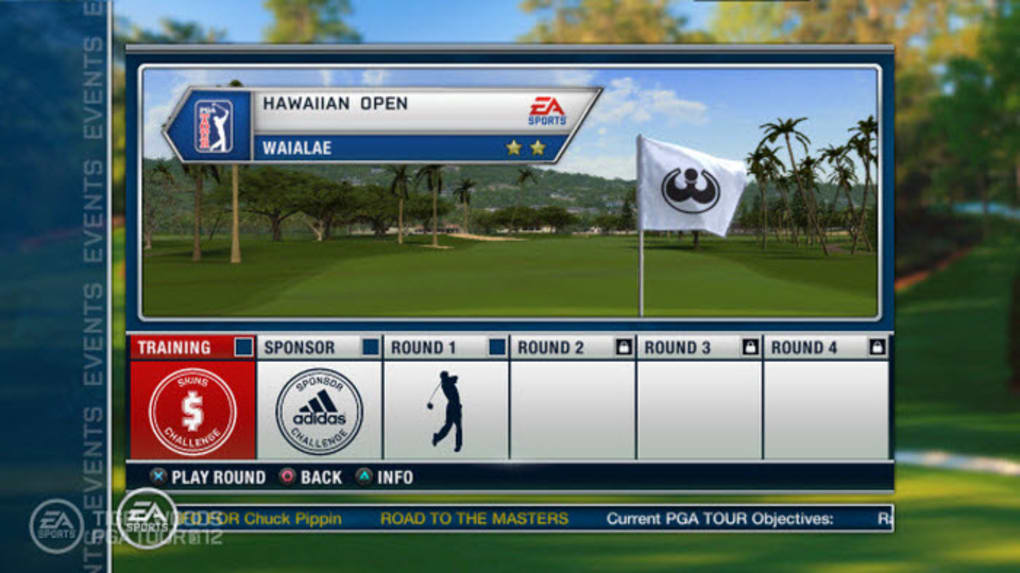
Despite its strengths in gameplay and realism, Tiger Woods PGA TOUR® 12: The Masters wasn’t without its flaws. The game’s user interface, unfortunately, felt outdated, failing to keep pace with the advancements in gameplay and graphics. The menus and navigation systems were clunky and unintuitive, a jarring contrast to the polished presentation of the game’s core mechanics. This design flaw detracted from the overall user experience, particularly for players accustomed to more modern and streamlined interfaces. While the game’s core gameplay loop was captivating, the frustrating navigation served as a persistent inconvenience.

The aesthetic of the game, while accurately representing the sport, was not visually groundbreaking for its time. The graphics, while detailed, weren’t leading-edge, though this point needs context within the available technology of the era. The focus on realistic course recreations sometimes came at the expense of the overall visual polish elsewhere in the game. This focus on accuracy and meticulous detail, although commendable, may have limited the potential for more visually striking elements that some other sports games of that era might have incorporated. The overall presentation fell somewhere between impressive and unremarkable for its time.
Lasting Impact and Legacy
Despite its interface shortcomings, Tiger Woods PGA TOUR® 12: The Masters remains a significant entry in the golf simulation genre. Its laser-scanned recreation of Augusta National set a high bar for future golf games, influencing subsequent attempts to capture the detail and realism of iconic courses. The introduction of the helpful Caddy system demonstrated EA’s ongoing commitment to creating accessible yet challenging gameplay experiences. The game’s legacy lives on, not only in its direct influence on future iterations of the PGA Tour series, but also in its demonstration of the power of meticulous attention to detail in creating a realistic and engaging virtual golf experience. While the game itself is no longer available for download, its features and innovations continue to resonate in the world of golf video games.
Comparison to Contemporary and Subsequent Titles
The game’s release coincided with the prevalence of other notable golf games. The simultaneous presence of titles like Jack Nicklaus Perfect Golf and later releases such as PGA TOUR 2K23 provided a competitive landscape for Tiger Woods PGA TOUR® 12: The Masters to occupy. Comparing these titles, a clear distinction arises in the focus on specific aspects of the golfing experience. While some contemporaries focused more on arcade-style gameplay, Tiger Woods PGA TOUR® 12: The Masters prioritized a near-photorealistic representation of courses and a detailed simulation of the sport. This distinction highlights the particular niche the game carved for itself, catering specifically to players who desired maximum realism and accuracy. The subsequent releases in the PGA Tour series, and other golf simulations since, often built upon the successes and failures of this iteration.
Conclusion: A Milestone in Golf Simulation
Tiger Woods PGA TOUR® 12: The Masters, despite its now-unavailable status, represents a significant milestone in the evolution of golf video games. Its hyper-realistic recreation of Augusta National and its accessible yet in-depth gameplay provided a compelling experience for players of all skill levels. While its outdated menus and less-than-groundbreaking graphics somewhat tarnish its legacy, its innovations in course recreation and the helpful Caddy feature leave a lasting impression. The game stands as a testament to the enduring appeal of golf simulation games and a reminder of the continual evolution of gaming technology and design. It effectively showcased what was possible in replicating real-world courses in a virtual setting, laying the foundation for many advancements in the subsequent years of golf game development.

File Information
- License: “Full”
- Latest update: “May 2, 2022”
- Platform: “Windows”
- OS: “Windows 8”
- Language: “English”
- Downloads: “30K”


