
Toca Kitchen, a free educational game developed by Toca Boca, invites young players on a delightful culinary journey. This mobile app transforms your device into a vibrant kitchen where children can experiment with cooking, unleash their creativity, and develop an early appreciation for food preparation. The game’s intuitive design and engaging gameplay make it accessible and enjoyable for a wide range of ages, fostering a playful introduction to the world of cooking.
Apps, Games, and Educational Value
Toca Kitchen stands out as a prime example of how app-based games can be both entertaining and educational. While the core gameplay revolves around cooking and experimenting with different ingredients and cooking methods, the game subtly integrates valuable learning opportunities. Children learn about different food types, cooking techniques, and even the importance of food preparation in a fun and engaging way, all without the pressure of strict rules or scoring systems. The focus is entirely on creative exploration and playful interaction. This lack of pressure allows children to freely experiment and discover their own culinary styles without the fear of failure. This approach to learning through play is highly effective in fostering a love for learning and encouraging experimentation.
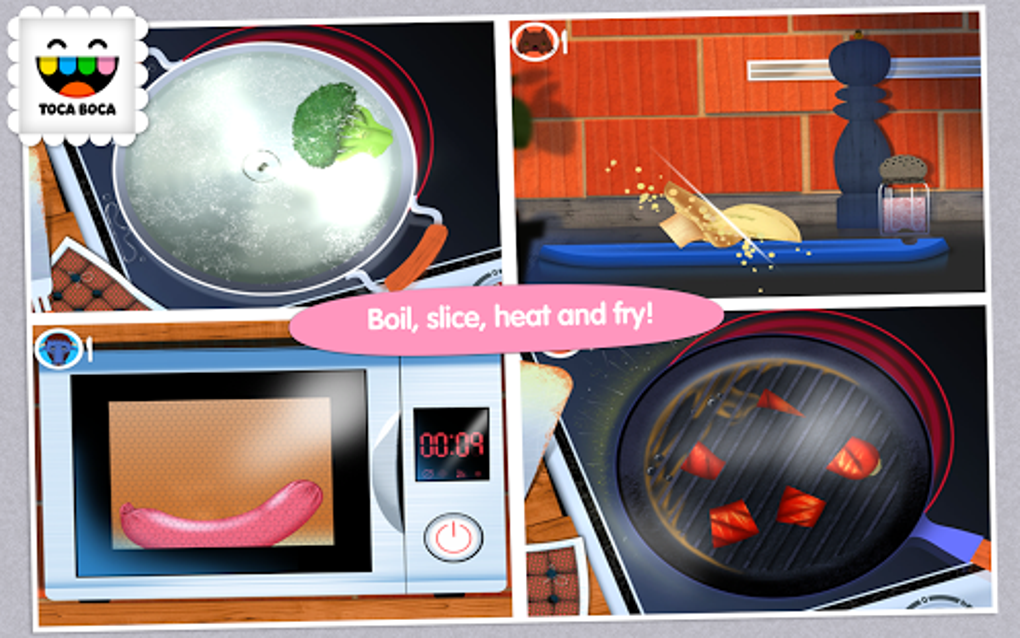
The app’s simple interface and intuitive controls ensure even young children can quickly grasp the gameplay mechanics. The vibrant visuals and engaging sound effects further enhance the immersive experience, making it easy for children to spend hours happily exploring the virtual kitchen and concocting their own culinary masterpieces. The game’s success lies in its ability to seamlessly blend entertainment and education, providing a valuable learning experience disguised as a fun and engaging game.
The availability of Toca Kitchen across multiple platforms – including Android, iOS, and Windows – ensures accessibility for a broad audience. This widespread availability underscores the game’s appeal and its potential to reach and engage children globally, fostering a shared experience of playful learning and culinary exploration.
Game Mechanics and Features
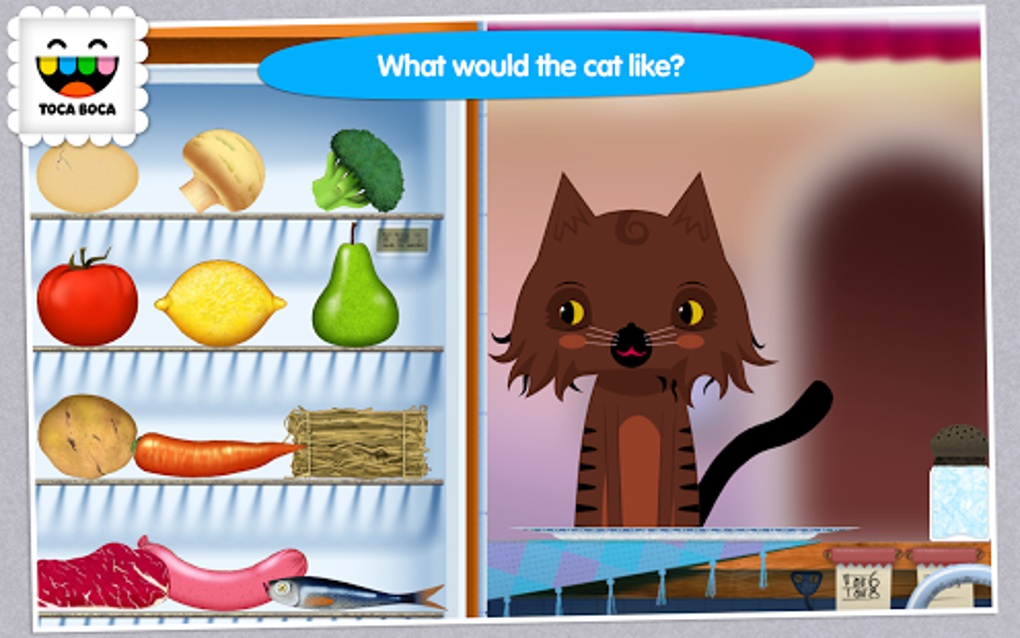
The gameplay in Toca Kitchen is refreshingly simple and intuitive. Players are presented with a virtual kitchen stocked with a variety of ingredients, including eggs, mushrooms, broccoli, tomatoes, lemons, potatoes, sausages, carrots, meat, and fish. These ingredients are neatly arranged in a refrigerator on the left side of the screen, while the cooking appliances—including a stovetop, microwave, and food processor—are located conveniently on the right. Children can drag and drop ingredients onto the cooking surfaces, using intuitive touch controls to interact with the game’s elements.
The game features four adorable and expressive characters – a boy, a girl, a cat, and a cow – who act as the culinary critics. Each character has their unique preferences and reactions to the dishes created by the player. Observing these reactions adds an extra layer of engagement and encourages children to experiment with different combinations of ingredients and cooking methods to discover what each character enjoys most. This feedback loop subtly encourages trial-and-error learning, reinforcing the understanding of cause and effect within the context of cooking. The diverse reactions of the characters also add a touch of humor to the gameplay, ensuring that children remain entertained and motivated to continue exploring the various possibilities.
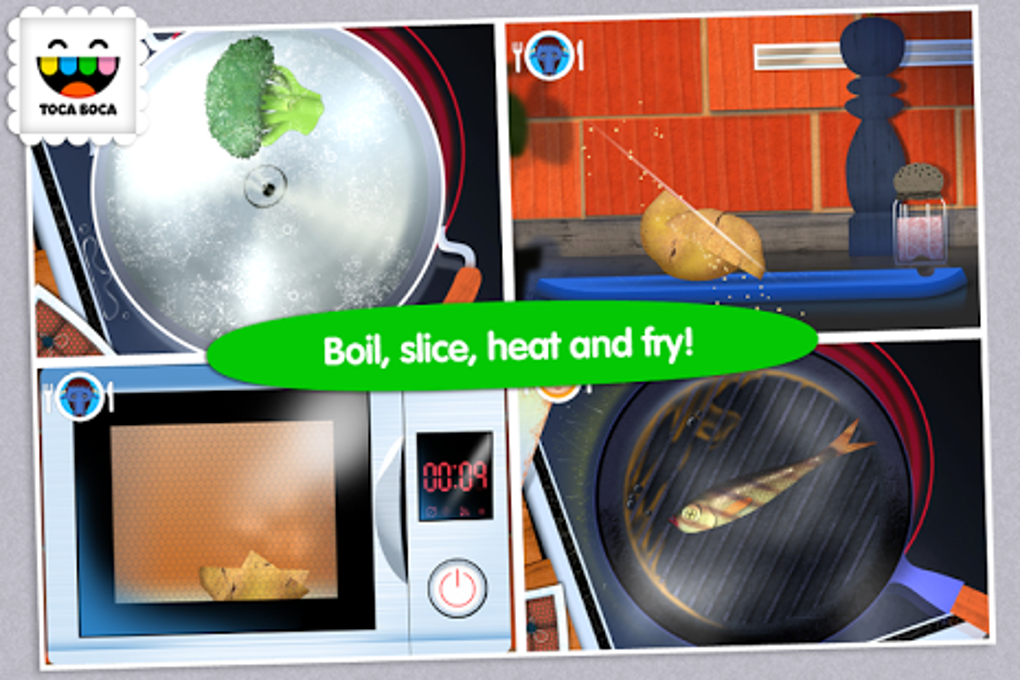
The cooking process itself is delightfully straightforward. Children can slice, chop, mix, fry, boil, and microwave ingredients, all with simple drag-and-drop actions. The game cleverly avoids complex recipes or specific instructions, allowing children to freely experiment and create their own culinary concoctions. This freedom from structured rules fosters creativity and allows children to explore their own culinary imaginations without constraints. The focus is on the process of cooking itself – the exploration, experimentation, and fun – rather than the achievement of a specific outcome.
For Business and Android Users
Toca Kitchen’s success transcends mere entertainment. From a business perspective, its intuitive design, broad appeal, and positive reception demonstrate the market potential for educational apps that prioritize fun and engagement. The app’s strong user ratings and significant download numbers serve as a testament to its popularity and success in the mobile gaming market.
For Android users, Toca Kitchen offers a seamless and enjoyable experience. The app is optimized for Android devices, ensuring smooth performance and compatibility. The intuitive interface and responsive controls make it easy to navigate and interact with the game’s features, enhancing the overall user experience. The game’s size is relatively small, making it easily accessible even on devices with limited storage capacity. Furthermore, being a free app makes it readily available to a large segment of Android users. These factors contribute to its wide adoption among Android users worldwide.
Expanding the Culinary Horizons: Room for Improvement
While Toca Kitchen excels in its simplicity and creativity-focused design, there’s always room for improvement. One area for potential enhancement lies in expanding the variety of ingredients available within the game. Currently, the selection is somewhat limited, and adding more options—such as different types of meats, a wider range of fruits and vegetables, spices, and other culinary staples—could significantly enrich the gameplay experience. This would add depth to the cooking simulations and would enable even more creative experimentation and culinary exploration.
Introducing additional cooking appliances or techniques could also enhance the game. The current selection of cooking methods is adequate but could benefit from expansion. Adding more tools and techniques would give children a wider array of possibilities to explore, broadening their culinary horizons and fostering a more comprehensive understanding of cooking techniques.
Finally, while the absence of rules and leaderboards is a strength, the inclusion of optional, non-competitive challenges or mini-games could further engage players and add an extra layer of depth to the experience. These could be simple, fun challenges related to identifying ingredients or learning about different cooking techniques, enhancing the educational aspect of the game without introducing competitive pressure.
Alternative Platforms and Translations
Recognizing the global appeal of Toca Kitchen, the developers have wisely made the game available across various platforms. Besides Android, the game is also available for iOS and Windows, ensuring that a wider audience can enjoy its engaging gameplay. Furthermore, the game has been translated into numerous languages, further enhancing its accessibility and making it possible for children around the world to experience the joy of culinary exploration. This global reach speaks volumes about the game’s potential to foster a sense of shared experience and inspire creativity across diverse cultures.
Conclusion: A Recipe for Success
Toca Kitchen is more than just a mobile game; it’s a playful introduction to the world of cooking and creativity. Its simple mechanics, engaging characters, and intuitive design make it an ideal app for young children who are eager to explore their culinary imaginations. While there is room for future enhancements, Toca Kitchen currently stands as a successful example of how technology can be used to facilitate playful learning and encourage a passion for cooking from a young age. Its strong emphasis on creative exploration, its availability across various platforms, and its commitment to accessibility make it a valuable addition to the world of educational apps. The game’s success is a testament to the power of simple, well-designed gameplay in fostering creativity and a love for learning.
File Information
- License: “Free”
- Latest update: “April 4, 2025”
- Platform: “Android”
- OS: “Android 13.0”
- Downloads: “4.9K”
- Size: “63.68 MB”
- Download Options: “APK, Google Play”
- Filename: “com-tocaboca-tocakitchen-1884-62469041-889601c67de15d26b010cbfe3d578ef3.apk”


