
Torque Drift, initially a popular mobile game, has made its way to the PC platform, offering players a taste of realistic drift racing on a larger screen. Developed by Grease Monkey Games, this PC port retains the core gameplay mechanics that made its mobile counterpart a hit, while also introducing some new features and challenges. This review delves into the nuances of Torque Drift on PC, examining its strengths and weaknesses to provide a comprehensive understanding of the gaming experience.
Gameplay and Physics: A Realistic Drifting Experience
At its heart, Torque Drift remains a drift racing game, emphasizing the art of controlled slides and precise car handling. The PC version successfully translates the realistic physics engine from the mobile game, allowing players to experience the nuances of weight transfer, tire grip, and counter-steering. The game accurately simulates the feeling of drifting, requiring skillful manipulation of the accelerator, brakes, and steering to maintain a controlled drift. This realistic physics engine sets Torque Drift apart from many arcade-style racing games, demanding precision and technique rather than simply mashing the accelerator. A compatible controller is highly recommended for a more immersive and responsive experience, as the precise movements required for successful drifting are much easier to execute using a controller rather than keyboard and mouse.
This attention to detail extends to the car’s behavior. The way the car responds to different inputs, the subtle shifts in weight, and the responsiveness of the steering all contribute to a genuine sense of immersion. However, the game’s audio design somewhat undercuts this realism. While the visual effects, such as smoke and tire marks, are beautifully rendered, the engine sounds lack the depth and accuracy expected of a game focused on such precise vehicular control. The engine sounds often fail to accurately reflect the gear shifts or the varying engine loads during drifting, which detracts from the overall realism of the driving experience.
Customization and Progression: Building Your Dream Drift Machine
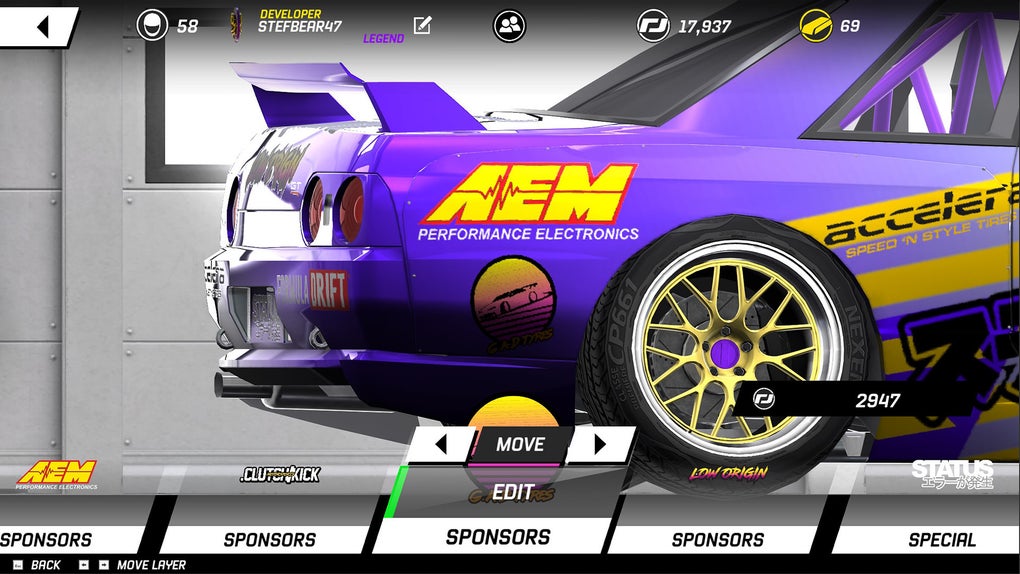
One of the key attractions of Torque Drift is its extensive car customization options. Players can choose from a diverse range of vehicles, each with its own unique handling characteristics. This choice extends beyond simple aesthetics, as vehicle performance is significantly impacted by the chosen chassis. Each car can be extensively modified with various parts, impacting performance in multiple dimensions. These customization options are crucial to achieving competitive times. Fine-tuning suspension, adjusting gearing, and selecting appropriate tires all significantly impact the overall car handling and drift capabilities. The attention to detail in the visual representation of these upgrades is also noteworthy. The game renders the car parts with impressive fidelity, making the customization process a visually pleasing experience, especially when using DLC vehicles, which often feature intricately detailed interiors.
The progression system is designed around earning in-game currency and reputation through successful races. This system is not overtly complicated, which is beneficial for newcomers, but also does not offer substantial depth, which could leave more dedicated gamers feeling the progression could have been fleshed out more. There’s a sense of accomplishment as players unlock new cars, parts, and sponsors. The incorporation of real-life racing teams and brands further enhances the immersion, and the sponsorship system adds a realistic layer to progression.
Game Modes and Multiplayer: Engaging Competition
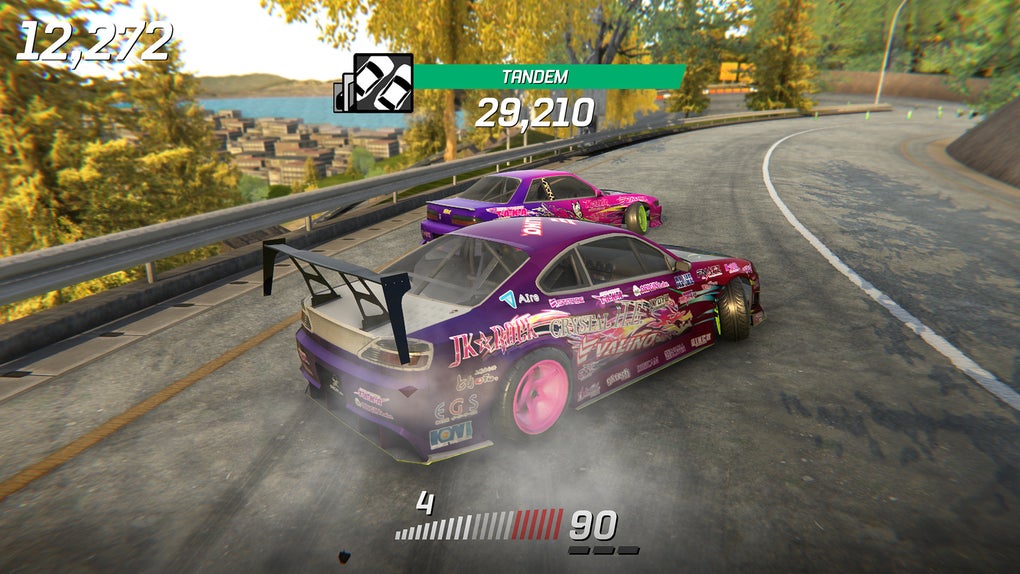
Torque Drift offers several game modes catering to various player preferences. Freestyle mode lets players practice their drifting skills without the pressure of competition. Events mode presents structured challenges, while Local Play allows for head-to-head races against friends or other players on the same network. The multiplayer mode, while not live player-versus-player (PvP), is unique in its approach, pitting the player against the highest recorded score for each track. This design choice is clever, sidestepping potential connection issues and ensuring smooth gameplay even for players with less-than-ideal internet connections.
While the lack of live PvP might disappoint some players seeking real-time competition, this approach allows for a focus on refined gameplay that eliminates many potential issues associated with live online interactions. The focus remains on achieving high scores through skilled drifting and car customization rather than solely focusing on beating other online opponents.
Graphics and User Interface: A Mixed Bag
Torque Drift’s visual presentation is a mixed bag. The cars and car parts are rendered with impressive detail and visual fidelity, particularly the DLC content. The interiors of the vehicles, in particular, are impressively modeled. However, the environments themselves appear significantly less polished. The environments and race tracks often lack detail and texture, appearing blurry and lacking in the same level of detail present in the car models. This discrepancy in visual quality is noticeable and detracts from the overall aesthetic experience. The inconsistency between the high-quality car models and the lower-quality environments creates a disconnect in the visual presentation.
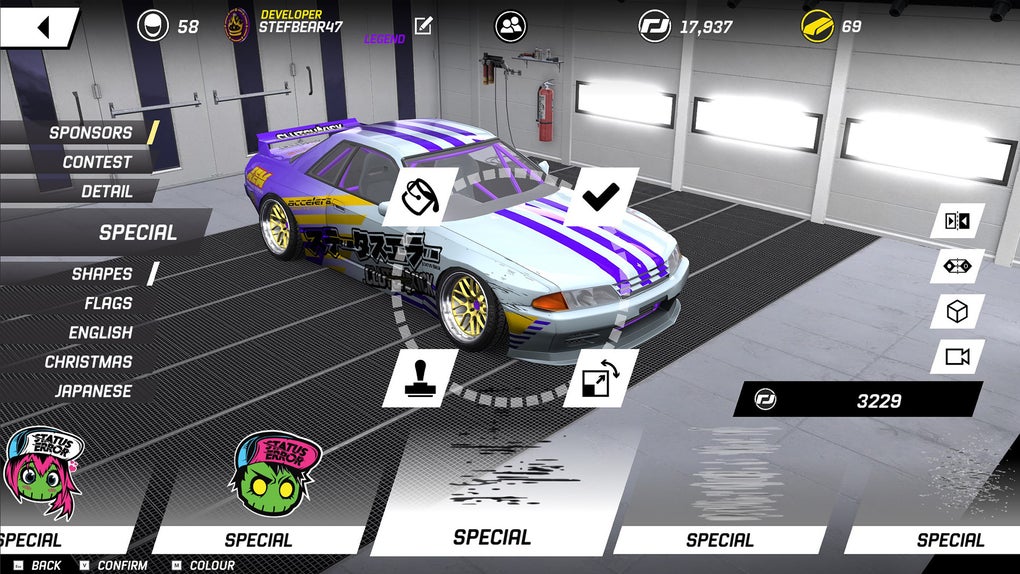
The user interface (UI) presents another point of contention. While functional, it is far from intuitive and lacks a proper tutorial. New players may find themselves struggling to navigate the menus and understand the game’s mechanics. The lack of a tutorial significantly increases the learning curve and could deter some players from continuing to play the game. A more user-friendly and intuitive UI, combined with a comprehensive tutorial, would significantly improve the overall accessibility and enjoyment of the game. This is especially important given that drift racing, as a genre, already has a relatively high skill ceiling.
Overall Assessment: Strengths and Weaknesses
Torque Drift’s PC port delivers a largely satisfying drift racing experience, particularly for those who enjoy the challenge of mastering realistic car handling. The game’s strength lies in its accurate physics engine, extensive customization options, and the cleverly implemented online multiplayer mode that avoids the technical challenges of real-time PvP. The detailed car models are a visually pleasing highlight.
However, several weaknesses detract from the overall experience. The inaccurate engine sounds, the unintuitive UI, the lack of a tutorial, and the blurry and less-detailed game environments are all significant drawbacks. These issues need to be addressed in future updates to fully realize Torque Drift’s potential as a top-tier drift racing game on the PC platform. The development team has demonstrated a commitment to high-quality car modeling and a sophisticated physics engine; however, extending this same level of attention to the game’s environments and the UI would significantly enhance the overall experience. A robust tutorial to introduce new players to drift racing mechanics is also crucial for making the game accessible to a wider audience. While the game currently offers a fun and challenging drift racing experience, addressing these weaknesses would propel Torque Drift to new heights.
File Information
- License: “Full”
- Version: “2.12.0”
- Latest update: “June 14, 2023”
- Platform: “Windows”
- OS: “Windows 7”
- Language: “English”
- Downloads: “36.6K”


