
Towns, a full-version PC game, offers a captivating experience for strategy and simulation enthusiasts. Released in 2016 and updated on April 1st, 2017, it has garnered a consistent following, though its precise download numbers beyond the initially reported figures remain elusive. While not overtly flashy in its presentation, Towns provides a rich and rewarding gameplay loop focused on meticulous city planning and resource management. This detailed review will explore its key features, gameplay mechanics, strengths, and weaknesses, providing a comprehensive overview for potential players.
Gameplay and Mechanics: Building Your Ideal Town
Towns places players in the role of a budding town planner, tasked with establishing and nurturing a thriving community from the ground up. The core gameplay revolves around strategic resource management, careful infrastructure planning, and the satisfaction of watching your digital hamlet grow and prosper. Unlike some city-building simulators that focus on rapid expansion and monumental constructions, Towns emphasizes a more organic and measured approach.
The game’s interface is relatively straightforward, presenting players with a top-down view of their developing town. Players are presented with a variety of buildings to construct, each fulfilling specific roles within the town’s ecosystem. Residential buildings house your citizens, providing a steady workforce for various industries. Commercial buildings generate income, while industrial structures process raw materials into finished goods. Agricultural buildings supply food, and infrastructure projects like roads, power grids, and water systems ensure the smooth functioning of the town.
A key element of the gameplay is resource management. Players must carefully balance the demands of their growing population while ensuring a steady supply of essential resources. This involves strategic land use, efficient resource allocation, and thoughtful planning to avoid bottlenecks and shortages. The game subtly encourages players to think ahead, anticipating future growth and planning their infrastructure accordingly.
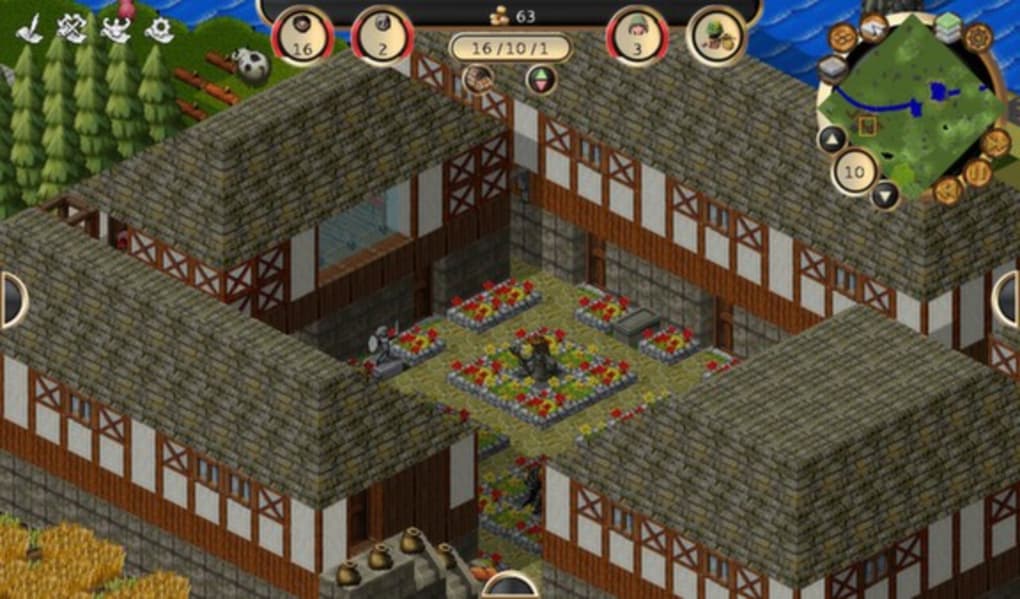
The game’s pace is deliberate, allowing players to savor the incremental progress of their town. While there’s a degree of challenge involved in managing resources and anticipating citizen needs, the overall experience is not overly frantic. This deliberate pace makes Towns particularly appealing to players who prefer a more relaxed and thoughtful approach to city building.
Graphics and Sound: A Simple Yet Effective Presentation
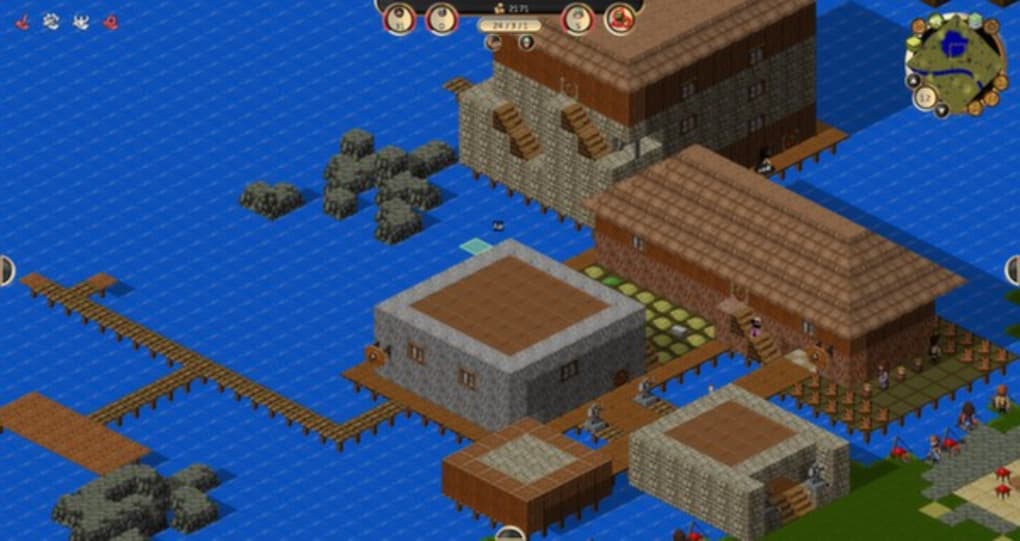
Towns opts for a simplified, low-polygraphic style, prioritizing functionality over high-fidelity visuals. While the graphics aren’t visually stunning, they are perfectly adequate for the task, clearly representing the various buildings and features of the town. The art style contributes to the game’s overall approachable and less daunting feel. It’s not about breathtaking landscapes; it’s about the satisfaction of building a functional and thriving community.
Similarly, the sound design is understated yet effective. Ambient sounds contribute to the overall atmosphere, providing a gentle background accompaniment to the gameplay without being distracting or intrusive. There’s a pleasant simplicity to the auditory elements, fitting the overall design philosophy of the game.
Strengths: A Focus on Core Gameplay
One of the greatest strengths of Towns is its focus on the core mechanics of city building. By eschewing unnecessary complexities and superfluous features, the game allows players to fully immerse themselves in the strategic and logistical challenges of town management. The streamlined gameplay avoids overwhelming newcomers, allowing them to quickly grasp the fundamentals and begin building their own digital utopia.
The game’s manageable scale also contributes to its appeal. While the town grows over time, it never becomes so vast and complex that it feels unwieldy or difficult to manage. This makes it ideal for players who appreciate a more intimate and hands-on approach to city simulation.
The lack of a complex storyline or narrative-driven elements is both a strength and a weakness. It allows players to focus entirely on the gameplay itself, without distractions. However, some players might find this minimalistic approach somewhat lacking in engagement.
Weaknesses: Room for Improvement
While Towns offers a compelling city-building experience, several areas could benefit from improvement. The most significant is the limited scope of the game. While the strategic depth is appreciable, the lack of diverse gameplay options or scenarios limits long-term replayability. Players might find themselves completing the same fundamental tasks repeatedly, eventually leading to a sense of stagnation.
The simplistic graphics, while functional, are not likely to impress players accustomed to more visually advanced city builders. The understated sound design, while not a negative, could be enhanced to add more atmosphere and immersion to the gameplay. Finally, the lack of multiplayer features or robust modding support further restricts the game’s appeal for some players.
Comparison to Other City Builders
Towns occupies a unique niche within the city-building genre. Compared to titans like Cities: Skylines, it sacrifices visual complexity and vast scale for a more focused and accessible experience. While it lacks the intricate details and advanced features of Cities: Skylines, it offers a more straightforward and less intimidating learning curve. It’s a game that prioritizes strategic gameplay over visual spectacle.
Unlike games focused on historical accuracy or fictional settings, Towns provides a generic framework for city development, allowing players to create their own vision of an ideal town without predefined limitations. This creative freedom is a distinct advantage, allowing players to experiment with different styles and approaches to city planning.
Conclusion: A Solid Choice for Strategic City Building Enthusiasts
Towns is a solid and enjoyable city-building simulation that excels in its simplicity and strategic depth. While it lacks the visual polish and extensive features of some competitors, its straightforward gameplay, manageable scale, and focus on core mechanics make it a compelling choice for players who appreciate a less overwhelming and more deliberate approach to urban planning. It’s a game that rewards careful planning and strategic thinking, offering a satisfying sense of accomplishment as your town grows and prospers. While it might not appeal to players seeking visually stunning graphics or complex narrative elements, it stands as a strong contender within the city-building genre, particularly for those who value a streamlined and engaging experience. Its potential for long-term replayability is somewhat limited by the lack of significant variations in gameplay, but its overall design makes it an excellent entry point for newcomers to the genre, or a welcome alternative for experienced players seeking a more relaxed and strategic challenge.
File Information
- License: “Full”
- Version: “2016”
- Latest update: “June 14, 2023”
- Platform: “Windows”
- OS: “Windows 7”
- Language: “English”
- Downloads: “589”


