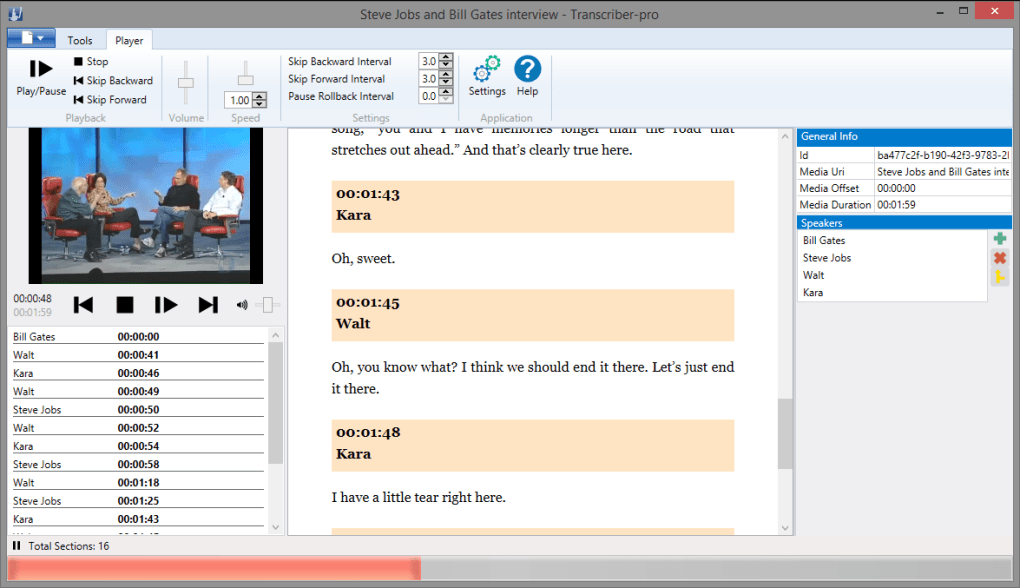
Transcriber Pro is a Windows-based software application designed to streamline the often complex process of audio transcription. This review delves into its features, benefits, drawbacks, and user experiences to provide a comprehensive assessment of its capabilities and suitability for various users. While it lacks automatic speech recognition, its focus on manual transcription tools makes it a powerful option for those seeking efficient manual transcription solutions.
Key Features and Functionality
Transcriber Pro’s core strength lies in its suite of features designed to enhance manual transcription efficiency. The software provides users with a robust set of tools that address many of the common challenges faced during the transcription process. These include:
-
Hotkeys: The program supports extensive customization of hotkeys, allowing users to assign frequently used commands and actions to keyboard shortcuts. This significantly reduces the need to use the mouse, accelerating the transcription workflow. Experienced transcribers can further enhance their speed and accuracy by utilizing a combination of hotkeys and foot pedals (though the software’s compatibility with specific foot pedals might need further investigation based on user reviews).
-
Timestamp Insertion: The ability to insert timestamps is a critical feature for accurate transcription. Transcriber Pro facilitates this process, allowing users to easily add timecodes to specific points in the transcript, invaluable for referencing specific sections of the audio.
-
Embedded Tags: The incorporation of embedded tags further refines the post-transcription process. These tags can be used to mark sections requiring review or to highlight particular segments of the audio, making the proofreading and editing stages more efficient.
-
Teamwork Capabilities: Although the specifics aren’t detailed in the provided information, the claim that Transcriber Pro facilitates task assignment to individual team members suggests support for collaborative transcription projects. This implies features allowing for the division of larger audio files into manageable sections, individual transcription, and subsequent merging or consolidation of the completed segments.
-
Media Control: Transcriber Pro offers standard media playback controls such as rewind, fast-forward, and pause. These intuitive controls allow users to navigate the audio file easily, ensuring precise synchronization between audio and text.
User Experience and Interface
User reviews present a mixed picture of the user interface. While some praise its “smart GUI” and ease of use, others found the interface to differ significantly from advertised screenshots. These discrepancies highlight a potential need for improved consistency between marketing materials and the actual user experience.
The simplicity of the user interface, while appreciated by some for its ease of learning, may also be perceived as lacking advanced features or customization options expected in professional-grade software. The lack of detailed visual representation on the interface might hinder intuitive understanding, making the initial learning curve steeper than expected for some users.
Pros and Cons of Transcriber Pro
Advantages:
-
Efficiency Enhancements: The combination of hotkeys, timestamps, and embedded tags contributes significantly to improved transcription efficiency, a key selling point for professional users. This streamlined workflow allows for faster turnaround times and higher productivity.
-
Cost-Effectiveness: User reviews highlight a “reasonable price,” suggesting a competitive pricing model compared to other transcription software. While a paid annual subscription is a necessary cost, the increased efficiency might offset this expense, depending on the user’s transcription volume and workflow.
-
Customizability: The ability to customize text substitution and export to various formats (txt, rtf, HTML) caters to diverse user needs and preferences. This flexibility is crucial for adapting to different project requirements and client specifications.
-
Text Manipulation Features: Features like speakers’ names auto-insertion and tagging incomprehensible audio sections significantly reduce post-transcription editing time, enhancing overall workflow efficiency.
Disadvantages:
-
Absence of Speech Recognition: The most significant drawback is the complete lack of automatic speech recognition (ASR). This means all transcription is done manually, limiting its appeal to users seeking faster solutions. For large volumes of audio, the manual process can be significantly time-consuming and may not be cost-effective for all users.
-
Annual Subscription Model: The software’s reliance on an annual subscription model, rather than a one-time purchase, presents a recurring cost. This recurring fee might be a deterrent for users with limited budgets or infrequent transcription needs.
-
Interface Inconsistencies: User feedback indicates inconsistencies between the advertised interface and the actual software, potentially leading to user frustration and difficulty in mastering the software. This highlights a need for improved clarity in marketing materials and a more user-friendly onboarding experience.
Comparison with Alternative Transcription Software
To fully assess Transcriber Pro, it’s crucial to compare it to other available transcription software. While the provided information doesn’t detail direct competitors, we can compare its features to common characteristics in the market:
-
ASR-based software: Many modern transcription tools incorporate ASR, offering a significant speed advantage over manual transcription. Transcriber Pro’s lack of ASR puts it at a disadvantage in this regard, especially when dealing with large volumes of audio.
-
Cloud-based solutions: Cloud-based transcription services often offer scalability and collaboration features, advantages lacking in Transcriber Pro. The lack of cloud functionality might hinder collaboration and limit accessibility for users who prefer cloud-based workflows.
-
Integrated editing tools: Some advanced transcription software integrates editing capabilities, allowing for simultaneous transcription and editing. This integrated approach can save time and improve efficiency, whereas Transcriber Pro likely requires separate editing software for post-transcription refinement.
Target Audience and Use Cases
Transcriber Pro is best suited for users who:
-
Prefer manual transcription: Users comfortable with and proficient in manual transcription will likely find the software’s features beneficial. The emphasis on tools that enhance manual transcription, such as hotkeys and timestamp insertion, are valuable for those who prefer this method.
-
Require high accuracy: The manual nature of the transcription process allows for meticulous review and editing, potentially leading to higher accuracy levels compared to ASR-based software, especially when dealing with complex audio or technical jargon.
-
Have limited budget (relative to ASR-based solutions): While an annual subscription is required, the cost might be lower compared to the cost of hiring human transcribers or using high-end ASR services for substantial transcription volumes. The cost-effectiveness would heavily depend on the user’s specific transcription needs and volume.
-
Need basic yet effective transcription tools: The software serves as a practical tool for individuals or small businesses needing straightforward transcription solutions. Its focus on fundamental features, rather than overwhelming users with advanced functionalities, might appeal to users who want a no-frills transcription experience.
Conclusion
Transcriber Pro presents a mixed bag. While its features enhancing manual transcription efficiency are undeniable, the absence of ASR and potential interface inconsistencies are significant drawbacks. The target audience is clearly users comfortable with manual transcription and who prioritize accuracy over speed. The software’s cost-effectiveness heavily depends on individual workflow and volume of transcription tasks. Before purchasing, potential users should carefully consider their transcription needs, workflow preferences, and budget to determine if Transcriber Pro aligns with their requirements. A thorough evaluation of other available transcription software is highly recommended to make an informed decision.
File Information
- License: “Trial version”
- Latest update: “June 13, 2022”
- Platform: “Windows”
- OS: “Windows 7”
- Language: “English”
- Downloads: “42.5K”
- Size: “421.82 KB”


