
Working in a bustling fast-food establishment is often seen as a real-life grind, a high-pressure environment many would rather avoid. Yet, for some inexplicable reason, the simulated version of this very scenario has captivated countless gamers. Titles like Diner Dash paved the way, proving that the frantic combination of speed, strategy, and service can be surprisingly addictive. Enter Turbo Pizza, a game that takes this beloved formula and amplifies it, delivering an even more fast and frenetic experience that quickly won over players with its charming aesthetics and demanding gameplay.
Developed by Reflexive, Turbo Pizza throws players headfirst into the exhilarating world of pizzeria management, inviting them to join the ambitious restaurateurs Rebecca and Robert on their quest to build a successful pizza empire. With a secret family recipe tucked away, this dynamic duo believes they can transform any run-down eatery into a thriving pizza paradise. The player’s mission, should they choose to accept it, is to help them achieve this dream, one perfectly prepared pizza, popcorn, and coffee at a time. This game isn’t just about quick service; it’s a vibrant, outrageous story wrapped in a fun-filled restaurant management simulation, truly earning its title: Turbo Pizza.
The Frenetic World of Turbo Pizza
At its core, Turbo Pizza is a time-management game that demands quick thinking, swift execution, and strategic planning. The premise is deceptively simple: prepare food and drink, serve it to the right customers, and do it all within a strict time limit. However, the game quickly escalates from a fairly relaxed introduction to a high-octane assault on your multi-tasking abilities. Players will find themselves juggling multiple appliances – ovens, popcorn machines, coffee makers – all demanding attention at warp speed. This intense pace is a significant part of the game’s appeal, offering a constant challenge that keeps players on the edge of their seats.
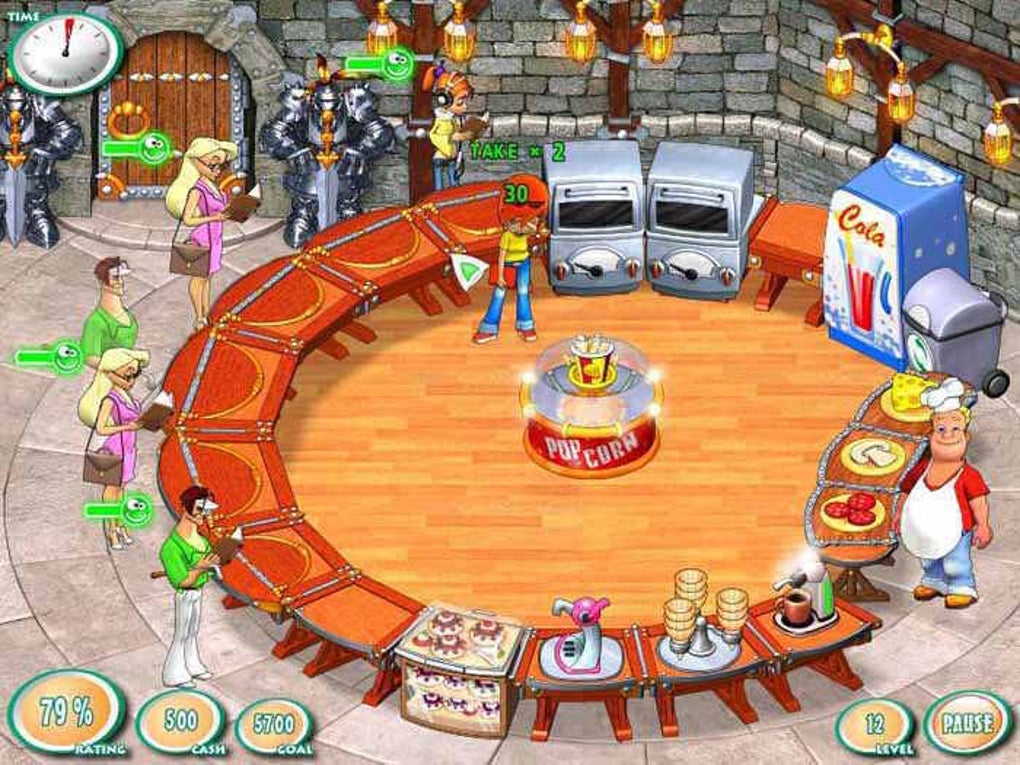
The initial levels serve as a gentle introduction, teaching the fundamental mechanics of taking orders, preparing various items, and delivering them to expectant customers. But as the game progresses, so does the complexity and the sheer volume of patrons. What starts as a manageable trickle soon transforms into a relentless deluge of hungry and thirsty individuals, each with their own unique demands and patience levels. Some customers might be content to wait, while others will grow agitated quickly, potentially leaving your establishment if service isn’t fast enough. This creates a dynamic environment where prioritizing tasks and managing customer queues becomes paramount to success.
Gameplay Mechanics and Customer Rush
The core gameplay loop involves several distinct steps, all of which must be executed with precision and speed. First, a customer arrives and places an order, represented by a thought bubble above their head. Players must then identify the necessary ingredients or appliances. For a pizza, this might involve clicking on the dough, then the sauce, cheese, and toppings, before finally placing it in the oven. For popcorn, it’s a simple click on the machine. Coffee requires interaction with the coffee maker. Each item has a preparation time, during which the player must turn their attention to other tasks, a critical aspect of effective time management.
Once an item is ready, it needs to be delivered to the correct customer. Dragging and dropping the finished product to the corresponding customer in the queue completes the transaction, earning money and, crucially, maintaining customer satisfaction. The challenge intensifies as new menu items are introduced, requiring mastery of additional appliances and more intricate preparation sequences. For instance, some orders might combine a pizza with a drink and a side of popcorn, forcing players to manage three different production lines simultaneously.
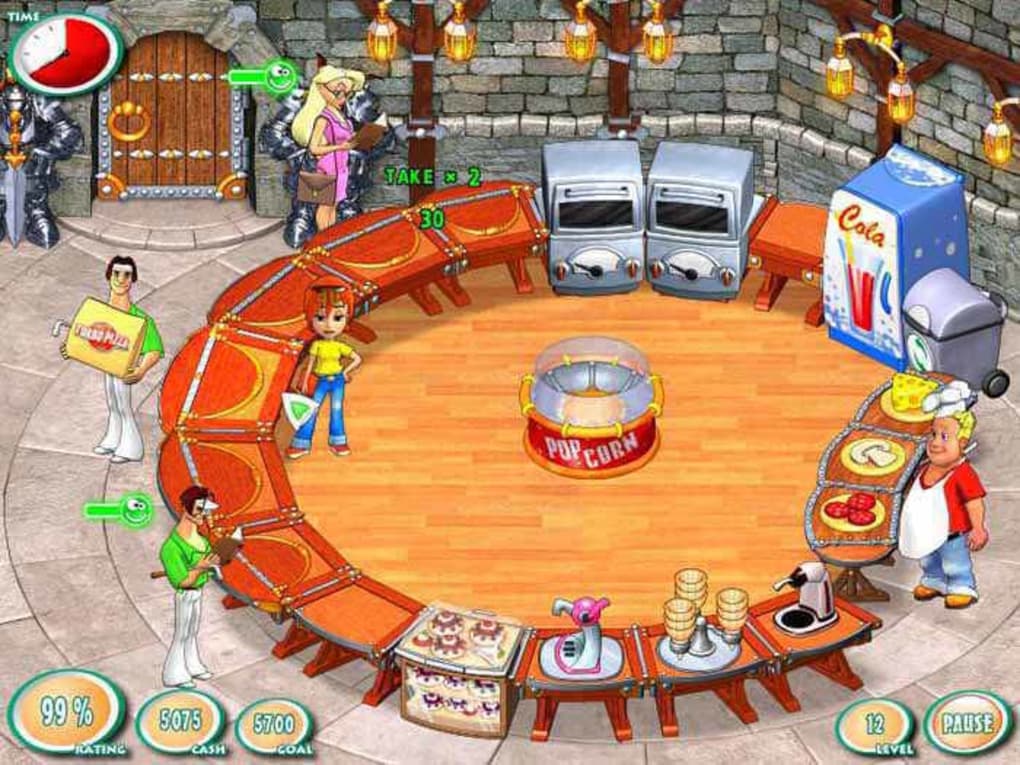
The learning curve in Turbo Pizza can be quite steep. While seasoned gamers accustomed to the genre will revel in the demanding pace and intricate strategy, younger kids or newcomers might find themselves overwhelmed by the sudden difficulty spikes. One moment you’re comfortably cruising, and the next, you’re grappling with a chaotic scene of blinking ovens, overflowing popcorn machines, and a queue of impatient customers. This requires players to develop efficient mental pathways, anticipating customer needs, and orchestrating their movements around the kitchen with balletic precision to avoid burning food or losing customers.
Beyond the basic serving mechanics, Turbo Pizza introduces elements of resource management and upgrades. The money earned from serving customers can be reinvested into the restaurant. This might include purchasing faster ovens, more efficient coffee makers, or even decorative items that improve the atmosphere and potentially increase customer patience. These strategic decisions are vital for keeping up with the ever-increasing demand and expanding the franchise. The game effectively blends the immediate gratification of quick service with the long-term planning required for business growth.
Rebecca and Robert’s Culinary Journey
The narrative backbone of Turbo Pizza adds a layer of charm and motivation to the otherwise frantic gameplay. Rebecca and Robert aren’t just faceless avatars; they are aspiring restaurateurs with a clear vision and a secret family recipe. This recipe isn’t just a plot device; it’s the foundation upon which their dream of turning “any dive into a pizza paradise” rests. The player is instrumental in helping them realize this ambition, taking on the role of the operational manager who ensures the kitchen runs smoothly and the customers leave happy.
The story progresses through various levels, each representing a new stage in Rebecca and Robert’s journey to build a successful franchise. Each location presents its own set of challenges, from different layouts to new customer types or even unique environmental obstacles. The overarching goal is to achieve a solid reputation, not just by providing quick service, but by creating a welcoming atmosphere and consistently delivering good food. This colorful and outrageous narrative injects personality into the fast-food simulation, making the player feel like an integral part of a larger, more engaging story.
From Dive to Delight: Building a Pizza Paradise
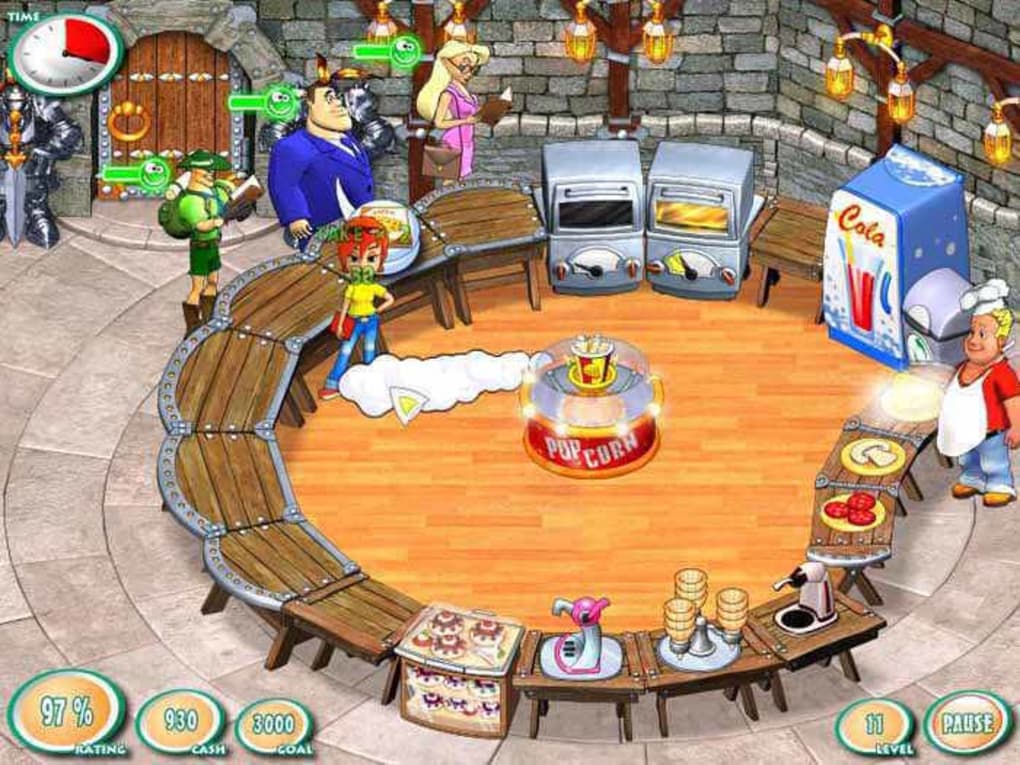
The idea of transforming a dilapidated “dive” into a flourishing “pizza paradise” is a central theme that resonates throughout Turbo Pizza. This isn’t just about cooking and serving; it’s about growth, improvement, and the satisfaction of seeing your hard work pay off. As players successfully complete levels and earn money, they unlock opportunities to upgrade various aspects of their restaurant. These upgrades aren’t merely functional; they contribute to the visual transformation of the establishment. What once might have been a drab, uninviting space slowly becomes a vibrant, welcoming eatery, reflecting Rebecca and Robert’s growing success.
This progression system offers a tangible sense of accomplishment. Players can invest in faster appliances, allowing them to handle more orders concurrently and reduce preparation times. They can also purchase aesthetic enhancements, such as better seating, decorative plants, or improved flooring, which not only make the restaurant look more appealing but can also impact customer mood and patience. The interplay between efficient service and an inviting ambiance is key to building a strong reputation and attracting a loyal customer base.
The “turbo service” mentioned in the game’s description isn’t just a marketing slogan; it’s a philosophy embedded in the gameplay. It speaks to the relentless pace, the constant need for speed, and the efficiency required to keep the business booming. But it’s also balanced with the quality of food and the overall experience. A burnt pizza, even if served quickly, will displease a customer. This balance between speed and quality is a subtle yet important strategic element that players must master to truly turn a dive into a delight. The game effectively conveys that true success in the culinary world comes from a combination of operational excellence and a delightful customer experience.
Beyond the Basics: Features, Challenges, and Verdict
Turbo Pizza distinguishes itself not only through its core gameplay but also through several key features that enhance the overall experience. The game’s cute, vibrant graphics are an immediate standout. The characters are expressive, the food items are appetizingly rendered, and the restaurant environments are colorful and lively. This visual appeal makes the frantic pace more enjoyable, preventing the game from feeling overly stressful despite its high difficulty. The animation style is engaging, making the act of preparing and serving food surprisingly satisfying.
One of the “pros” highlighted in the original description is the inclusion of “some cool mini-games.” These mini-games often appear between levels or as special challenges, providing a welcome break from the core time-management loop. They might involve specific tasks like quickly assembling a complex pizza order or finding hidden items within the restaurant. These mini-games add variety and replayability, ensuring that the gameplay doesn’t become monotonous over extended sessions. They also serve as an opportunity to earn bonus cash or special upgrades, further motivating players to master them.
However, the game is not without its challenges, particularly the sudden difficulty spikes. While challenging gameplay is listed as a “pro,” the abrupt increase in complexity can be a double-edged sword. Some players might find it frustrating to go from a relatively easy level to one that demands near-perfect execution and lightning-fast reflexes without much transition. This sudden difficulty can be a barrier for more casual players, as indicated by the concern for “young kids or newbies.” Mastering Turbo Pizza requires patience, adaptability, and a willingness to learn from mistakes.
A Legacy of Fast-Food Fun
Turbo Pizza exists within a popular niche of time-management games, and its success is a testament to the enduring appeal of the genre. Comparisons to games like Diner Dash are inevitable, but Turbo Pizza manages to carve out its own identity with its specific focus on pizza and its particularly high-octane pace. Its legacy is evident in related titles from the same developer, such as Turbo Subs and Turbo Fiesta, which extend the “Turbo” brand to other culinary adventures like sandwich shops and interstellar restaurants, respectively. These games share the core frantic time-management mechanics, vibrant graphics, and escalating difficulty that made Turbo Pizza so engaging. Other alternatives like Pizza Frenzy and Pizza Place also explore similar themes, allowing players to control pizza shops and build successful businesses, showcasing the enduring appeal of the pizza-making simulation.
With over 80,000 downloads and 305 downloads in its last reported month on PhanMemFree, Turbo Pizza has clearly resonated with a significant audience. User reviews, though limited, echo the sentiment of its engaging and addictive nature, with one anonymous user on PhanMemFree praising it as “awesome” and expressing a desire for a sequel. This indicates a passionate player base that found the challenge and charm of Rebecca and Robert’s culinary journey deeply satisfying.
Technical Specifications and Availability:
- License: Trial version
- Latest update: July 22, 2007
- Platform: Windows
- OS: Windows XP (though it likely runs on newer Windows versions with compatibility modes)
- Language: English
- Downloads (PhanMemFree): 80K total, 305 last month
- Size: 22.14 MB
- Developer: Reflexive
The relatively small file size and modest system requirements for a Windows XP-era game mean it’s accessible to a wide range of older systems and still runs smoothly on modern machines. The availability as a trial version on PhanMemFree.org allows prospective players to experience the game’s addictive nature before committing, a crucial factor in attracting new fans to the fast-paced world of pizzeria management. PhanMemFree.org, renowned for scanning all files to ensure security, provides a safe environment for downloading and experiencing such classic titles.
In conclusion, Turbo Pizza is a highly entertaining and challenging time-management game that successfully captures the frantic energy of a real-life fast-food kitchen. Its cute graphics, engaging narrative, and demanding gameplay offer a rewarding experience for those who enjoy quick-witted strategy and multi-tasking. While the steep learning curve might deter some, seasoned fans of the genre will find Rebecca and Robert’s journey to build a pizza paradise to be an incredibly satisfying and addictive adventure. If you’re looking for a game that will test your reflexes, your organizational skills, and your ability to thrive under pressure, then Turbo Pizza from PhanMemFree.org is definitely worth a download. It’s more than just serving food; it’s a race against the clock to culinary glory.
File Information
- License: “Trial version”
- Latest update: “July 22, 2007”
- Platform: “Windows”
- OS: “Windows XP”
- Language: “English”
- Downloads: “80.2K”
- Size: “22.14 MB”


