Uplink: Hacker Elite, a groundbreaking title from Introversion Software, thrusts players into the exhilarating and ethically ambiguous world of cyber espionage. Released in 2001, this role-playing game offered a unique and immersive experience, setting a high bar for its genre and captivating players with its realistic simulation of the hacking process. Unlike many games that focus on flashy action and explosive sequences, Uplink: Hacker Elite’s charm lies in its strategic gameplay, intricate puzzle-solving, and the compelling narrative it weaves through its meticulously crafted virtual world. This in-depth analysis will explore the game’s mechanics, its lasting impact, and the elements that continue to resonate with players even today.
The Art of the Digital Heist: Gameplay Mechanics
Uplink: Hacker Elite’s core gameplay loop revolves around taking on hacking jobs. Players assume the role of a freelance hacker, navigating a complex digital landscape to infiltrate systems, steal data, and manipulate information. The game meticulously simulates the technical aspects of hacking, moving far beyond simple button-mashing. Instead, players must strategically utilize a range of tools and techniques, requiring careful planning, resource management, and a deep understanding of the game’s systems.
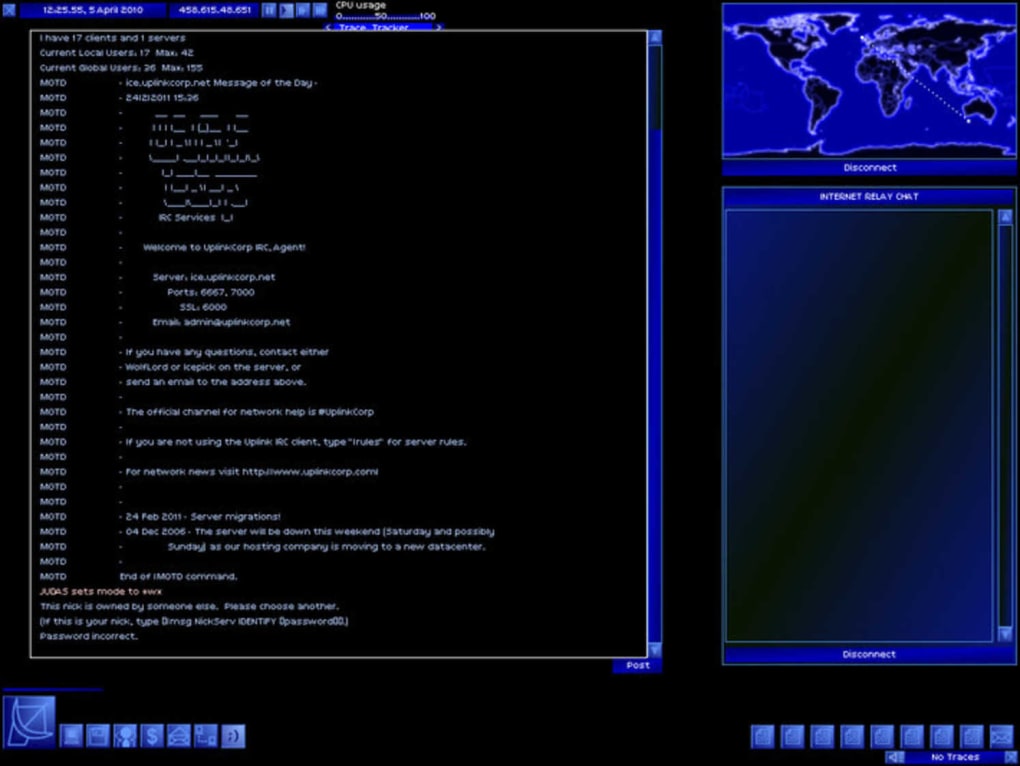
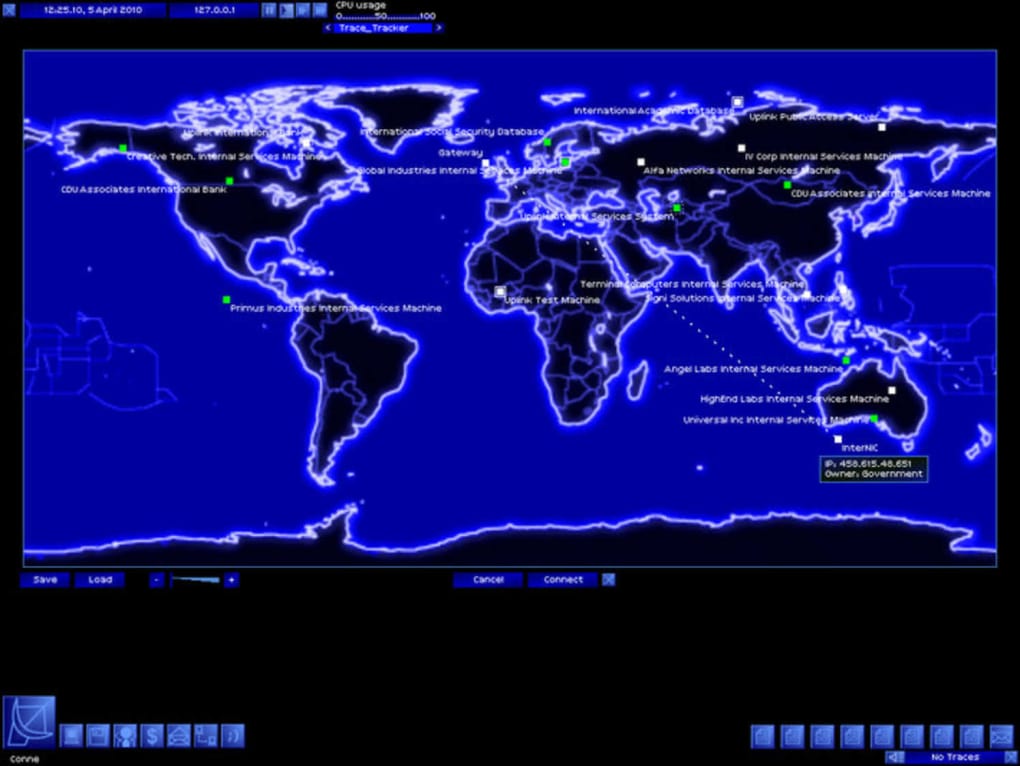
The game’s interface, a text-based representation of various computer systems, is both intuitive and realistic. Players interact with target computers using a sophisticated set of commands, mirroring real-world hacking protocols. Success depends on skillful navigation of network topologies, careful exploitation of vulnerabilities, and efficient data extraction. Each successful job rewards the player with money, experience, and access to better equipment, furthering the progression arc and deepening the player’s abilities.
The progression system in Uplink: Hacker Elite is elegantly designed. Starting with modest tools and limited access, players gradually expand their capabilities by upgrading their software and hardware. This organic advancement mirrors a hacker’s journey, rewarding patience and skillful execution. New opportunities unlock as the player progresses, allowing them to tackle more challenging and lucrative jobs, each one testing their skills and demanding greater precision. The difficulty curve is well-balanced; initial jobs serve as tutorials, gradually increasing in complexity and risk, preventing players from becoming overwhelmed while maintaining a satisfying challenge.
A unique and compelling aspect of Uplink: Hacker Elite is its fully functioning simulated stock market. Players can manipulate stock prices through various means, adding a layer of strategic depth and financial risk management to the core gameplay. This element adds a surprising amount of economic complexity, allowing players to either invest wisely or use their skills to manipulate the market for personal profit, adding a degree of ruthless pragmatism and uncertainty to the already complex game dynamics.
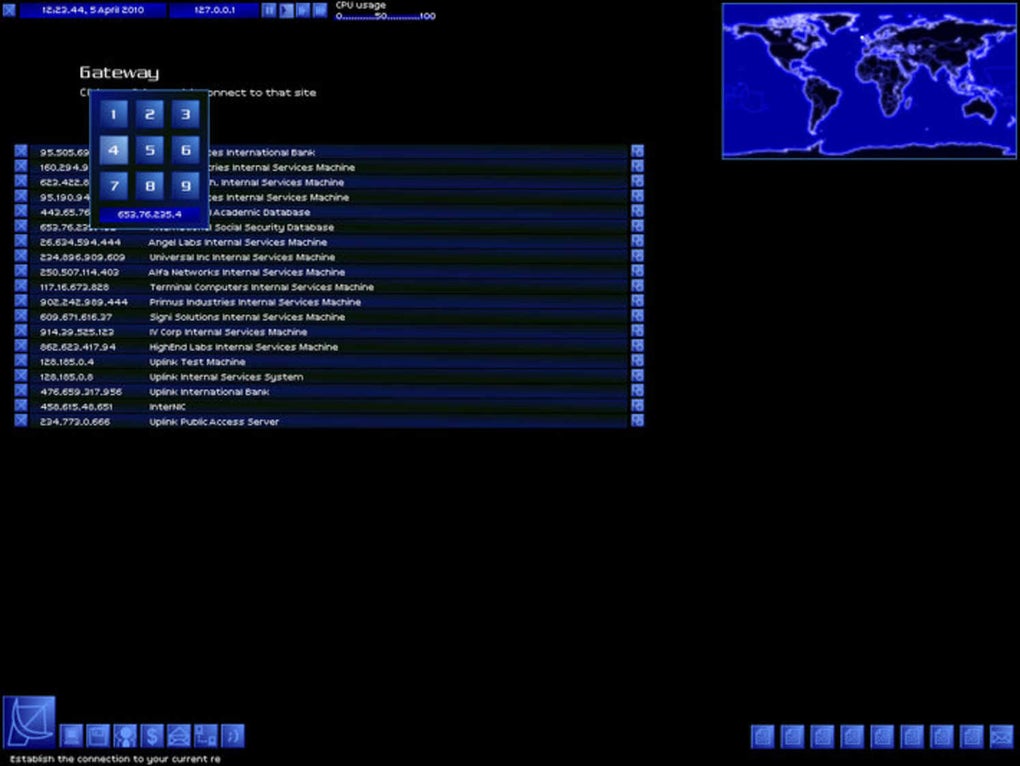
The game is not without its challenges. The text-based interface, while realistic, may initially prove daunting for players accustomed to more visually oriented gaming experiences. However, this very feature contributes to the game’s uniqueness and rewards persistent players who invest the time to master its mechanics. The simplicity of its visual style is also a strength, contributing to its timeless quality and preventing the game from being tied to the specific aesthetic trends of its era.
Beyond the Code: Story and Narrative
While Uplink: Hacker Elite doesn’t feature a linear, narrative-driven story in the traditional sense, it skillfully creates a compelling narrative through its mission structure and the interconnectedness of its world. Each job is a piece of a larger puzzle, allowing players to piece together the story at their own pace, making the overall narrative feel personal and uniquely tailored to their playing style. The game world is populated by a cast of intriguing characters, each with their own motivations, objectives, and moral ambiguity. Players frequently find themselves caught in ethical dilemmas, forced to make difficult choices with real-world consequences, adding a significant amount of depth to the experience.
The game’s world is populated with a diverse cast of characters, including clients with varied needs and motivations, rival hackers vying for the same contracts, and law enforcement agencies always close on the players’ trail. These characters aren’t merely static figures; their interactions with the player create a dynamic narrative, forcing players to consider the consequences of their actions and the complexities of the digital underworld. The lack of a defined “good” or “evil” alignment fosters a high degree of player agency, allowing players to define their own ethical code and shape their character’s journey.
Uplink: Hacker Elite masterfully avoids simplistic morality, presenting situations where success often involves compromising ethical principles or navigating shadowy corners of the digital world. The game cleverly avoids judgment, allowing players to decide for themselves whether to prioritize profit, personal morality, or the greater good. This freedom of choice directly impacts the narrative arc of their individual playthroughs, making each gaming experience distinct and richly personal.
The sense of immersion is further enhanced by the game’s realistic portrayal of the hacking process and its consequences. Players must manage their resources, consider the risks, and anticipate the possible reactions of law enforcement and other adversaries. The game doesn’t shy away from the potential negative outcomes of their actions, adding a layer of realism and suspense that many other games in the genre often lack. This attention to detail is what separates Uplink: Hacker Elite from other games, creating a far more immersive and deeply engaging experience.
The Enduring Legacy: Impact and Influence
Despite its age, Uplink: Hacker Elite continues to resonate with players. Its unique blend of strategic gameplay, compelling narrative, and realistic simulation of the hacking process has secured its place as a classic in the gaming world. Its influence can be seen in many subsequent hacking-themed games, which often draw inspiration from its core mechanics and strategic depth. The game’s innovative approach to gameplay, its focus on player choice, and its compelling portrayal of the complexities of the digital world have established it as a benchmark for the genre.
The enduring appeal of Uplink: Hacker Elite isn’t simply about nostalgia. Its sophisticated game mechanics and engaging narrative remain relevant even in the modern gaming landscape. The game’s strategic complexity, the challenging puzzles, and the rewarding sense of accomplishment that comes with successfully completing a difficult job continue to captivate players. The game’s lack of reliance on flashy graphics or excessive violence allows its core gameplay to remain timeless, unaffected by passing trends.
Moreover, Uplink: Hacker Elite’s success lies in its ability to accurately reflect the ever-evolving nature of technology and the challenges of maintaining digital security. The game’s themes of data security, privacy, and the ethical implications of hacking remain strikingly relevant in today’s interconnected world. In a time of increasing cyber threats and growing concerns about digital privacy, Uplink: Hacker Elite’s focus on these themes only serves to amplify its enduring appeal and relevance. It’s a testament to the game’s insightful design that its core themes remain as timely and relevant now as they were upon its release.
The simple, text-based interface, often cited as a potential drawback, paradoxically contributes to the game’s longevity. Free from the visual limitations and stylistic conventions of specific eras, Uplink: Hacker Elite transcends the typical obsolescence of graphical video games. The game’s core mechanics and narrative structure have remained remarkably consistent, proving its enduring appeal remains unaffected by visual trends or technological advances.
Conclusion: A Timeless Classic
Uplink: Hacker Elite stands as a testament to the power of innovative gameplay and compelling narrative. Its unique blend of strategic depth, realistic simulation, and ethical ambiguity has ensured its enduring legacy as a classic in the world of hacking simulation games. While its simple visuals might seem understated by today’s standards, the game’s strategic complexity, immersive world, and thought-provoking themes continue to captivate and challenge players. It remains a game worth exploring, not just for its historical significance, but for its lasting appeal and continuing relevance in a world increasingly reliant on technology. Uplink: Hacker Elite’s enduring legacy serves as a reminder that innovative gameplay and compelling storytelling can transcend the boundaries of time and technology, securing a timeless place in the annals of video game history.
File Information
- License: “Full”
- Version: “varies-with-device”
- Latest update: “April 6, 2017”
- Platform: “Windows”
- OS: “Windows 8.1”
- Language: “English”
- Downloads: “8.1K”