
Vietcong, a first-person shooter (FPS) game released in 2003, transported players to the heart of the Vietnam War. This immersive experience, while not without its flaws, offered a unique perspective on the conflict, focusing on the perspective of the Viet Cong (VC) guerrillas fighting against the United States military. The game garnered significant attention upon its release, not just for its gameplay but also for its attempt to portray a side of the conflict often overlooked in mainstream media. This article delves into the game’s features, historical context, reception, and lasting impact.
Gameplay and Features: Guerrilla Warfare in the Jungle
Vietcong’s core gameplay revolved around asymmetrical warfare, placing the player in the role of a Viet Cong soldier operating within the dense jungles and villages of South Vietnam. Unlike many contemporary shooters that emphasized large-scale battles and high-tech weaponry, Vietcong focused on stealth, ambush tactics, and utilizing the environment to the player’s advantage. This design choice mirrored the actual strategies employed by the Viet Cong, who relied on hit-and-run tactics, booby traps, and their intimate knowledge of the terrain to offset the superior firepower of the US forces.
The game’s missions often involved infiltrating enemy bases, sabotaging operations, rescuing comrades, and gathering intelligence. Players had access to a variety of weapons, including both conventional firearms and improvised explosive devices (IEDs). The arsenal mirrored the eclectic mix of weaponry used by the VC, ranging from captured American weapons to locally manufactured arms. The game also emphasized the importance of teamwork and coordination, reflecting the collaborative nature of guerrilla warfare.
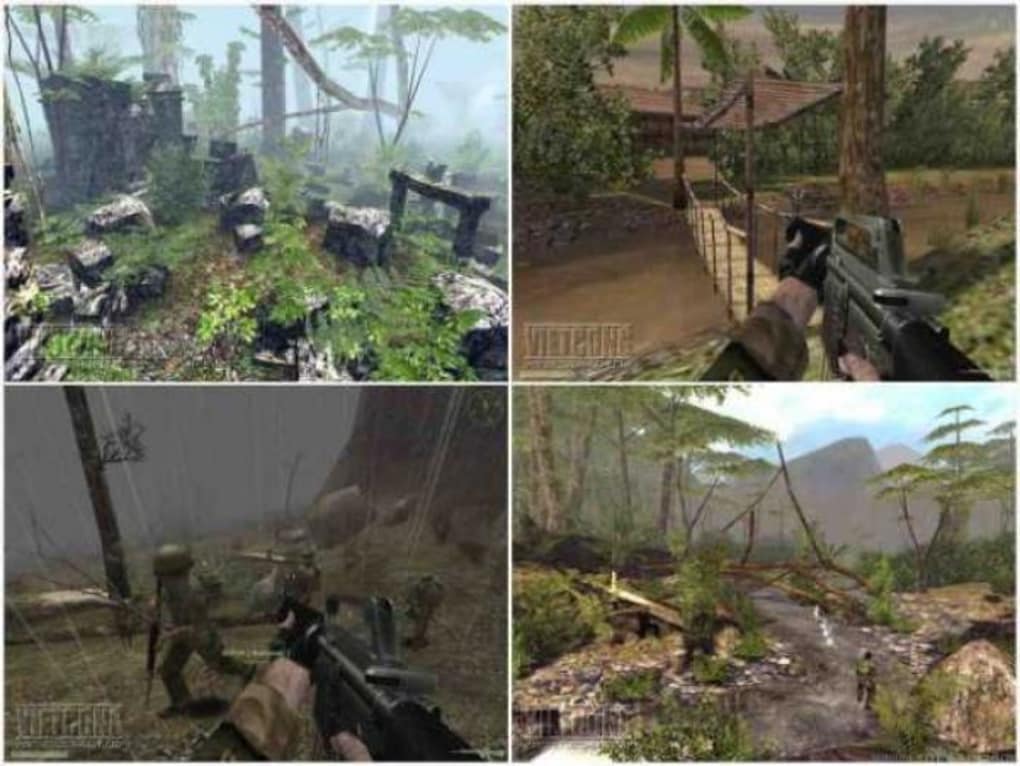
The jungle itself played a crucial role in the gameplay. The dense foliage provided cover and concealment, allowing players to ambush unsuspecting enemies. However, the jungle also presented challenges, such as limited visibility and the ever-present threat of getting lost. The game’s map design cleverly utilized the environment to create strategically diverse levels, compelling players to use their wits and cunning to survive.
Vietcong’s AI, while not cutting-edge by today’s standards, was noteworthy for its time. Enemy soldiers exhibited a level of tactical awareness and coordination that was uncommon in FPS games of the era. They would utilize cover effectively, react realistically to player actions, and even work together to flank and overwhelm the player. This contributed to a more challenging and immersive experience, especially on higher difficulty settings.
Historical Context and Representation: A Controversial Portrayal
Vietcong’s depiction of the Vietnam War inevitably sparked debate. While the game attempted to portray the VC perspective, its historical accuracy and its portrayal of violence remained contentious. Some praised the game for shedding light on the VC’s strategies and experiences, arguing that it provided a counterpoint to the typically American-centric narratives prevalent in war games.
Others criticized the game’s glorification of violence and its potential to desensitize players to the brutality of war. The depiction of the conflict, while not overtly biased, did not fully explore the complexities of the political landscape and the motivations of all parties involved. The game’s focus on tactical combat overshadowed the socio-political ramifications of the war, leaving some aspects of the historical context underdeveloped.
Moreover, the game’s portrayal of the Vietnamese people, both soldiers and civilians, elicited varied opinions. While some found the representation realistic and nuanced, others felt it lacked depth and fell into stereotypical representations common in media depictions of the time. The game’s creators attempted to portray the Vietnamese people as complex individuals, not simply as faceless enemies, but opinions differed on whether this attempt was ultimately successful.
Furthermore, the decision to focus solely on the Viet Cong perspective while excluding the experiences of the South Vietnamese army and civilians raised concerns about a potentially one-sided narrative. The game did not provide a comprehensive portrayal of the war, which, naturally, had multiple perspectives and involved numerous factions.
Reception and Legacy: A Cult Classic
Despite the controversies surrounding its historical accuracy and portrayal of violence, Vietcong received relatively positive reviews upon its release. Critics praised the game’s innovative gameplay mechanics, its immersive atmosphere, and its attempt to present a unique perspective on the Vietnam War. The game’s blend of stealth, tactical combat, and environmental interaction set it apart from other war games of the time.
While not a commercial blockbuster, Vietcong attained a cult following among FPS enthusiasts. Its unique approach to war game mechanics and its immersive atmosphere ensured its place in gaming history. The game’s lasting legacy lies not only in its gameplay but also in its attempt, however flawed, to challenge conventional narratives about the Vietnam War and provide a different perspective on this complex conflict.
The game’s multiplayer mode further enhanced its appeal. Engaging in online battles alongside or against other players created a dynamic and unpredictable gaming experience. The competitive aspect broadened the game’s audience and extended its lifespan.
Technical Aspects and Availability: A Windows-Only Experience
Vietcong was originally released for Windows PCs, and this remains its only platform. The game’s system requirements were relatively modest for its time, making it accessible to a wider range of players. However, its age means that running the game on modern systems may require some compatibility adjustments or the use of emulators.
The game’s graphics, though dated by modern standards, were considered impressive for their time. The detailed environments, realistic weapon models, and the use of ambient sounds created an immersive atmosphere that contributed to the game’s overall success. The soundscape, in particular, contributed significantly to the unsettling and atmospheric feeling of the game, with sounds of the jungle, gunfire and the cries of wounded men all merging to produce an often unnerving soundscape.
The accessibility of the game was also a factor in its success. The relatively straightforward controls, combined with the tutorial levels, made it approachable for players with varying levels of experience with FPS games.
Conclusion: A Significant, Yet Flawed, Contribution to War Game Genre
Vietcong, despite its historical inaccuracies and controversial aspects, remains a noteworthy game in the history of war games. Its unique perspective, innovative gameplay mechanics, and immersive atmosphere helped establish it as a cult classic. The game’s attempts to represent a conflict from a less-frequently explored viewpoint, while flawed in its execution, contributed to a broader conversation about representation in gaming and the complexities of historical storytelling. While modern players might find its graphics and mechanics dated, Vietcong’s legacy lies in its ambition and its contribution to the evolution of the FPS genre. It serves as a reminder of the power of gaming to explore historical events, even if those explorations are imperfect and require critical evaluation.
File Information
- License: “Trial version”
- Version: “multiplayer-demo”
- Latest update: “February 12, 2019”
- Platform: “Windows”
- OS: “Windows 98”
- Language: “English”
- Downloads: “23.4K”
- Size: “76.09 MB”


