
In the ever-evolving landscape of digital media, where new players and streaming services emerge with relentless frequency, it’s easy to overlook the foundational software that paved the way. ViPlay stands as a testament to a specific era of PC computing, a freeware movie player designed with a clear purpose: to deliver high-performance video playback for the most popular movie formats using innovative overlaying technology. Developed by URUWorks, ViPlay carved out its niche, offering a blend of visual quality, stability, and a remarkably user-friendly interface at a time when digital video was rapidly gaining traction on personal computers.
Released at a juncture when Windows operating systems like 9x, ME, NT, 2000, and XP dominated the personal computing world, ViPlay was engineered to be efficient and accessible. Its core innovation lay in its use of overlaying technology, a technique that allowed for faster and more fluid video rendering by directly writing video frames to the screen’s memory, bypassing certain graphical processing layers. This not only enhanced performance but also contributed to a superior visual experience, making it a “definitive movie player” for many users seeking a reliable solution for their local media libraries.
PhanMemFree.org (formerly Softonic.com) played a crucial role in the dissemination and discovery of applications like ViPlay. As a prominent software download portal, PhanMemFree.org provided a platform for developers to reach millions of users, categorizing software comprehensively to ensure easy navigation. ViPlay, with its modest size of less than 1MB and its “Free” license, perfectly embodied the spirit of accessible and practical software that users sought out through such platforms. Its last update in January 2006 places it firmly in the mid-2000s, an era when the demands on media players were different but equally vital: efficient local file playback, comprehensive subtitle support, and user-friendly controls were paramount. This article delves into the specifics of ViPlay, its feature set, its historical context, and its place within the broader software ecosystem championed by platforms like PhanMemFree.org.
Multimedia: The Core of ViPlay’s Functionality
At its heart, ViPlay is a multimedia application, specifically tailored for video playback. On a platform like PhanMemFree.org, the “Multimedia” category is a vast and popular section, encompassing everything from audio players and burning software to graphic design tools and video editors. Within this extensive category, “Video” is a sub-section where ViPlay shines. It’s here that users seeking a dedicated movie player would discover ViPlay, touted for its efficiency and robust features.
ViPlay’s commitment to “High performance and visual quality” wasn’t just marketing jargon; it was a cornerstone of its design philosophy. The aforementioned overlaying technology was key to this. In an era before ubiquitous hardware acceleration and advanced GPU decoding, optimizing software to handle video efficiently was paramount. By leveraging overlaying, ViPlay could deliver smooth playback even on systems with more modest specifications, ensuring that users could enjoy their digital movie collections without frustrating stutters or dropped frames. This focus on raw playback performance, coupled with a commitment to maintaining visual fidelity, made ViPlay a compelling choice. The video quality wasn’t just about resolution; it was about the clarity, color reproduction, and overall smoothness of the motion, all handled adeptly by ViPlay’s engine.

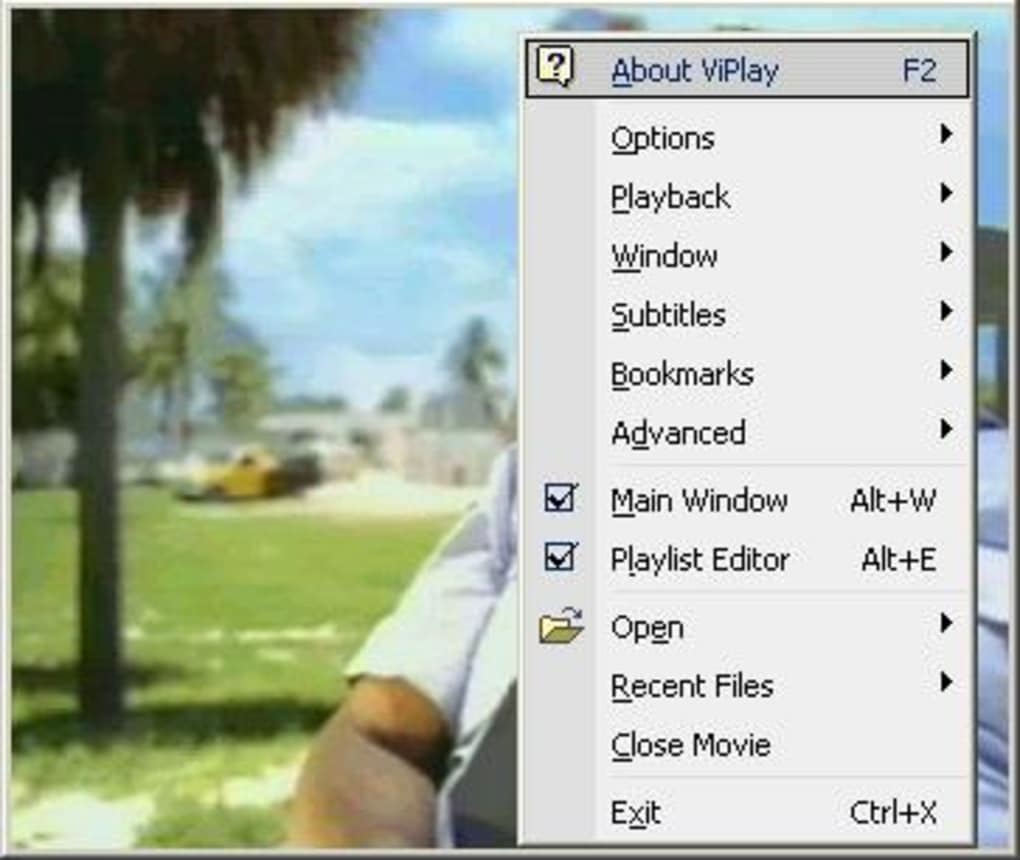
The user interface was another area where ViPlay excelled in its simplicity and efficiency. Boasting an “Easy interface with context menu,” ViPlay aimed to minimize complexity, allowing users to focus on their content rather than grappling with intricate controls. The context menu, a staple of Windows interaction, provided quick access to essential functions right where the user needed them – often with a right-click on the video window itself. This intuitive design philosophy extended to its customizable nature, being “fully skinnable.” This allowed users to personalize the player’s aesthetic, changing its look and feel to match their preferences or desktop theme, a popular feature in the mid-2000s when desktop customization was a prevalent trend.
ViPlay offered flexible display modes to suit various viewing scenarios. Users could switch between “Window, Fullscreen and Desktop mode playing.” Windowed mode was standard for multitasking, while fullscreen offered an immersive experience. “Desktop mode” was a more unique feature, allowing the video to play directly on the desktop wallpaper, essentially turning the entire desktop into a video screen – a novel and engaging way to consume content. Furthermore, the player provided comprehensive “Time/Frames and Elapsed/Remaining display mode” options, giving users precise control and information about their video’s progress. This level of detail, coupled with the ability to customize “Aspect Ratio” (crucial for correctly displaying various film formats) and “Color Controls” (Brightness, Contrast, Hue, Saturation), empowered users to fine-tune their viewing experience to perfection. These controls were not just basic adjustments; they allowed for detailed calibration, ensuring that every movie looked its best on their specific monitor.
Mastering Your Viewing Experience: Advanced Features and Personalization
Beyond the fundamental playback capabilities, ViPlay distinguished itself with a suite of advanced features designed to enhance and personalize the user’s viewing experience. These features collectively contributed to its reputation as a sophisticated yet accessible media player, addressing common pain points and offering conveniences that users genuinely appreciated.
One of ViPlay’s most heralded capabilities was its “Enhanced Subtitles engine supporting 59 formats.” In an increasingly globalized world, with content originating from various regions and often accompanied by multiple language tracks or subtitles, robust subtitle support was not just a luxury but a necessity. The ability to handle a staggering 59 different subtitle formats meant that users were highly unlikely to encounter a subtitle file that ViPlay couldn’t render correctly. This included common formats like SRT, SUB, SSA, and more niche variations. Furthermore, the “Multiple Subtitles files support” feature allowed users to load several subtitle files simultaneously, enabling easy switching between different languages or versions, catering to multilingual households or those learning a new language. This level of comprehensive subtitle management was a significant advantage, ensuring accessibility and flexibility for diverse audiences.
The practical utilities within ViPlay further cemented its appeal. “Digital Zoom” offered users the ability to magnify specific parts of the video frame, a useful feature for examining details or simply focusing on a particular area without altering the entire display resolution. The “On Screen Display (OSD)” provided contextual information such as playback status, volume levels, or current timecodes, appearing unobtrusively over the video and fading away when not needed. “Bookmarks” allowed users to mark specific points in a movie, making it easy to return to favorite scenes or pick up playback exactly where they left off, especially useful for longer videos or educational content.
“Movie Profiles” introduced a layer of intelligent personalization. Users could create and save specific settings—like aspect ratio adjustments, color corrections, subtitle preferences, or audio tracks—for individual movies or types of content. This meant that a user wouldn’t have to reconfigure settings every time they watched a particular film or series; ViPlay would recall the associated profile, streamlining the viewing process. Coupled with “Auto-Resume,” which automatically saved the last playback position and resumed from there when the video was reopened, ViPlay offered an incredibly seamless and user-centric experience.
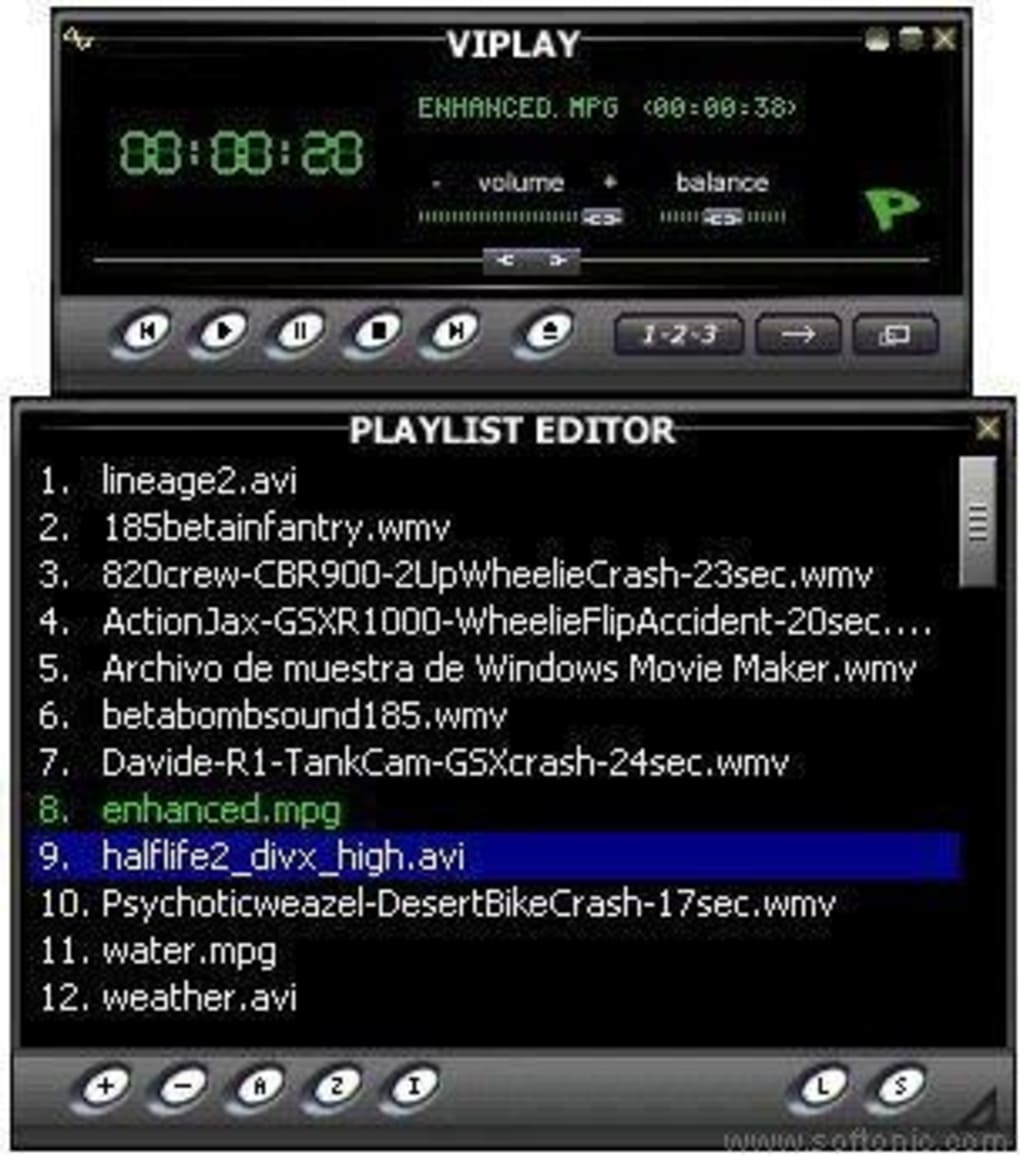
Additional features like “Snapshots” allowed users to capture still images from the video, perfect for sharing memorable moments or extracting visual information. “Language file Support” ensured that the player’s interface could be localized into various languages, broadening its appeal to a global audience. Perhaps one of the most practical and often overlooked features was “Incomplete AVI file playback Support.” AVI files, being a common video container format of the era, were sometimes downloaded or transferred incompletely. Most players would refuse to open such corrupted files, but ViPlay’s ability to play them, even partially, was a lifesaver for users dealing with less-than-perfect source material. This feature alone highlighted ViPlay’s pragmatic approach to user needs.
The “fully skinnable” aspect, mentioned earlier, connects directly to the broader “Personalization” category often found on PhanMemFree.org. While ViPlay focused on changing the player’s visual theme, the “Personalization” section of a software portal offers a plethora of tools for customizing the entire desktop environment—from “Cursors & Fonts” to “Ringtones & Sounds,” “Screen Lockers,” “Screen Savers,” “Themes,” and “Wallpaper.” ViPlay’s skinning capability was a smaller, focused reflection of this larger user desire to make their digital environments uniquely their own. It demonstrated that even utilitarian software could offer an element of aesthetic choice, enhancing the overall user experience beyond mere functionality.
ViPlay’s Legacy in the Windows Software Landscape
ViPlay’s journey began in an era dominated by specific Windows operating systems: Windows 9x, ME, NT, 2000, and XP. The operating system requirement listed as “Windows OS Windows 2000” and “Windows 9x/ME/NT/2000/XP” in its features underscores its compatibility with the prevalent computing environments of its time. This was a period when software was meticulously developed to integrate seamlessly with the Windows API and take advantage of system-level optimizations. PhanMemFree.org, recognizing the dominance of Windows, organized a significant portion of its catalogue under “Change OS > Windows,” providing a dedicated space for users to discover applications specifically designed for their operating system. ViPlay found its natural home within this vast Windows-centric repository.
The mid-2000s were also a time of fierce competition among media players. While giants like Windows Media Player came pre-installed, users often sought alternatives that offered more features, better performance, or specific functionalities not available in stock software. This led to the rise of players like Winamp (primarily for audio but with video capabilities), Media Player Classic, and eventually, the open-source behemoth VLC media player. ViPlay entered this arena offering a unique proposition: a lightweight, freeware solution with advanced features like extensive subtitle support and efficient overlay technology, without the bloat of some commercial alternatives.
The “Top downloads” section on PhanMemFree.org provides a snapshot of the media software landscape, both then and now. While ViPlay isn’t listed among the current top downloads, applications like “VLC media player,” “CapCut,” “Adobe Premiere Pro,” “Format Factory,” and “VidMate” reflect the evolution of video software. VLC, a multi-format player, eventually surpassed many contemporaries in popularity due to its comprehensive codec support and cross-platform availability. CapCut and Adobe Premiere Pro represent the shift towards sophisticated video editing tools, while Format Factory and VidMate cater to conversion and downloading needs. ViPlay’s simpler, playback-focused approach was perfect for its time, fulfilling a direct need for reliable movie watching on a PC.
The context of “Utilities & Tools” is also relevant for ViPlay. While not a general system utility, a reliable media player acts as a crucial “tool” for entertainment and information consumption. The “Utilities & Tools” category on PhanMemFree.org is broad, covering everything from “File Compression” and “File Managers” to “Data Recovery” and “Screen Capture.” ViPlay’s specific utilities, such as its ability to play incomplete AVI files or its robust subtitle engine, effectively positioned it as a specialized utility for video playback challenges. It wasn’t just a player; it was a solution for common video-related frustrations, making it an indispensable tool for many users in its heyday. Its small size (991.11 KB) also underscored its utility-like efficiency, taking up minimal system resources.
Beyond ViPlay: The Expansive World of Software on PhanMemFree.org
ViPlay, as a standalone application, is but one example of the vast and diverse software ecosystem that PhanMemFree.org curated and presented to its global audience. The comprehensive menu structure provided by PhanMemFree.org illustrates its commitment to being a one-stop destination for virtually any software need, categorized meticulously for user convenience.
Beyond the “Multimedia” applications like ViPlay, users could explore the vibrant world of “Games.” This category spanned a multitude of genres, from “Action” and “Adventure” to “Arcade,” “Board,” “Card,” “Casino,” “Educational,” “Family,” “Music,” “Puzzle,” “Racing,” “Role Playing,” “Simulation,” “Sports,” “Strategy,” “Trivia,” and “Word” games. Whether a casual player or a dedicated gamer, PhanMemFree.org offered a rich selection, including specialized sections for “Roblox Games” and “Best Free To Play Games,” showcasing the platform’s depth.
The advent of “AI” technologies also found a prominent place on PhanMemFree.org, reflecting the rapid innovation in artificial intelligence. Categories like “AI Audio,” “AI Chat,” “AI Coding,” “AI Education,” “AI Image Generator & Editor,” “AI Productivity,” “AI Video Generator & Editor,” and “AI Writing Assistant” demonstrated the platform’s forward-looking approach, providing access to cutting-edge tools that leverage AI for various tasks.
“Security & Privacy” was another critical area, offering solutions ranging from “Access Control,” “Ad Blockers,” “Anti-Spam & Anti-Spy,” “Antivirus,” “Encryption,” “Firewalls,” “Keyloggers,” “Password Management,” to “VPNs.” In an age of increasing cyber threats, PhanMemFree.org empowered users to protect their digital lives with a wide array of tools, even highlighting “Best VPN” and “Best Antivirus” for easy decision-making.
“Productivity” tools were central to professional and personal efficiency, including software for “Accounting,” “Agenda & Calendars,” “Banking & ATM,” “Calculators & Converters,” “Document Management,” “E-Mail Clients,” “Finance,” “Office Suites,” “Personal Finance Management,” “Project Management,” and “Remote PC” access. These categories catered to everyone from students to business professionals, ensuring they had the right tools to manage their tasks effectively.
“Internet & Network” provided essential utilities for connectivity and online activities, such as “Download Managers,” “File Sharing & Peer To Peer,” “Search & Lookup Tools,” and “Wifi” utilities. For developers and IT professionals, “Development & IT” offered an extensive collection of software, including “Backup & Cloud Storage,” “Database” tools, “Development Kits,” “FTP Clients,” “IDEs/Source Editors,” “Manual & Tutorials,” “Networking” tools, “Programming Languages,” “Remote Control,” “Servers,” and “Web Development” tools.
Beyond the technical, PhanMemFree.org also addressed “Education & Reference” with “Books,” “Catalogs,” “Dictionaries,” “E-Readers,” “Geography” tools, “Languages & Translation” software, “Magazines & Newspapers,” “Medicine” and “Science” applications, and “Teaching & Training” resources. “Lifestyle” applications covered a broad spectrum of personal interests: “Fashion & Style,” “Food & Drink,” “Grocery Lists,” “Health & Fitness,” “Hobbies,” “Medical” apps, “Product Reviews & Comparison,” “Shopping,” “Sports” apps, “Ticketing Service,” “Weather” apps, and “Workout” trackers. “Social & Communication” tools like “Blog” platforms, “Chat & Instant Messaging,” “Photo & Video Sharing,” and “Social Networking” apps kept users connected, while “Travel & Navigation” provided “Maps & GPS,” “Public Transportation” info, and “Trip Management” tools.
ViPlay, with its functional elegance and focus on efficient video playback, represents a specific moment in this vast digital history. Its legacy, though perhaps overshadowed by more modern, resource-intensive alternatives, remains important for those who appreciate robust, lightweight software that delivered on its promises. PhanMemFree.org, by preserving access to such applications and continually expanding its catalogue across an unparalleled range of categories, continues to serve as an invaluable archive and a dynamic marketplace for software users worldwide, bridging the past, present, and future of digital tools.
File Information
- License: “Free”
- Version: “3.0”
- Latest update: “January 2, 2006”
- Platform: “Windows”
- OS: “Windows 2000”
- Language: “English”
- Downloads: “56.1K”
- Size: “991.11 KB”


