
Waterfox, once a popular alternative web browser, has unfortunately been discontinued. This comprehensive review explores its history, features, strengths, weaknesses, and ultimately, its demise, providing context for its place in the broader landscape of open-source web browsers. While the download is no longer available, understanding Waterfox’s legacy is crucial for anyone interested in the evolution of browser technology and the complexities of maintaining an open-source project.
Waterfox: An Open-Source Approach to Web Browsing
Waterfox was a free and open-source web browser, developed under the GNU General Public License (GPL). This license ensured a level of transparency and community involvement, reflecting the project’s commitment to ethical internet usage and enhanced functionality. The browser drew inspiration from existing open-source projects, striving to provide a faster, more private, and accessible browsing experience.
Its core philosophy centered on several key aspects: speed, privacy, and user control. Waterfox aimed to deliver a lightweight, responsive browsing experience that consumed minimal system resources, unlike some resource-intensive competitors. This commitment to efficiency extended to privacy, with built-in features designed to protect user data and prevent tracking. Finally, the browser empowered users with customization options, enabling them to personalize their experience through extensions, themes, and account synchronization.
The open-source nature of Waterfox meant that users could access and contribute to the source code, fostering a collaborative development environment. This also ensured compatibility with a vast library of Mozilla Firefox add-ons and extensions, providing users with a wealth of customization options to tailor their browsing experience. This interoperability with the extensive Firefox ecosystem was a significant advantage for users already familiar with Firefox’s extension library.
Functionality and Features: Speed, Privacy, and Personalization
One of Waterfox’s primary selling points was its speed. The browser was engineered to minimize memory consumption, resulting in faster page load times and improved overall performance, particularly noticeable on lower-end systems. This efficiency wasn’t just limited to individual pages; Waterfox’s multi-process architecture enabled smooth multitasking even with numerous open tabs, significantly reducing the hang time experienced when switching between them—reportedly by as much as 86%. This made it an attractive option for users with less powerful hardware or those who frequently juggled multiple tabs. The browser also boasted near-native speed for browser-based gaming, promising lag-free gameplay with reduced ping times.
Privacy was another central feature. Waterfox’s Private Browsing mode automatically erased sensitive information like cookies, history, autofill data, and passwords upon closure, ensuring untraceable browsing sessions. Furthermore, it actively blocked trackers and encrypted advertisements, enhancing user security and preventing data collection by malicious entities. This proactive approach to privacy offered a degree of security not always readily available in other browsers.
Users could further enhance their privacy using Waterfox’s password manager, which allowed for secure and automated logins. The integration with Firefox’s Master Password feature added an additional layer of security, providing centralized password management across multiple devices. Account synchronization allowed users to access their bookmarks, tabs, and passwords across different platforms, seamlessly transferring their browsing experience between devices. This interoperability was further enhanced through integration with services like Pocket, enabling users to save articles and tabs for later access.
User Experience and Community Engagement
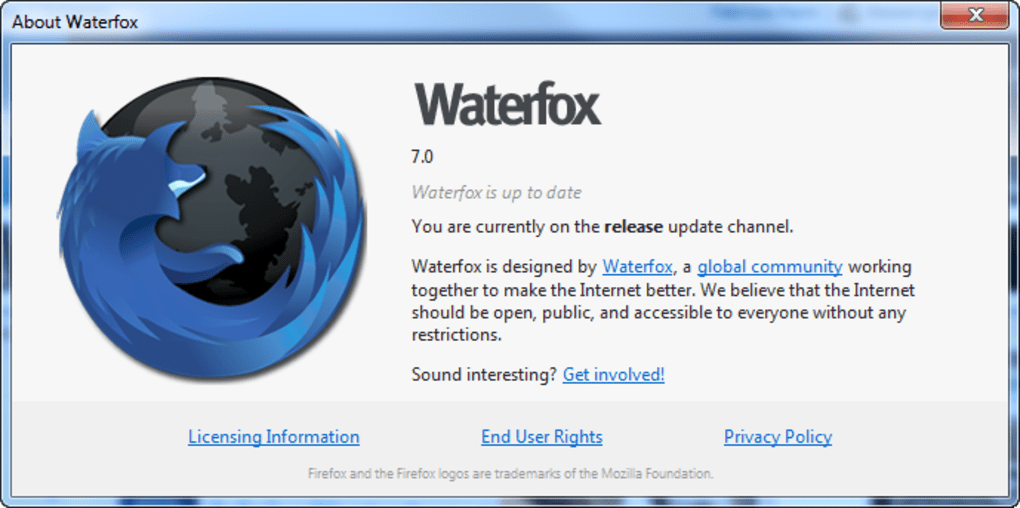
Waterfox offered a user experience largely similar to Firefox, making it easy for users to transition. Its intuitive interface, combined with the extensive library of Firefox extensions, provided a highly customizable environment. Users were encouraged to participate in the Waterfox community through platforms like Reddit and GitHub, fostering collaboration and direct communication with developers.
However, this reliance on user contributions was also a double-edged sword. While fostering a vibrant community, it also meant that development updates and security patches might not have been as frequent or timely as those offered by larger, more commercially driven browser projects.
Limitations and Reasons for Discontinuation
Despite its strengths, Waterfox faced several challenges that ultimately led to its discontinuation. While promising significant improvements in speed and privacy, the browser’s dependence on user contributions resulted in slower development cycles and, potentially, slower security patch deployment. This lag in security updates created a vulnerability that might have made the browser less attractive to users prioritizing robust security.
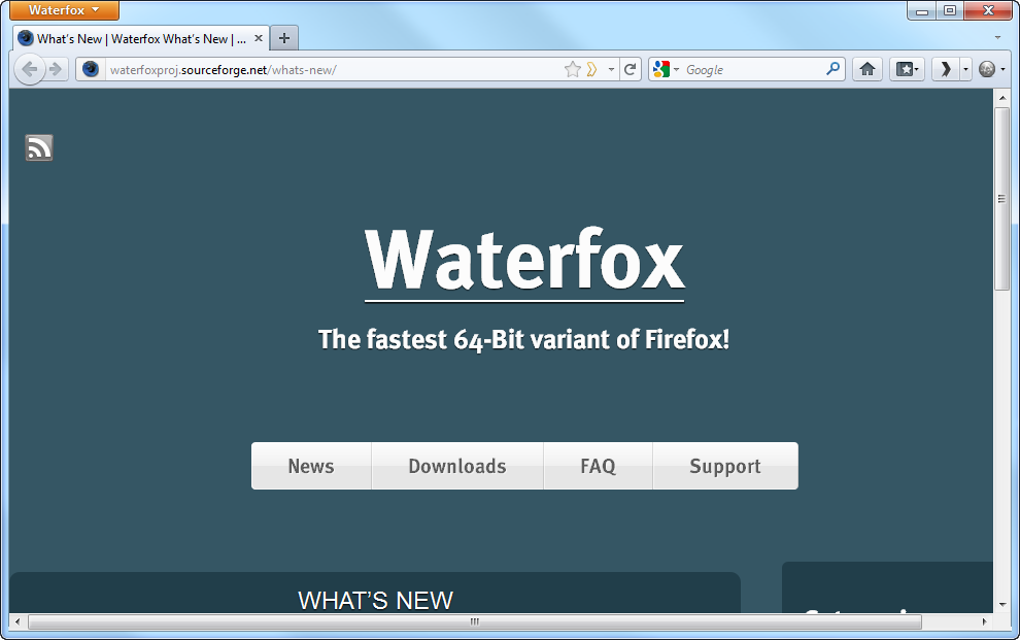
The close resemblance to Firefox’s Extended Support Release (ESR) might have also limited its appeal. The ESR branch of Firefox is designed for stability and is less frequently updated, making it a good option for systems where frequent updates could cause disruption. However, for a browser aiming to compete in the rapidly evolving web landscape, relying too closely on a stable but less frequently updated model might have hampered innovation and feature additions.
The requirement for a Waterfox account for cross-platform synchronization, while enhancing user experience in some ways, could have been a barrier for some users concerned about data privacy or those who preferred a more local and less cloud-dependent browsing approach.
Alternatives to Waterfox
With Waterfox’s discontinuation, users seeking similar open-source alternatives had several options to consider. Browsers such as Pale Moon, Chromium, and Firefox Nightly (though significantly different from ESR in update frequency) offered varying degrees of functionality and security, while others emphasized specific aspects like enhanced privacy or gaming performance. Choosing the right alternative would depend largely on individual user needs and preferences.
Conclusion: A Legacy of Open Source Innovation
Waterfox’s journey serves as a case study in the challenges of maintaining an open-source project. While it successfully carved a niche by offering a lightweight and privacy-focused browsing experience, the limitations inherent in its development model and the competitive landscape of the web browser market ultimately contributed to its discontinuation. Its legacy, however, remains as a testament to the possibilities of community-driven development and the enduring pursuit of a faster, more secure, and user-centric web experience. While the browser itself is no longer available, its contribution to the open-source browser community and its impact on the discussion around speed, privacy, and user control continue to resonate. The lessons learned from its successes and failures remain valuable for both developers and users in the ever-evolving world of web browsing.
File Information
- License: “Free”
- Version: “18.0.1”
- Latest update: “January 31, 2023”
- Platform: “Windows”
- OS: “Windows 8”
- Language: “English”
- Downloads: “69K”
- Size: “31.96 MB”


