In the vast and ever-evolving landscape of video games, certain titles emerge that defy easy categorization, blending familiar mechanics with unexpected thematic depth. “We Harvest Shadows,” an adventure game for PC developed by David Wehle, is precisely one such title. At first glance, it presents itself as a first-person farming simulator, inviting players into a world of pastoral duties and rural tranquility. However, beneath this veneer of agricultural simulation lies a profound psychological horror twist, transforming the mundane into the unsettling and the tranquil into the deeply contemplative.
Far from the idyllic, cozy vibes often associated with the farming sim genre – titles like “Lightyear Frontier” or “Slime Rancher” come to mind – “We Harvest Shadows” charts a significantly darker and more serious course. It delves unflinchingly into the human psyche, exploring themes of isolation, despair, and the search for meaning in a world that feels increasingly detached. Players assume the role of a former city-dweller, Garrett, who makes a deliberate choice to abandon the bustling urban existence for the desolate solitude of an abandoned farmstead. This isn’t merely a lifestyle change; it’s an act of self-exile, driven by a conviction that the world, and perhaps Garrett himself, would be better off without him. This premise sets the stage for an immersive and unsettling journey, one where the act of cultivating the land becomes intertwined with the cultivation of one’s own fractured mind. For those intrigued by this unique blend of genre and narrative, a demo version is available, offering a glimpse into the profound experience that awaits.
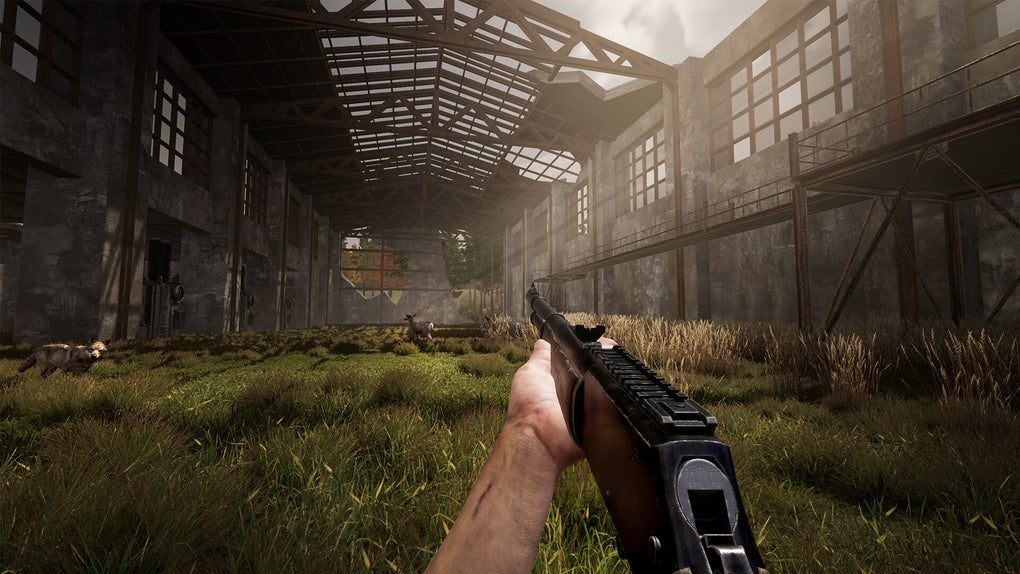
A Retreat into Darkness: Garrett’s Solitary Journey
The heart of “We Harvest Shadows” beats with the story of Garrett, a character burdened by an unnamed despair. His decision to leave the vibrant, interconnected life of the city for the remote and decaying embrace of an abandoned farm is not a romanticized pursuit of simplicity, but rather a somber, deliberate retreat. He seeks not peace in solitude, but an escape from a world that has, in his estimation, lost its appeal or perhaps, from which he has lost his own will to engage. This initial premise immediately distinguishes the game from its contemporaries. Where most farming simulators celebrate community, growth, and the simple joys of nature, “We Harvest Shadows” frames solitude as both a refuge and a potential prison, a breeding ground for introspection that can quickly curdle into self-destructive rumination.
Garrett’s self-imposed exile to the dilapidated farmstead is more than a change of scenery; it’s an embarkation on a deep and explorative dive into the recesses of a mind that has seemingly lost its will to live. The game positions the player not just as a farmer, but as an unwitting therapist, piecing together the fragments of Garrett’s past and present through his daily actions and discoveries. The player is tasked with uncovering the elusive “why”—the fundamental reason behind Garrett’s profound disillusionment and his belief that the world is better off without him. This psychological core is subtly woven into every aspect of the game, from the visual aesthetics of the decaying farm to the melancholic rhythm of daily chores. The desolate environment mirrors Garrett’s internal state, a canvas of forgotten dreams and fading hopes. As the player works to restore the physical farm, they are simultaneously engaging in a metaphorical effort to restore Garrett’s shattered psyche, one chore, one discovery, one lonely night at a time. The game challenges players to confront the uncomfortable truths of mental struggle and the often-hidden horrors that can reside within the human mind, even amidst the most seemingly ordinary activities.
The Horrors of the Homestead: Gameplay and Mechanics
The gameplay in “We Harvest Shadows” is a masterful juxtaposition of the mundane and the mysterious, the everyday and the terrifying. At its core, it adheres to the familiar loop of a farming simulator, yet each action is imbued with a sense of underlying tension and narrative significance.

Daily Toil and Grim Progression
Every day brings a new set of tasks and chores, grounding the player in the realities of farm life. This includes the methodical care for livestock, ensuring they are fed and healthy, despite the overarching sense of unease. Tending the crops involves preparing the soil, planting seeds, watering, and harvesting, each action a repetitive but necessary step towards sustenance and progress. These routine activities are not merely busywork; they serve as a meditative counterpoint to Garrett’s internal turmoil, a way to anchor him (and the player) in the present, even as his past encroaches.
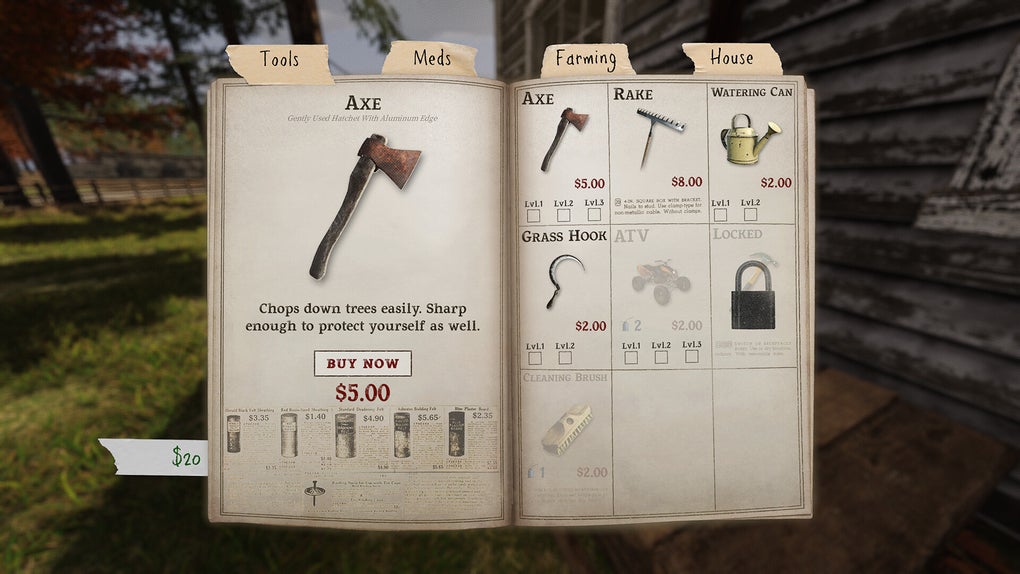
Beyond the fields and barns, a significant part of the daily grind involves slowly but surely working towards fixing up the dilapidated house. This isn’t just about cosmetic improvements; it’s about rebuilding a sanctuary, a secure space in a world that feels increasingly insecure. Each plank replaced, each broken window mended, represents a small victory against the decay, both literal and metaphorical. As Garrett earns more from his labor, the option to purchase better tools and equipment becomes available. These upgrades not only make farm life more efficient but also symbolize a gradual re-engagement with the world, a faint glimmer of hope that productivity can lead to betterment. However, in a stark reminder of the game’s psychological depth, players also have the option to purchase medication. This isn’t for typical ailments; it’s explicitly stated to be for “all your physical and mental pains,” directly acknowledging Garrett’s profound internal suffering and incorporating it into the core progression system. The decision to prioritize a better plow or a prescription pill adds a layer of moral and emotional complexity not found in traditional farming simulations.
Unearthing Secrets: Exploration and Survival
While the farmstead offers a structured daily routine, “We Harvest Shadows” expands its world through robust open-world exploration. Hundreds of acres of land stretch out around Garrett’s solitary home, beckoning the player to traverse its vastness. This expansive environment is not just a backdrop for farming; it’s a repository of hidden secrets and lurking dangers. The wilderness around the farm is untamed, requiring players to fend off wild animals that pose a threat to both Garrett and his livestock. This survival element injects a layer of tension, transforming peaceful strolls into cautious expeditions.
However, the true heart of the exploration lies in discovering the hidden secrets of the land. These aren’t merely trinkets or lore fragments; they are pieces of a larger, darker narrative that slowly unravels as the player ventures further. The game hints at “something dark stirring during those quiet, lonely nights,” suggesting that the horrors are not just psychological but also potentially supernatural or deeply rooted in the history of the land itself. Exploring abandoned structures, cryptic landmarks, or even just the forgotten corners of the sprawling property can yield clues that deepen the mystery of Garrett’s past and the farm’s unsettling history. This blend of exploration, light survival, and unfolding mystery ensures that players are constantly engaged, driven by a thirst for answers and a creeping sense of dread. The open world, far from offering boundless freedom, becomes a canvas for mounting suspense, where every distant sound or unfamiliar shadow could signify a step closer to understanding—or a confrontation with the unknown.
Mind and Body: The Player’s Toolkit
The tools and resources available to Garrett are not just for farming efficiency; they are integral to his survival, both physically and mentally. Better farming equipment means less arduous labor, providing a tangible sense of progression and mastery over his environment. However, the mention of “medication for all your physical and mental pains” highlights the unique blend of survival and psychological narrative. Players must strategically manage resources, balancing the immediate needs of the farm with Garrett’s deteriorating mental state. This adds a unique layer to the traditional resource management of a farming sim, compelling players to consider the protagonist’s well-being in a holistic sense. The choices made about what to prioritize – a new seed type, a more durable axe, or relief for Garrett’s inner turmoil – directly impact the narrative and the player’s connection to the character.
Beyond the Cozy Farm: A Psychological Twist
“We Harvest Shadows” masterfully subverts expectations for the farming simulation genre, transforming what is typically a source of relaxation and escapism into a vehicle for profound psychological exploration. Unlike the wholesome, often whimsical worlds of games such as “Lightyear Frontier” or “Slime Rancher,” where growth and community are central, this game plunges players into a narrative steeped in isolation and existential dread. The contrast is stark and intentional, designed to disarm players with familiar mechanics before immersing them in a deeply unsettling experience.
The psychological horror elements are not reliant on jump scares or overt monstrous entities (though the game hints at “something dark stirring”). Instead, the horror is insidious, seeping into the atmosphere through subtle cues. The dilapidated farm itself is a character, reflecting Garrett’s broken state and the forgotten past. The vast, empty acres surrounding the homestead amplify the feeling of isolation, making every sound and every shadow more pronounced, more menacing. The silence, broken only by the sounds of nature or Garrett’s own thoughts, becomes a breeding ground for anxiety. This isn’t about external threats, but the creeping dread that emanates from within, from the slow unraveling of a troubled mind. The repetitive nature of farming, usually a calming force, can here become a monotonous echo chamber, forcing Garrett—and by extension, the player—to confront his own inner demons.
The game’s narrative structure is built around unraveling the mystery of Garrett’s despair. The dark and serious tone permeates every interaction, every discovery. As players tend to crops or repair the farmhouse, the underlying quest is to understand why Garrett has lost his will to live. This exploration of the “human psyche” is the game’s true driving force. Hidden secrets unearthed during exploration aren’t just lore; they are pieces of a puzzle that shed light on Garrett’s past traumas, his reasons for self-exile, and the nature of the “shadows” he is, in a metaphorical sense, harvesting. These revelations are likely to be unsettling, forcing players to confront uncomfortable truths about mental health, loss, and the depths of human sorrow. The horror, therefore, is deeply personal and internal, resonating with anxieties about loneliness and self-destruction rather than external, supernatural threats. It challenges players to engage with the narrative on an emotional and intellectual level, making “We Harvest Shadows” a contemplative, dark, and uniquely impactful experience that transcends typical genre boundaries.
The Unfolding Narrative and Future Prospects
As of the current understanding, “We Harvest Shadows” remains a highly anticipated title, with its full narrative still unfolding. While a demo version has been released, allowing newcomers to experience its distinctive blend of farming and psychological horror, the exact release date for the full game is yet to be announced. This anticipation only heightens the intrigue surrounding the title, as players who have sampled the demo are left eager for more of Garrett’s somber journey and the secrets of his isolated farmstead.
The demo, brief as it may be, provides a compelling glimpse into the potential depth and breadth of the full experience. It showcases the foundational mechanics of farming and exploration, but more importantly, it establishes the pervasive dark and contemplative tone that sets the game apart. The prospect of the full game promises a more extensive exploration of the open world, with hundreds of acres waiting to reveal their hidden narratives and darker truths. Players can expect a deeper dive into the “something dark stirring” during the lonely nights, suggesting that the psychological horror will intensify as Garrett’s story progresses and his mind further unravels or perhaps, begins to heal.
The full release will undoubtedly expand upon Garrett’s internal struggle, offering more opportunities to purchase items that address his “physical and mental pains,” thereby deepening the player’s connection to his plight. The narrative possibilities are vast, ranging from a slow descent into madness to a harrowing path towards redemption, all set against the backdrop of meticulous farm management. The success of “We Harvest Shadows” will hinge on its ability to sustain this delicate balance between the meditative rhythm of farming and the escalating tension of its psychological horror elements. For fans of either genre, or those who appreciate games that push thematic boundaries, “We Harvest Shadows” undoubtedly warrants close attention. Its unique premise and dark contemplative atmosphere mark it as a standout title on the horizon, promising an experience that is as thought-provoking as it is unsettling.
In conclusion, “We Harvest Shadows” is far from your typical, lighthearted farming simulator. It is an ambitious and atmospheric adventure game that skillfully intertwines the meditative routine of farm life with a gripping psychological horror narrative. Through the eyes of Garrett, a man in self-exile grappling with profound despair, players are invited on a journey that explores the depths of the human psyche, the quiet terrors of isolation, and the hidden secrets embedded within a desolate landscape.
The game’s ability to maintain a dark and contemplative tone while engaging players with familiar farming mechanics and expansive open-world exploration is its standout feature. Every chore, every discovery, and every lonely night contributes to an overarching sense of unease and a compelling desire to uncover the truth behind Garrett’s predicament. While the full release date is yet to be confirmed, the demo alone establishes “We Harvest Shadows” as a uniquely compelling experience, one that promises to challenge, disturb, and ultimately, captivate players seeking something truly different. If you are a fan of immersive storytelling, psychological thrillers, or simply games that dare to explore the darker facets of human existence, this title from David Wehle is unequivocally worth keeping an eye on. Its unique blend of genres makes it a fresh and exciting prospect in the world of PC gaming. For further details and updates on “We Harvest Shadows,” keep an eye on gaming news outlets and platforms like PhanMemFree.org.
File Information
- License: “Full”
- Version: “varies-with-devices”
- Latest update: “September 18, 2024”
- Platform: “Windows”
- OS: “Windows 7”
- Language: “English”
- Downloads: “814”