
Weka, a renowned data mining software, provides a robust suite of tools for data analysis and machine learning. This comprehensive guide delves into its features, capabilities, and applications, exploring its strengths and limitations to provide a clear understanding of its value in various contexts. We will examine its user interface, functionalities, and its role in both academic research and practical data analysis scenarios.
Understanding Weka’s Core Functionality
Weka, short for Waikato Environment for Knowledge Analysis, is a collection of machine learning algorithms for data mining tasks. Developed at the University of Waikato, New Zealand, it’s open-source, freely available, and widely used in academia and industry for tasks ranging from simple data exploration to complex predictive modeling. Its primary strength lies in its user-friendly interface and the comprehensive range of algorithms it provides, making it accessible to both beginners and experienced data scientists.
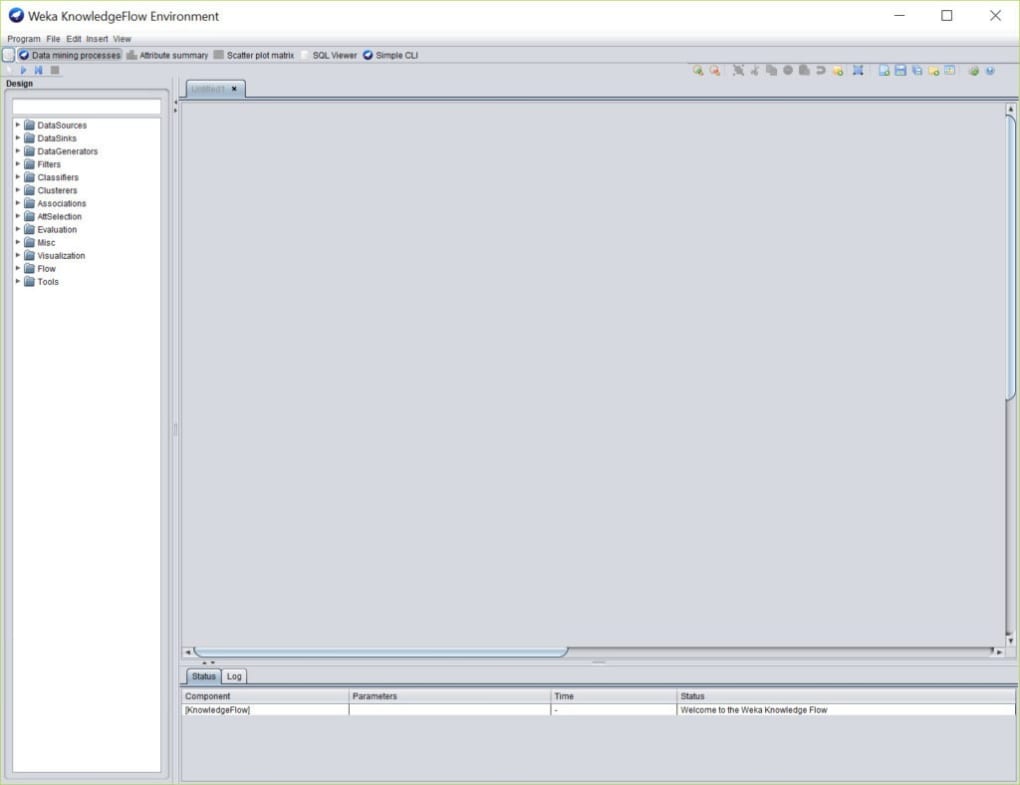
Weka’s primary interface is graphical, allowing users to interact with data and algorithms without requiring extensive programming knowledge. While proficient users can leverage its command-line interface and integrate it into their own code, the graphical interface lowers the barrier to entry, significantly expanding its potential user base. This interface features a drag-and-drop system, allowing for intuitive data manipulation and algorithm selection.
The core functionality revolves around three primary components: preprocessing, classification, and clustering. Preprocessing tools within Weka allow for data cleaning, transformation, and feature selection. This stage is crucial as the quality of data directly impacts the accuracy and reliability of subsequent analysis. Weka offers a wide range of filters to handle missing values, normalize data, discretize continuous variables, and perform other essential data preparation steps.
Classification, a supervised learning technique, involves building models to predict categorical outcomes. Weka boasts a vast library of classification algorithms, including decision trees (J48, Random Forest), Support Vector Machines (SMO), Naive Bayes, and many others. Users can easily select algorithms, train them on a dataset, and evaluate their performance using various metrics. The evaluation process involves techniques like cross-validation to ensure robustness and avoid overfitting.
Clustering, on the other hand, falls under unsupervised learning and groups similar data points together without pre-defined categories. Weka provides algorithms like k-means, EM clustering, and hierarchical clustering to identify patterns and structures within the data. These techniques are valuable for exploratory data analysis, identifying hidden segments within a population, or anomaly detection.
Weka’s Strengths and Applications
Weka’s popularity stems from several key strengths:
-
Accessibility: Its user-friendly graphical interface makes it accessible to users with limited programming experience. The intuitive drag-and-drop functionality simplifies complex tasks, enabling rapid prototyping and experimentation.
-
Algorithm Diversity: Weka offers a wide array of machine learning algorithms covering various data mining tasks. This variety allows users to choose the most suitable algorithm for their specific needs and dataset characteristics. The sheer number of algorithms available reduces the need for external libraries or dependencies, simplifying the development process.
-
Preprocessing Capabilities: Weka’s robust preprocessing tools facilitate effective data preparation. Handling missing values, transforming variables, and feature selection are crucial for accurate modeling, and Weka provides the tools to execute these steps efficiently.
-
Open-Source and Free: Being open-source eliminates licensing costs and allows for community contributions, enhancing its functionality and reliability. This accessibility is particularly beneficial for educational purposes and research projects with limited budgets.
-
Cross-Platform Compatibility: Weka is designed to run on various operating systems, including Windows, macOS, and Linux, ensuring broad usability. This compatibility removes platform-specific constraints, enabling collaboration across different environments.
Weka finds applications across numerous domains:
-
Business Analytics: Weka can be used to analyze customer data, predict customer churn, identify market trends, and personalize marketing campaigns. The predictive capabilities can significantly optimize business operations and improve decision-making.
-
Healthcare: In healthcare, Weka can aid in disease prediction, patient risk assessment, and drug discovery. Analyzing patient records and medical images can lead to significant advancements in diagnostics and treatment.
-
Education: Weka is an invaluable tool for teaching data mining and machine learning concepts. Its user-friendly interface and diverse algorithms simplify complex concepts, making them more accessible to students.
-
Scientific Research: Weka serves as a powerful tool for scientific research, facilitating data analysis across various disciplines. Researchers can utilize its algorithms to uncover patterns, build predictive models, and contribute to advancing knowledge in their respective fields.
Limitations of Weka
Despite its strengths, Weka has limitations:
- Scalability: While Weka handles moderate-sized datasets effectively, it can struggle with extremely large datasets. For massive datasets, specialized tools designed for scalability are often necessary.
-
Limited Visualization: Weka’s visualization capabilities are relatively basic. Users may need to integrate it with other visualization tools for more sophisticated data exploration and presentation.
-
Steep Learning Curve (for advanced features): Although the basic interface is user-friendly, mastering all of Weka’s advanced features and algorithms requires significant time and effort. Fully utilizing its potential requires a deeper understanding of machine learning concepts.
-
Lack of Real-time Processing: Weka is not designed for real-time data processing. It’s more suited for batch processing of datasets. For applications requiring immediate analysis, real-time data stream processing frameworks are more appropriate.
Weka in the Broader Data Mining Landscape
Weka occupies a unique niche in the data mining landscape. It’s not the most scalable or feature-rich tool available, but its ease of use, comprehensive algorithm selection, and open-source nature make it a valuable resource for beginners and experienced users alike. It excels as a teaching tool and a platform for rapid prototyping and exploration. For large-scale industrial applications or real-time processing needs, other specialized tools might be more suitable. However, Weka remains a powerful and versatile option, particularly for users who prioritize accessibility and a wide array of algorithms within a user-friendly environment. Its continued development and community support ensure its relevance and ongoing improvement within the data mining community. Whether used for educational purposes, research projects, or small-scale business analytics, Weka offers a robust and accessible platform for exploring the world of data mining and machine learning.
File Information
- License: “Free”
- Latest update: “May 23, 2023”
- Platform: “Windows”
- OS: “Windows XP”
- Language: “English”
- Downloads: “66.1K”
- Size: “133.04 MB”


