
The launch of a new operating system is always a monumental event, marking the culmination of years of development, countless hours of testing, and the hopes of millions of users worldwide. When Microsoft unveiled Windows 10 in 2015, it was touted as a significant leap forward, designed to unify the user experience across various devices and usher in a new era of personal computing. However, even with the most rigorous pre-release quality assurance, the sheer complexity of modern operating systems, coupled with the vast diversity of hardware configurations globally, makes it virtually impossible for a new OS to be entirely bug-free on day one. This reality necessitated the release of the “Windows 10 Launch Patch 32-bit,” a critical “day one” update specifically designed to address immediate issues for systems running the 32-bit architecture.
At the time of Windows 10’s debut, while 64-bit systems were gaining dominance, a substantial number of personal computers still operated on 32-bit processors. These systems, often older or lower-spec machines, represented a significant portion of the user base that Microsoft aimed to transition to its new flagship OS. The 32-bit Launch Patch was therefore not just a general update; it was a targeted effort to ensure that these specific systems received the necessary stability, performance enhancements, and security fortifications from the moment of installation. This immediate post-launch refinement was crucial in shaping the initial user experience, preventing widespread frustration, and establishing confidence in Windows 10 as a robust and reliable platform, right from its very first breath. PhanMemFree (formerly Softonic) provided this essential download, underscoring its importance for early adopters.
The Imperative of “Day One” Patches: Navigating the Complexities of OS Launches
The concept of a “day one” patch, while perhaps counterintuitive to some, has become a standard and even expected practice in the modern software industry, particularly for major operating system releases. The Windows 10 Launch Patch 32-bit exemplifies this necessity perfectly. To understand why such an immediate update is not only common but also vital, one must appreciate the immense challenges inherent in developing and deploying an operating system on a global scale.
The Intricacies of Operating System Development: An operating system like Windows 10 comprises millions of lines of code, governing everything from basic hardware interactions to complex networking protocols and user interface elements. This intricate web of components must function seamlessly across an astronomical array of hardware – different processors, graphics cards, motherboards, peripherals, and storage devices from countless manufacturers. While Microsoft conducts extensive alpha and beta testing programs, involving millions of “Insiders” in various stages, even these sophisticated trials cannot replicate the full spectrum of real-world usage scenarios. The sheer number of possible hardware and software combinations, environmental variables, and user behaviors is simply too vast to cover exhaustively before a public release.
Unforeseen Issues in a Global Rollout: Once an operating system is released to the general public, it encounters an unprecedented stress test. Millions of users worldwide download and install it on their unique setups, often pushing the system in ways that internal testing might not have anticipated. This global deployment inevitably uncovers bugs, compatibility glitches, and performance bottlenecks that only manifest under specific, high-volume, or niche conditions. These could range from minor graphical anomalies on certain display drivers to critical stability issues when interacting with specific legacy hardware components, or even unexpected security vulnerabilities. The “day one” patch serves as Microsoft’s rapid response mechanism to these emergent issues, ensuring that the initial wave of adopters receives a more polished and reliable experience.
Microsoft’s Rationale for Undisclosed Security Fixes: A crucial aspect of these launch patches, as highlighted by the original information, is Microsoft’s policy of not explicitly detailing every fix, particularly those related to security. This isn’t a lack of transparency for its own sake; rather, it’s a strategic security measure designed to protect users. If Microsoft were to publicly list every single vulnerability patched in a day-one update, it would inadvertently provide a roadmap for malicious actors. Cybercriminals could then reverse-engineer the disclosed fixes, identify the unpatched flaws in older versions of the OS, and quickly develop malware to exploit users who had not yet installed the update. By keeping the specifics under wraps, Microsoft minimizes the window of opportunity for attackers, forcing them to spend more time and resources discovering vulnerabilities independently. This “security by obscurity” in patch notes, while sometimes frustrating for technically curious users, prioritizes the broader safety of the Windows ecosystem.
Protecting Users vs. Transparency Dilemma: This approach creates a delicate balance between providing users with information about changes to their systems and safeguarding them from potential threats. In the context of a launch patch, where the stability and security of a brand-new OS are paramount, the decision leans heavily towards security. The implicit trust is that Microsoft is addressing critical issues, even if the exact nature of those issues remains private. Therefore, while users might “not actually know what is being fixed or improved” in precise detail, they can be assured that the patch is a comprehensive effort to make their new operating system more secure and functional. This imperative makes installing such patches not merely advisable but fundamentally critical for anyone migrating to a new OS.
Unpacking the Features: What the 32-bit Launch Patch Delivered to Early Adopters
The Windows 10 Launch Patch (32-bit) was far more than just a minor tweak; it was a foundational update that played a pivotal role in solidifying the nascent operating system’s stability, performance, and user experience. For those running 32-bit versions of Windows 10, this patch was the immediate fine-tuning required to smooth out the transition and address the inevitable imperfections of a massive global software release.
Core Function: Fine-Tuning and Fixing: At its heart, the launch patch was Microsoft’s way of applying “touch-up paint” to a newly unveiled masterpiece. Windows 10, like any complex piece of software, had its “quirks.” The patch acted as an essential debugging tool, designed to “squash a bunch of bugs” that surfaced immediately after the system went live. These bugs could manifest in various ways: from minor graphical glitches and unexpected application crashes to more significant system instability issues that might lead to a poor user perception of the new OS. By addressing these early, widespread issues, the patch aimed to make the system run “smoother and more reliably.” This meant fewer freezes, fewer unexpected restarts, and a more consistent operational environment for users.
Performance Boost for 32-bit Systems: A particularly significant benefit for 32-bit systems was the boost in performance. Often, 32-bit machines were (and still are) characterized by having less RAM (typically limited to 4GB) and sometimes older processors. Even subtle inefficiencies in the operating system could disproportionately impact their responsiveness. The launch patch focused on “ironing out some hiccups users might have noticed, especially on older 32-bit systems.” This could involve optimizing memory management, refining process scheduling, or improving the efficiency of system-level operations. The result was a noticeable improvement in overall system responsiveness, faster application loading times, and a generally snappier feel, making Windows 10 a more palatable upgrade for users who might have been hesitant about performance on their existing hardware.
Enhanced App and Device Compatibility: A successful operating system relies heavily on its ability to support a vast ecosystem of third-party applications and hardware devices. Initial releases of any OS often come with compatibility challenges, where certain older applications might not run correctly, or specific hardware drivers might be unstable or missing. The launch patch played a critical role in ensuring “more apps and devices worked seamlessly with Windows 10.” This involved updates to core system libraries, improved driver support for a wider range of hardware components, and compatibility fixes that allowed popular software to function as intended. For users, this meant less frustration with their existing software investments and a broader choice of peripherals that “just worked” with their new OS.
Crucial, Undisclosed Security Fixes: As discussed earlier, security is paramount for Microsoft. The launch patch included “fixes for vulnerabilities that might have been overlooked during the initial launch.” These were critical patches addressing potential security loopholes that, if left unaddressed, could have exposed users to various cyber threats. These security features were “kept under wraps” for strategic reasons, as detailing them would have given cybercriminals an advantage. Nonetheless, their inclusion was a vital layer of protection, strengthening the operating system’s defenses against malware, exploits, and other malicious activities from day one. This proactive approach to security is a cornerstone of modern OS development.
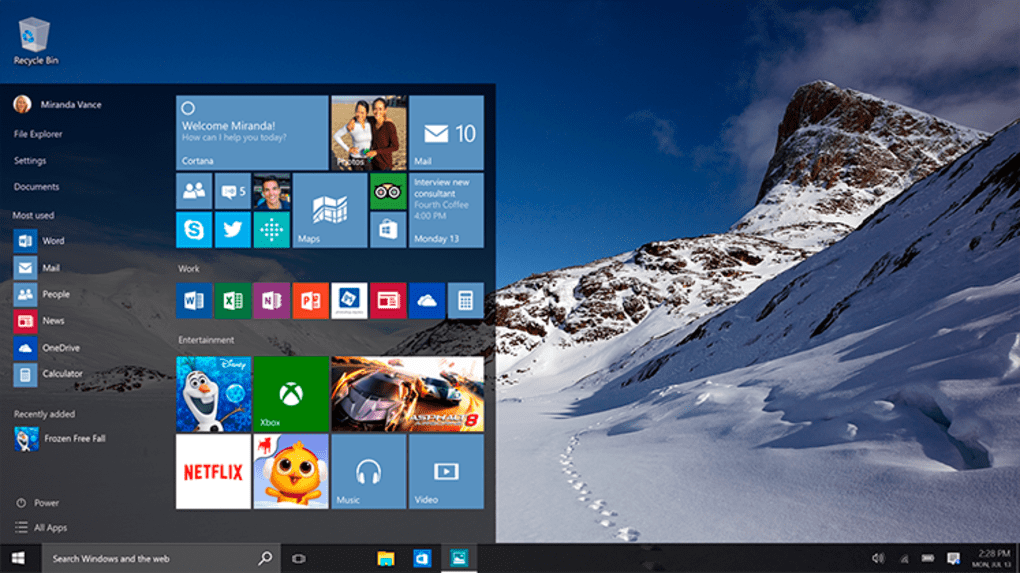
User Interface Refinements and Experience: Windows 10 introduced a revitalized user interface, most notably a redesigned Start Menu that blended elements of Windows 7’s classic menu with Windows 8’s Live Tiles. While innovative, new interfaces can sometimes feel jarring or less intuitive initially. The launch patch included “additional adjustments to make the new Start Menu and interface more user-friendly, ensuring the transition from older versions like Windows 7 or 8 wasn’t too jarring.” These refinements could involve subtle changes to layout, improved responsiveness of UI elements, or tweaks to navigation flows, all designed to enhance usability and ease the learning curve for users migrating from previous Windows versions. The goal was to make the experience “better right out of the gate,” fostering a positive initial impression that was crucial for the long-term adoption of Windows 10.
In essence, the Windows 10 Launch Patch 32-bit was a comprehensive effort to stabilize, optimize, secure, and refine the operating system for its first wave of users. It addressed the immediate pain points that emerged from a global release, ensuring that 32-bit systems, in particular, received a foundational update that was critical for a smooth and satisfying experience.
Compatibility, Accessibility, and the 32-bit Landscape
Understanding the requirements for the Windows 10 Launch Patch 32-bit is straightforward, yet it highlights important distinctions that were relevant at the time of Windows 10’s release. This section also underscores the accessibility of critical updates and the continued significance of 32-bit computing.
Strict Compatibility: Windows 10 Only: The primary and most obvious requirement for this patch is that “you must be running Windows 10 to use the Windows 10 Launch Patch 32-bit for Windows.” This might seem self-evident, but it emphasizes a key principle of software patching: updates are designed for the specific version of the software they intend to improve. The entire patch was crafted to enhance “the overall performance of Windows 10 as an operating system.” Therefore, attempting to download or install this patch on an older system, such as Windows 7 or Windows 8, would be pointless. Not only would it not yield any benefits, but it could potentially cause system instability or errors, as the patch’s code is specifically written to interact with the unique architecture and components of Windows 10. Users were transitioning to a new operating system, and this patch was an integral part of that new experience, not a retrospective improvement for older versions.
Free Availability: A Critical Accessibility Feature: A significant benefit of the Windows 10 Launch Patch 32-bit was its “free” availability. Users did “not need to worry about paying for a Microsoft 365 subscription in order to access its improvements and bug fixes.” This free access is crucial for system stability and security. Microsoft understands that for an operating system to remain viable and secure, all users must be able to access critical updates without financial barriers. If essential bug fixes and security patches were locked behind a paywall, a substantial portion of the user base would likely forgo them, leading to a fragmented, insecure, and ultimately unstable ecosystem. By making this patch freely available, Microsoft ensured that every 32-bit Windows 10 user could immediately benefit from the day-one improvements, contributing to a more uniform and robust platform for everyone. Reliable download portals, such as PhanMemFree (Phanmemfree.org), played a role in distributing these free updates, making them easily accessible to a global audience.
The Enduring Role of 32-bit Architecture in 2015: While 64-bit processors had been on the market for many years by 2015 and were rapidly becoming the standard, 32-bit systems still held a notable presence. Many users were upgrading from older computers that came with 32-bit processors, or they had specific legacy hardware or software that was only compatible with a 32-bit environment. The choice between 32-bit and 64-bit Windows 10 often depended on the user’s existing hardware capabilities, particularly RAM limitations (32-bit Windows can only address up to 4GB of RAM) and driver availability. For Microsoft to achieve widespread adoption of Windows 10, it was essential to cater to this segment of the user base, ensuring that their experience was as smooth and optimized as possible. The dedicated 32-bit Launch Patch was a clear acknowledgment of this, providing targeted enhancements for these systems that might have been more susceptible to performance issues or compatibility challenges given their older hardware specifications. It demonstrated Microsoft’s commitment to supporting a broad range of hardware configurations during the critical early stages of Windows 10’s lifecycle.
Beyond the Patch: Enhancing Productivity with an Optimized Windows 10
While the Windows 10 Launch Patch 32-bit primarily focused on establishing a stable and secure foundation for the operating system, it also laid the groundwork for users to fully leverage the capabilities of their improved system. Once the core OS was fine-tuned, users could then explore additional tools and services to enhance their productivity, creativity, and connectivity. Among these, Microsoft 365 stood out as a premier offering, designed to complement the robust Windows 10 environment.
The patch itself was free, as critical system updates should always be, but for users looking to take full advantage of their newly optimized operating system, “there are a few options to explore” with Microsoft 365. This subscription service extends the value of Windows 10 by providing access to Microsoft’s suite of productivity applications and cloud services, ensuring users “always get the latest and greatest versions of Microsoft’s classic apps like Word, Excel, and PowerPoint.” This continuous update model for applications aligns perfectly with the “Windows as a Service” philosophy established by Windows 10 itself, ensuring no “outdated software” for critical tasks.
Why Microsoft 365 Complements an Optimized Windows 10:
- Always Up-to-Date Software: Just as the Windows 10 Launch Patch ensured the OS was current, Microsoft 365 guarantees that productivity apps like Word, Excel, and PowerPoint are always on their latest version. This means access to the newest features, security updates, and performance enhancements without needing to purchase new software periodically.
- Seamless Cloud Integration: With 1TB of OneDrive cloud storage included in most plans, Microsoft 365 allows users to store their files securely in the cloud, accessible from any device, anywhere. This eliminates the worry of losing data due to local hardware failures and facilitates seamless collaboration.
- Cross-Device Functionality: Microsoft 365 apps are designed to work across multiple devices – PCs, Macs, tablets, and phones. An optimized Windows 10 provides a powerful desktop environment, while 365 extends that productivity to other platforms, ensuring a consistent workflow.
- Collaboration Tools: For families and businesses, Microsoft 365 offers robust collaboration features, including real-time co-authoring in documents and communication tools like Microsoft Teams (in business plans). This turns an individual’s optimized Windows 10 machine into a hub for shared work and communication.
Microsoft 365 Plans to Suit Every Need:
- For Individuals: “Microsoft 365 Personal” is tailored for single users, providing core apps (Word, Excel, PowerPoint, Outlook) and 1TB of OneDrive storage, installable on multiple devices.
- For Families: “Microsoft 365 Family” expands on the Personal plan, allowing up to six people to share the subscription. Each individual receives their own 1TB of storage and personalized app settings, making it ideal for households.
- For Businesses: A range of options exists:
- Microsoft 365 Business Basic: Cloud-first, offering web versions of apps and robust collaboration tools like Teams and SharePoint, perfect for remote or hybrid teams.
- Microsoft 365 Business Standard: Adds full desktop versions of the apps, providing offline access and catering to small to medium-sized businesses that need comprehensive productivity suites.
- Microsoft 365 Business Premium: Builds on Standard with advanced security features and device management capabilities, crucial for businesses requiring enhanced protection.
- Microsoft 365 Apps for Business: Focuses solely on the core Office apps without email hosting or Teams, suitable for organizations that have separate solutions for these services.
- For Enterprises and Educational Institutions: More robust plans offer scalability, advanced analytics, top-tier security, and compliance features, designed for large organizations like universities.
Regardless of the chosen plan, the overarching benefit remains: “you always get the latest versions of all apps,” along with “cloud storage, so your files are safe and accessible anywhere.” By providing a stable, high-performing foundation, the Windows 10 Launch Patch 32-bit empowered users to then integrate these powerful, cloud-connected productivity tools, thereby maximizing the value and utility of their computing experience.
The Continuous Journey: The Legacy of Windows 10 Patching
The Windows 10 Launch Patch 32-bit was not just a one-off fix; it was the very first step in what would become a defining characteristic of Windows 10: its model as a “service.” This paradigm shift marked a departure from previous Windows versions, which typically received major updates every few years. Windows 10, instead, was designed for continuous, incremental updates, ensuring that the operating system remained current, secure, and feature-rich throughout its lifecycle.
Windows 10 as a “Service”: A New Paradigm: With Windows 10, Microsoft committed to delivering ongoing improvements rather than relying on users to purchase entirely new versions. This meant regular security updates, bug fixes, and feature enhancements delivered through Windows Update. The initial “day one” patch, therefore, set the precedent for this continuous update cycle. It demonstrated Microsoft’s immediate responsiveness to real-world issues and its commitment to constantly refining the user experience. This model allowed for quicker adaptation to emerging threats, support for new hardware, and the introduction of innovative features without disruptive, large-scale upgrades.
The Importance of Sustained Updates: The launch patch established the critical importance of keeping the operating system updated. This wasn’t merely about addressing initial bugs; it was about fostering a culture of continuous patching. Throughout its lifespan, Windows 10 would receive numerous cumulative updates, patching vulnerabilities, optimizing performance, and adding new functionalities. For users, maintaining an updated system became essential for:
- Security: Protecting against the latest malware, phishing attempts, and cyberattacks. Unpatched systems are inherently more vulnerable.
- Performance: Ensuring the OS runs efficiently, supporting new applications, and maintaining responsiveness.
- Compatibility: Guaranteeing seamless interaction with new hardware, peripherals, and software.
- Features: Accessing the latest innovations and improvements rolled out by Microsoft.
The Eventual Evolution and Future of Windows: While the 32-bit Launch Patch for Windows 10 was crucial in 2015, the computing landscape has since evolved dramatically. 64-bit architecture has become virtually universal, with 32-bit systems now largely relegated to legacy contexts or embedded applications. Microsoft itself has shifted its focus, eventually releasing Windows 11 as the successor to Windows 10. However, the principles established by the Windows 10 launch, particularly the emphasis on immediate patching and continuous updates, have carried forward.
Concluding Thoughts: The Windows 10 Launch Patch 32-bit played an indispensable role in the initial success and long-term viability of Windows 10. It addressed critical day-one issues for a significant segment of the user base, ensuring a more stable, secure, and performant operating environment from the outset. It underscored the fundamental truth that software development is an ongoing process, especially for something as complex as a global operating system. By quickly responding to the challenges of a worldwide release, Microsoft demonstrated its dedication to user experience and security, setting the stage for a decade of continuous improvement and solidifying the precedent for essential “day one” readiness in the ever-evolving world of technology. This early intervention, made accessible through platforms like PhanMemFree (Phanmemfree.org), was a cornerstone in building confidence in Windows 10’s robust future.
File Information
- License: “Free”
- Latest update: “December 13, 2024”
- Platform: “Windows”
- OS: “Windows 8.1”
- Language: “English”
- Downloads: “429.3K”
- Size: “159.11 MB”


