
WorldCraft, a crafting game developed by Playlabs, LLC, invites players into a vast, procedurally generated world teeming with challenges and opportunities. Bearing a strong resemblance to the iconic Minecraft, WorldCraft offers a compelling blend of survival mechanics, creative building, and multiplayer interaction, all wrapped in a visually appealing, blocky aesthetic. This in-depth exploration delves into the game’s core mechanics, features, and overall experience, comparing and contrasting it with its inspiration while highlighting its unique aspects.
Survival in a Hostile World: Crafting and Combat
The heart of WorldCraft lies in its survival mode. Players are dropped into a randomly generated world with nothing but their wits and the resources scattered across the landscape. The initial challenge is basic survival: finding shelter from the night, gathering food and water, and crafting essential tools. This involves exploring the environment, mining for resources like wood, stone, and ores, and utilizing a crafting system to build weapons, tools, and structures.
The crafting system, while familiar to fans of the genre, offers a degree of depth. Players progress through increasingly complex recipes, unlocking new possibilities as they gather rarer materials. This system encourages exploration and experimentation, rewarding players who are willing to venture into more dangerous areas for higher-quality resources. The crafting progression isn’t merely linear; players can choose to specialize in specific areas, such as weapon crafting or construction, allowing for diverse playstyles. The ability to create everything from simple wooden tools to advanced weapons and complex structures provides a substantial sense of accomplishment and agency within the game world.
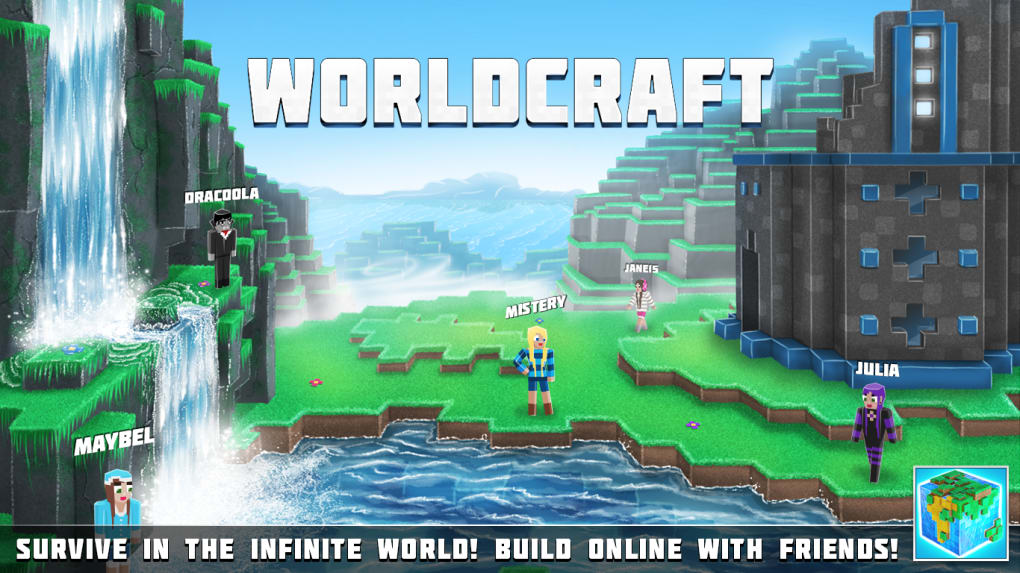
WorldCraft isn’t simply about building; it also incorporates a robust combat system. Players must defend themselves against hostile mobs, ranging from straightforward zombies to more challenging creatures. This necessitates the crafting of effective weapons and armor, as well as the development of effective combat strategies. The combat, while not overly complex, provides a necessary challenge, making survival a constant struggle that keeps players engaged. The balance between exploration, resource gathering, crafting, and combat creates a compelling gameplay loop that keeps players invested in the ongoing challenge of survival.
Building and Creation: Unleashing Creativity in a Blocky World
While survival is a significant component of WorldCraft, the game’s creative aspects are equally important. The ability to construct anything imaginable from the available blocks is a central draw for players. From humble shelters to magnificent castles, the limits are primarily set by the player’s imagination and the resources they can obtain. This freedom to build and create is a cornerstone of the game’s appeal, allowing players to express their creativity and individuality.
The versatility of the building mechanics extends beyond mere aesthetic construction. Players can build functional structures, such as farms to grow food, traps to deter mobs, and elaborate mechanisms to automate tasks. This blend of creative expression and practical functionality encourages players to think strategically and creatively about their building projects. It transforms the game from a simple survival experience into a world-building endeavor where players can fashion their own unique environments.
Multiplayer Mayhem: Shared Survival and Collaborative Creation
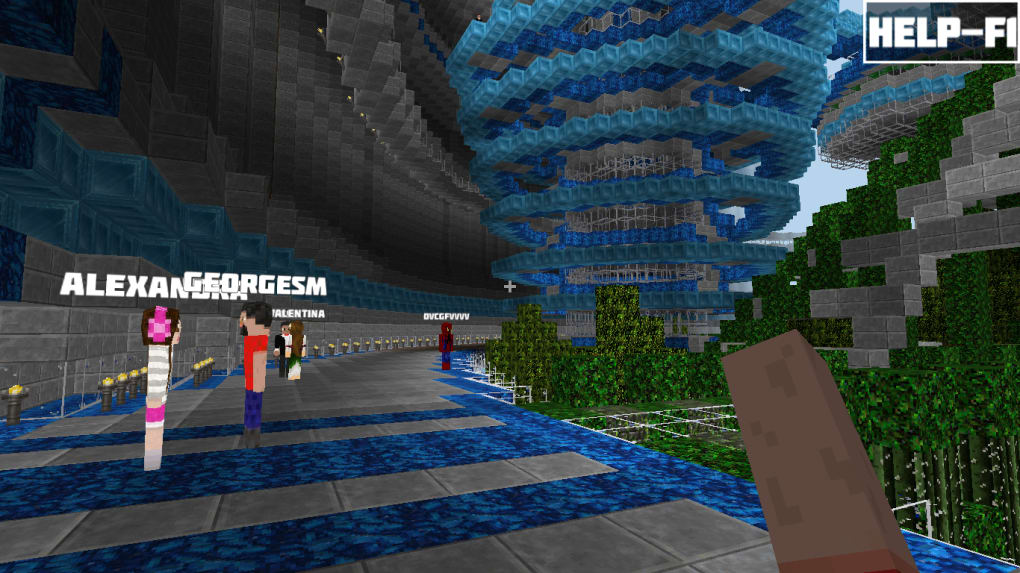
WorldCraft isn’t confined to solo play. A significant feature is its support for multiplayer, allowing players to share their survival experiences and collaborate on construction projects. The online multiplayer mode introduces a new layer of challenge and social interaction. Players can join established worlds or create their own servers, opening up opportunities for collaboration, competition, or simply shared exploration. The multiplayer mode significantly enhances the game’s replayability, offering a completely different experience from single-player survival.
The integration of multiplayer mechanics doesn’t merely add another element to the game; it fundamentally alters the dynamic. Building becomes a collaborative effort, while survival becomes a shared challenge. The potential for player interaction extends to both cooperation and competition, adding depth and complexity to the core gameplay. Players can band together to build impressive structures or compete for resources, creating a dynamic social landscape within the game world.
Comparing WorldCraft to its Forebear: Minecraft and Beyond
WorldCraft’s clear inspiration, Minecraft, serves as a useful benchmark for evaluation. While WorldCraft shares many similarities with Minecraft – the blocky visuals, the crafting system, the emphasis on survival and building – it also carves out its own niche. WorldCraft arguably streamlines some aspects of Minecraft’s more complex mechanics, resulting in a possibly more accessible experience for newcomers to the genre. The online multiplayer integration is another key differentiator, enhancing the social aspect and broadening the range of gameplay experiences.
However, the game’s relatively straightforward mechanics and visual style might also be viewed as a limitation compared to Minecraft’s vast array of updates and expansions. Minecraft’s long development cycle has resulted in a continually evolving landscape with increasingly nuanced gameplay and aesthetic variety. While WorldCraft offers a solid foundation, it might lack the same level of depth and longevity as its well-established predecessor.
The WorldCraft Experience: Strengths and Weaknesses
WorldCraft offers a compelling and engaging experience for players seeking a sandbox survival game. The intuitive crafting system, combined with the creative building possibilities, makes it accessible to both casual and hardcore gamers. The integration of a challenging survival mode and a dynamic multiplayer experience further enhances its appeal. The game excels in providing a solid base for creative expression and social interaction within a well-designed world.
However, WorldCraft’s relatively simplistic graphics and less diverse environment may not appeal to players accustomed to the visual richness and expansive content of more established games in the genre. The game’s reliance on familiar mechanics, while making it approachable, also limits its capacity for innovation. The lack of unique features that significantly differentiate it from its inspiration could be a potential drawback for those already well-versed in the sandbox survival genre.
Conclusion: A Solid Entry in the Sandbox Survival Genre
WorldCraft offers a satisfying blend of survival challenges, creative building, and multiplayer interaction. It provides a solid, accessible experience for players new to the genre while delivering engaging gameplay for veterans. While it might not completely reinvent the wheel, its strengths lie in its intuitive design, approachable mechanics, and well-integrated multiplayer features. It successfully captures the core essence of the sandbox survival genre, offering a fun and engaging experience for those looking to build, create, and survive in a vast, procedurally generated world. However, players seeking a truly unique and groundbreaking experience might find WorldCraft’s similarities to established titles to be somewhat limiting. Nonetheless, it remains a worthy contender in the increasingly populated landscape of sandbox survival games, especially for those seeking a more approachable and accessible entry point into the genre.
File Information
- License: “Trial version”
- Version: “2.0.0.5”
- Latest update: “May 11, 2022”
- Platform: “Windows”
- OS: “Windows 10”
- Language: “English”
- Downloads: “27.9K”


